







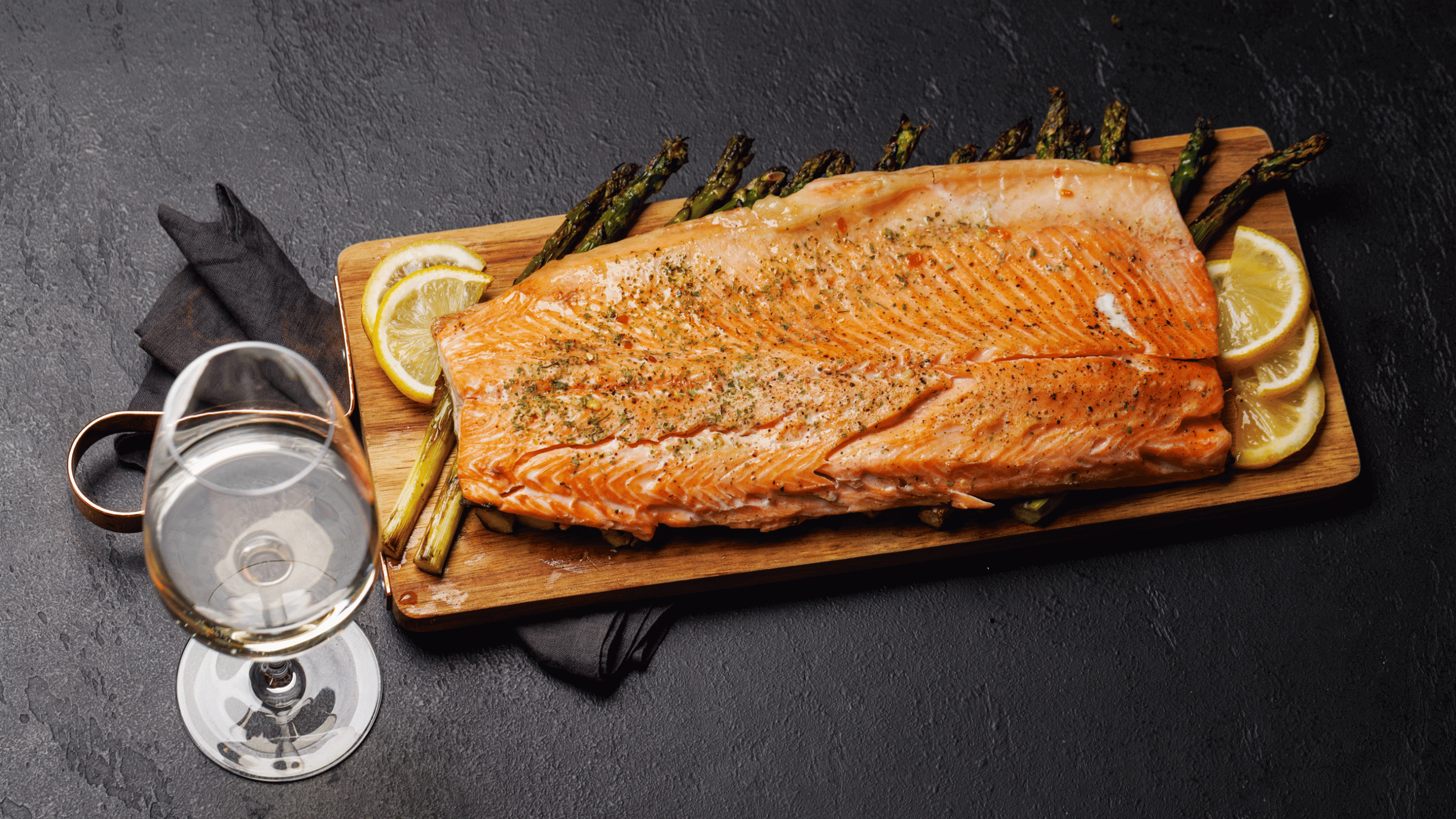
A celebratory July 1 Canada Day table in British Columbia is a sight to be seen.
There might be spot prawns piled onto a platter beside a bowl of strawberries. Cedar-planked salmon comes off the grill while someone else flips burgers. Corn is rolled in butter. A bag of ketchup chips appears from nowhere. Later, there’s a butter tart on a paper plate.
It’s a chaotic menu by wine-pairing standards, but wines from Canada’s westernmost province of British Columbia (BC) handle it because of one thing: acidity.
Freshness has built BC’s international wine reputation, and it’s also what makes the wines useful at the table. Canadian summer food tends to be rich, smoky, sweet, and salty, often all at once. Bright acidity doesn’t fight those flavours, it keeps up with them.
‘What goes together grows together,’ says Okanagan Valley native Ned Bell, one of Canada’s best-known chefs and co-owner of Hatch Hospitality in Vancouver.
Across the board, ‘BC’s climate gives our wines an acidity and freshness that work beautifully with food,’ Bell adds.
Seasonal food that hits the spot
Take spot prawns – the large Pacific Ocean crustacean prized for its lobster-like sweetness and delicate buttery texture.
For a few weeks each spring, they’re the most anticipated ingredient on Canada’s west coast – restaurants build menus around them, fishmongers sell out.
‘Wild BC spot prawns signal that summer is on its way,’ says Bell. ‘They kick off an incredible parade of seasonal ingredients, from strawberries and raspberries to sweet corn, cherries, apricots, and peaches, each arriving in its own perfect time.’
The excitement surrounding spot prawn season says something about Canadian summer food. Despite the country’s reputation for hearty fare, the best warm-weather meals are often built around fresh fish and produce; ingredients that taste best when they’re barely touched.
BC wine matches that instinct almost exactly. ‘The focus is on style and texture, with acidity playing a key role across all wines,’ says Bram Bolwijn, guest and VIP experience manager with Iconic Wineries of BC.
That same acidity that flatters shellfish also holds up to the grill – and Canadian summer cooking loves a grill.

Open-fire grilling, fresh produce – and rosé
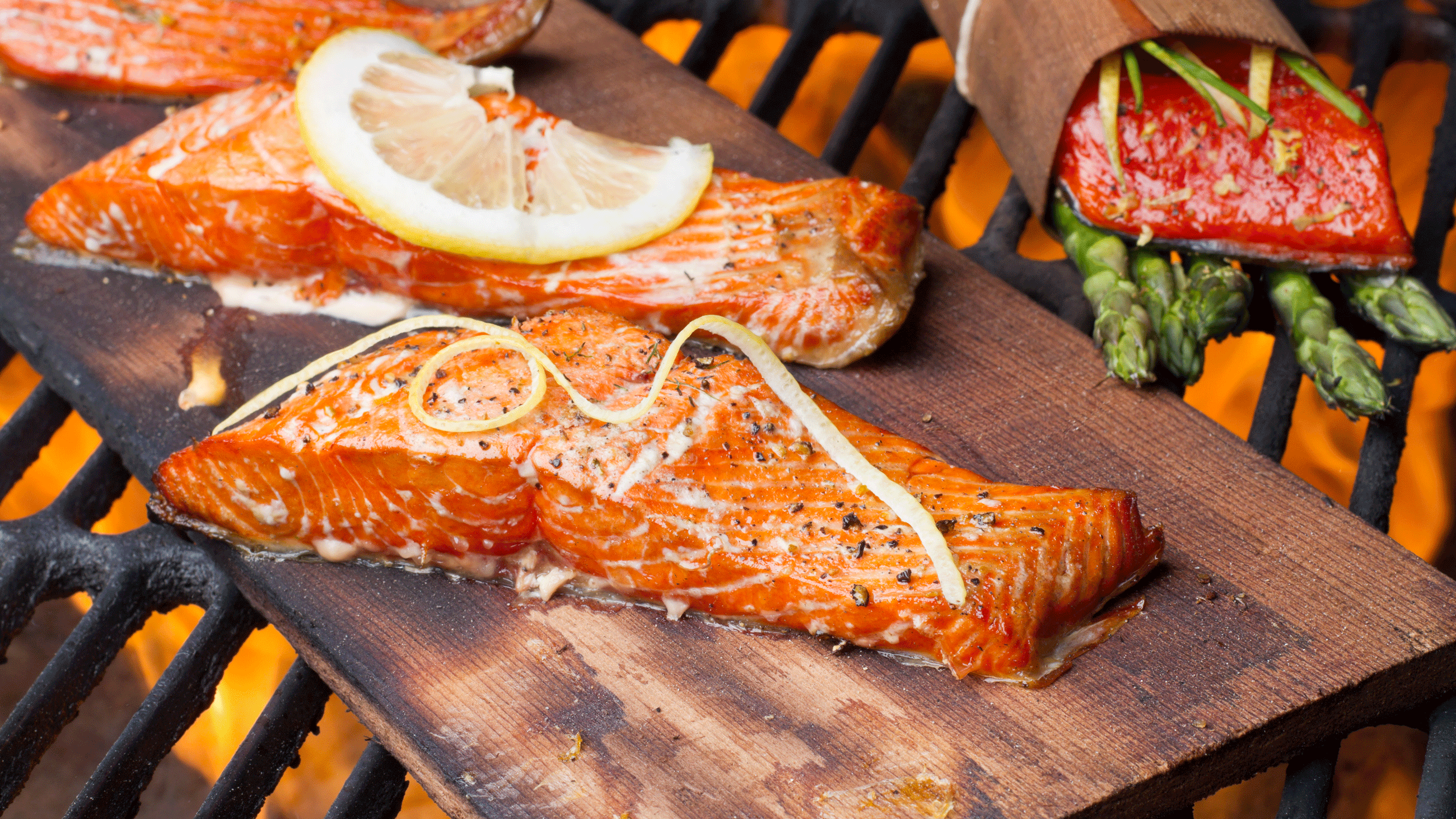
Cedar-planked salmon remains one of the country’s most iconic warm-weather dishes.
The technique originates with Indigenous nations along the Pacific coast – including the Squamish, Tsilhqot’in, and Haida – who cooked salmon over open fire on cedar planks, drawing on cedar’s deep cultural significance in coastal life.
Elsewhere, burgers, sausages, and steaks become the centrepiece of backyard gatherings.
Ask Joshua Bauerlein, estate chef at Liquidity Wines in Okanagan Falls, what a real Canadian summer meal looks like and his answer isn’t particularly complicated.
‘Grilled game and burgers. Mixed with fresh seasonal produce like Okanagan peaches and sweet corn, and cold, refreshing sides.’
Bauerlein’s answer raises the obvious question: what wine goes with all of this? ‘Rain or shine, I love a good Cabernet Franc rosé,’ he says.
Rosé zeroes in on the middle ground. It has enough freshness for salads and seasonal vegetables, enough fruit for burgers, and enough character to stand up to smoky flavours.
‘Cab Franc’s bright acidic and often herbal structure helps cut through the richness of game while highlighting the earthy and savoury notes from the grill,’ adds Bauerlein.

Diversity and freshness
That willingness to surprise is why other parts of the world are now paying attention to the wines from Canada’s west coast.
BC produces everything from traditional-method sparkling wine and aromatic whites to vast ranges in red wines and rosé, and let’s not forget ice wine. Few regions offer such a mixed bag while maintaining a consistent sense of freshness.
For international drinkers discovering BC wine for the first time, Bolwijn believes geography may attract attention, but it isn’t what keeps people interested.
‘The Okanagan Valley’s location begins the conversation: quality and the way we present our wines build our reputation, through a region that is defined by diversity.’
That diversity is particularly useful on Canada Day, when the menu rarely sticks to one theme. Seafood shares space with grilled meats. Farmers’ market produce sits beside potato chips. Dessert appears long before anyone is actually hungry.

Wines that make sense
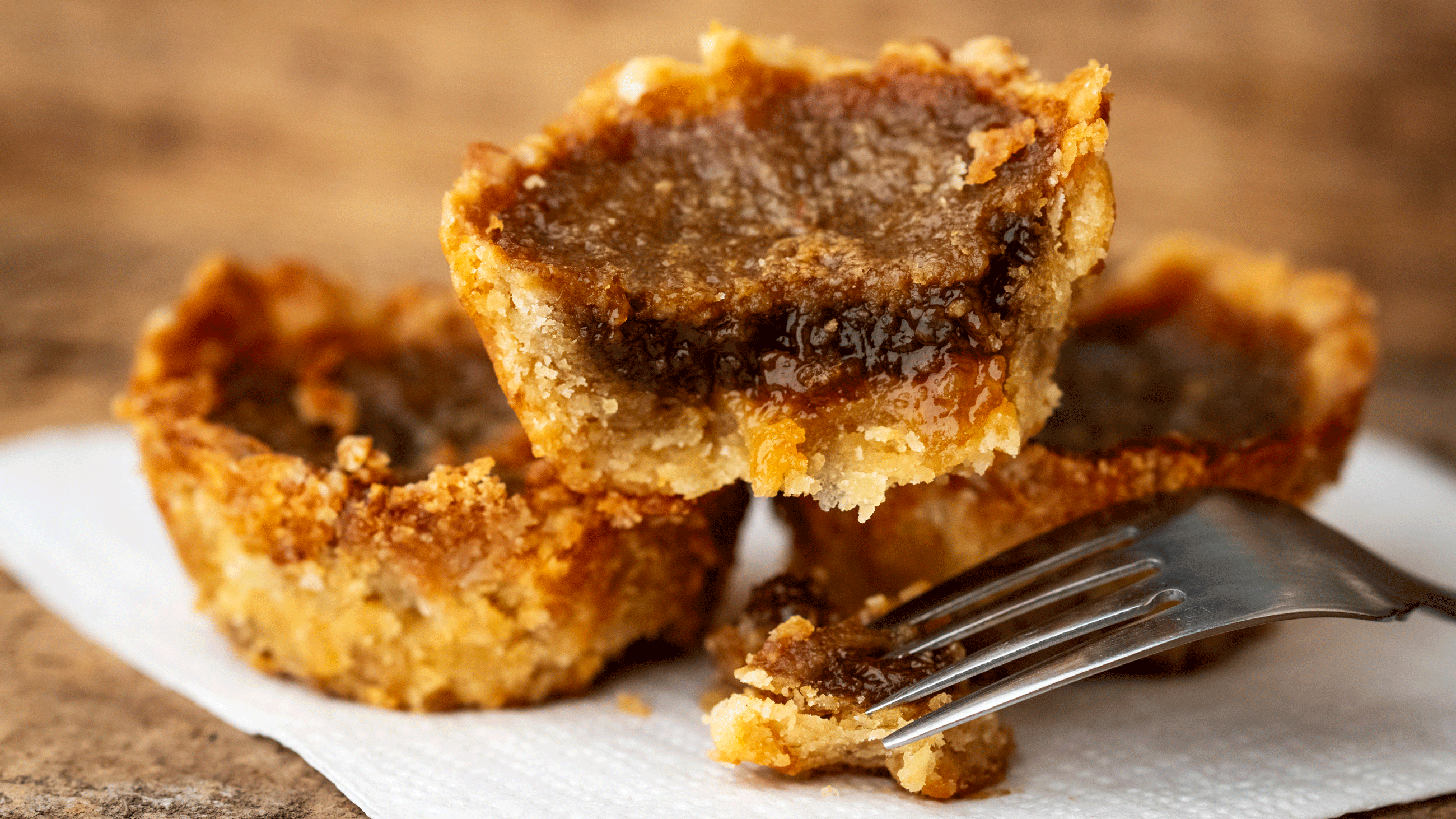
Which brings us to the butter tart: a uniquely Canadian dessert of brown sugar, often maple syrup and, yes, lots of butter, that tastes similar to pecan pie without the pecans.
Ice wine carries a reputation as a special-occasion pour – more likely to be offered to visitors than poured on a random Tuesday. Yet few wines make more sense alongside a butter tart.
The dessert is rich, intensely sweet, and unapologetically indulgent. A dry wine can feel harsh by comparison. Ice wine to the rescue; matching the tart where it is, while acidity prevents the pairing from becoming cloying.
That’s the thing about BC wine. It doesn’t need a carefully planned tasting menu to make sense.
Give it spot prawns, salmon, burgers, corn, or dessert. Give it the slightly chaotic spread that appears on Canadian tables every summer. More often than not, it finds a way to fit in.
OKANAGAN PEACHES AND BURRATA with Quail’s Gate, Chenin Blanc, Okanagan Valley 2025. Ripe peaches at peak ripeness, split into soft burrata. Chenin Blanc brings shape to the creaminess and keeps the fruit from getting lost.
BC SPOT PRAWNS with Tantalus, Old Vines Riesling, Okanagan Valley 2023. Spot prawns cooked barely at all; just heat, butter, and salt. Riesling runs through the natural sweetness and keeps the finish clean and briny.
CEDAR-PLANKED SALMON with Martin’s Lane, Simes Vineyard Pinot Noir, South Kelowna Slopes 2023. Cedar smoke wraps the salmon, adding richness and depth. Pinot Noir brings enough structure and acidity to match the fat without overpowering the fish.
GRILLED CORN AND HERBED BUTTER with CedarCreek, Aspect Chardonnay, Okanagan Valley 2022. Corn charred at the edges, slick with herb butter melting into the kernels. Chardonnay settles into the richness and keeps the bite from turning heavy.
BC STRAWBERRIES WITH CRACKED BLACK PEPPER AND BASIL with 1 Mill Road, Pinot Noir Rosé, Naramata Bench 2025. Fresh strawberries split and scattered with basil. The rosé lifts the fruit and accentuates its herbal edge, keeping each bite light and clean.
POUTINE with Blue Mountain, Gold Label Brut, Okanagan Valley NV. An iconic Canadian dish: fries buried under cheese curds and hot gravy, eaten while everything is still melting. Sparkling wine resets the palate between bites.
KETCHUP CHIPS with Red Barn, Stand Apart Gamay, South Kelowna Slopes 2025. This flavour of potato crisps tastes like vinegar, tomato, and salt in equal measure, and is beloved in Canada. Gamay keeps pace and leaves just enough fruit behind to reset the palate.
SMASH BURGER with Hester Creek, Cabernet Franc Rosé, Okanagan Valley 2025. A beef or game burger pressed thin so the edges go crisp and almost bitter, cheese melting into the bun. Cabernet Franc rosé stays lifted through the smoke and fat.
BANNOCK AND WHIPPED HONEY BUTTER with Unsworth, Saison Vineyard Pinot Gris, Vancouver Island 2025. Warm bannock (a fried flatbread) torn open, steam rising into honey butter that melts into the crumb. Pinot Gris softens the sweetness without dulling the texture.
BUTTER TARTS with Bench 1775, Whistler Riesling Icewine, Similkameen Valley 2022. Sticky pastry and caramel-like filling that clings to the fork. Icewine mirrors the sweetness but keeps it from feeling heavy or one-note.
10 BC wines to pair with Canadian summer dishes

10 wines that perfectly capture the fresh spring taste of Niagara Peninsula


Meet Decanter’s new North America Regional Editor