




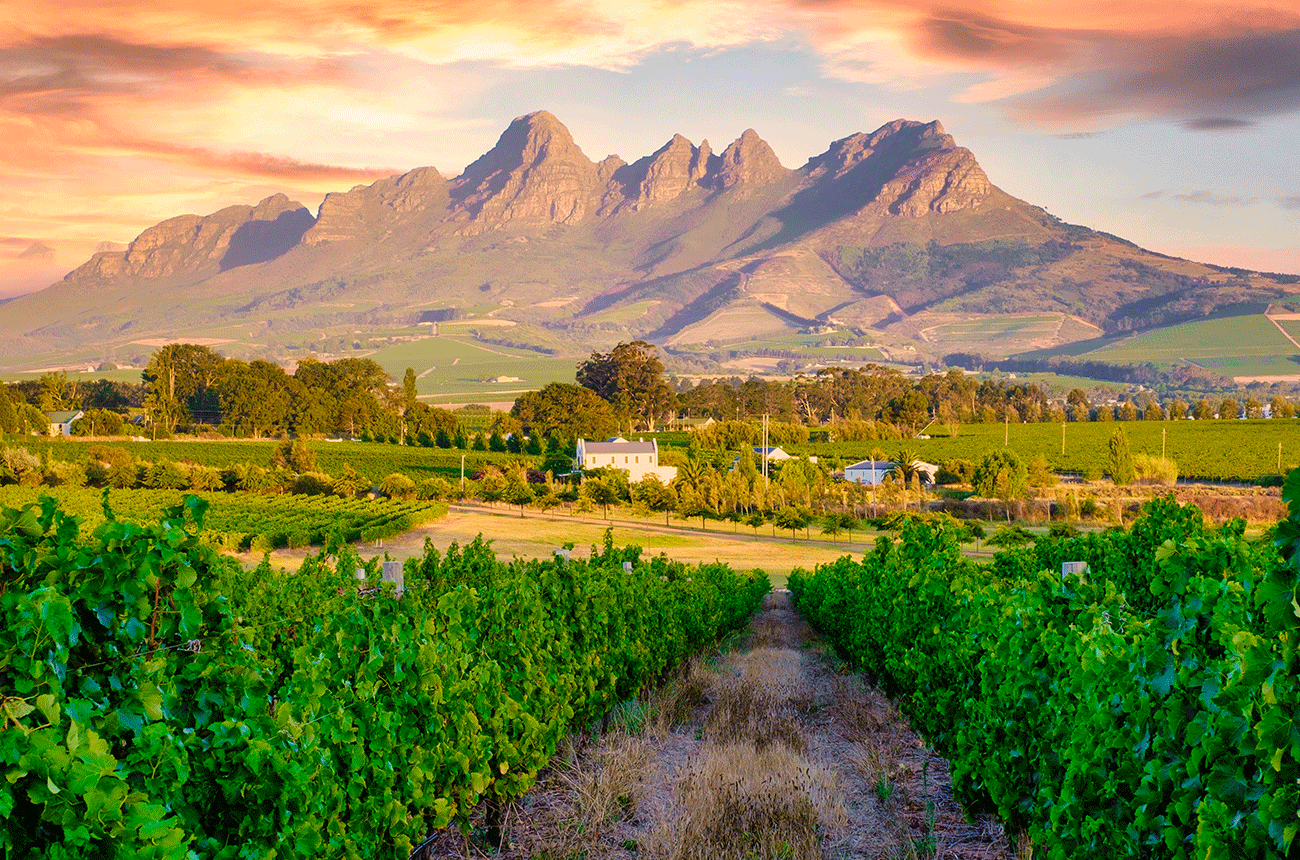
Many wine-producing countries have a grape that has become central to their identity. For South Africa, Chenin Blanc is its signature white variety, and at the 2026 Decanter World Wine Awards (DWWA), it emerged as one of the shining stars for the rainbow nation.
It was not always this way. Like the country itself, South African Chenin Blanc has been through quite a revolution over the past three decades. Known locally for years as Steen, the grape was treated as a dependable workhorse: high-yielding, hardy and destined mostly for brandy, bulk wine, semi-sweet blends and inexpensive dry whites. South Africa, it turned out, had become the grape’s adopted superpower, growing more Chenin Blanc than anywhere else on earth.
There is an irony in that. Chenin Blanc’s ancestral home is France’s Loire Valley, where it makes some of the world’s most ageworthy and revered white wines, from the honeyed sweet wines of Vouvray to the steely dry whites of Savennières. Yet in South Africa, the grape was long valued for what it could produce in volume rather than for what it could express.
That began to change as a new generation of producers looked again at what they had, recognising that these low-yielding old vines, many over 35 years old, were capable of remarkable things. By farming them for quality rather than quantity and working site by site, winemakers began to reveal a grape of real depth and character.
Among those who drove the change is Johan Jordaan, cellar master at Spier, who in February was named Chenin Blanc Master Winemaker for the second consecutive year at the Master Winemaker 100 awards in Paris. For him, the transformation has been a collective effort, grounded in better farming.
Our focus is key to the success of the varietal and the category as a whole. The wines have improved over the years due to a focus on regenerative viticultural practices that buffer these vines against nature’s variations. South African winemakers have embraced the challenge to bring forth the beauty, elegance and class that the grape holds.
Johan Jordaan, Cellar Master at Spier
Safe to say, Chenin is now entering its heyday. The country enjoyed a banner year at the world’s largest wine competition, earning 27 more medals overall than last year. At the top tier, South Africa claimed one Best in Show, eight Platinums and 36 Golds. While red wine led the way at Platinum level, it was Chenin that was crowned with South Africa’s sole Best in Show: Stellenbosch Reserve, Hangbrug Chenin Blanc, Stellenbosch 2025.
A regional fingerprint
The judges praised Stellenbosch Reserve’s varietal character delivered ‘with spotless precision’, its ‘brightness and freshness’, and a restrained use of oak that filled out the palate ‘without obscuring that primary charm’. One judge found ‘a little salty intrigue’ that spoke of site and authenticity.
For the team behind it, that sense of place is the whole point. ‘With Stellenbosch Reserve we are looking to make a wine that is true to the varietal and the profile one would expect from a Stellenbosch Chenin,’ says commercial director Warren Granat-Mulder.
The aim, he explains, is ‘texture and elegance, hence the short stint in the barrel’, while keeping the wine ‘fruit forward, yet fresh and zesty’. Stellenbosch whites, he adds, tend to sit ‘more on the yellow fruit spectrum than perhaps the riper tropical fruit one often gets out of an area like the Swartland’.
That regional fingerprint, the idea that a single grape can taste notably different from one district to the next, was something the judges noticed too, remarking on the ‘impressive differentiation of Chenin Blanc wines according to their regional origin’ across the South African flight.
The memory bank of Old Vines
Nowhere is that difference clearer than in the Swartland, the warm, dry region north of Cape Town that has become synonymous with old-vine Chenin. The area earned its first Platinums since 2022 this year, one of them for Nederburg, Heritage Heroes The Anchor Man Old Vine Chenin Blanc, Swartland 2024, a wine the judges called ‘a classic style, segueing power and freshness seamlessly’.
The secret lies underground. ‘Swartland is unique in producing outstanding old-vine Chenin Blanc because of its terroir,’ says white wines winemaker Jamie Williams. ‘It is dryland farming, so no irrigation occurs. These old vines can root deeply within the decomposed granite and shale soils to search for water, concentrating the fruit in the small berries, which gives lovely mid-palate depth and complexity.’ Decades of survival, she believes, are written into the wine:
Older vines have withstood the stressors of the environment over time, and that memory bank is valuable in the way the wines are expressed.
Jamie Williams, Head of White Wine Team at Nederburg
An all-weather grape
Part of Chenin’s appeal in South Africa is its sheer adaptability, a trait that has made it a favourite from everyday quaffers to the country’s most ambitious whites. Van Loveren’s Survivor Reserve Chenin Blanc, Swartland 2023 took a Gold, and for cellar master Pierre Wahl the variety’s resilience is precisely what makes it so valuable in a warming climate.
‘I have always regarded Chenin Blanc as the most versatile variety I work with,’ he says. ‘Its naturally high acidity makes it particularly resilient in the face of climate change, allowing it to retain freshness and balance even at higher levels of ripeness and alcohol.’
That versatility extends to the table, too. Wahl calls Chenin ‘one of the world’s greatest gastronomic white wines’, perfectly suited to the melting-pot of French, Indian, German and Cape Malay influences in South African cooking. Best of all, he offers an image hard to better: ‘For me, South African Chenin Blanc is sunshine in a bottle. It captures the generosity of our climate while maintaining a vibrant energy and freshness.’
Championing Chenin
What unites these wines is not just a grape but a change in standing. ‘Chenin in South Africa has become a flagbearer for the country and the wines we make can comfortably compete on the international stage,’ says Granat-Mulder. He sees the variety’s rise continuing, noting that it now commands a respect far more readily given than even a decade ago.
Just as South African wine as a whole has spent the past three decades remaking its place in the world, shedding an old reputation for volume and earning a new one for quality, Chenin has come to embody that journey. It is a grape, and a country, increasingly defined by what it can achieve at the very top.
DWWA 2026: Top-scoring South African Chenin Blancs
Stellenbosch Reserve, Hangbrug Chenin Blanc, Stellenbosch 2025
Best in Show, 97 points
A number of our judges commented on the impressive differentiation of Chenin Blanc wines according to their regional origin in the 2026 DWWA South Africa cohort: the best of all reasons for making the choice of a particular Best In Show wine difficult. This was the bottle that eventually emerged triumphant, admired on multiple fronts. One was the delivery of varietal character with spotless precision, together with splendid brightness and freshness. Its Stellenbosch classicism brought an assured poise as well as charm, with just enough inner austerity to keep the drinker coming back to the glass. The oaking, finally, was much admired here for not obscuring that primary charm, but filling out the mid-palate, adding texture, and providing a faint flavoury undertow of extra richness. There even seemed to be a little salty intrigue to the palate for some judges, enhancing the sense of authenticity and site. Assured work and an encouraging introduction to the exciting South African white-wine scene. Alcohol 13.5%
Nederburg, Heritage Heroes The Anchor Man Old Vine Chenin Blanc, Swartland 2024


Platinum, 97 points
A classic style, segueing power and freshness seamlessly. Ambient riches of orchard fruit, guava and kaffir lime dance over the mineral backbone and enmesh in the lanolin texture and citrus acidity. Very long and herbaceous.
Alc 13.7%
Van Loveren, Survivor Reserve Chenin Blanc, Swartland 2023

Gold, 95 points
Astounding beeswax nose with flinty, fynbos herbs and hints of bitter lemon. Vivacious and breezy, giving lanolin texture and a focused gunpowder tension towards the finish. Alc 14%
Alvi’s Drift, Albertus Viljoen Chenin Blanc, Scherpenheuvel, Worcester 2024

Gold, 95 points
Impasto style layers of baked apple, lemon and stone fruit glaze the lanolin complexity, freshened by a zippy tangerine acidity and ginger twist at the end. Alc 13.5%
Perdeberg, The Dry Land Collection Longevity Natural Sweet Chenin Blanc, Paarl 2025

Gold, 95 points
Abundant ramblings of dried pineapple, mango, apricot and honeyed ginger sink into the rich, sumptuous palate, deftly countered by bright, cleansing acidity that lifts the finish. Alc 9.5%
Discover all winners at awards.decanter.com


A new dawn for UK wine at Decanter World Wine Awards 2026
Top 35 Value Golds: Exceptional wines under £15 from DWWA 2026