







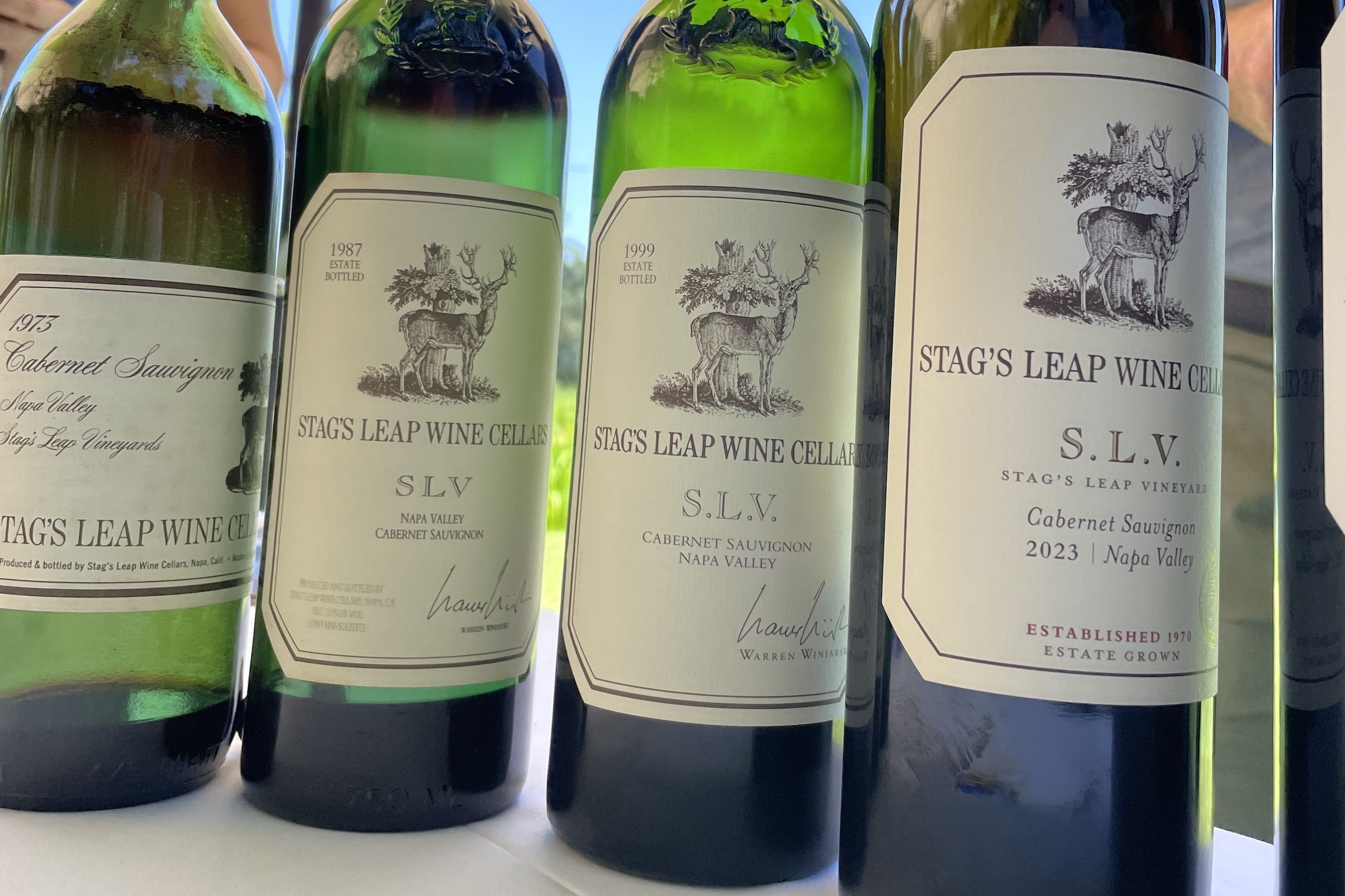
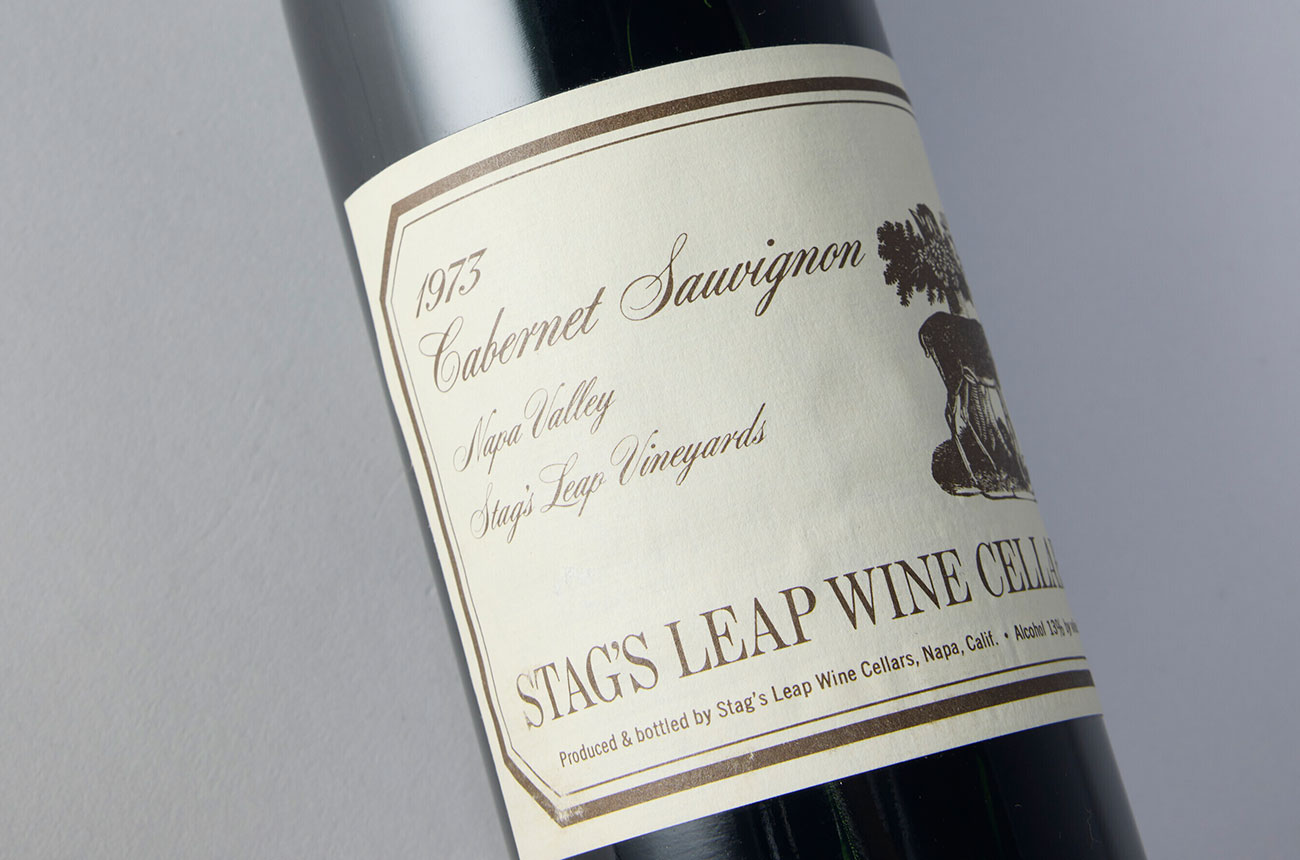
On 15 July 2026, a single bottle of 1973 Stag’s Leap Wine Cellars S.L.V. Cabernet Sauvignon sold at Christie’s for $22,500 (£16,724) – nearly four times its $6,000 high estimate.
Six weeks earlier, I drank another bottle from the winery’s dwindling library reserves.
It’s one thing to know the story of a wine that changed the course of its region’s history; it’s quite another – and deeply humbling – to taste it.
On 4 June at Stag’s Leap Wine Cellars with owner Marchese Piero Antinori, Antinori CEO Renzo Cotarella, Stag’s Leap winemaker Marcus Notaro and two other prominent wine journalists, I was granted the opportunity to drink a couple of glasses of the 1973 Cabernet that is preserved in the Smithsonian’s National Museum of American History – a bottle that was named among the ‘101 Objects that Made America’.
At the time of our tasting, only 19 bottles reportedly remained at the winery.
Opening a wine time capsule
The wine earned its place in history on 24 May 1976, in a blind tasting of French and California wines organized in Paris by Steven Spurrier and Patricia Gallagher.
With mostly French experts judging, the 1973 S.L.V. finished first among 10 Cabernets from California and Bordeaux.
Notaro took on the task of opening the wine and, with the help of a Durand wine opener and a steady hand, extracted a beautifully intact cork.
Decanting the rare wine was just as nerve-racking, but everyone’s shoulders relaxed at the first sight of the still-dark robes of ruby red wine cascading down the glass, with only subtle bricking in the colour – the first hint that it was in impeccable condition.
Notaro also passed around an original copy of the Time magazine issue in which George Taber’s ‘Judgment of Paris’ piece appears.
I was shocked to see how short it was: just one column, four paragraphs, nearly run off the page and into the spine by a giant Armstrong Tires advertisement.
‘California defeated all Gaul’, declared the copy, yet astonishingly, in the fourth paragraph, Taber incorrectly identified the winning Stag’s Leap vintage as ‘1972’ instead of 1973!
What of it, I marvelled. A mere footnote, lost to the history of whatever the print circulation was for that one issue.
The full story of Stag’s Leap Wine Cellars began when founder Warren Winiarski tasted Nathan Fay’s homemade 1968 Cabernet Sauvignon from the vineyard next door.
In that sample, he found the proof he needed that this corner of Napa could produce Cabernet worthy of fine wine.
Winiarski bought an adjoining prune orchard in 1970 and planted what became Stag’s Leap Vineyard, or S.L.V.
What did the 1973 S.L.V. Cabernet taste like?

As we sipped the ’73, each marvelling over it in our own way, Cotarella explained that the Judgment of Paris–winning wine had come from the third crop of grapes off the new vineyard.
‘Young vines can produce extraordinary fruit at that stage, when yields remain naturally low and balanced, before their fourth-leaf ambitions outrun their still-developing roots,’ he said.
As for the wine itself, extraordinary scarcely describes what wafted out of my glass. The 1973 offered up rich tobacco, charcuterie and black truffle notes, with sumptuous loamy earth, currant fruit and white pepper.
Yet its defining quality was freshness: a saline acid tension that made the wine feel not merely alive but positively energised.
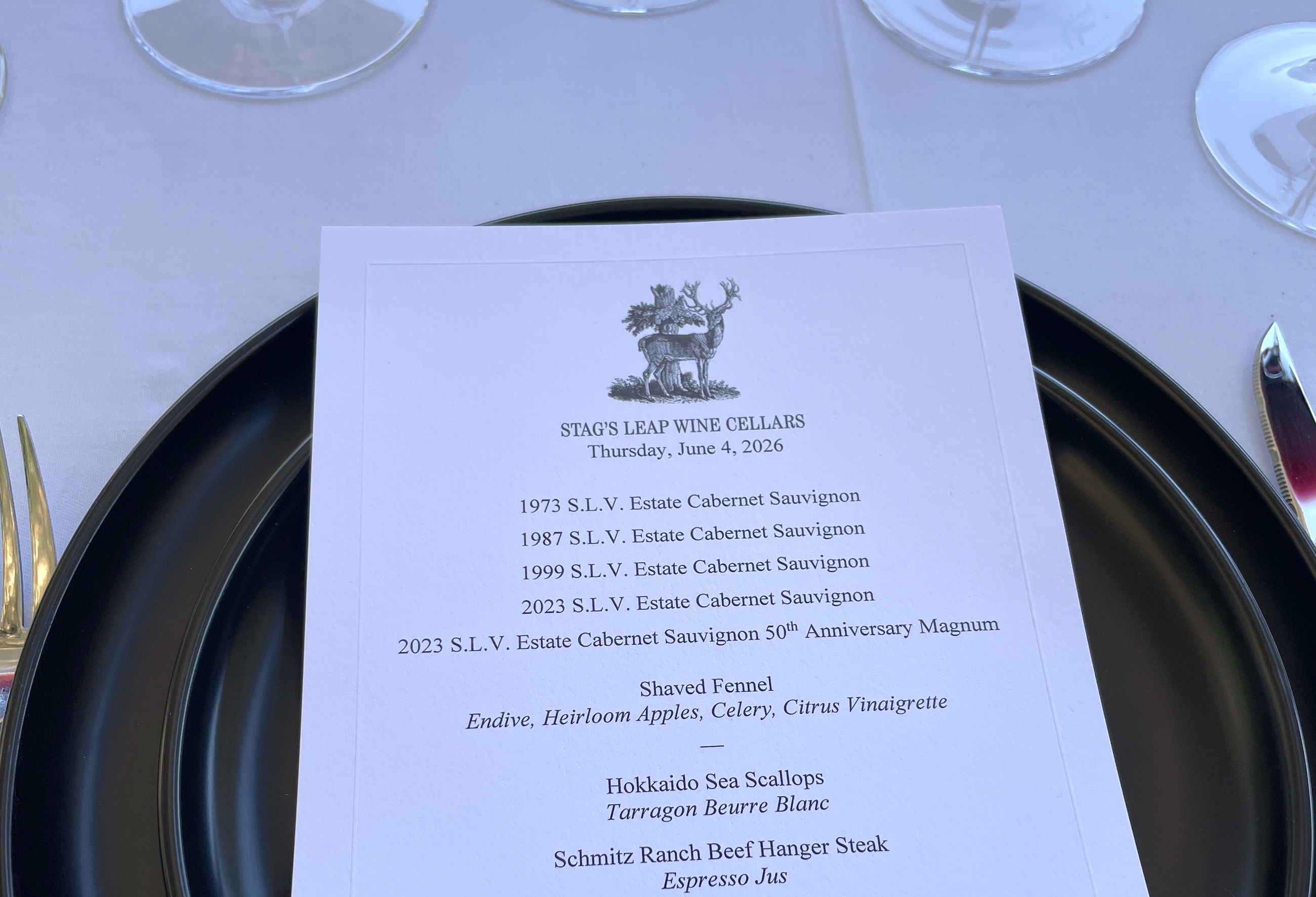
Drunk with plates of shaved fennel, Hokkaido sea scallops with tarragon beurre blanc, and hanger steak with espresso jus, it kept gathering energy rather than surrendering it.
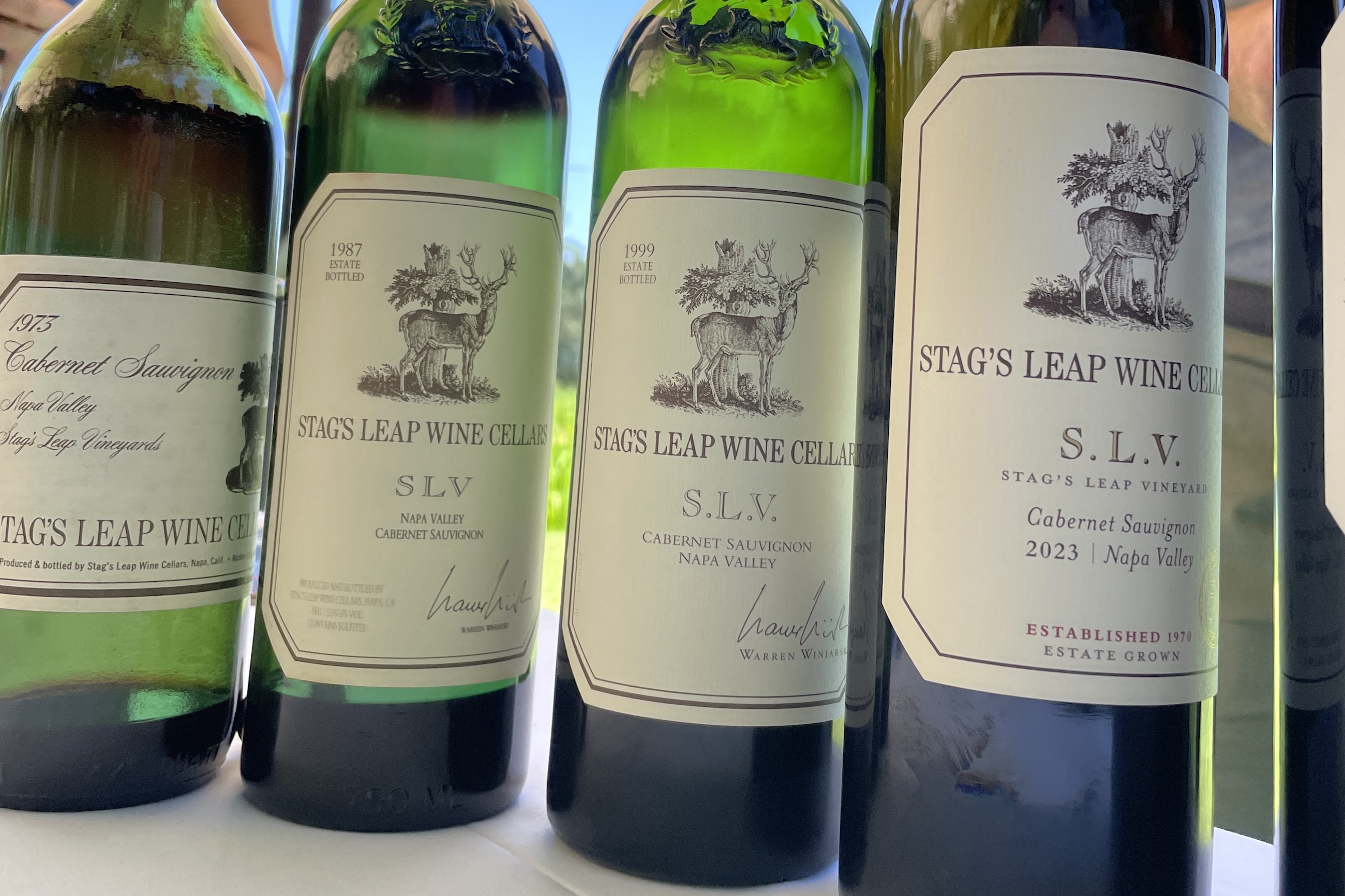
An accompanying bottle of 1987 S.L.V. was softer, warmer and fleshier, with resolved tannins, incense and currants.
The 1999 S.L.V. offered minty freshness, black fruit and rich tobacco, its beautiful density carried by featherweight tannins.
Together they made a persuasive case that Napa Cabernet’s reputation for longevity should not rest on one miraculous bottle.
Antinori acquired a 15% stake in Stag’s Leap Wine Cellars in 2007 and became its sole owner in 2023.
During the luncheon, we also drank the 98-point 2023, the first vintage produced under full Antinori ownership; the wine struck Notaro as distinctly ‘Margaux-like’ with its perfumed violets.
Cotarella, reflecting on the reference to Bordeaux, said simply: ‘We are farmers. We have to control our vineyards to control our quality and style.’
If you could save time in a bottle …

I wish so many of you could have the opportunity to drink something as beautiful as the ’73 S.L.V. And, truthfully – you can.
Find a red wine that you love and store as many bottles as you can, in a cool, darkened place, for as long as you can stand it, if for no other reason than to share a glass with your grandchildren when they come of legal drinking age.
From Napa’s recent decades of wine, I would keep drinking and cellaring 2013 and 2021 for their profound structure and concentration; 2016 and 2019 for their black fruit and loamy earth richness; and 2018 and 2023 for their marriage of concentration and freshness.
As for the 1973 S.L.V., if allowed one final wine before shuffling off this mortal coil, I might choose it.
It was that good.

Historic ‘Judgement of Paris’ wine sells for $22,500
Christie’s announced a world record auction price for a bottle of 1973 Stag’s Leap Wine Cellars S.L.V. Cabernet Sauvignon.
Bo Barrett: The man at Montelena
Before the 50th anniversary of the Judgement of Paris tasting, Bo Barrett reflected on Chateau Montelena’s 1970s leap to global acclaim.
The best 2023 Napa Cabernets to drink with your grandkids
Our Napa expert suggests 18 wines from the 2023 vintage to lay down for loved ones and life’s special moments.


