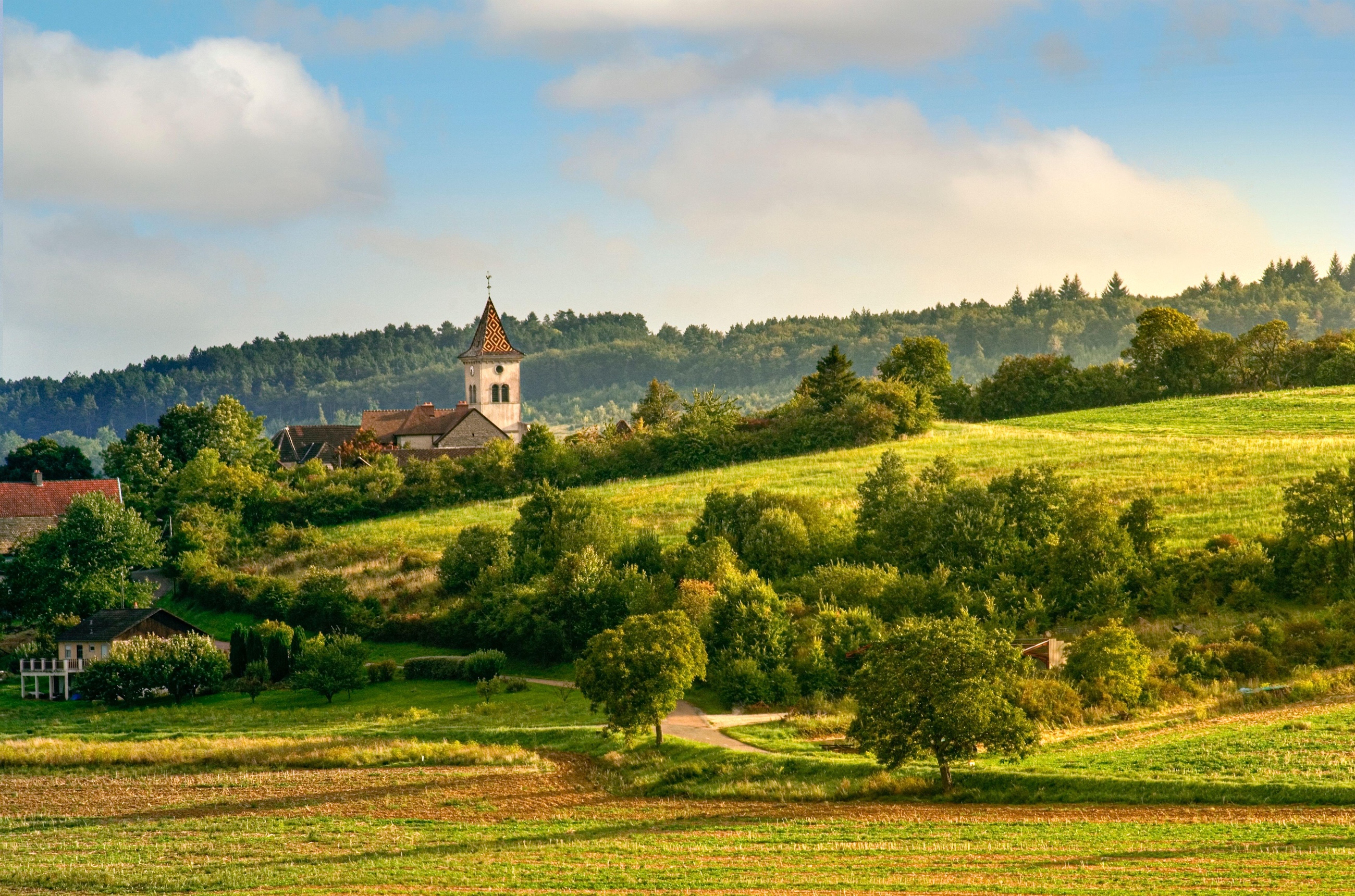








‘Everyday drinking’ is an important concept, but what, exactly, do we mean?
A topic such as this should write itself, yet I found the subject slippery while actually writing it.
Part of the reason is that it is necessarily a moving target, changing with the seasons and the weather, where one is located, and with whom one is dining.
The other difficulty is that one is spoiled for choice – how can the topic be narrowed to a reasonable scope if each day brings an exciting new possibility?
Below are my coups de cœur (heart throb) Burgundy producers, as the French would say; the vignerons I turn to for excellent mid-week drinking.
These personal choices are made on impulse rather than logic, and they are organised geographically for simplicity’s sake.
The necessary criteria are quality, availability and price. To qualify for everyday drinking, it must be good, readily available in shops or restaurants, and at least reasonably affordable.
Chablis/Auxerrois
A quick look at my personal website reveals a profusion of Chablis. Once ridiculously undervalued, Chablis in recent years has taken off in renown, and in price, yet northern Burgundy still holds surprising value.
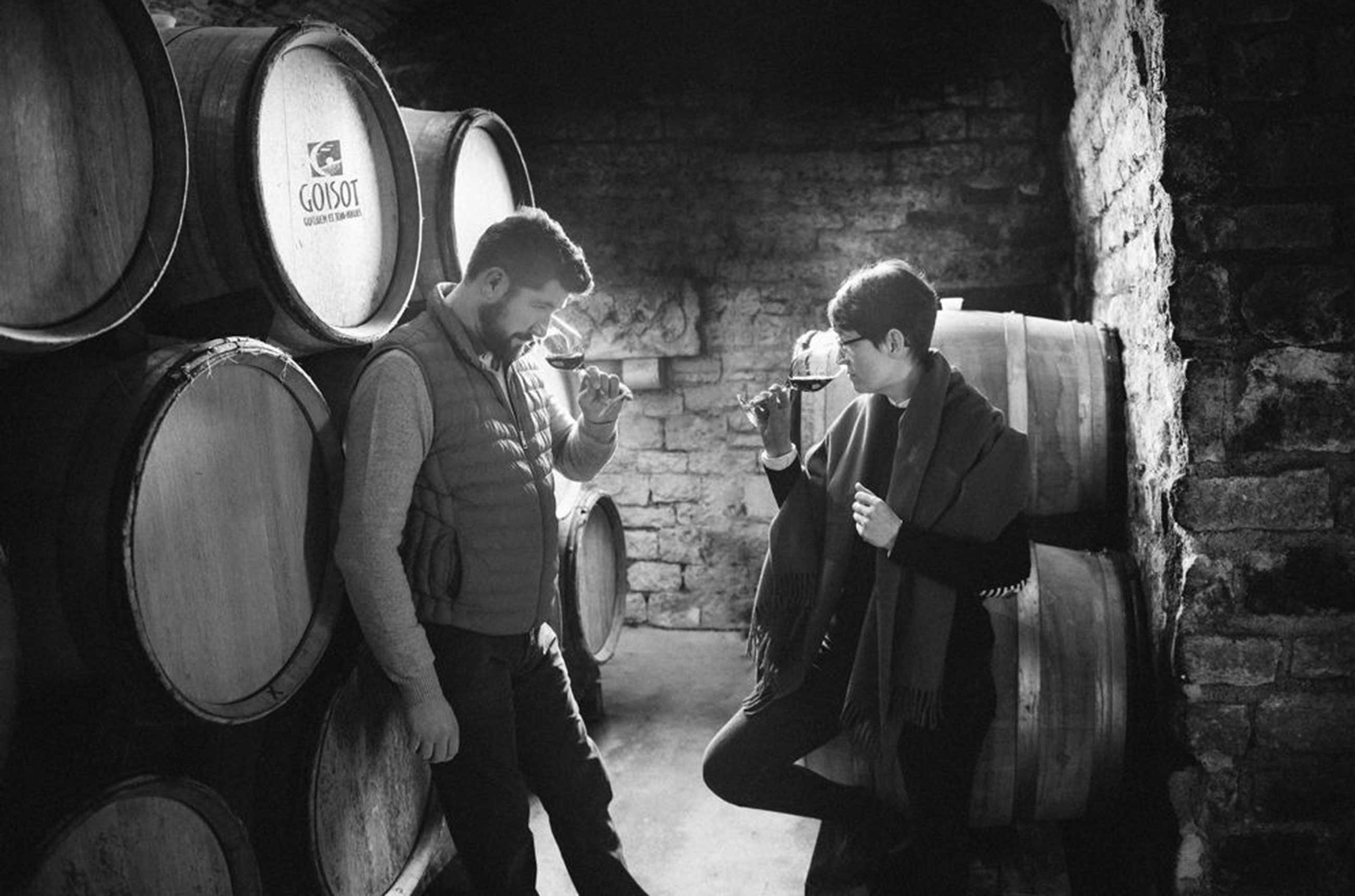
Domaine Jean-Hugues & Guilhem Goisot is not as well-known, particularly to anglophone drinkers, as the best Chablis producers, but it also sits at the top of the hierarchy.
It is based in the charmingly obscure town of St-Bris, where the appellation wines are Sauvignon de St-Bris, a close Kimmeridgian cousin of Sancerre.
The Goisot clan produces perhaps the most expressive versions available of this appellation (often on north-facing slopes, sometimes co-planted with Sauvignon Gris), but when the exposure or soils are better suited to Chardonnay (east-facing) or Pinot Noir (south-facing) these grapes are grown and bottled as Bourgogne Côtes d’Auxerre.
At an extraordinarily reasonable price point, they also produce a winning Aligoté that is widely available.

Côte de Nuits
The Côte de Nuits is the land of grand cru Pinot Noir and one might imagine a struggle to find everyday wines. Luckily, this is not the case at all.
Even top producers can still make wines here that are beautiful and affordable, and Domaine Trapet must surely be at the front rank.
Given the quality here, all the wines could qualify as reasonably priced, but the Passetoutgrain à Minima, a blend of Gamay and Pinot Noir from the ‘wrong side of the tracks’ in Gevrey, is a true bargain, as are the Gevrey village-level cuvées 1859 and Ostrea.
These are cuvées produced by Domaine Trapet Père & Fils, formerly directed by Jean-Louis Trapet, whose sons Pierre and Louis are now at the helm.
They have also launched their own label, Pierre & Louis Trapet, where they produce classic styles and some more experimental bottlings.
Worthy of note, the wines from Trapet’s cousin domaine, Domaine Rossignol-Trapet, are also of extraordinary value from superb terroirs.
For the summer months it may be useful to highlight Burgundy’s only ‘cru’ rosé from Marsannay. I often mark the beginning of summer by buying in a case of pink for hotter weather.
The classic producer is Domaine Bruno Clair, whose careful combination of direct press and maceration on the skins produces a delightfully elegant summer rosé.
Bruno’s cousins at Domaine Bart and his neighbour Sylvain Pataille also offer worthy renditions.
Côte de Beaune
The wines of Domaine Henri & Gilles Buisson are among the most frequent weekday visitors on my dinner table. The domaine is located in St-Romain, where they farm 19ha of certified organic vineyards.
Although the family has lived in the village since the 12th century and trace their work as vignerons to 1758, they have bottled wine under the family name only since 1947, the year in which the village received its own appellation.
Before 1947, St-Romain was considered part of the Hautes-Côtes, tucked away in a valley behind Meursault in the region’s upper slopes, which is why the village is less well-known to many.
The higher elevations meant that in the past the grapes ripened with difficulty, but with a changing climate, St-Romain has come into its own to produce wines with lush, forward fruit that still retain plenty of structure, making them excellent companions to food.
The vineyard-designated St-Romain wines are the star of the show at Buisson, but the red and white Bourgogne-level wines are delicious as well at an eminently affordable price.
Côte Chalonnaise
The Côte Chalonnaise is home to many diverse wine styles. One producer has mastered several: Bruno Lorenzon is producing some of the finest wines anywhere in the Côte Chalonnaise.
Although he is based in Mercurey, known for red wines, his 30 years at the family domaine have given him the experience to produce stunning wines in both colours.
He now produces wines from 9ha of vines, six in Mercurey and three in Montagny. As he noted: ‘I’m a white wine guy who makes Pinot Noir in a Chardonnay way.’
He sometimes delights in running counter to received wisdom, deriding the early-picked, reductive style currently in fashion for Chardonnay in very amusing terms, quoting Henri Jayer: ‘A wine must be good from the beginning’.
He presses whole bunches of Chardonnay delicately and vinifies in a minimalist way without chaptalising, acidifying, or adding sulphur, to sublime results.
In either colour or terroir, the master of Mercurey delivers beautiful wines of precision and impressive depth of flavour.
Mâconnais
The Mâconnais is a fertile hunting ground for the everyday value wines that often appear at my house.
The region is broad and varied, and numerous producers are making great wine at great prices.
Across the appellations of the Mâconnais, from Pouilly-Fuissé premier cru to Mâcon-Villages and beyond, however, the style pioneered by Jean-Marie Guffens and Julian Desplans at Maison Verget consistently delivers satisfaction.
They adapt the winemaking style to each cuvée across a broad range, but in general, the wines are concentrated and aromatic, with a slightly smoky, reductive edge imparted by the winemaking.
Despite picking fairly ripe fruit, the wines never lose their balance and retain a lively freshness that makes them refreshing even in a warm vintage.
Even in an era of skyrocketing prices, these producers show that Burgundy still offers abundant choices for everyday drinking.
Favourite Burgundy producers for everyday drinking


$15 white Burgundy and magnums of Riesling: What our Burgundy expert drinks at home
White Burgundy starter pack: How to figure out what you like