





Finding something to say about the collection of wines known colloquially as Super Tuscans isn’t particularly difficult.
But what kept guests at our recent masterclass at the Decanter New York Fine Wine Encounter hanging on right until the end was the unique way it was presented.
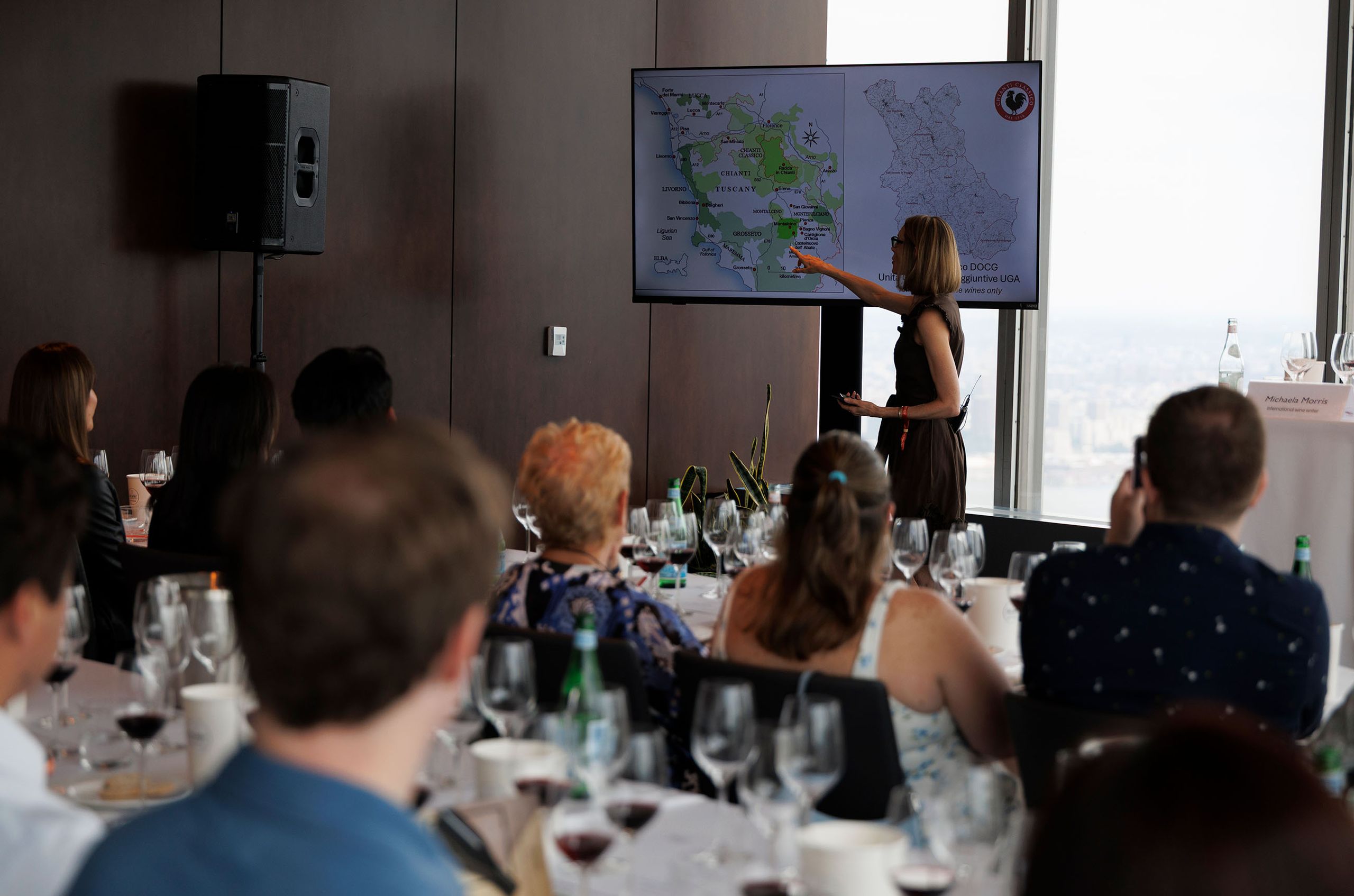
Led by Michaela Morris – long-time Decanter contributor, DWWA Regional Chair for Piedmont, and expert on all things Tuscan – alongside myself – Decanter’s Regional Editor for Italy – the featured wines were arranged not by vintage, as is the norm, but as a timeline telling the story of the development of the category.
Evolution of an icon
In the 1970s and ’80s, Chianti (the birthplace of most Super Tuscans) was handicapped by legislation demanding the inclusion of white grapes, prioritising quantity over quality.
‘The SuperTuscans helped to improve the quality of wine coming out of Tuscany,’ explained Morris.
Antinori, Tignanello 2021
The first wine in the lineup needed little introduction: Tignanello’s place as one of the first Super Tuscans is cemented in history.
A Sangiovese-dominant blend with proportions of Cabernet Sauvignon and Cabernet Franc, tasting the 50th vintage of this storied wine was a breath of fresh air: dark fruits, zesty acidity, and balsamic herbs, tied together by fine tannins.
Isole e Olena, Cepparello 2021
Next came a pure Sangiovese, the flagship wine of the Isole e Olena property since its first vintage, 1980.
‘Cepparello was his [former owner Paolo de Marchi’s] study of Sangiovese,’ commented Morris, pointing out that rather than a single-vineyard selection, the best fruit from across the entire estate was used.
Juicy cherry fruits, refined tannins, a fragrant herbal twist and underlying sapidity mark this out as a classy, poised example of Italy’s most renowned red grape.
Fontodi, Flaccianello 2021
Arriving 10 years after Tignanello, this 100% Sangiovese shows great contrast between dark fruits and super-bright acidity in its 40th vintage.
Morris explained that Fontodi started as a family hobby, playing second-fiddle to the family’s historic terracotta business.
As a result, it was younger brother Giovanni Manneti who inherited the winery, while his older brother was given the keys to the main family business.
The original plan was to switch every few years, but Giovanni fell in love with the wine industry and refused to leave!
Born as a single-vineyard expression, since 2001 Flaccianello has been a selection of the best fruit from the estate.
Concentrated, saline and zesty with structural tannins, the 2021 will reward ageing – as we found out at the end of the masterclass…
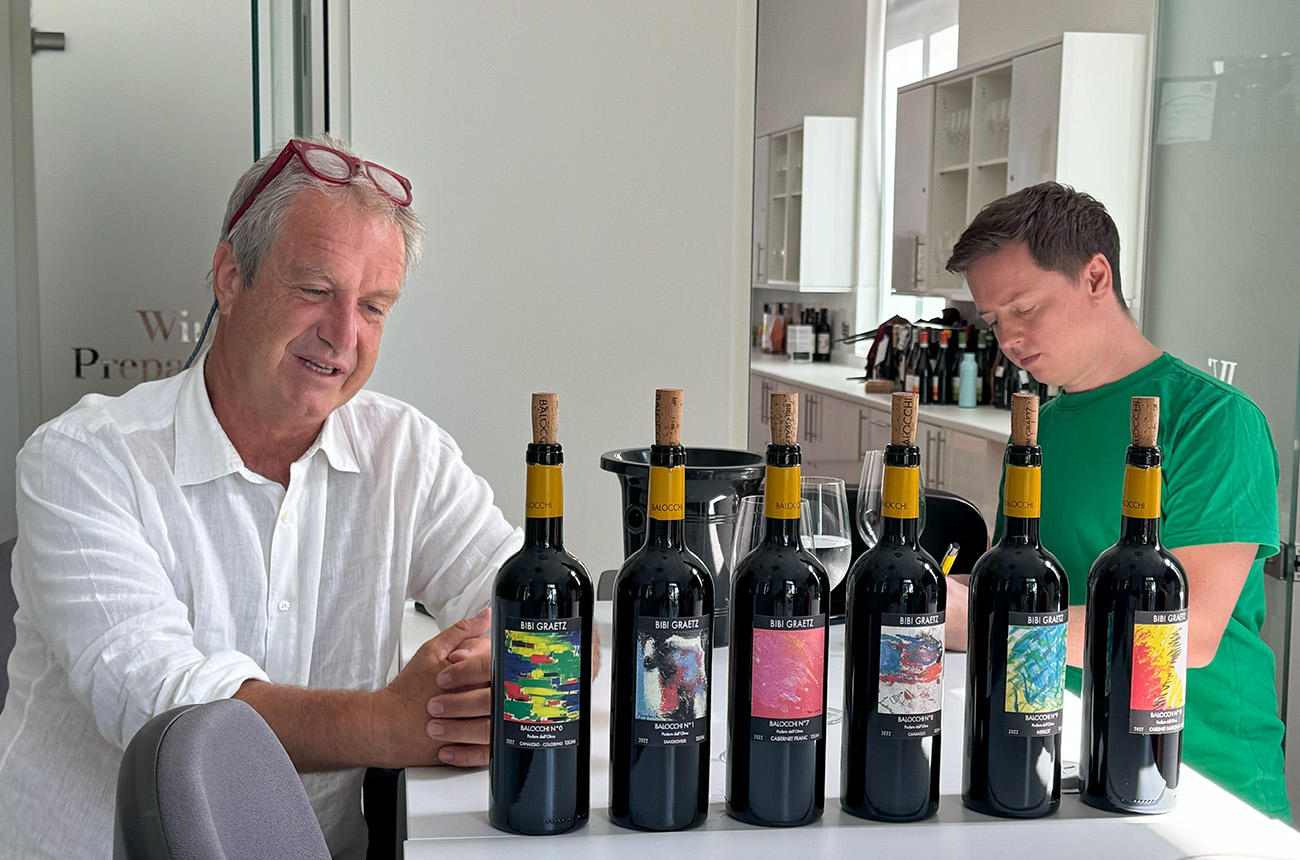
Bibi Graetz, Colore 2023
The final part of the Super Tuscan story brings us to the turn of the 21st century, when things had began to come full circle.
The new-look Chianti Classico had shed its restrictive and damaging requirement for white grapes in the blend, and the focus had swung to Sangiovese.
In this environment, and ‘not shackled by traditions,’ young Bibi Graetz set up shop in Fiesole.
His style has meandered over the years, finally settling on wines which showcase purity and finesse in equal measure.
Colore 2023, his flagship old-vine Sangiovese selection, shows ripe, creamy strawberry and raspberry on a long, precise, and textural palate.

The older vintages
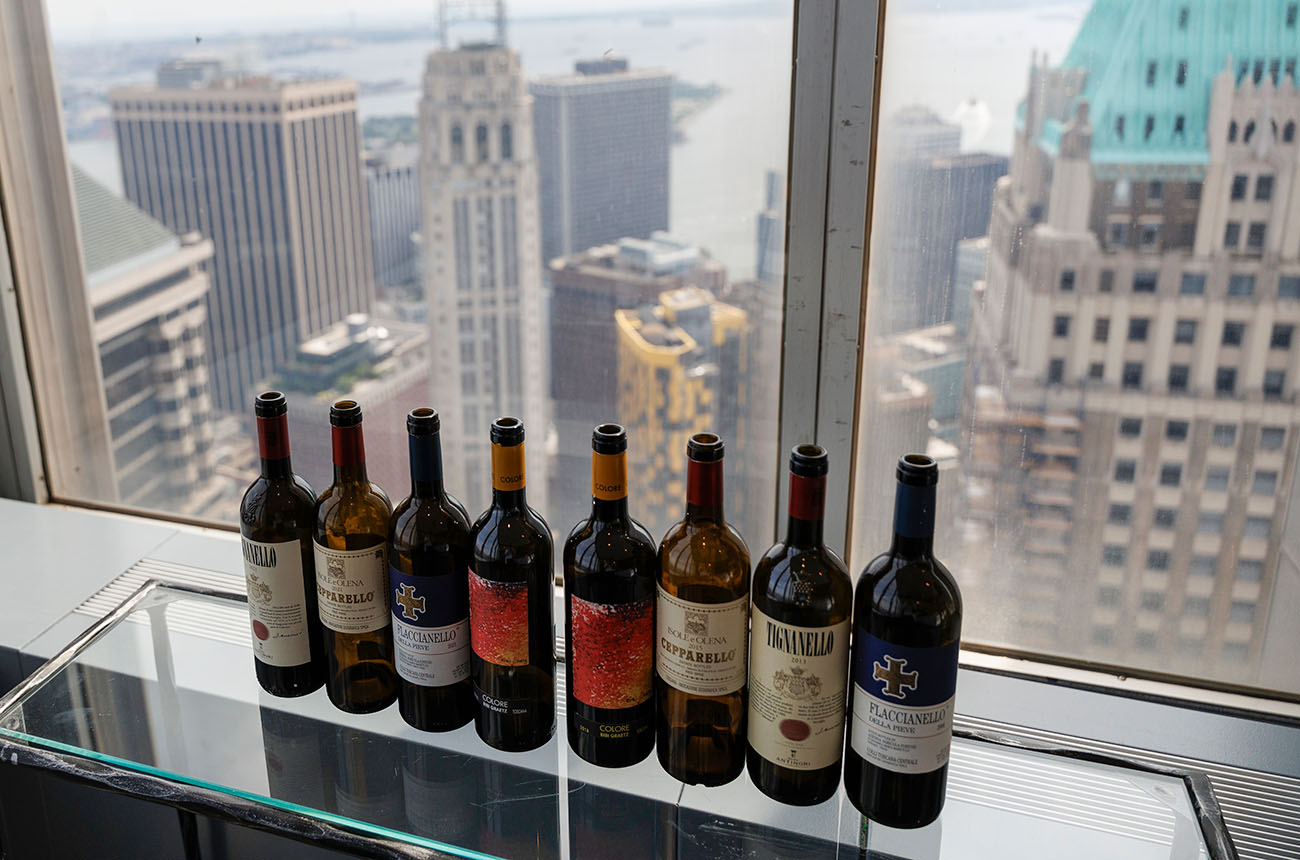
While the first four wines mapped the story of the Super Tuscans, the back four were poured in vintage order, newest to oldest, enabling guests to understand how the wines evolve with age.
Bibi Graetz, Colore 2018
This 2018 vintage includes 5% Canaiolo and 5% Colorino compared to the 100% Sangiovese of 2023.
Showing beautifully, it develops black tea and blood orange notes which overlay dark berry and cherry fruits.
Isole e Olena, Cepparello 2015
From a generous, sunny but balanced vintage, Cepparello’s deep and concentrated cherry character is deeply inviting and perfectly translates the vintage, lifted by fresh minty notes and a dancing, vibrant palate.
Antinori, Tignanello 2013
This complex and deep pour shows its plummy, herbal side alongside appealing black tea and olive evolution.
It’s a fantastic vintage to discover, not just with Tignanello but with many other Tuscan reds, too.
Fontodi, Flaccianello 2006
Stealing the show, this structural and still-youthful sip is full of minty dark berries outlined by bright acidity.
According to Morris, this is ‘one of [owner] Giovanni Manetti’s favourite vintages’ – and it’s easy to see why.
What is a Super Tuscan?
Super Tuscans 2.0: Meet the innovators behind the stylish new wave