






Washington is a winemakers’ playground. Unburdened by strict rules, they can freely experiment with grape varieties, wine styles, vine-growing practices and blends to produce some of the most impressive wines in the US.
Here, Rhône varieties such as Syrah are transformed into wines that don’t mimic their predecessors, but rather express their own regional character or follow winemakers’ unbridled imaginations.
‘You’re free to make your own wine the way you choose,’ says Brian Rudin, winemaker and general manager of Echolands Winery, a two-time Decanter World Wine Awards Platinum winner that also makes multiple Syrah bottlings.
‘You don’t need to make it the way your grandparents did.’
Syrah has been a leader among these experiments since it was planted in Washington 40 years ago, with a rapidly developing range of styles true to the terroirs of the Walla Walla Valley, Red Mountain AVA and beyond.
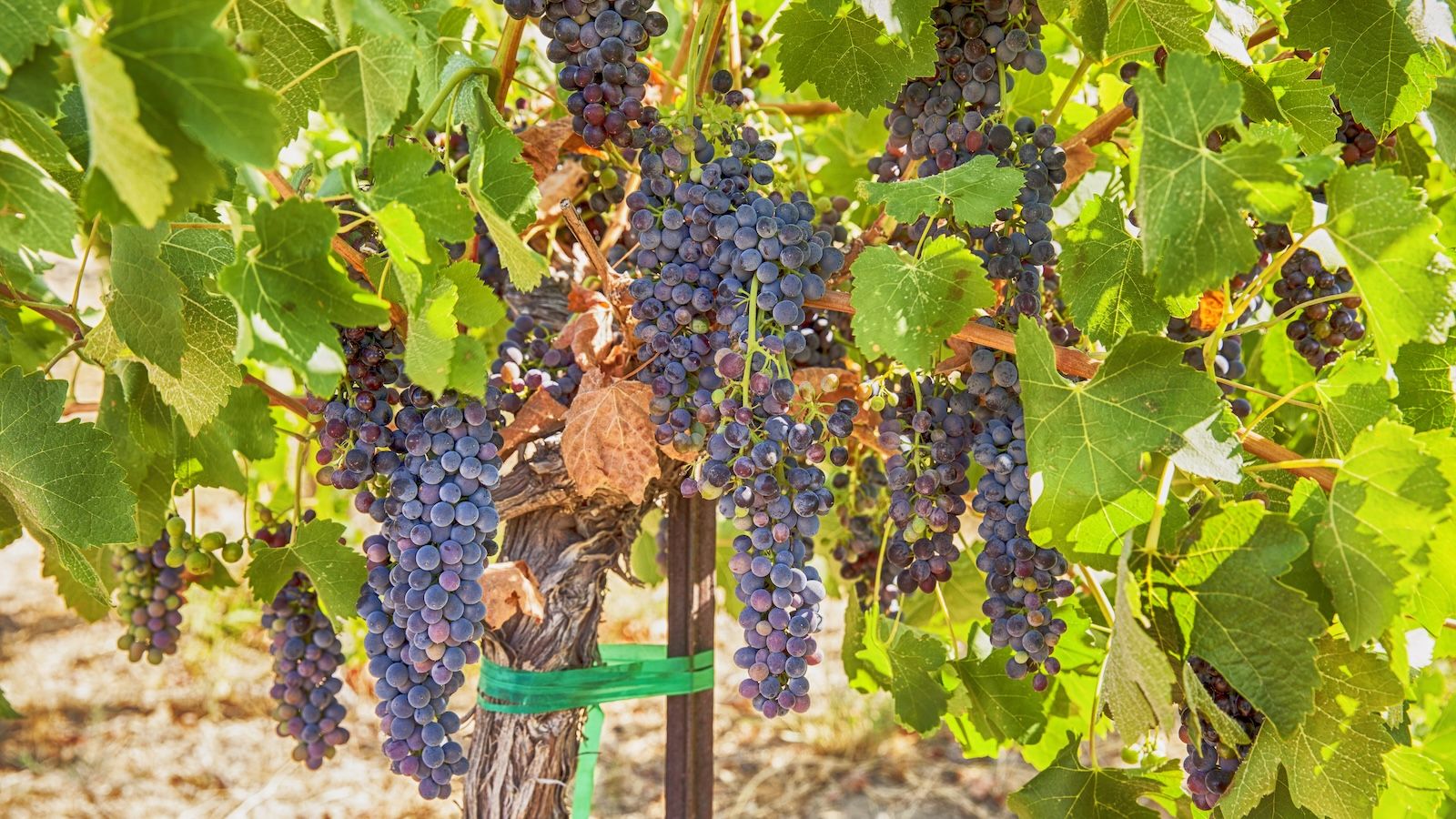
The grape variety appeals to winemakers and wine lovers for creating approachable, food-friendly wines with ripe fruit flavours, complexity and general lushness.
The rise of Washington Syrah
‘Syrah can be a good introductory wine to newcomers – and we certainly need newcomers – but, at the same time, satisfy the needs of the most advanced wine aficionado,’ says Dick Boushey, a pioneering Washington grapegrower.
‘Syrah’s diversity and adaptability are its strengths. Syrah can take the increased heat that we have seen up and down the West Coast. So, it is a variety that is sustainable for the future.’
The first Washington Syrah plantings are credited to Mike Sauer and his family in 1986, in their Red Willow Vineyard in Yakima Valley.
By contrast, Cabernet Sauvignon was introduced to the state in 1941, with Merlot following in 1965, according to the Washington State Wine Commission, bringing the state renown with bottlings from the likes of Leonetti Cellars and Quilceda Creek.
However, Syrah is now a close competitor with Merlot for the second most-planted red variety, with more than 6,300 hectares to Cabernet’s 19,400+ hectares.
Besides being bottled as a single-varietal wine, Syrah is also used in many blends with other Rhône varieties or Cabernet, a decisive factor in its growth.
Producers such as Columbia Winery and now-closed McCrea Cellars encouraged the early plantings of Syrah, while the bold, modern wines from the likes of K Vintners and Cayuse Vineyards helped put Washington Syrah on the radar of a wider range of wine drinkers.
How Washington Syrah styles differ by region
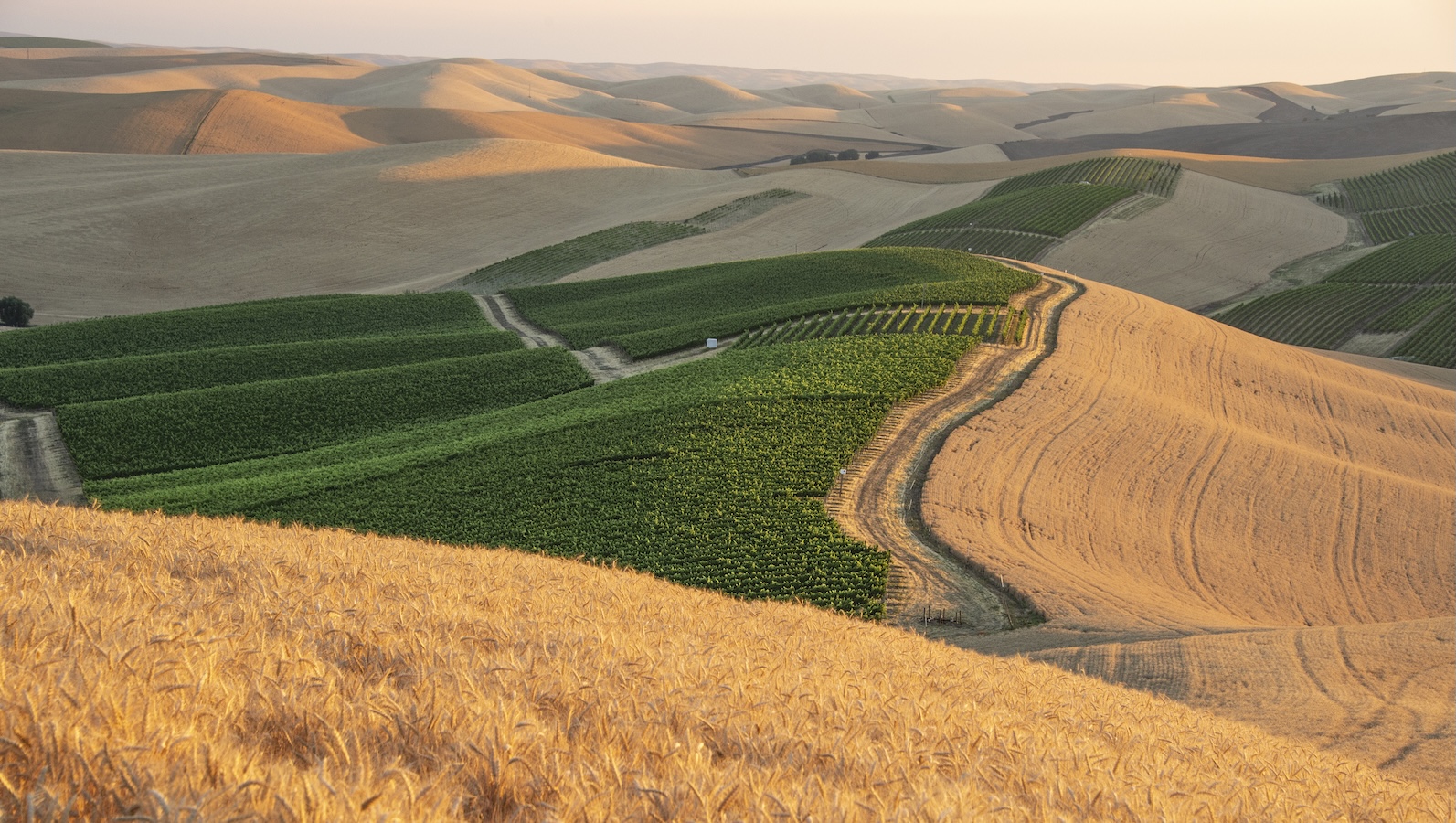

Washington’s major wine regions yield several distinctive styles of Syrah, according to Boushey.
In the warmer parts of the broad Columbia Valley AVA, the wines tend to be inky, ripe and dark – similar to bold California wines.
In cooler areas, like the foothills of Yakima Valley, the wines show more acidity, savoury notes and lower alcohol levels.
In southeastern Walla Walla Valley, where the AVA spreads across the border between Washington and Oregon, Syrah has become the signature variety of The Rocks District of Milton-Freewater.
Here, the cobblestone-filled soils become the main story, leading to wines with signature notes of earth, meat, iodine and herbs.
‘The radiant heat from the exposed basalt stones contributes greatly to the profile that Rocks wines carry,’ says Trey Busch, winemaker of Sleight of Hands Cellars, a Washington winery that owns Stoney Vines Vineyard in The Rocks. (Because the district falls entirely within Oregon, many Washington wineries end up making wines from both states.)
Busch continues: ‘The vines spend more time “shut down” during the hottest days, preserving energy and simply surviving in such a harsh climate. The vine roots also go extremely deep since there is not much soil or moisture-holding capacity.’
How Washington Syrah styles are shaped in the vineyard
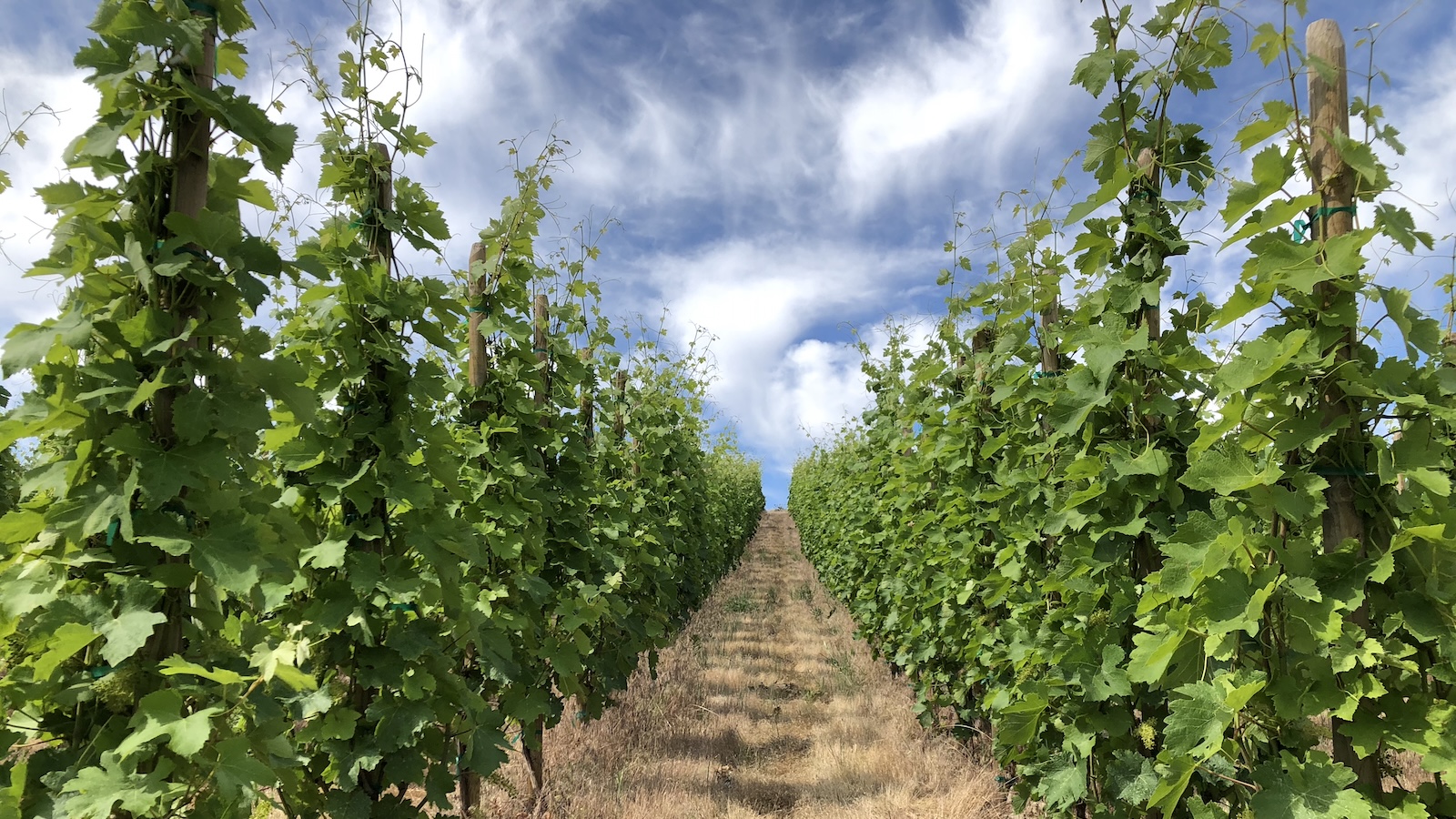

Straddling the windswept ridgeline of Red Mountain, WeatherEye Vineyards makes its own Syrah and provides fruit to wineries such as Liminal and MTN/ART.
There, vineyard manager Ryan Johnson has been fine-tuning the viticulture to coax out Syrah’s best qualities. Working with a little less than three hectares of the 16-hectare vineyard planted with Syrah, he became one of the few Washington growers to use the échalas system, with each vine is trained on its own tall stake.
Since Red Mountain is hot, windy and dry, Ryan increased the vine density, creating more natural shade to protect the fruit. As a result, he gets complex, singular wines from this site.
‘Syrah is very site-driven and also very strongly influenced viticulturally,’ Johnson explains. ‘You can farm it conventionally, you can grow it like Cabernet, you can treat it in the cellar like generic reds, and you’ll get a generic red wine. But if you match the right training system, the right terroir and the right clone, and then manage your irrigation and nutrition at the highest level, you’ll get that ultimate expression.’
Responding to current market demands, more young Washington winemakers are turning towards lighter wines, Syrah included.
Since 2019, Kelsey Albro Itämeri of Itä Wines has been picking the fruit she sources from Les Collines Vineyard in southeastern Walla Walla very early to avoid overripeness.
That way she doesn’t need to make water or acid additions to adjust the alcohol level and balance of the wines. As a result, Itä Syrah comes in at only 12% abv, with low levels of tannins.
‘If you want to taste the place, Syrah does an excellent job of doing that,’ says Itämeri.
‘It is also delicious. It’s a little bit wild and a little feral and has some magnetism to it. It’s not just fruity. It is also savoury. It has the edge. It makes you think. As people grow in their love of wine, they don’t just want a fruit bomb, they want a wine that is interesting.’
11 Washington-made Syrahs to try
Wine selection and tasting notes by Gwendolyn Elliott

What next for Washington State’s wines?


Pursued by Bear: Kyle MacLachlan’s pursuit of fine wine and a taste of home