






The sense of rivalry that once existed among winemakers globally has largely faded, replaced by a culture of exchange and mutual support.
Today, producers build their experience across borders and hemispheres, travelling widely and working harvests in different regions. Sharing knowledge has become the norm.
Historically, Spanish wine producers haven’t always excelled at collective action or setting aside individual interests for the greater good; however, a new generation of winemakers has begun to redefine that narrative.
Embracing the idea that together they are stronger, they’ve moved beyond small groups to form broader movements that cut across traditional boundaries.
Under the radar
This shift has gained momentum in Rioja with the launch of VIR, a terroir-focused collective that debuted in Madrid in early March with a tasting showcasing 38 producers from 18 villages across the DOCa region.
Many of the participants represented emerging projects that remain largely under the radar.
‘We firmly believe that Rioja is home to the greatest variety of exciting projects, which, unfortunately, are overshadowed by industrial-scale wineries that have appropriated the narrative of family-run, artisanal producers,’ argues regional rising star Miguel Merino, one of the organisers.
The March tasting offered a snapshot of Rioja’s growing terroir movement, bringing new names to the fore and highlighting the diversity of styles within this vision.
It also presented a more specific Rioja, with a focus on villages, sites and individual vineyards, as well as a bolder reinterpretation of tradition informed by a global perspective.
‘We are the best-prepared generation yet,’ says Alberto Pedrajo, co-founder, alongside Javier Alonso, of the forward-thinking project Alonso & Pedrajo, based in Villalba de Rioja, near Haro. ‘We have travelled extensively and witnessed other movements that have inspired us.’
‘The VIR tasting in March presented a more specific Rioja, with a focus on villages, sitesand individual vineyards’
Amaya Cervera
A pivotal event

For those attending the VIR event, the atmosphere echoed that of the I Encuentro de Viticulturas (‘First Wine Growing Encounter’), a conference on Spain’s wine regions, rural areas and unique vineyards, held in May 2016 at producer La Granja Nuestra Señora de Remelluri in Labastida (Rioja Alavesa).
Set in the foothills of Monte Toloño, a peak in the Sierra de Cantabria range, the gathering forged lasting connections between Spain’s early terroir pioneers – not least host Telmo Rodríguez – and a younger generation then beginning to raise the profile of fine wine across regions such as Galicia, Gredos, Priorat and Valencia.
Among those present at the 2016 conference were young Rioja producers who had taken over their parents’ small wineries, as well as others who had started projects from scratch.
Some were members of Rioja ’n’ Roll, a group founded the previous year to champion small-scale vignerons with strong ties to the land and rural life.
Its founding members – Alegre & Valgañón, Artuke, Barbarot, Exopto, MacRobert & Canals, Olivier Rivière, Sierra de Toloño and Tentenublo – were already producing, or would soon be producing, some of the most compelling and exciting wines in Rioja.
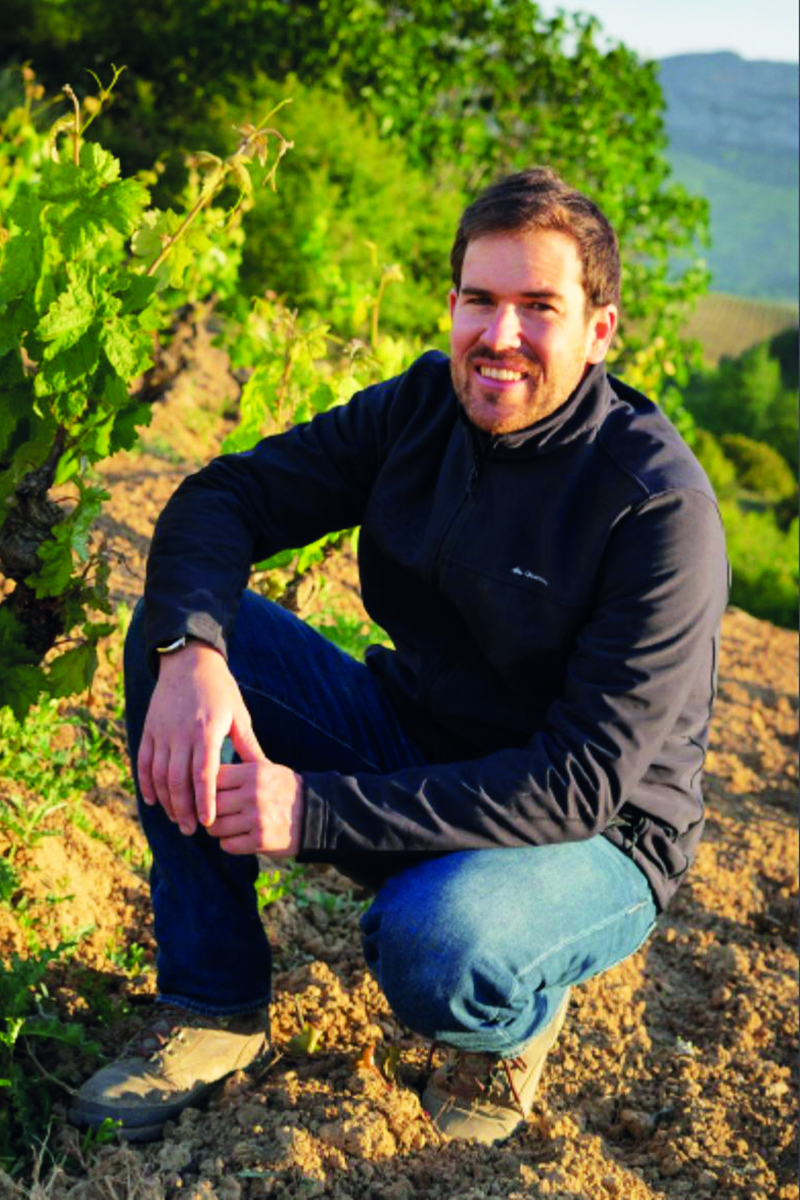
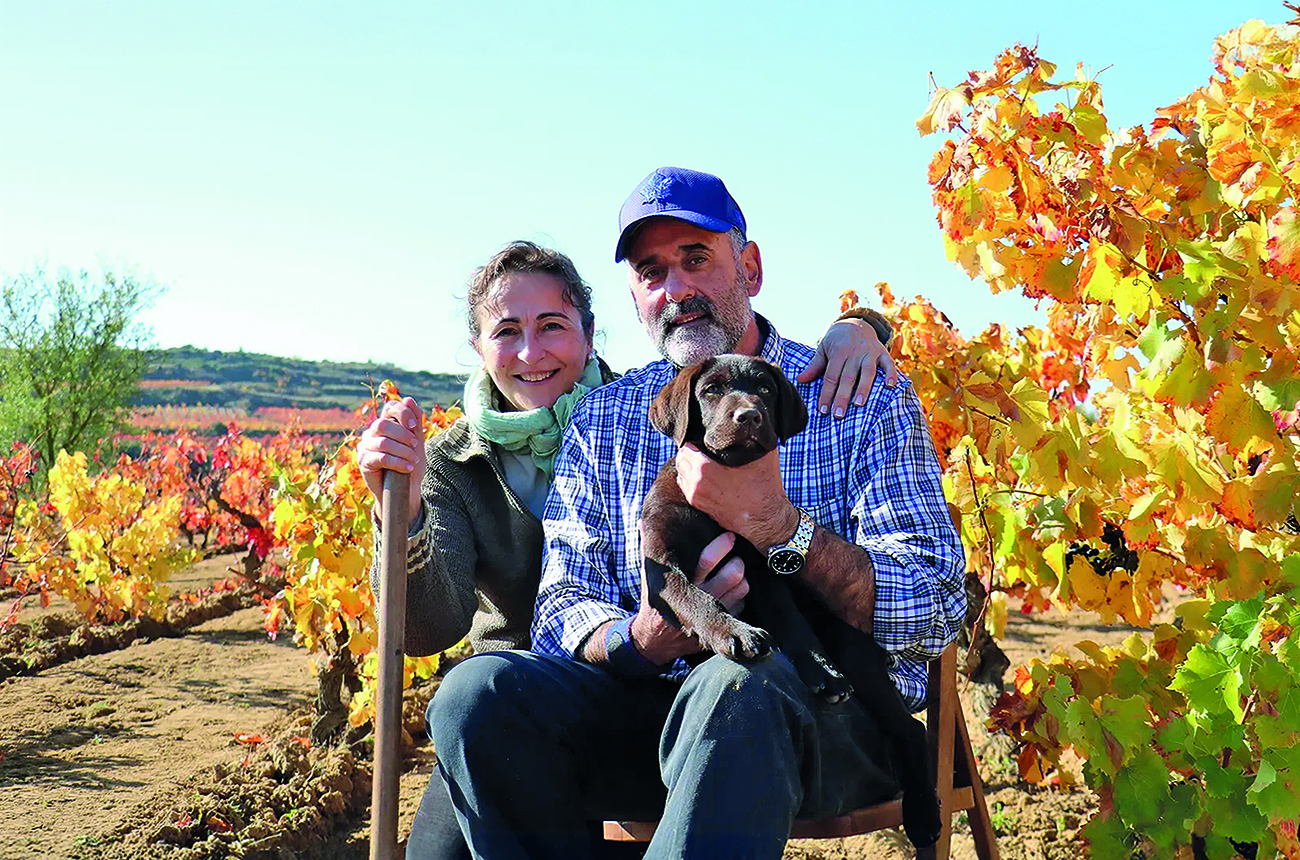
Less well known at the time, but equally committed, were two young wine-growers from San Vicente de la Sonsierra, a little southeast of Labastida: José Gil, whose family runs Bodegas Olmaza, and Miguel Eguíluz of Bodegas Cupani (pictured, below).
The 2016 Wine Growing Encounter proved pivotal. ‘We realised how important it was to share ideas, build connections with other producers and move in the same direction,’ explained Gil a few years later, as his wines began to gain international recognition.
It’s no surprise that they went on to establish their own group, ‘Martes of Wine’, alongside other emerging producers, including Carlos Sánchez (Labastida); Miguel Merino, who in 2017 returned to start working full-time at the winery founded in 1994 by his father in Briones (Miguel Sr died in 2021); Ricardo Fernández (Abeica), who steered his family estate in Abalos towards a terroir-focused approach before turning 30; and Alvaro Loza, who returned to Rioja in 2019 after gaining experience abroad.
Shared values
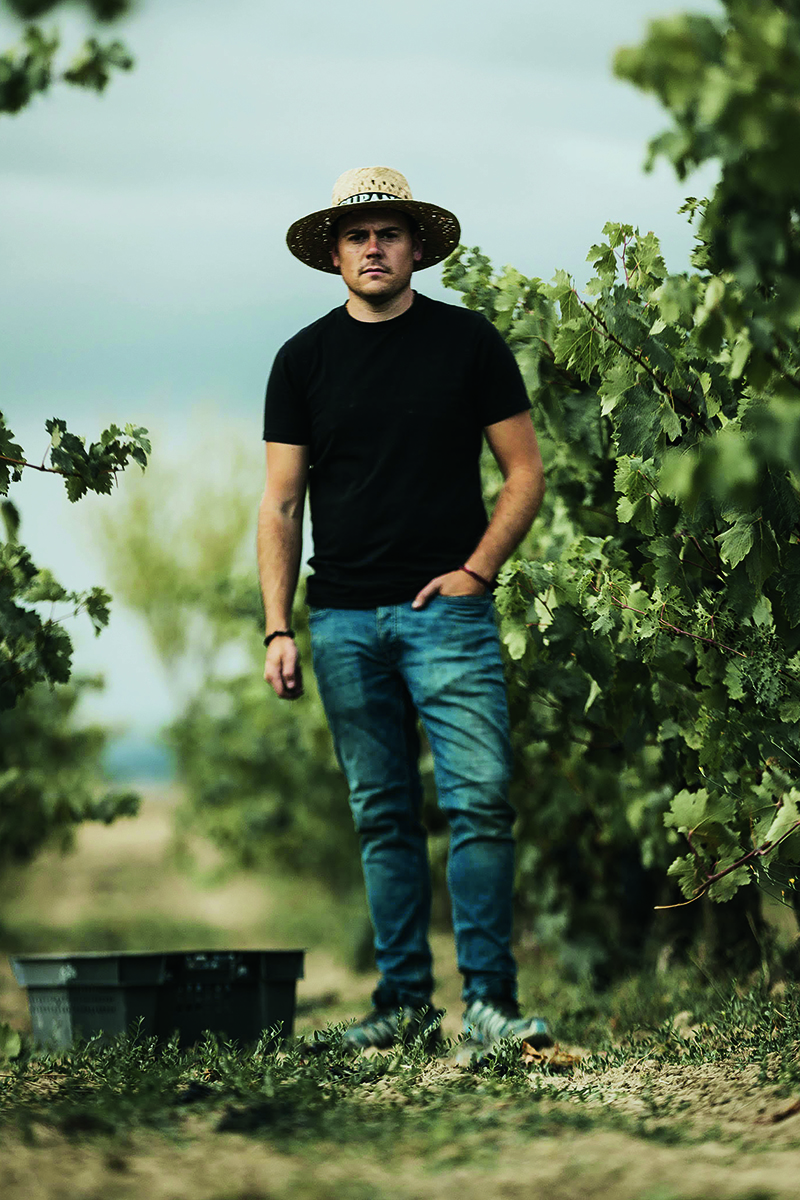
Martes of Wine began informally as a tasting group, with sommelier Iván Sánchez from the Michelin two-star Venta Moncalvillo restaurant in Daroca de Rioja (southwest of Logroño) also taking part.
What started as informal blind tastings held on Tuesdays (martes in Spanish) gradually evolved into a functional network, sharing resources, acquiring cellar equipment, finding importers, visiting wine-producing regions and inviting wine professionals to share their knowledge.
The shared values of Rioja ’n’ Roll and Martes of Wine ultimately laid the groundwork for VIR.
Its origins were simple: a meeting between the two groups that led to a joint list of like-minded producers whom they would like to bring together for a tasting of contemporary Rioja. ‘Almost everyone got involved,’ they say.
The aim was not just to raise awareness, but also to convey a vision of wine based on protecting origin, vineyard identity and respect for the landscape.
‘We are committed to a sustainable model – economic, social and environmental – that safeguards both the dignity of the wine-grower and the future of our villages,’ states their manifesto, which was read out twice during the event.
The group also called for ‘solidarity among producers pursuing and championing their own projects’.
‘We are committed to a sustainable model – economic, social and environmental’
VIR group manifesto
Changing mindsets

Despite their dynamism, this new golden generation, which produces some of Rioja’s most exciting wines, still faces significant barriers in reaching importers, distributors and sommeliers.
Many express frustration that the market’s upper end continues to view Rioja through a narrow, outdated lens.
‘Some importers see Rioja as a source of cheap, boring, homogeneous wine,’ notes Vicky Fernández, partner of José Gil at Vignerons de la Sonsierra, and closely involved in planning the VIR tasting.
‘They even have the wrong idea about what the region looks like,’ adds Pedrajo. ‘They expect something similar to La Mancha [in central Spain’s vast plains], so they’re really struck by the real landscape of Rioja.’
The goal for all these independent producers is now to convince importers to include not just one Rioja in their portfolio, but six, eight or 10 – and by doing so, to reveal their awareness of both the region’s quality and diversity.
The energy generated by this gathering of like-minded producers reflects the collaborative spirit that has come to define this new generation, rather than being a response to the current – challenging – market situation.
‘We wanted to encourage our distributors and customers to meet our fellow producers,’ explains Arturo de Miguel of Artuke in Baños de Ebro. ‘There are many fascinating small-scale projects in Rioja now.’
The tasting drew strong interest to producers such as Artuke, José Gil, Miguel Merino and Laguardia-based Oxer Bastegieta, among others.
The presence of San Vicente de la Sonsierra-based Abel Mendoza, who has embodied the vigneron role model better than anyone else in Rioja, added weight to the event.
Together with his wife, Maite Fernández, he has supported rising star Jade Gross in launching her own project in the region.
Other producers who have encouraged winegrowers to make the leap into winemaking include Telmo Rodríguez, who has supported Remelluri suppliers such as Alain Quintana from Familia Quintana in this transition. Alain and Jade were at the VIR tasting.
Bodegas Tierra also showcased its wines alongside those of nearby Area Pequeña after inviting brothers Joseba and Koldo García Quintana to make use of Tierra’s facilities in Labastida.
Practical benefits
Collaboration in Rioja now extends well beyond these groups.
In September 2024, Menudas Bodegas was established, bringing together 11 microproducers, each producing fewer than 5,000 bottles.
While modest in scale, the initiative has proved to be a significant step forward for its members, who typically farm their own vineyards and often have other jobs.
They’ve gained visibility and access to public funding, and support one another by pooling resources for practical matters, such as buying a barrel-washing machine or corks for the whole group.
They are also advocating for a reduction in bureaucracy, arguing that small producers face the same administrative burdens as large wineries.
Among their priorities is the removal of the DOCa requirement for a minimum of 50 barrels to certify ageing.
Navarrete-based Elena Corzana, one of the association’s most prominent members, known for her varietal wines, took part in the VIR tasting.
Subsierra, an association focusing on the Sierra de Cantabria foothills, which stretch from Briñas, just above Haro, to Moreda de Alava, north of Logroño, was also established in 2024.
Its members – Amaren, Area Pequeña, Artuke, Bodegas Tierra, Carlos Sánchez, Loli Casado, Ostatu and Teodoro Ruiz Monje – are committed to owning their own vineyards or maintaining long-term relationships with growers in the Sonsierra, paying fair (above the average) prices for fruit.
They’re equally determined to ensure the continuation of manual harvests, to preserve old vineyards, to remain family-run, with a registered address in the Sonsierra, and to have vineyards that are certified organic or in conversion.
All these groups share an underlying theme: a deep commitment to the land and a determination to enhance its value. Rioja is lucky to have them.

Rioja Report 2026: Crianza & Reserva: Looking for the sweet spot

Rioja Report 2026: White Rioja: A successful quest for excellence