


Multiple reports have confirmed that a rare archaeological site in the Sonoran Desert in southwestern Arizona was bulldozed by a Department of Homeland Security (DHS) contractor during construction of the latest sections of the wall along the border between Mexico and the United States.
On 24 April, as bulldozers scraped the landscape along an area around 150ft from the Mexican border, they destroyed a 280ft by 50ft etching in the desert sand, known as an intaglio, believed to have been around 1,000 years old.
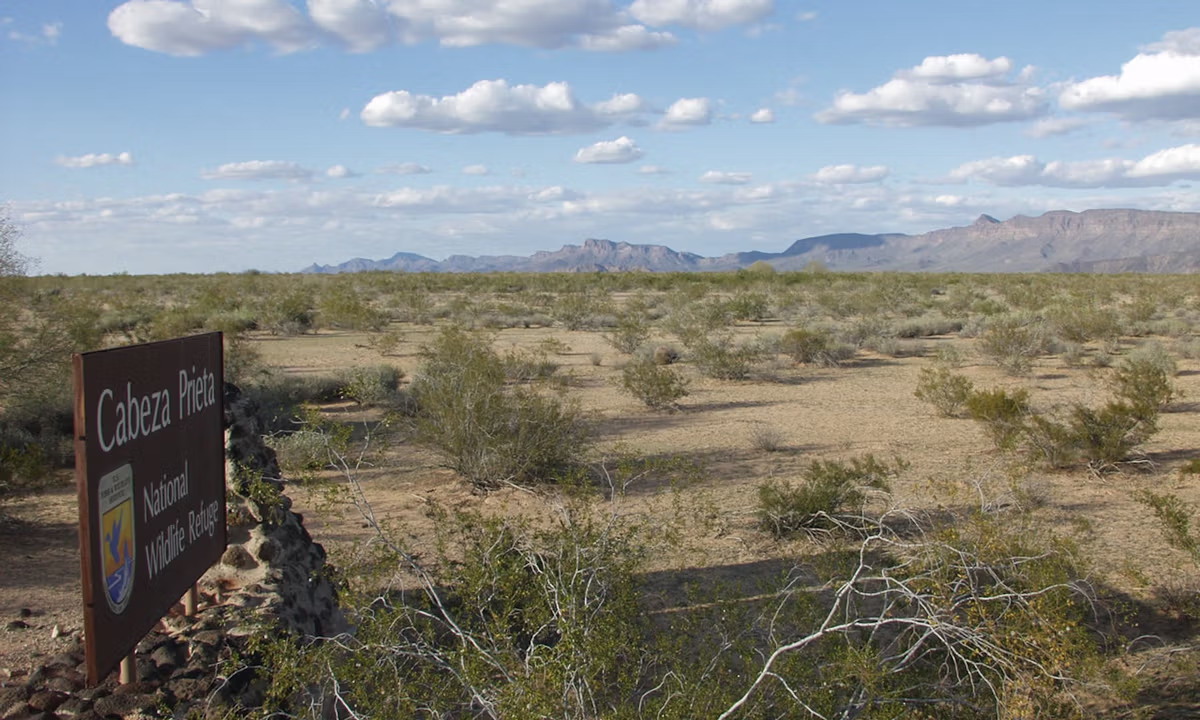
Located in a remote corner of Arizona’s Cabeza Prieta National Wildlife Refuge, the area is sacred to local Indigenous communities and part of a Unesco biosphere. With wide alluvial basins separated by steep mountain ranges, the biosphere is home to rare and endangered flora and fauna. It also contains more than 3,000 petroglyphs. Destruction of the intaglio inside the refuge has environmental and cultural significance, according to Lorraine Eiler, a Hia-Ced O’odham elder and co-founder of the International Sonoran Desert Alliance.
“You can’t separate our land from our culture,” Eiler tells The Art Newspaper, noting that the border crosses tribal lines, and that she and members of her community still visit their cousins in Mexico for ceremonies in spite of plans to wall off reservation lands, which would separate tribal lands in the US from those in Mexico. The destruction of the intaglio, she adds, “is an insult to our ancestors”.
Eiler says that a group of O’odham “runners”, participating in a ceremonial practice of running and praying through their traditional territories, warned her on 23 April that they had seen bulldozers getting perilously close to the intaglio site. This was despite the fact, she says, that “DHS and the border patrol had been warned by the tribe and by Cabeza staffabout the importance of the intaglio and what it meant to our people”. After being alerted by the runners, Eiler made dozens of calls to environmental and tribal groups, but to no avail. She now thinks the bulldozing of the intaglio was a “deliberate act”.
The DHS contractors “either weren’t told or completely ignored what they were told—and without notifying anyone they destroyed it”, Eiler says. “They weren’t even supposed to be in the area—they were supposed to be further west. They just didn’t want to be stopped.”
Eiler says the contractors destroyed a stretch of the intaglio around 70ft long. The etching had depicted the form of a fish, possibly in reference to those in the nearby Sea of Cortez.
“It connects us to our ancestors, carrying memory and meaning and teachings passed down through generations. People who aren’t native American might think it’s just a landmark, but it’s so much more.”
Rick Martynec, a retired archaeologist who has studied the intaglio for two decades and advocated for its preservation, told The Intercept: “I liken it to destroying the Nazca lines”—referring to the hundreds of figures drawn into the deserts of southern Peru—“something that culturally we should have been relishing and promoting. Not destroying.”
Aaron Wright, a preservation anthropologist with Archaeology Southwest who visited the intaglio with Martynec shortly before it was destroyed calls its demise “an archaeological travesty”.
“It’s unique in that it’s a rare inland intaglio in a remote section of the Sonoran Desert,” Wright tells The Art Newspaper, noting that it sits on a lava field near two dried up rivers. He describes intaglios as “designs—often geometric but sometimes figurative—scraped into desert pavements: geological surfaces of compacted and patinated gravels”. He adds that the one bulldozed along the border last month was similar to examples he has studied near the Gila River.
“There’s a lot more at the at the site than had been previously recognised or documented,” Wright says. “There are complexes of intaglio like features on the ground, but they don’t show up in aerial photographs very well.” Further research requires more aerial photography and visits to the Mexican side, he notes, currently impossible with the new border wall.
“The scope, pace, and apparent lack of substantive oversight for the border infrastructure work currently underway is endangering archaeological, cultural and sensitive natural resource sites throughout the heart of the Sonoran Desert,” Aaron Cooper, the executive director of the International Sonoran Desert Alliance, tells The Art Newspaper. “If this work continues, the irreversible damage to this sacred site is not just likely to happen elsewhere, it is inevitable.”
Representatives for the US Department of Homeland Security had not replied to The Art Newspaper’s requests for comment by the time of publication. Construction of the border fence along the border with Mexico has been a priority for US president Donald Trump in both his first and second terms. In March, archaeologists and landowners in Texas’s Val Verde County raised concerns about plans to build the border wall along the Rio Grande river, which could harm the area’s many prehistoric rock art sites.
