

Close Menu
  • News
  • Stocks
  • Bonds
  • Commodities
  • Collectables
    • Art
    • Classic Cars
    • Whiskey
    • Wine
  • Trading
  • Alternative Investment
  • Markets
  • More
    • Economy
    • Money
    • Business
    • Personal Finance
    • Investing
    • Financial Planning
    • ETFs
    • Equities
    • Funds

Subscribe to Updates

Get the latest markets and assets news and updates directly to your inbox.

Trending Now

12,000-Year-Old Clothing Made of Animal Hide Discovered in Ice Age Caves in Oregon

February 12, 2026

Plan for Centre Pompidou in New Jersey is ‘dead’, local official says – The Art Newspaper

February 12, 2026

Senior AI staffers keep quitting — and are issuing warnings about what’s going on at their companies

February 12, 2026
Facebook X (Twitter) Instagram
The Asset ObserverThe Asset Observer
Newsletter
LIVE MARKET DATA
  • News
  • Stocks
  • Bonds
  • Commodities
  • Collectables
    • Art
    • Classic Cars
    • Whiskey
    • Wine
  • Trading
  • Alternative Investment
  • Markets
  • More
    • Economy
    • Money
    • Business
    • Personal Finance
    • Investing
    • Financial Planning
    • ETFs
    • Equities
    • Funds
The Asset ObserverThe Asset Observer
Home»Art Market
Art Market

12,000-Year-Old Clothing Made of Animal Hide Discovered in Ice Age Caves in Oregon

News RoomBy News RoomFebruary 12, 2026
Share
Facebook Twitter LinkedIn Pinterest Email

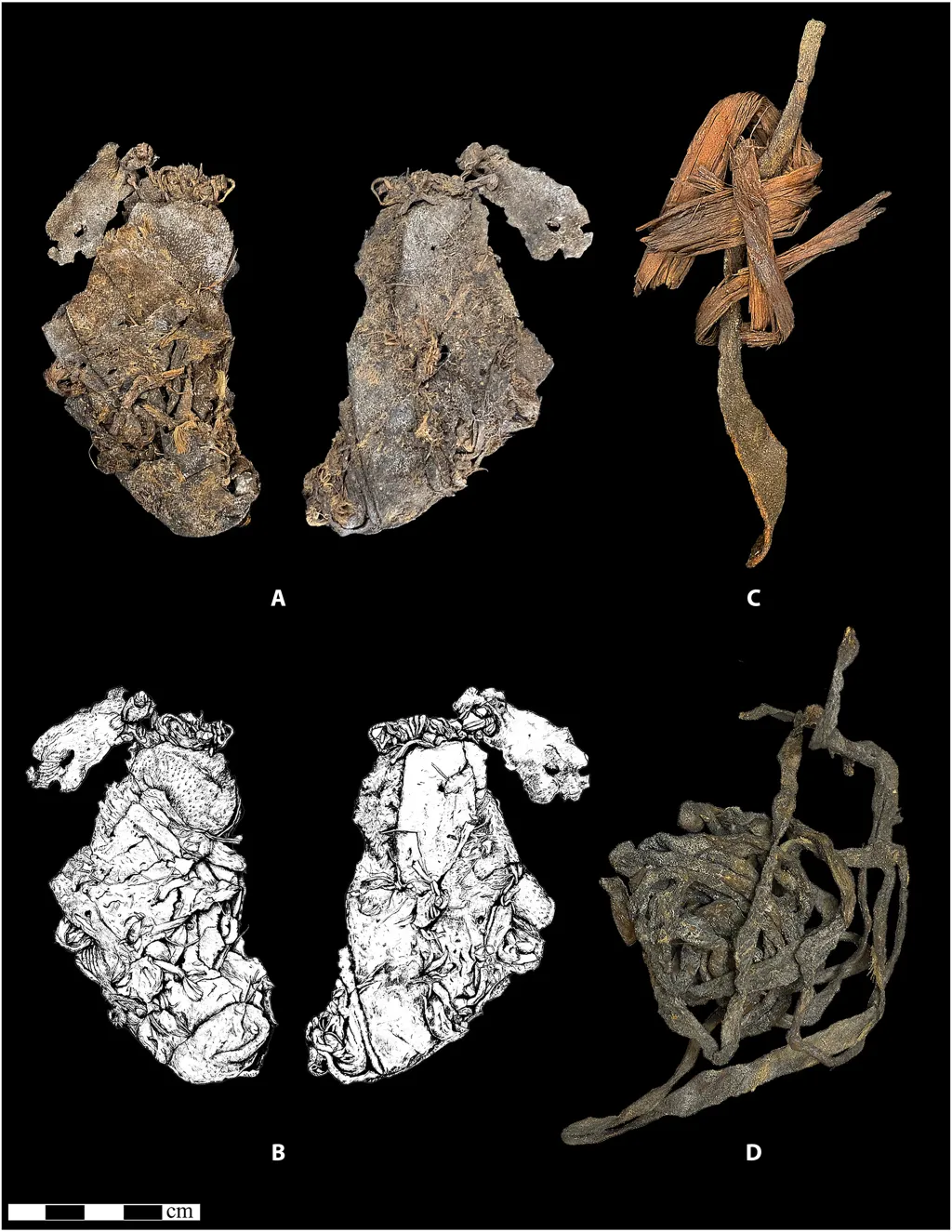
A team of 13 archaeologists and scientists from universities in Oregon and Nevada have successfully dated a cache of animal hide clothing to the Late Pleistocene era, making it the oldest known sewn clothing in the world.

The stitched-together hides were originally excavated, along with other materials (braided cords, knotted bark, and other fiber objects), by an amateur archaeologist named John Cowles from Cougar Mountain Cave in western Oregon in 1958, according to the study published in Science Advances. Cowles kept his findings until his death in the 1980s, at which point they were transferred to the Favell Museum, which collects Indigenous artifacts and contemporary western art, in Klamath Falls, Ore. Some of the objects in the study (wooden and fiber artifacts) were originally discovered in the nearby Paisley Cave.

The group that published the study used radiocarbon and ZooMS (Zooarchaeology by Mass Spectrometry) to date 55 object—hides, bone needles, and other tools—to the Younger Dryas, a period that took place between 12,900 and 11,700 years ago and was marked by a return to glacial temperatures, which necessitated different types of clothing technology.

The “well-dated and rare perishable assemblages” discovered in both caves “illustrate the underappreciated technological sophistication and complexity of technologies used by Late Pleistocene peoples that have broader implications for how we envision, model, and discuss early lifeways of the Western Hemisphere,” the authors wrote in their report.

Richard Rosencrance, a PhD student at the University of Nevada, Reno, and one of the authors of the study, told Live Science that while the idea of animal hide clothing from this era isn’t new, no one previously knew what it looked like or how it was constructed as no examples of Pleistocene clothing have previously been identified. It turns out, Rosencrance, notes, that “they were accomplished and serious sewists during the Ice Age.”

Share. Facebook Twitter Pinterest LinkedIn Tumblr Email

Keep Reading

Plan for Centre Pompidou in New Jersey is ‘dead’, local official says – The Art Newspaper

Joe Frazier Statue Will Officially Replace Beloved Rocky at Bottom of Philadelphia Museum Steps

Exhibition of Black artists reinterpreting the US flag opens without key Dread Scott work – The Art Newspaper

Studio Museum in Harlem Announces 2026 Artists in Residence, First Cohort in New Building

Centre Pompidou’s New Jersey Museum Is Officially Canceled After Jersey City Mayor Pulls Support

This year’s Carnegie International will feature 61 artists, including Jasleen Kaur and Li Yi-Fan – The Art Newspaper

Carnegie Museum announces 61 artists and collectives for 2026 Carnegie International.

Carnegie International, America’s Oldest Biennial-Style Show, Names 61 Artists for Biggest Edition Yet

Austrian pavilion artist Florentina Holzinger joins Thaddaeus Ropac – The Art Newspaper

Recent Posts
  • 12,000-Year-Old Clothing Made of Animal Hide Discovered in Ice Age Caves in Oregon
  • Plan for Centre Pompidou in New Jersey is ‘dead’, local official says – The Art Newspaper
  • Senior AI staffers keep quitting — and are issuing warnings about what’s going on at their companies
  • Binding Option to Acquire 90% of Advanced Pomme REE Project in Quebec, Partnering with Metallium
  • Why energy is the best-performing sector in the S&P 500 so far this year

Subscribe to Newsletter

Get the latest markets and assets news and updates directly to your inbox.

Editors Picks

Plan for Centre Pompidou in New Jersey is ‘dead’, local official says – The Art Newspaper

February 12, 2026

Senior AI staffers keep quitting — and are issuing warnings about what’s going on at their companies

February 12, 2026

Binding Option to Acquire 90% of Advanced Pomme REE Project in Quebec, Partnering with Metallium

February 12, 2026

Why energy is the best-performing sector in the S&P 500 so far this year

February 12, 2026

Joe Frazier Statue Will Officially Replace Beloved Rocky at Bottom of Philadelphia Museum Steps

February 12, 2026
Facebook X (Twitter) Instagram
© 2026 The Asset Observer. All Rights Reserved.
  • Privacy Policy
  • Terms
  • Press Release
  • Advertise
  • Contact

Type above and press Enter to search. Press Esc to cancel.