


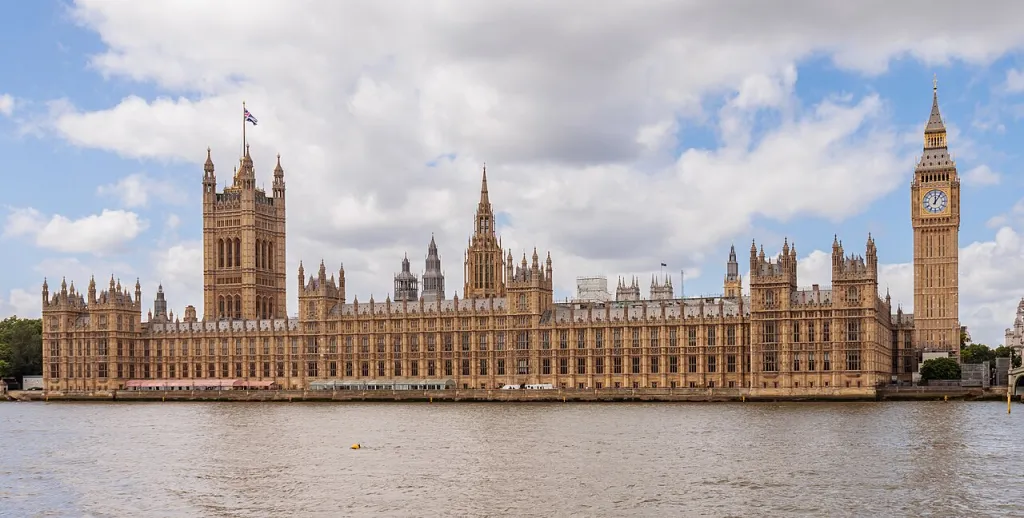
The Palace of Westminster, the oldest building on the United Kingdom’s Parliamentary estate, which has played a central role in 900 years of British history, still contains some secrets hidden below.
Evidence of human activity dating back almost 6,000 years has been discovered by archaeologists working at the Palace of Westminster in England, the UK Houses of Parliament reported. The findings predate the earliest earthworks at Stonehenge by more than a millennium.
Archaeologists have been working at the site in phases as part of a three-year program led by the Houses of Parliament Restoration and Renewal Delivery Authority.
There, they unearthed more than 60 struck flint flakes, including one worked tool, likely dating to the late Mesolithic or early Neolithic period (around 4300 BCE). They were previously undisturbed in sand deposits that once formed part of Thorney Island, where prehistoric communities are believed to have fished, hunted, and gathered food. These finds offer a closer look at early human life in present-day central London.
“The history of Westminster is long, fascinating and well-documented. Discoveries such as these allow us to add to our knowledge of this ancient site. These archaeological investigations are an important part of the preparation work for the restoration and renewal of the Victorian building,” The Lord Speaker, Lord McFall of Alcluith, said in a statement.
Experts additionally unearthed a Medieval leather boot, shoe soles, and straps; fragments of decorated clay tobacco pipes dating to the reconstruction of the Palace of Westminster after the 1834 fire; a Roman altar fragment believed to be over 2000 years old; a lead flowering heart badge from the 14th to 15th century; a 19th-century five-pint beer jug inscribed with “Geo Painter”, a tavern owner of the historic Ship and Turtle Tavern in London’s Leadenhall area; and decorated Medieval Westminster floor tile.
“As we prepare for the restoration and renewal of the iconic Palace of Westminster, a huge amount of work is going on to understand more about the building and the thousands of years of history underneath the home of Parliament as we know it today,” Judith Cummins MP, Deputy Speaker of the Commons and R&R Programme Board Chair, said in a statement.
The findings are expected to influence the forthcoming design and construction decisions during the Palace of Westminster’s restoration.
Earlier this year in August 2025, archaeologists discovered substantial remains of the Medieval Lesser Hall, a two-story dining space dating back to 1167.
Ongoing archaeological investigations are being carried out by MOLA (Museum of London Archaeology), commissioned by the Restoration and Renewal Delivery Authority. They span nine locations across the Palace of Westminster, including Black Rod’s Garden, Royal Court, Speaker’s Court, Speaker’s Green, Cromwell Green, Old Palace Yard, Victoria Tower Gardens, New Palace Yard, and the Thames Foreshore and River. Investigations will continue through to 2026, with a full report of the findings slated to be published in 2027.
