


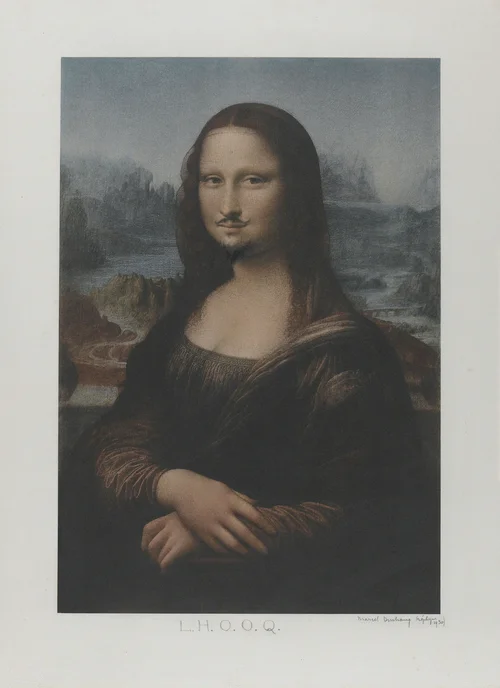
L.H.O.O.Q. Mona Lisa, 1919
Marcel Duchamp
Art Resource
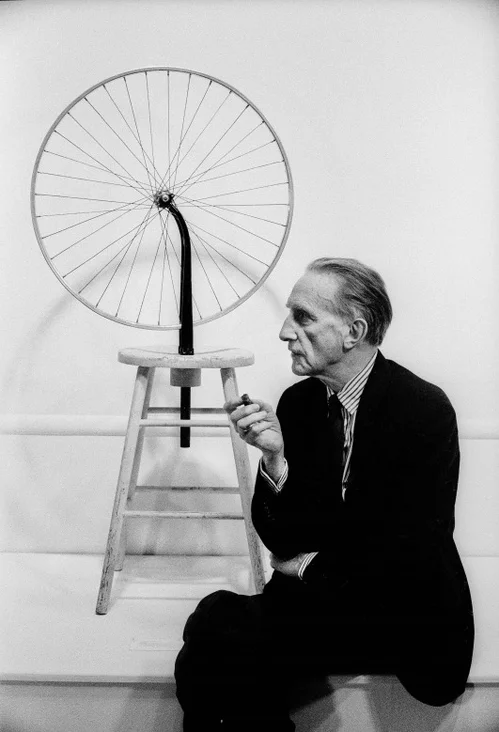
Marcel Duchamp, Duchamp Retrospective, Pasadena Art Museum, 1963
Julian Wasser
Robert Berman Gallery
“The word ‘art’ etymologically means to do, not even to make, but to do—and the minute you do something, you are an artist,” Marcel Duchamp said in his first and last TV interview with the BBC in 1968. It was a characteristically sly incitement from an artist who spent six decades dismantling every assumption about what art could be. From placing a urinal on a pedestal and drawing a mustache on a reproduction of the Mona Lisa (1503), to diagramming the mechanics of sexual desire and reproducing his entire oeuvre in miniature, Duchamp proved that an artist could do and be anything.
Though the French American provocateur worked in glass and avant-garde painting, he’s most famous for his readymades: everyday objects elevated to the status of art by the act of presentation. Such work reveled in institutional transgression and playfully overturned artistic and social customs. Some irony, then, underlies museum shows devoted to his legacy. And this summer, MoMA is presenting “Marcel Duchamp,” the first major retrospective of the artist’s work in the United States in more than half a century, on view through August 22nd. Gathering 300 paintings, sketches, readymades, and sculptures across six decades, it offers contemporary audiences a chance to take full measure of an artist whose influence has become so pervasive as to be almost invisible.
Duchamp shifted art from a purely visual experience to a mental one, paving the way for Conceptual, Pop, and digital art. He granted artists permission to continuously reinvent, provoke, and resist resolution outside of established movements and media. Here are eight contemporary artists who, like Duchamp, refuse to let art settle into good taste.
Nina Katchadourian
B. 1968, Stanford, California. Lives and works in New York City and Berlin.
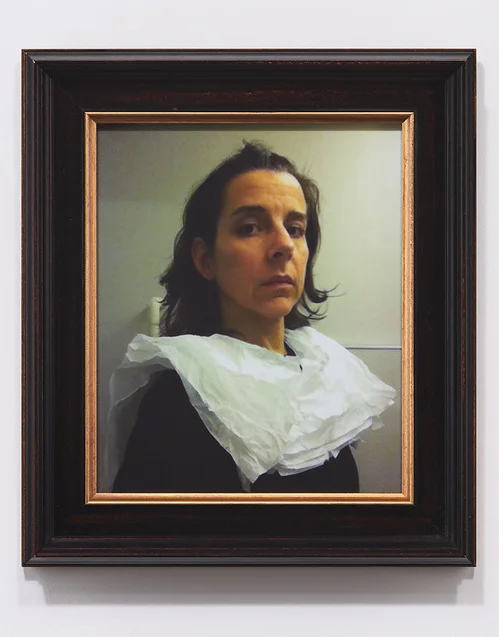
Lavatory Self-Portrait in the Flemish Style #7 ("Seat Assignment" project, 2010 – ongoing), 2011
Nina Katchadourian
Catharine Clark Gallery
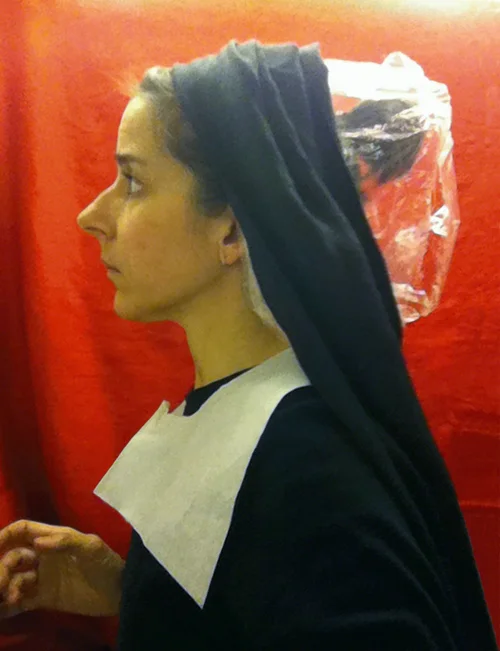
Lavatory Self-Portrait in the Flemish Style #13 ("Seat Assignment" project, 2010–ongoing), 2011
Nina Katchadourian
Catharine Clark Gallery
In 1919, marking the 400th anniversary of Leonardo da Vinci’s death, Duchamp drew a mustache and goatee on a postcard reproduction of Mona Lisa and titled it L.H.O.O.Q. Read aloud in French, the letters roughly translate to “she has a hot ass.” The work was both a prank and a Dadaist provocation, mocking conventional notions of gender, the sanctity of art history, and the fetishization of beauty.
Nearly a century later, the American conceptual artist Nina Katchadourian locked herself in an airplane bathroom, fashioned a wimple from a toilet-seat cover and a veil from a hand towel, and photographed herself in the manner of a fifteenth-century Flemish portrait. The unexpectedly convincing images, Lavatory Self-Portraits in the Flemish Style from her series “Seat Assignment” (2010–present), went viral.
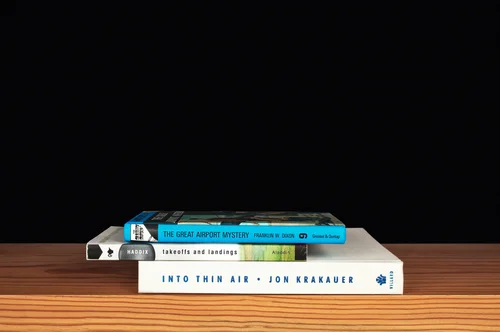
"The Great Airport Mystery" from "Family Gathering" ("Sorted Books" project, 1993–ongoing), 2013
Nina Katchadourian
Catharine Clark Gallery
Katchadourian often imposes such absurd constraints to generate formal invention. In“Sorted Books” (1993–present), the American artist’s longest-running project, she arranges library volumes so their spines form punning stories or sayings, engaging the same wordplay that Duchamp embraced.
One such book stack, Primitive Art (2001), reads: “Primitive Art / Just Imagine / Picasso / Raised by Wolves.” Whether it’s a joke, a piece of art criticism, or a poem is up to the viewer.
Jamian Juliano-Villani
B. 1987, Newark, New Jersey. Lives and works in New York City.
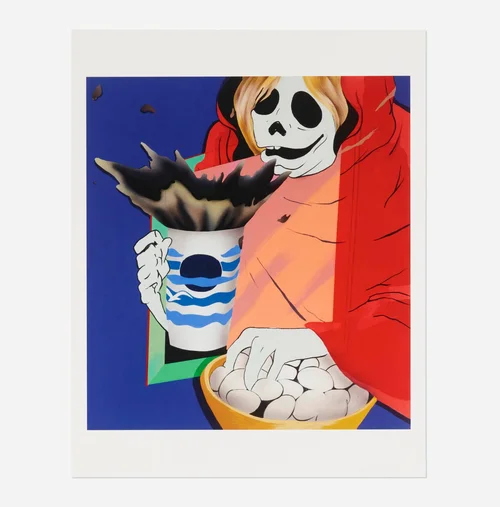
The Breakfast From Hell, 2014
Jamian Juliano-Villani
The BlackWood Gallery
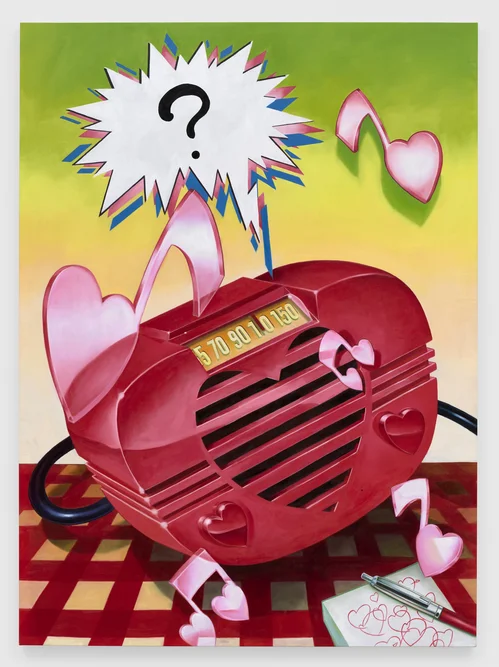
Growing up in New Jersey as the daughter of commercial silkscreen printers, Jamian Juliano-Villani spent her childhood folding identical t-shirts emblazoned with familiar images like Pope John Paul II’s face. That early exposure to mass reproduction still animates her painting practice, which culls imagery from memes, film stills, stock photo databases, children’s books, art history, and the continuous scroll of contemporary visual culture, then recombines it in operatically bizarre compositions.
For Juliano-Villani, as for Duchamp, a chosen image is already a transformed one. Her work is deliberately, joyfully irreverent, flattening hierarchies between high and low culture—like pairing Leonardo da Vinci’s Vitruvian Man (ca. 1492) with a knife-wielding dog or replacing the turkey in a Rockwell-esque dinner scene with a microwave—and media: Juliano-Villani employs oil painting and graffiti-style airbrushing with the same wry confidence Duchamp brought to placing a urinal on a pedestal (Fountain, 1917).
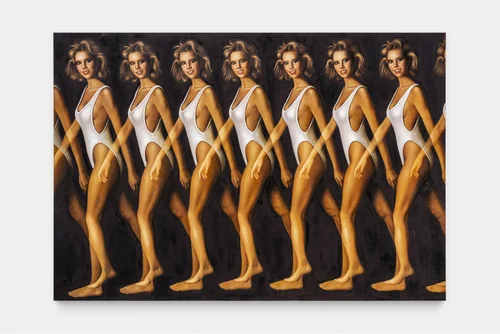
This impertinence extends to authorship itself. Juliano-Villani has solicited prompts from friends and strangers, even asking Nathan Fielder of Nathan for You fame to generate short scenarios for her to visualize.
Likewise, the artist has outsourced her canvases to reproduction painters in China, making works she described as “human AI.” For example, Ashley (2024) features repeated images of Jean-Michel Basquiat kicking a chair.
Mika Rottenberg
B. 1976, Buenos Aires. Lives and works in New York City.
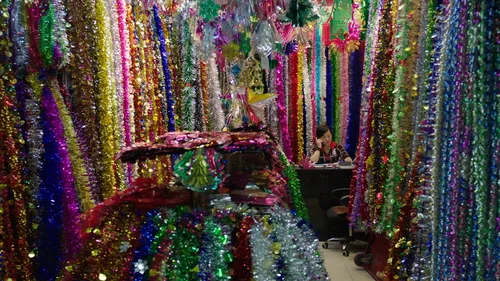
Hair milked for cheese, acrylic fingernails ground into maraschino cherries, sweat triggering the production of a pearl: These are a few of the absurd forms of labor that appear in Mika Rottenberg’s technicolor video installations.
Working across sculpture, film, architecture, and performance, the artist exposes both the invisible systems that structure contemporary life and the often grotesque conditions that sustain them. Born in Buenos Aires and based in New York, Rottenberg frequently traces supply chains that connect distant, seemingly unrelated sites of production. In Cosmic Generator (2017), a surreal single-channel film and installation, viewers follow the exchange of commercial goods through a subterranean tunnel system that links a Chinese restaurant in Mexicali, Mexico, to a massive wholesale market in Yiwu, China.
The surreal, Rube Goldberg–like contraptions that animate Rottenberg’s films move between comedy and critique, recalling Duchamp’s own tongue-in-cheek fascination with arbitrary systems, futility, and mechanized desire. His monumental glass painting, The Bride Stripped Bare by Her Bachelors, Even (1915–23), for instance, diagrams a frustrated erotic pursuit played out in an abstract mechanical process involving scissors, sieves, and stove pipes.
Rachel Youn
B. 1994, Abington, Pennsylvania. Lives and works in Albuquerque, New Mexico.
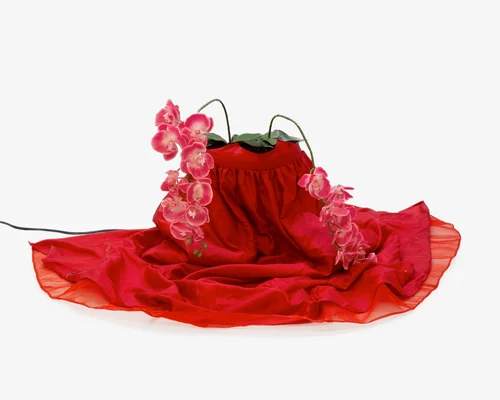
Sit pretty, 2024
Rachel Youn
Alice Amati
Duchamp had an uncanny talent for making ordinary objects feel erotic, even perverse. Many of his later works explicitly conjured body parts, from Please Touch (1947), with its three-dimensional rubber breast set against black velvet, to Female Fig Leaf (1950), a bronze cast reminiscent of female genitalia held within a leaf. Youn extends that subversive sensibility through kinetic sculptures built from salvaged massagers, fans, motors, exercise bikes, and artificial flowers that twitch, bow, and strain in awkward, repetitive motions. In Tantal (2026), a diminutive neck massager rotates two red orchids bound together by a thin silver chain, while in Sit Pretty (2024), two overburdened orchid plants shake and gyrate atop a vibration platform draped in a lush crimson hanbok chima, or a traditional Korean skirt.
Ellen Harvey
B. 1967, Farnborough, U.K. Lives and works in New York City.
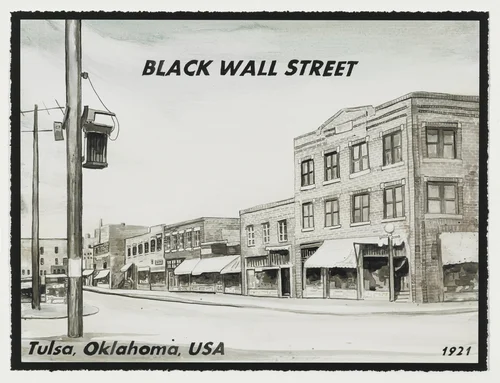
The Disappointed Tourist: Black Wall Street, 2021
Ellen Harvey
Graphicstudio USF
The British conceptual artist Ellen Harvey is drawn to what culture leaves behind. Her ongoing series, The Disappointed Tourist (2019–present), which comprises hundreds of small oil paintings of places that no longer exist, functions as a catalogue of the irretrievable past. The lost sites, erased by war, ecological disaster, gentrification, or the breakneck pace of modernity, range from the Colossus of Rhodes, felled by an earthquake in the 3rd century B.C.E., to Los Angeles’s Tower Records, which shuttered in 2006.
Harvey is not, however, simply an elegist. Her technically exacting practice is shot through with conceptual wit and a deep understanding of the ways art is circulated and encountered. Interested in expanding access to art, she’s undertaken projects such as copying every nude in Miami’s Bass Museum and creating a miniature version of every work in the Whitney Museum catalog. The impulse has a precedent in Duchamp’s Box in a Valise (1935–1966), a portable “retrospective” of miniature replicas of 69 of his best-known works, including paintings like Nude Descending a Staircase (1912) and readymades like Fountain (1917). Like her forebear, Harvey treats her copies not as mere replicas, but as genuine vehicles for unsettling institutional authority.
Ry Rocklen
B. 1978, Los Angeles. Lives and works in Los Angeles.
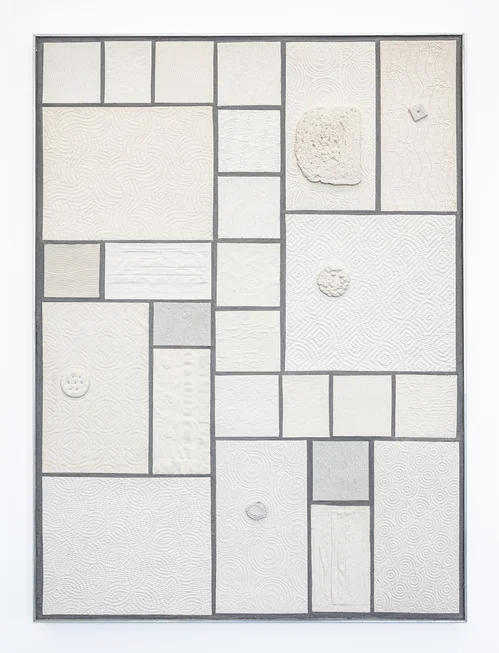
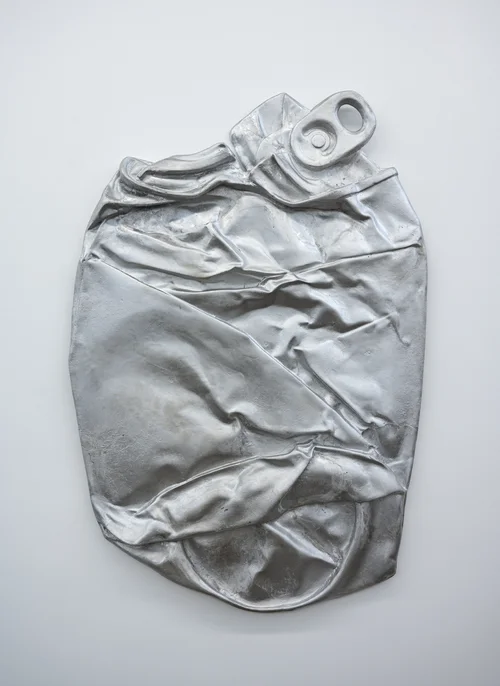
While the found objects in Duchamp’s readymades often remain unchanged—like a snow shovel suspended from the ceiling in Prelude to a Broken Arm (1915) and the bicycle wheel mounted on a stool in Bicycle Wheel (1913)—American sculptor Ry Rocklen subjects everyday artifacts to thoughtful acts of preservation and transformation. The American artist’s approach is both conceptual and nostalgic, even reverential. Flat tires, shopping carts, paper towels, umbrellas, and tennis shoes appear in his sculptures, which are alternately tiled in mosaic; cast in porcelain; plated in copper, brass, or bronze; or embellished with beads and other ornamental flourishes.
These interventions don’t obscure the original objects so much as reframe them, revealing their latent value and restoring a sense of beauty to the overlooked and cast-off. Absorption Panel (White Bread) (2024), for example, features a patchwork of various paper towel and napkin patterns rendered in white, cream, and ecru ceramic mounted on mortar and enclosed in a metal frame. A Ritz cracker and a slice of white bread lend the deceptively elegant relief a sense of playfulness.
Nikita Gale
B. 1983, Anchorage, Alaska. Lives and works in Los Angeles.
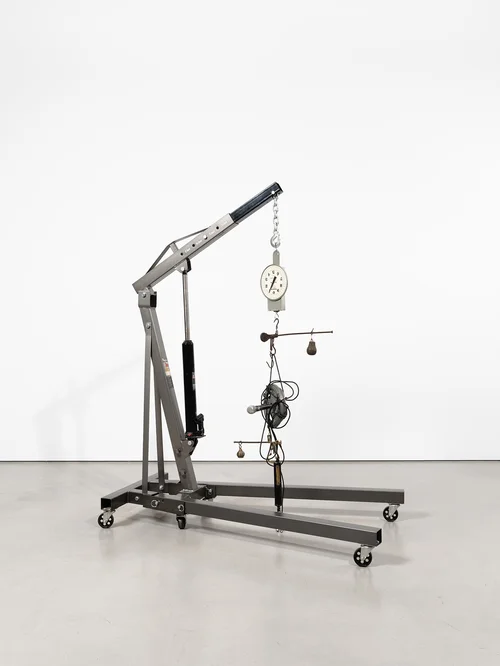
TALENT 15LBS, 2023
Nikita Gale
Petzel Gallery
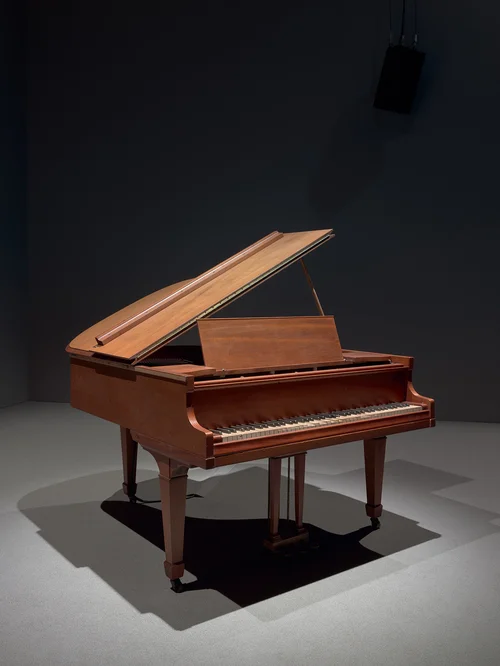
In Nikita Gale’s installations, the apparatus of live performance is everywhere, but performers are conspicuously absent. Microphone stands appear without microphones. Stage curtains drape scaffolding with no stage to frame. In TEMPO RUBATO (STOLEN TIME) (2023–24), which won the Bucksbaum Award at the 2024 Whitney Biennial, a player piano in a dramatically lit room silently “played” a selection of pop songs. The mute instrument, like much of the American artist’s practice, poses questions about the structures that determine who gets amplified, and who gets silenced or suppressed.
In this sense, Gale emerges as a contemporary heir to Duchamp’s insistence that art engage the gray matter rather than the retina. The conceptual artist’s work refuses to deliver the sensory experience that viewers have come to expect and instead asks them to reconsider their relationship to spectacle and their desire for on-demand entertainment. Gale similarly emphasizes the role of the spectator as an active participant in the work, necessary to its production and eventual completion.
Andrew Ohanesian
B. 1980, Laguna Beach, California. Lives and works in New York City.
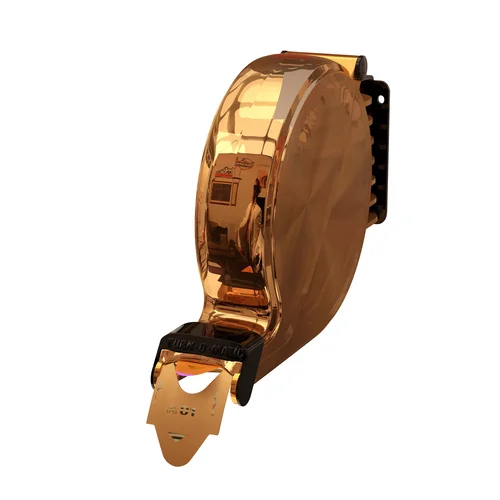
Take-A-Number, 2017
Andrew Ohanesian
Pierogi
In 2012, Andrew Ohanesian reconstructed the ground floor of a quintessentially American suburban home inside a cavernous Brooklyn warehouse, complete with functioning kitchen, living room, beige carpeting, and a china-filled armoire. On opening night, Ohanesian hosted a party, inviting audience participation that left the house all but destroyed: mirrors shattered, furniture overturned, surfaces littered with beer bottles, and walls tagged with graffiti. In mimicking life so faithfully, the installation became a kind of uncanny mirror, collapsing the distance between constructed artwork and authentic event.
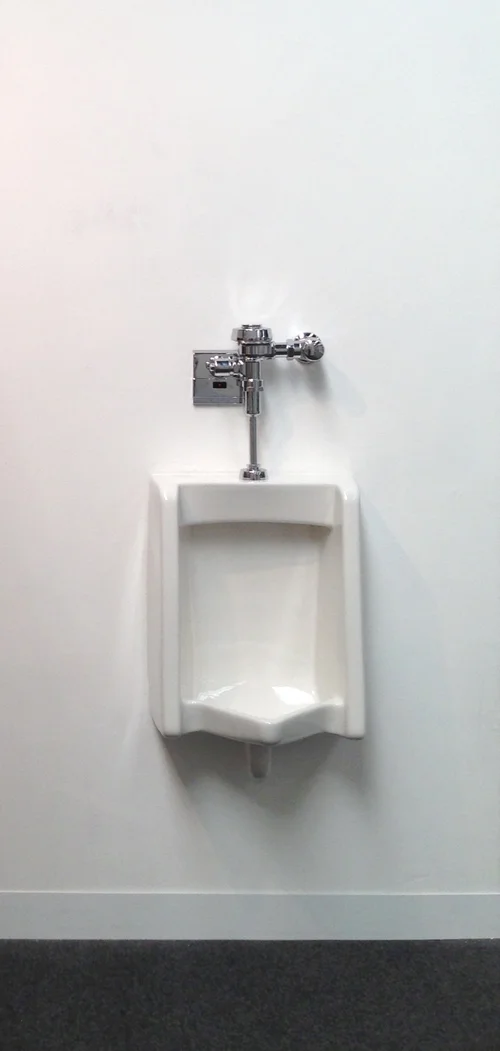
Introducing mundane objects into fine art contexts is a conceptual move that Ohanesian, like Duchamp, returns to again and again. But where Duchamp eliminated skill almost entirely, Ohanesian reintroduces the artist’s hand as he replicates mass-produced objects. For Take-A-Number (2017), the artist cast the number dispenser so often seen in D.M.V.s in bronze and naval brass. For other pieces, the intervention is more conceptual than aesthetic, such as Urinal (2013), shown at the 2013 Armory Show: The artist outfitted a urinal with a complex re-circulating plumbing system so that it actually flushed despite being hung on a booth wall. “Ideally, indicting both the art fair as a toilet,” the artist told Artsy. “And carrying forward the idea of a future toilet as art fair, tied together with the visceral flush.” A urinal is a urinal is an art fair: no doubt Duchamp would have agreed.
