





Tulsa, Oklahoma-based digital artist Lily Belmira has made a new, free video game allowing anyone to virtually visit Michael Heizer’s mysterious and radically difficult-to-enter land artwork in the Nevada desert, titled City. Only six people a day who are willing to pay the regular admission fee of $150 are permitted to explore City, one of the world’s largest artworks, in person. Spanning over a mile and a half, its precise location has been kept secret to some degree since its opening in 2022.
But Belmira hopes to offer a virtual way around all that, while deliberately challenging the notion of restricted access to art, in favor of a more democratic and broad-reaching approach.
She told ARTnews via email that she made the video game out of “a genuine interest in showing City to more people.” But it is also a critique of what she calls a “bourgeois scar on the earth,” albeit a “beautiful” one, in an artist statement. “I didn’t like City when I started, and I saw this project as a way to undermine its power,” she adds.
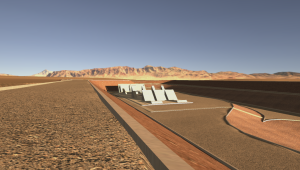
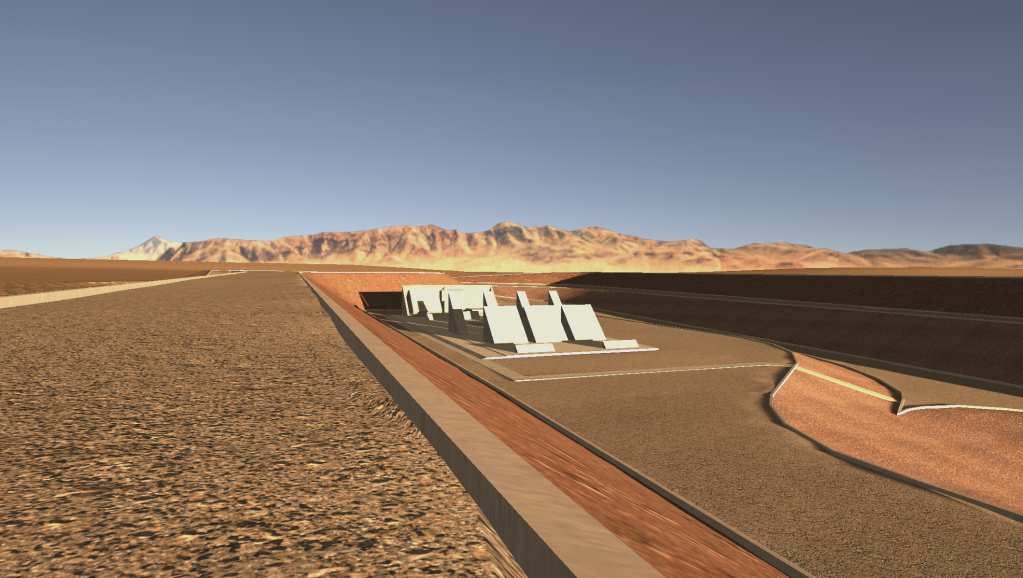
To that end, players of Belmira’s City by Michael Heizer [Free Version], which anyone can try by clicking here, must start behind an intentionally obtrusive no-trespassing fence. An opening further along the fence eventually allows users to wander through a simulation of Heizer’s barren, manicured landscape of paths, mounds, and depressions, where strange, abstract geometric sculptures emerge, appearing equally ancient and futuristic, or alien. Belmira used LIDAR data available online to model City’s terrain, as well as Google Maps satellite imagery.
City by Michael Heizer [Free Version] still image, by video artist Lily Belmira. Image courtesy of the artist.
While she feels the video game “is forgiving [Heizer] in some way,” Belmira told ARTnews she still wonders: “How can an artwork that has been seen by so few people have so much power?” She points to City’s “aura” and role in securing the surrounding land as a national monument by 2015 executive order. “The game asks if bringing an exclusive artwork down to the level of online art could free the work and its creator from the economic bind that keeps their art from being experienced,” she said.
Dubbed the art-world Atlantis, City took some 50 years to make, beginning in the 1970s, and cost $40 million to produce. Like Heizer’s other artworks, often made in remote settings and of epic scope, it has regularly sparked criticism in line with some of Belmira’s views. ARTnews senior editor Alex Greenberger said Heizer’s creations “evince a muscular, macho sensibility.” Others argue the artist’s work reaffirms structures of settler colonialism by omitting Indigenous perspectives of the land being used, as Alicia Harris discussed in a 2020 dissertation.
After virtually strolling through City in Belmira’s video model, some of its mysterious puzzle pieces do, gratifyingly, start to come together. After all, cell phones aren’t allowed on the site, and imagery of the City is limited. We get a better sense of its scale and form, without ever having to trudge through the unforgiving desert heat. Whether Belmira intended it or not, the enjoyable exercise left me curious to experience more, and perhaps, one day, make it there myself.


City by Michael Heizer [Free Version] still image, by video artist Lily Belmira. Image courtesy of the artist.


