


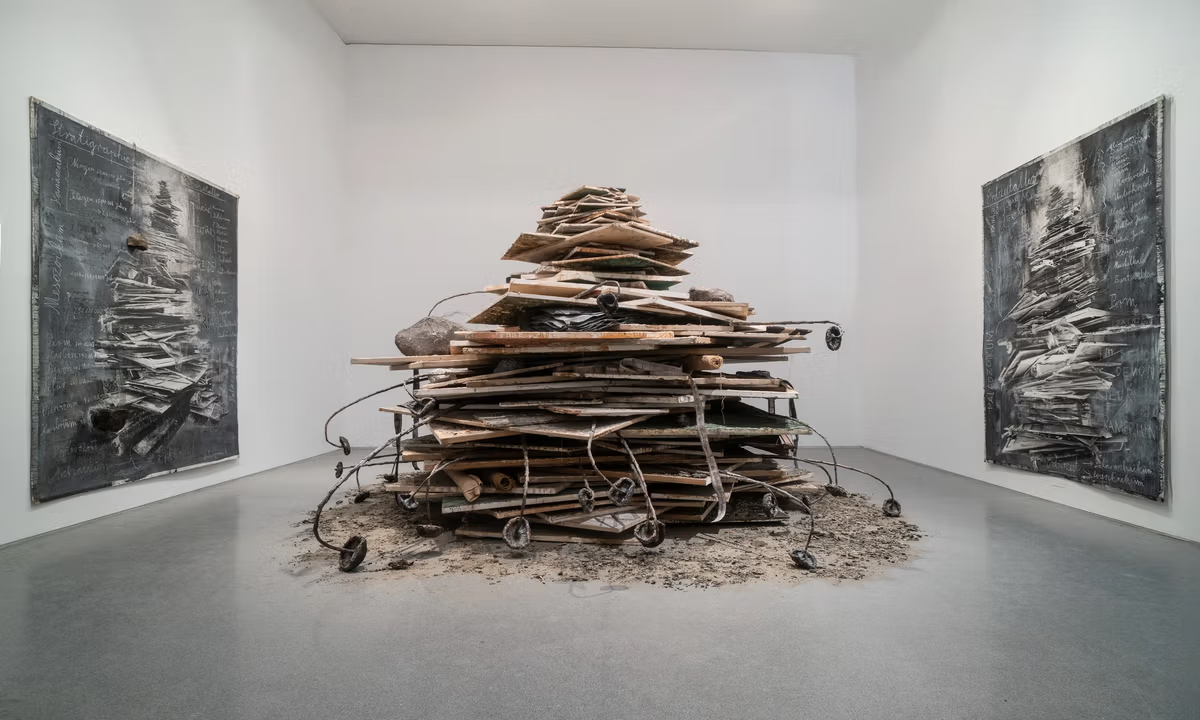
Die Erdzeitalter (Ages of the World) (2014) by Anselm Kiefer
Israel Museum, Jerusalem
The Israel Museum has acquired a fourth work by Anselm Kiefer for its permanent collection: the 17ft-tall sculpture Die Erdzeitalter (Ages of the World), donated by the Miami property developer and collector Martin Z. Margulies. The work, which consists of stacked canvases, dried sunflowers, rubble and lead books flanked by two paintings, evokes the apocalyptic aftermath of a disaster and is described as “part totem and part funeral pyre”. It was made for Kiefer’s 2014 retrospective at the Royal Academy of Arts in London. There, it was bought by Margulies, who displayed it at his Miami museum the Warehouse. Suzanne Landau, the Israel Museum’s outgoing director, who organised the institution’s first Kiefer solo exhibition in 1984, says the German artist’s work helps “process complex questions around cultural memory and life in landscapes impacted by war”.
Courtesy of Smithsonian Institution
Pachycephalosaurus dinosaur skull
Smithsonian National Museum of Natural History, Washington, DC
Excavated in South Dakota in 2024, this virtually complete skull of a Pachycephalosaurus was sold at Sotheby’s last July for $1.7m (with fees) to the former Google chief executive Eric Schmidt and his wife, Wendy. The couple donated the dinosaur skull to the National Museum of Natural History. These dome-headed bipedal herbivores lived around 67 million years ago, at the end of the Cretaceous Period. The skull will be CT-scanned to understand the shape and size of the dinosaur’s brain. Matthew Carrano, the museum’s dinosaurs curator, says that this is a spectacular example: “We almost never get to see the animal’s face or the teeth or other parts of the head, because they usually have broken away.”
Courtesy of Frans Hals Museum
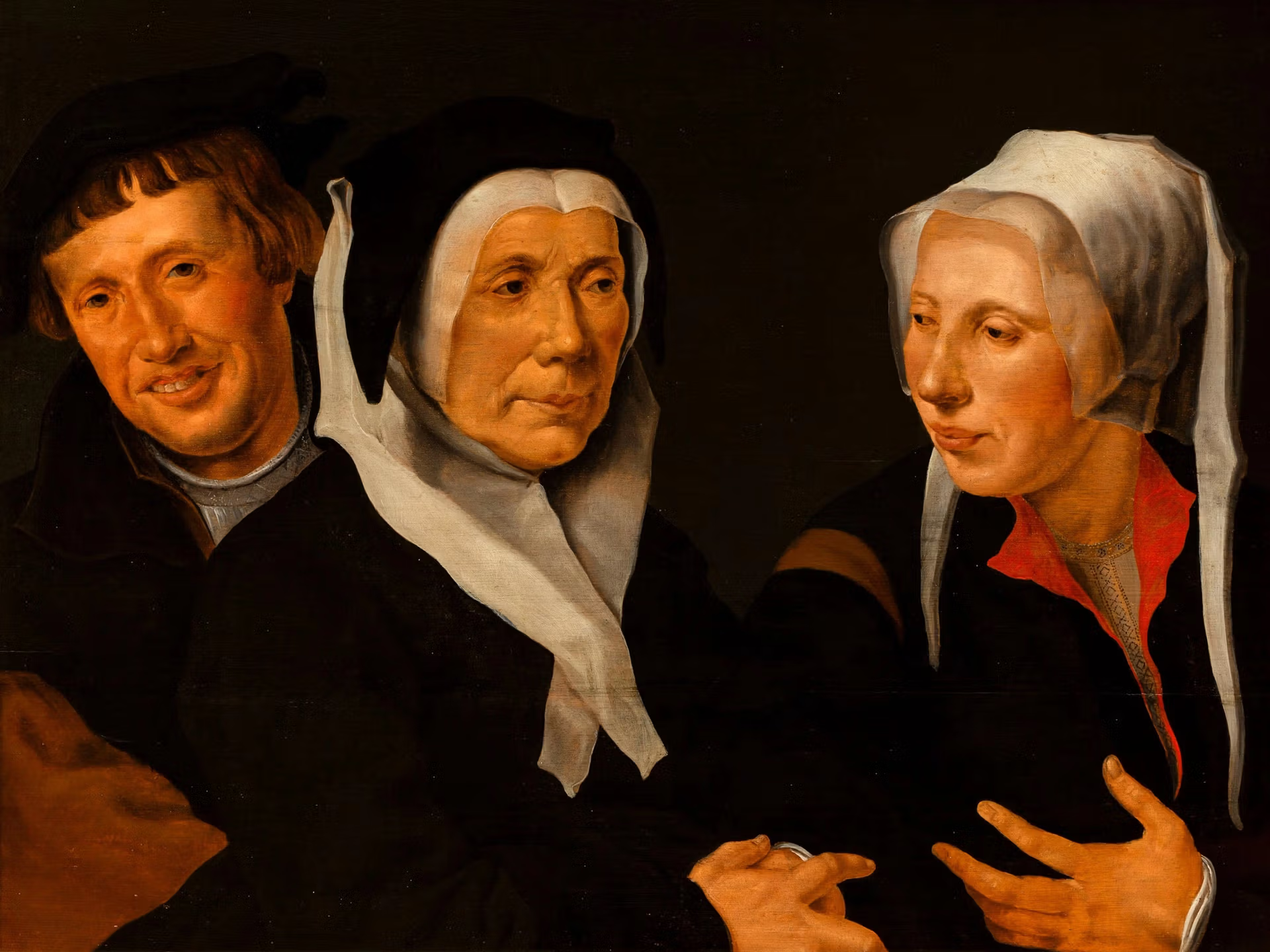
Genre scene (around 1526-27) by Maarten van Heemskerck
Frans Hals Museum, Haarlem, the Netherlands
This early genre scene by Maarten van Heemskerck (1498-1574) has been purchased by the Frans Hals Museum after it featured in a multi-venue exhibition of the Haarlem-born painter’s work in 2024-25. Haarlem painters are known for genre painting, but the style only became popular in the 17th century, so this is a particularly early example. It is also the only known genre scene by Van Heemskerck, who primarily painted portraits and biblical stories. The sitters are anonymous, and the closely cropped composition gives little context for what is going on—some art historians speculate it may have originally been part of a larger painting, with another figure on the right. Lidewij de Koekkoek, the director of the Frans Hals Museum, says the work demonstrates Van Heemskerck’s “steady hand” and “the high standard of painting in 16th-century Haarlem”.
