

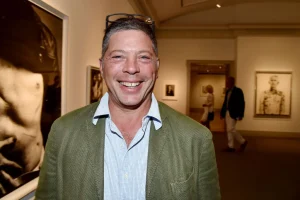





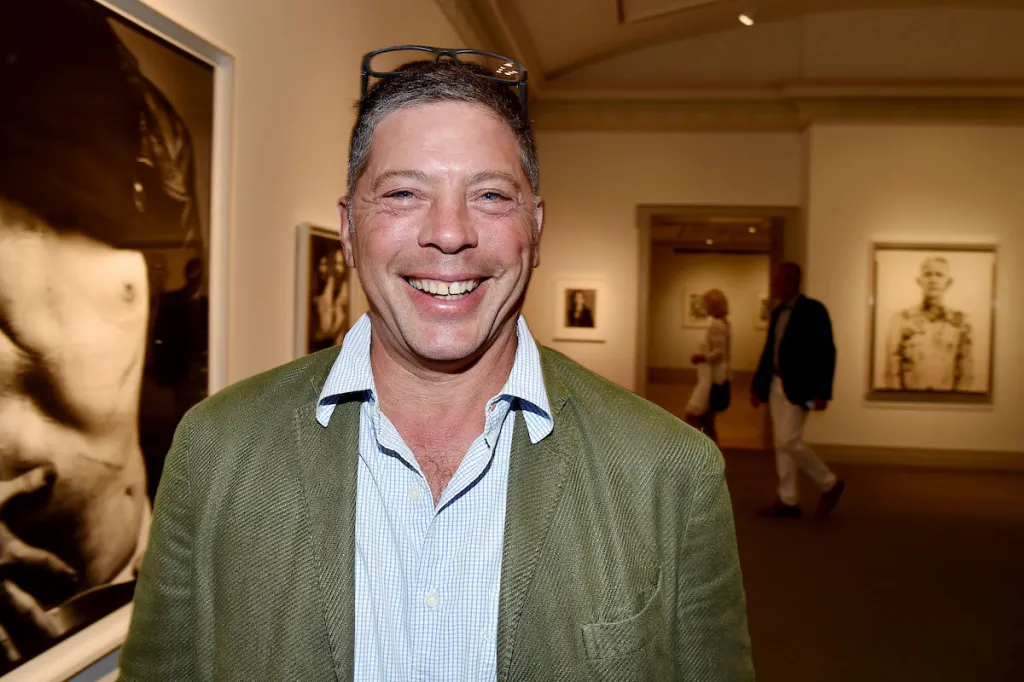
In a lawsuit filed earlier this month, dealer Adam Lindemann is facing allegations that he sued a 25-foot-tall Julian Schnabel sculpture on a Long Island estate without permission.
Filed on August 20 in New York’s Eastern District, the lawsuit was brought by the Nature Conservancy, a preserve in Montauk. Lindemann, the founder of New York’s now-defunct Venus Over Manhattan gallery, has a property next to the vast preserve.
Newsday, a publication focused on Long Island’s Nassau and Suffolk Counties, first broke news of the lawsuit on Thursday.
Lindemann is accused of trespassing on the Andy Warhol Visual Arts Preserve, which the conservancy currently owns and which was once the property of Pop artist Andy Warhol. Lindemann is accused of installing Schnabel’s Ahab without the Nature Conservancy’s permission.
Known as Eothen (“from the East” in Greek), Lindemann’s adjacent estate is a six-acre property with a house and six cottages that Lindemann purchased from J.Crew CEO Millard Drexler for $50 million in 2015, according to the Real Deal. There was an additional 24-acre horse farm that Lindemann did not purchase.
The conservancy is an Arlington, Virginia–based nonprofit dedicated to environmental preservation. In 1992, the New York property was donated by the Andy Warhol Foundation for the Visual Arts. As part of the donation at that time, the conservancy agreed to “preserve a section of the ecologically significant Montauk Moorlands and to promote the visual arts,” per the lawsuit.
After it discovered Lindemann had installed a sculpture on the preserve, the conservancy allegedly asked Lindemann to remove the sculpture in question within 90 days in an initial December 2024 letter, with additional correspondence about the sculpture’s removal. The nonprofit also found Lindemann parking personal vehicles in its lot, mowing its lawn, and planting shrubs, according to the suit.
“Despite TNC’s repeated demands and efforts towards amicable resolution, Defendant has refused to remove the Sculpture and continues to enter the property without permission,” William H. Taft V, the conservancy’s attorney, wrote in the suit.
According to the lawsuit, Lindemann agreed to remove the sculpture by August 31, 2025, after a meeting with conservancy officials in May.
On September 7, 2025, however, Lindemann sent the nonprofit an email, saying, “as promised I’m moving the sculpture!” He added, “Sure hope that makes you happy as it’s expensive and disruptive but it’s happening as you wished and I agreed. All the best to you and I’ll send pics as soon as the move is completed, we are currently organizing this with the local artist, the famous local artist Julian Schnabel’s team.”
Taft explained, “In a show of good faith — and with the intent to resolve these issues amicably — TNC noted that Defendant may not have been aware of the exact boundary lines between the Preserve and Defendant’s property and offered to meet with Defendant on site to walk their shared boundary.”
On February 6, 2026, conservancy officials allegedly sent Lindemann a cease-and-desist demanding he stop entering and parking on the property, as well as maintaining “any part of the preserve.” It also demanded the artwork’s removal within within 30 days.
The sculpture has allegedly still not been removed.
Julian Schnabel with Ahab for a 2014 presentation of the work in Miami.
Photo Alexander Tamargo/Getty Images for Brickell Flatiron
“To date, Defendant continues to park personal vehicles in the Preserve’s parking area, mow the Preserve adjacent to his property, and refuses to remove the Sculpture from the Preserve,” Taft said.
The conservancy has requested a jury trial and is seeking an injunction that would stop Lindemann from entering the property, a declaration that the conservancy has exclusive control of the preserve, a declaration that Lindemann does not own the sculpture, a declaration the conservancy can remove the sculpture, and attorneys’ fees.
The protection of the preserve is “important for migratory birds, rare species, and other wildlife,” the lawsuit claims. “The Preserve’s location along the Atlantic Flyway — a major north-south migration route used by birds in North America — makes it an important feeding ground and stop-over site for Neotropical migratory birds.”
Lindemann did not respond to ARTnews’s request for comment by the time of publication.


