


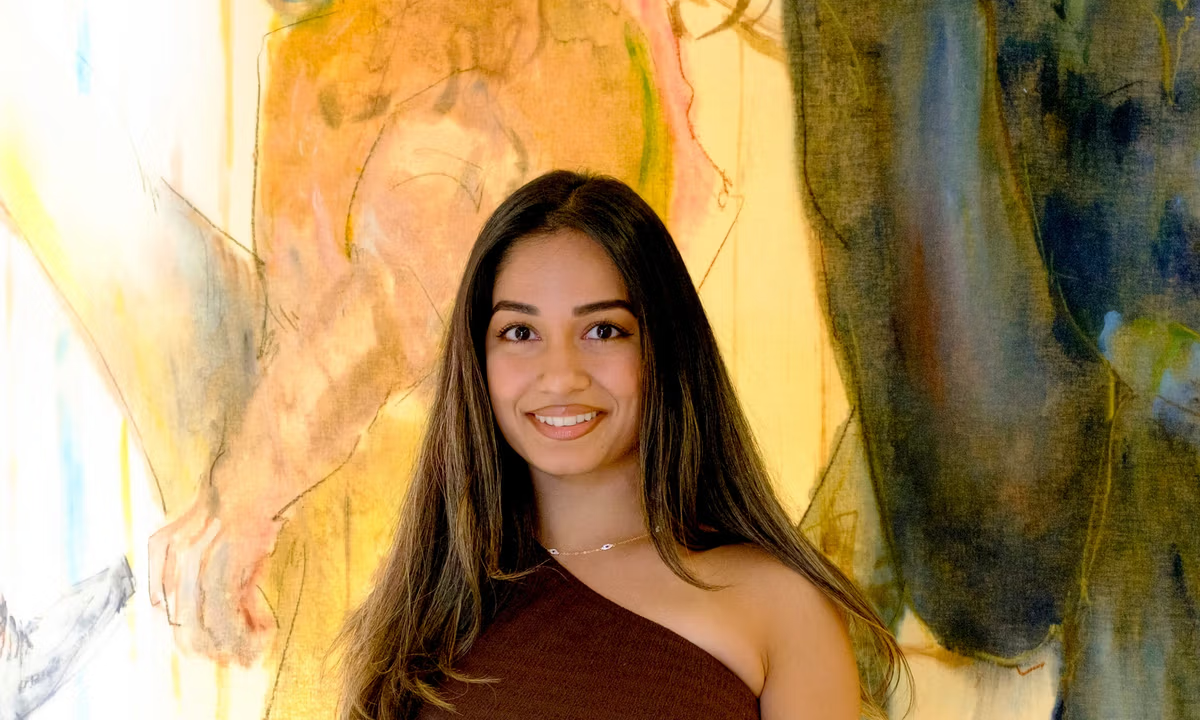
At 28 years old, the interdisciplinary artist Aiza Ahmed is one of the youngest with a solo presentation in the inaugural Art Basel Qatar. Showing new paintings and woodcut sculptures with the New York-based gallery Sargent’s Daughters, Ahmed explores notions of identity, investigating broader ideas of nationalism as well as her own relationship to her heritage. Born in Pakistan, Ahmed moved often while growing up and is now based in New York. For the past several months, however, she has also called Qatar home, as she splits her time between residencies: Fire Station’s Arts Intensive Study Program in Doha and Silver Art Projects in New York.
Her interest of late has been the theatricality of the Wagah-Attari ceremony, a daily military ritual at the Pakistan-India border that has taken place since 1959. With soldiers moving in choreographed performances, the spectacle offers Ahmed a way to examine identity, gender and power dynamics.
The Art Newspaper: Your work considers themes including national identity. How was that affected by your background?
Aiza Ahmed: I was born in Lahore and spent the first seven years of my life in Karachi before my family moved to London and then Dubai, which is where I consider home. I left Dubai in 2016 for Cornell in Ithaca, New York, and then I completed my MFA at Rhode Island School of Design (RISD). Belonging to multiple places and finding peace within that—taking from each place what I can—is part of my work. I’ve been navigating this long-distance relationship with Pakistan, and I want to question that, given I am an artist of the diaspora and feel a deep sense of fragmentation.
Did you set about exploring this intentionally?
It’s always been on my mind because I have such fond memories of Pakistan, but, as you get older, you start to question what you’re seeing, being both an observer and a participant.
Ahmed’s studio at Fire Station in Doha Courtesy of the artist
When did you start to consider performance and pageantry in your work?
I was at RISD thinking about wedding and funeral rituals and the idea of the collective ceremony. I started thinking about the border because the Wagah-Attari ceremony takes place in my hometown in Pakistan. I remember visiting the ceremony when I was young. The idea of a border is something you can spend a lifetime delving into. As I thought about borders, I wanted to trace my ancestry. Where did I come from? How did Pakistan come into being? And then I thought back to the partition of India and Pakistan. I want to learn about the past to understand today. My work is very line based, and the idea of a borderline had a kind of magical resonance.
You imbue humour into your subjects. What do you hope to achieve with that?
The Wagah-Attari ceremony has an inherent theatricality that easily reads as humorous, and there are obvious colonial ties. Thousands of tourists come to watch, like the Changing of the Guard [at London’s Buckingham Palace]. It happens daily and the two sides—India and Pakistan—are doing the exact same movements, like marching with high kicks. It’s like they’re acrobats or puppets controlled by the strings of a higher state, and there’s so much pomp and drama that it looks absurd. But, at the same time, it takes a lot of collaboration to move in synchronicity. I like to think about their lives outside of the performance, when they take off this costume, especially as I began to understand my own sense of identity and outward presentation, code-switching in a way as I move and live in different contexts. Humour and satire open a space for reflection. I want viewers to see different ways of understanding the constructs of national identity and gender, and to open portals into the histories of these constructs. I don’t want to be didactic; when distortions and humour occur, it becomes a kind of caricature.
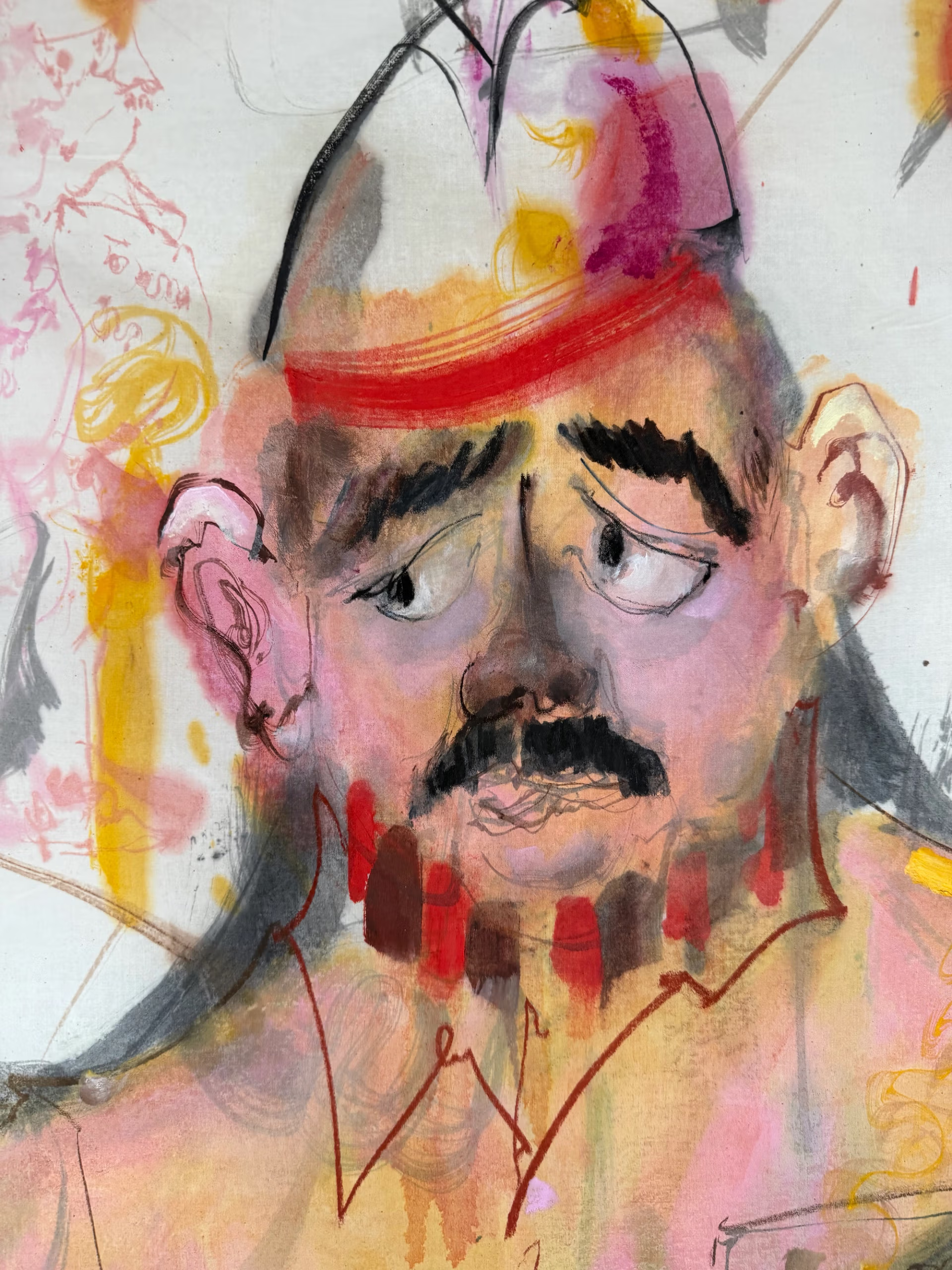
Ahmed’s work explores humour and satire Courtesy of the artist
Tell me about your choice of materials.
It’s a way to keep thinking about fragmentation and the many roots I have. I use wood and muslin, which are male-dominated materials in South Asian craft traditions. I feel tied to muslin because it originates in the Indian subcontinent where my paternal ancestry is. It’s from a time before the British entered India, but with colonisation it’s become almost extinct. I’m thinking of this history and muslin’s role in trade routes. It is also porous and can be viewed from both sides, which destabilises the line I’m drawing, in turn destabilising the image of the border.
What has your experience been like during your residency in Doha?
Growing up in Dubai, Doha feels familiar, yet it’s of course a different place. It’s a dream to be here for nine months. The residency brings in international and local curators and artists to help with professional development, and we’ve been able to engage with Art Basel Qatar’s programming and the many community activations happening across Doha.
The work I’ve made in the residency, which will be shown at Art Basel, is part of my exploration of the border ceremony. I’ve also been thinking deeper about the minor characters in things like state ceremonies, specifically the musicians in the background who hold the whole spectacle together but are rarely given centre stage. I like to imagine their inner thoughts and the small human gestures that complicate the choreography of a spectacle. At the core of my work, I’m finding ways to explore humanity and the individual people who make up the collective.
