


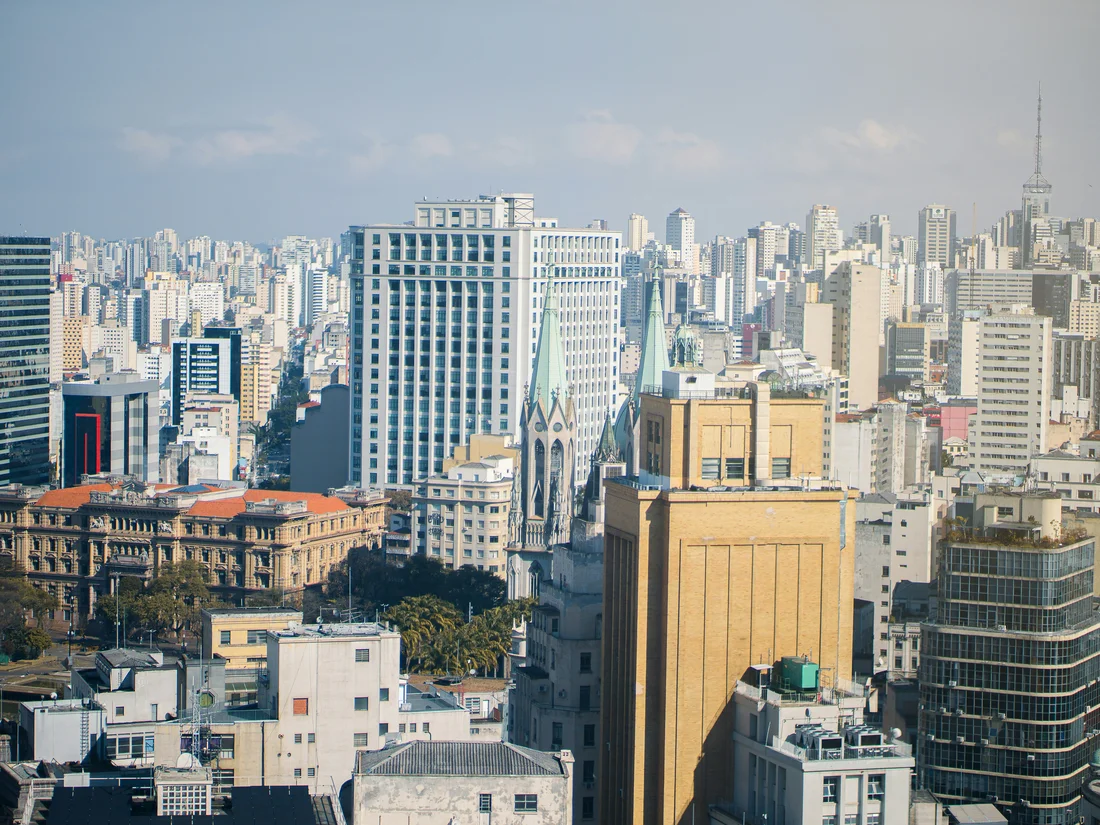
São Paulo is a cultural powerhouse, and it’s home to the São Paulo Bienal (the second-oldest in the world) as well as Latin America's largest art fair, SP-Arte. Yet for all its scale, the city’s art scene “feels like it grew in secret, slowly, almost by accident,” in the words of Fernanda Brenner, founding artistic director of the nonprofit space Pivô. São Paulo spans more than 1,500 square kilometers and defies easy navigation; what holds it together for art lovers is a network of distinct cultural clusters—gallery districts, modernist landmarks, artist-run spaces—each with its own rhythm.
As the influential gallerist Nara Roesler, whose gallery turns 50 this year, told Artsy, the city “provides an opportunity to experience a cultural ecosystem that is constantly evolving and to discover the richness and diversity of Brazilian and Latin American art through the people who make the city so dynamic.”
This guide offers a bespoke selection of galleries, museums, and favorite places to unwind, selected by those in the city’s art scene. Click the links to see their Google Maps or Artsy pages.
The key neighborhoods for art lovers in São Paulo
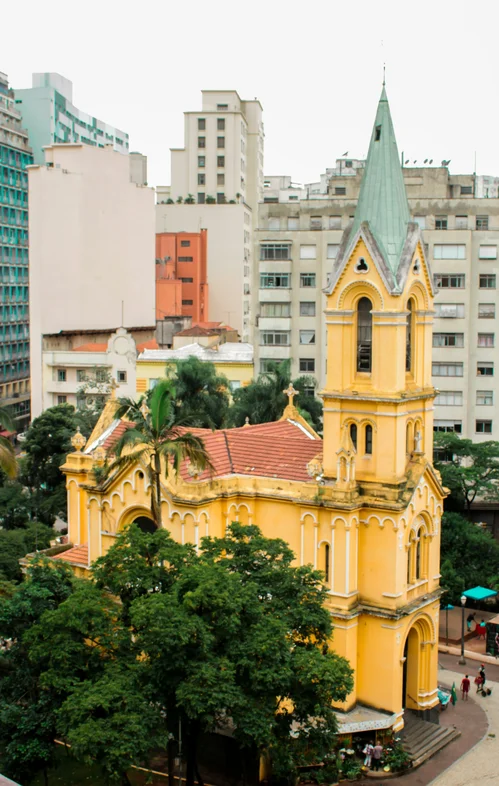
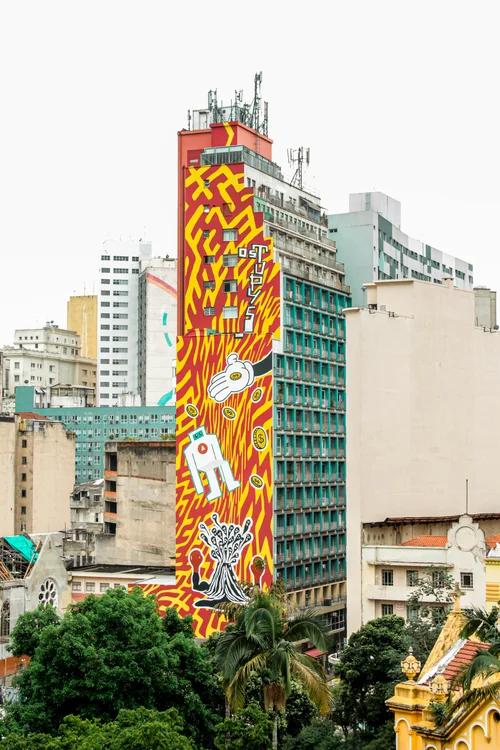
“In a city as vast and complex, where mobility remains a challenge, the emergence of vibrant cultural clusters has become increasingly important in fostering connections and shaping meaningful artistic communities,” said Kiki Mazzucchelli, co-founder of the newly inaugurated gallery Mazzucchelli Cardoso and co-curator of ABERTO, an art project occupying landmark buildings.
Four clusters anchor the São Paulo art map.
Jardins
The city’s upscale residential and luxury shopping district, where leafy streets and modernist houses hold most of São Paulo’s most established galleries within walking distance.
- Gomide & Co.: known for pristinely curated shows by contemporary Brazilian artists including Hélio Oiticica, Mira Schendel, and Lenora de Barros.
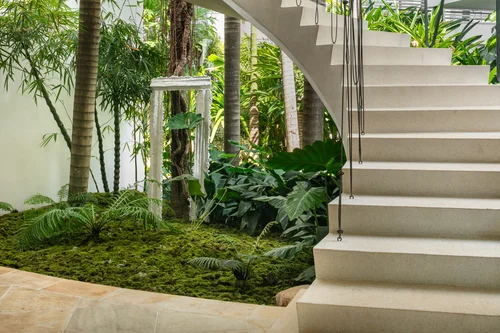
- Luciana Brito: Founded in 1997, the gallery represents the estate of Brazilian artist Waldemar Cordeiro alongside artists such as Alex Katz and Marina Abramović. In 2016, it moved into a modernist Rino Levi house with a garden by Roberto Burle Marx.
- Luisa Strina: Dubbed “the grande dame of Brazilian art,” Strina opened her gallery in 1974. She represents renowned Brazilian and international artists including Anna Maria Maiolino, Alfredo Jaar, and Olafur Eliasson.
- Martins&Montero: emerged in 2024 with locations in São Paulo and Brussels; represents seminal 1970s artists such as Hudinilson Jr., alongside emerging names like Ana Mazzei and Jota Mombaça.
- Mazzucchelli Cardoso: co-founded by Kiki Mazzucchelli and Luciana Cardoso, “committed to research, experimentation, and the development of meaningful artistic trajectories,” Mazzucchelli explains.
- Nara Roesler: With outposts in São Paulo, Rio de Janeiro, and New York, Roesler represents storied names such as Abraham Palatnik—a key figure of Brazilian kinetic and Op art—alongside established and mid-career artists including Lucia Koch and Brígida Baltar.
Center and Higienópolis
The historic downtown that Brenner describes as “left behind by money and somehow more alive for it—a place where art and the thinking it invites seem to gather in the cracks.” Mazzucchelli highlights the modernist icon Galeria Metrópole, “recently occupied by several project spaces: Surplus, run by curator Erica Burini and artist Kauê Garcia; 25M, a former retail space that fosters experimental practices; and pop-ups that take place in different shops.” Adjacent Higienópolis is home to modernist apartment blocks built in the 1940s–50s by architects fleeing war-torn Europe.
- Verve: founded in 2013 by artists Allan Seabra and Ian Duarte Lucas; focused on Brazilian contemporary art.
- A Gentil Carioca: founded in 2003 by artists Márcio Botner, Ernesto Neto, and Laura Lima; has kept a pulse on exciting contemporary Brazilian art ever since.
- Central: founded in 2016 by Fernanda Restom; presents a wide, conceptually rich program.
- Vermelho: founded in 2002; features Latin American and Brazilian contemporary artists including Claudia Andujar and Tania Candiani.
Vila Madalena
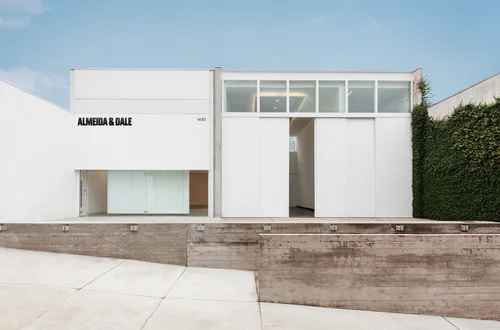
The city’s bohemian heart—gallery-dense, café-lined, where artists actually meet after openings.
- Almeida & Dale: founded in 1998; known for exhibitions of internationally renowned artists such as Lygia Clark, while also championing a new generation of Black Brazilian and Indigenous artists.
- Raquel Arnaud: Arnaud has supported Brazilian and Latin American artists since 1973, representing some of the essential Concrete and Neo-Concrete artists.
Barra Funda
A rapidly changing neighborhood, traditionally home to commercial warehouses, which is now home to energetic galleries and art collectives.
- Fortes D’Aloia Gabriel: a trailblazer in São Paulo’s contemporary scene since 2001; shows the 1980s generation—Leda Catunda, Beatriz Milhazes—alongside younger artists in multimedia and performance.
- Mendes Wood DM: Since opening in 2010, the gallery added a second São Paulo location at Rua Iramaia 105—the modernist Casa Iramaia, worth visiting for the architecture alone. It represents a robust roster of contemporary Latin American and international artists.
- GDA Artistas: an artist-run collective dedicated to experimental and conceptual contemporary art practices; founded in 2021.
The museums and private collections to know in São Paulo
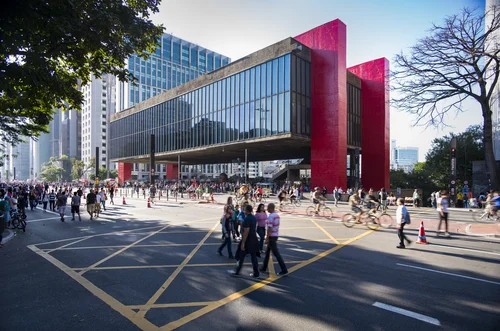
“São Paulo is perhaps the city where contemporary art most directly confronts the contradictions of the present,” Amanda Cordeiro, curator at MASP, told Artsy. “What makes it unique is not merely its scale, but the friction between a certain urban utopia born of plural modernisms and the urgent realities of a deeply unequal and diverse city.”
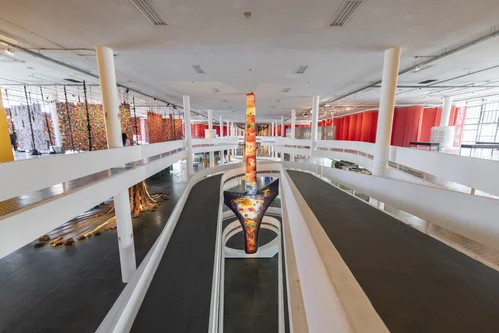
- Museum of Art of São Paulo Assis Chateaubriand (MASP): the city’s most important museum, housed in Lina Bo Bardi’s monolithic concrete-and-glass building from 1968—and, since 2025, also in the 14-story monolithic Annex across the street. The collection spans canonical European modernism and contemporary art from the Global South. Cordeiro singles out MASP’s vão livre, the vast open space beneath the building, as “the museum’s most defining image—suspended, yet open to a space that belongs to the city.”
- Pinacoteca Luz and PINA Contemporânea: an essential historical span of Brazilian art. As chief curator Ana Maria Maia told Artsy, “the museum’s mission is to consider Brazilian art in dialogue with cultures from around the world, which stems from São Paulo’s cosmopolitan identity.”
- Andrea & José Olympio Pereira Collection at Galpão da Lapa: Opened to the public in 2026, this private collection—displayed in a vast warehouse in Lapa—is a treasure trove of Brazilian modern and contemporary art. The Olympio Pereiras holds more than 2,400 works shown in rotating displays. Book in advance on the Galpão da Lapa website.
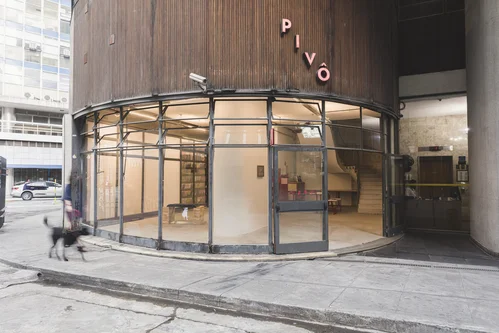
- Pivô: the nonprofit exhibition space and art research residency, delivering stellar shows since Brenner founded it in 2012. It sits inside Copan, the S-shaped mega-block designed by Oscar Niemeyer. “What stays with me is how art here slips out from behind glass and into the everyday,” Brenner said of the area. “On the ground floors of the building it all runs together—the Megafauna bookshop, Bel Coelho’s Cuia with its natural wine and food that tastes like memory, and a few steps down Fel, pouring some of the best cocktails in town, where you can most definitely find me when I am around.”
- Instituto Moreira Salles (IMS): Brazil’s preeminent photography institution, “whose archives and program are among the finest in Brazil” Brenner said. IMS opened in Rio de Janeiro in 1992 and in São Paulo in 2017. A site-specific large-scale installation by Richard Serra graces the back garden.
- Tomie Ohtake Institute: Designed by Ruy Ohtake and opened in 2001, the institute has staged some of Brazil’s most ambitious recent exhibitions—including 2018’s “Afro-Atlantic Histories,” co-hosted with MASP.
Where the art world in São Paulo eats, drinks, and shops
The places where artists, gallerists, and curators actually gather are easy to miss without a local steer.
For drinks
Bar Balcão, Carneiro’s top pick with its single curving bar, has been a meeting point for the city’s critics, actors, artists, and curators for decades. In Vila Madalena, São Cristóvão is where artists gather after openings, according to Hena Lee, partner-director of Almeida & Dale; it’s also excellent for a traditional feijoada on a Saturday. The Punch, an intimate Japanese-style cocktail bar, is strictly by reservation and turns out innovative drinks with unusual ingredients; Guarita is more mixology-forward, with bartenders happy to build drinks to your palate. SubAstor is the classic Caipirinha stop—try something with seasonal fruits like tangerine or cajú. Beverino is a much-loved wine bar with a curated stock of biodynamic bottles you can pick off the shelves yourself.
For dinner
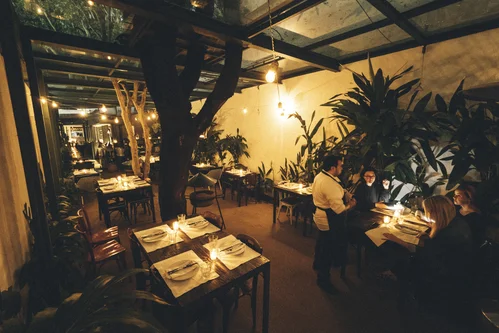
A Figueira Rubaiyat sets the city’s most photographed table around a centuries-old fig tree—it’s the high-end pick. In Centro, Bar da Dona Onça and Casa do Porco are inseparable from Pivô’s neighborhood; both are helmed by chef Janaína Rueda. “Janaína Rueda, a genius who laid the first stone of Copan’s new life right when we got there almost 15 years ago, turned home cooking into something communal,” said Brenner, “and with Casa do Porco, she keeps reshaping what the city can taste.” Chou offers an intimate garden and a menu built around seasonal ingredients. Le Freak is “a lively spot with a crowd that often includes artists, curators, and other people from São Paulo’s cultural community,” per Mazzucchelli. Metzi does ambitious Brazilian Mexican fusion; Hirá Ramen Izakaya is Lee’s pick for ramen. Piselli Jardins is the go-to for fresh pasta and a stellar wine list, and Shoshana, a tiny and much-cherished Jewish restaurant a few steps from Centro’s community arts center Casa do Povo, is a local staple.
For lunch
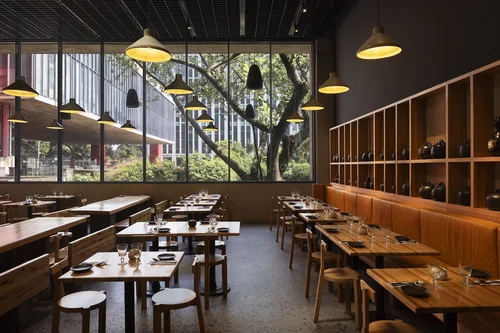
A Baianeira—Carneiro’s pick—inside MASP and led by chef Manuelle Ferraz, serves traditional Bahian and Mineiro cuisine. Cuia, on the ground floor of the Copan building, is Mazzucchelli’s pick: “a relaxed spot with excellent Brazilian-inspired cuisine, popular among people from the local creative scene.” In Jardins, Le Jazz is the reliable French bistro that draws an arty crowd (equally good for a casual dinner), while Botanikafé is the young-crowd go-to for sandwiches, vegetarian fare, and a fortifying espresso before dashing back to the galleries.
Top tips for art lovers visiting São Paulo
How to plan: São Paulo sprawls. Trying to cross gallery districts on a whim doesn’t work. Build the day by cluster—Jardins in the morning, Centro after lunch, Vila Madalena for early evening openings and dinner. Galleries are walkable within their cluster, but Uber is the standard way to move between them. The metro doesn’t reach most gallery areas, and rush-hour traffic across the city is unforgiving.
What locals know: Most galleries close Sundays and Mondays, with shorter Saturday hours; many of the strongest project spaces operate by appointment only—email ahead. Opening nights rarely start before 7 p.m. and often run late, spilling into dinner. As Brenner puts it: “Nobody is ever in a hurry to go home.”
Bringing work home: Exporting art from Brazil requires more paperwork than from European or U.S. galleries. Most São Paulo galleries handle international shipping routinely, but build in lead time. Speaking Portuguese helps; English is widely spoken in commercial galleries.
