






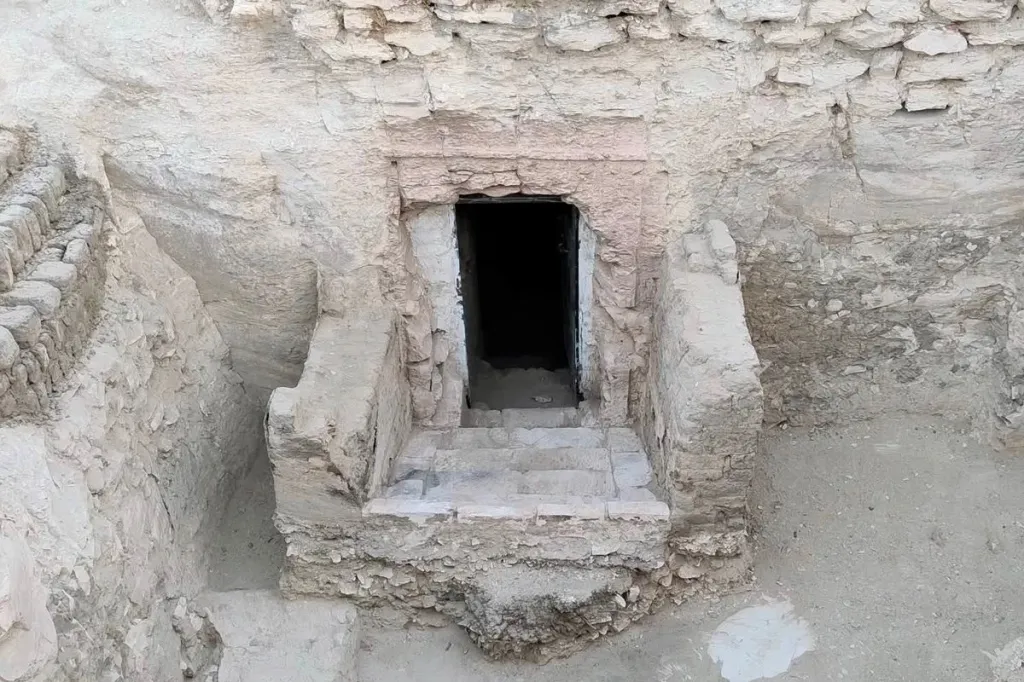
Archaeologists have uncovered a previously unknown tomb in the ancient Egyptian necropolis of Sheikh Abd El-Qurna on Luxor’s West Bank. The 3,000-year-old monument contains colorful wall paintings as well as inscriptions identifying the former occupant as a man named Paser.
Part of the Theban Necropolis, a UNESCO World Heritage site, the Sheikh Abd El-Qurna cemetery is known for its concentration of tombs of priests and high-ranking officials from Egypt’s New Kingdom (1570–1069 BCE). Based the artistic style of its decorations, the newly uncovered monument is believed to date to the Ramesside period (ca. 1292–1069 BCE), which spans 19th and 20th dynasties of the New Kingdom.
The discovery was made during the current excavation season by a Dutch archeological mission from Leiden University led by Carina van den Hoven. Van den Hoven has directed research at the site since 2018 in cooperation with Egypt’s Supreme Council of Antiquities (SCA), which made the announcement.
According to Mohamed Abdel Badie, head of the Egyptian Antiquities Sector, the monument follows the traditional layout of a New Kingdom elite private tomb, comprising an open forecourt leading to a rock-cut chapel, beneath which lie underground burial chambers. In the courtyard, archeologists found well-preserved architectural features, including mudbrick walls containing a niche for a funerary stela and a staircase leading to the tomb’s entrance.
Inside, inscriptions name Paser as the tomb’s owner. Though sections of the monument’s decorated walls remain concealed by a thin layer of dirt, visible scenes show him worshipping various deities within shrine settings. Elsewhere, they depict him seated with his wife at an offering table; in New Kingdom art, such images served as magical substitutes for the real thing, providing the deceased with an eternal supply of food and drink.
“The team will continue documenting and studying the tomb to identify those buried within it and reconstruct their identities,” said Hisham Al-Leithy, secretary-general of the SCA.


