





The British artist Piers Secunda, whose work focuses on geopolitical and social issues, is addressing Russia’s destruction of Ukrainian cultural heritage and kidnapping of its children in a new exhibition. Titled Nature Morte: The Extermination of Ukraine (until 6 September), the show is on display at London’s Fitzrovia Gallery.
Nature Morte is the result of a self-funded, three-year research project for which Secunda travelled to Ukraine. It displays a body of charcoal ink-on-paper works made using the soot of a government building bombed in Kharkiv in eastern Ukraine, brought to Secunda by his friend, the war correspondent Jerome Starkey. A painter and sculptor, Secunda has previously created drawings using charcoal from the burned-out Mosul Museum destroyed by Isis in Iraq.
Piers Secunda in Kharkiv in February 2026 Courtesy of the artist
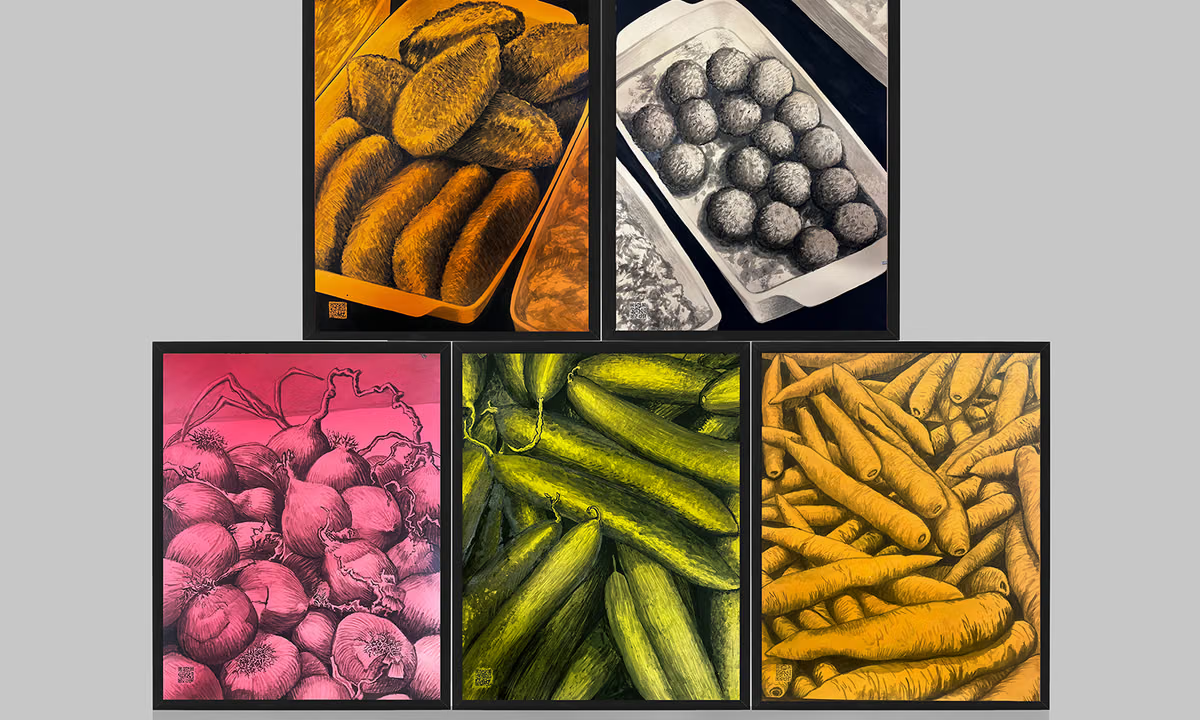
Secunda’s 21 artworks for Nature Morte depict ingredients and traditional Ukrainian foods, such as Borshch (a traditional sour vegetable soup) and pampushky bread, reflecting their importance to Ukrainian identity. The paintings are grouped into three pyramids and one vertical display with the titles The Deportation of Ukrainian Children; The Looting of Ukrainian Art and Culture; The Militarisation of Ukrainian Children and The Attempt to Destroy Odesa Cathedral (all 2026).
In the pyramid and linear layouts, the paintings are organised into images of raw ingredients like fruits and vegetables at the bottom, prepared foods in the middle and then breads at the top. “Everybody can understand and relate to the idea of converting raw ingredients into food, and then food becomes tradition over the course of time,” Secunda tells The Art Newspaper.

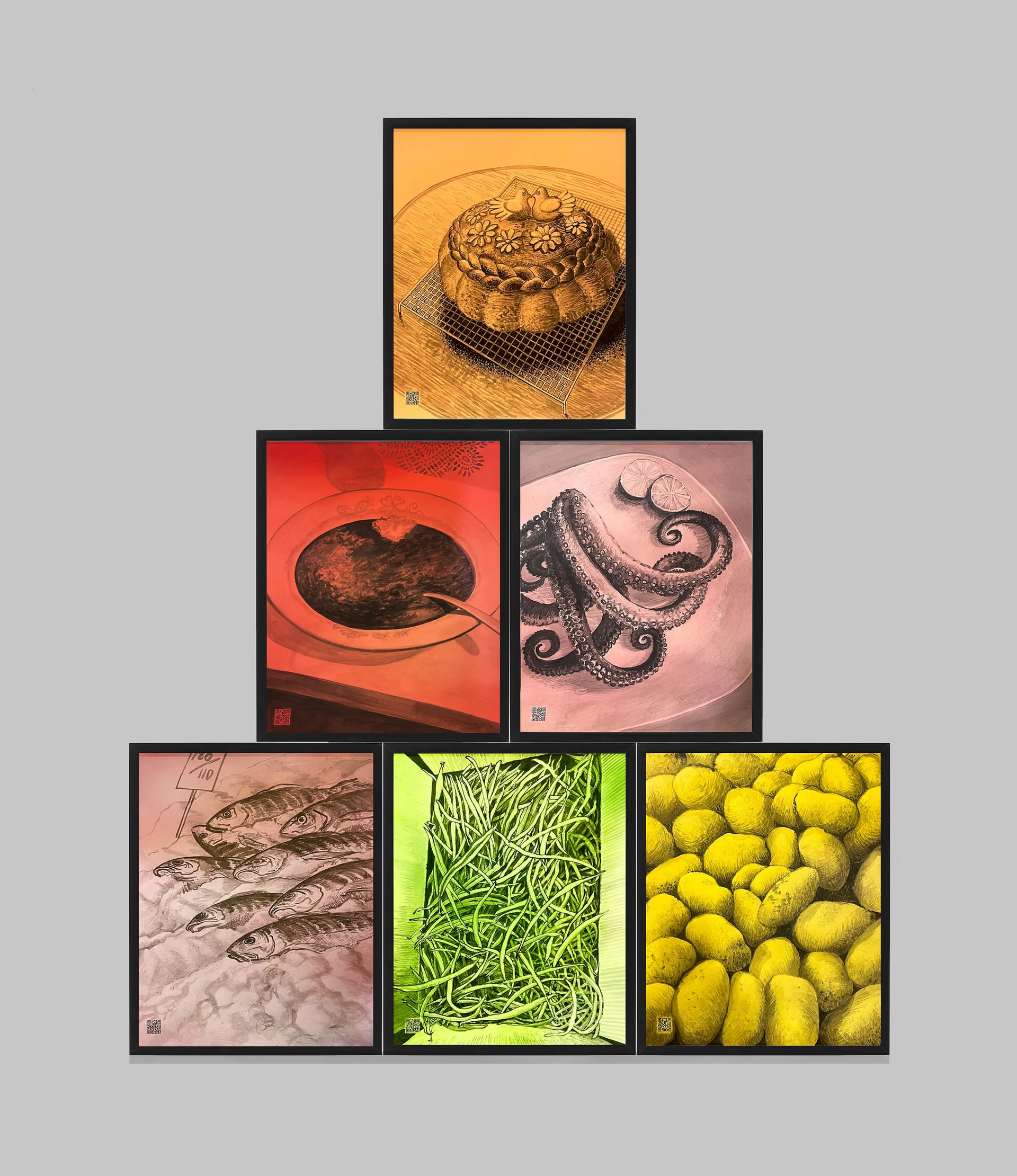
Piers Secunda’s The Militarisation of Ukrainian Children (2026) Courtesy of the artist and Fitzrovia Gallery
These layouts reflect Russia’s targeting of Ukraine’s food culture as well as a metaphor for the power structures in the Russia-Ukraine conflict, Secunda tells The Art Newspaper. “I wanted to emulate the power structure that shows that there’s somebody at the top who’s in charge […] from whom the orders and the command percolate downwards,” he adds.
Each painting features a QR-code (also accessible on Secunda’s website) that links to an individual identified by the Ukrainian government as complicit in the crimes named within that grouping of works’ title. In total, 21 people are named. The linked archives combine “open-source evidence with information gathered through extensive interviews with Ukrainian NGOs, museum and archive professionals, cultural-sector workers, government employees, independent researchers and intelligence services”, a press release says.

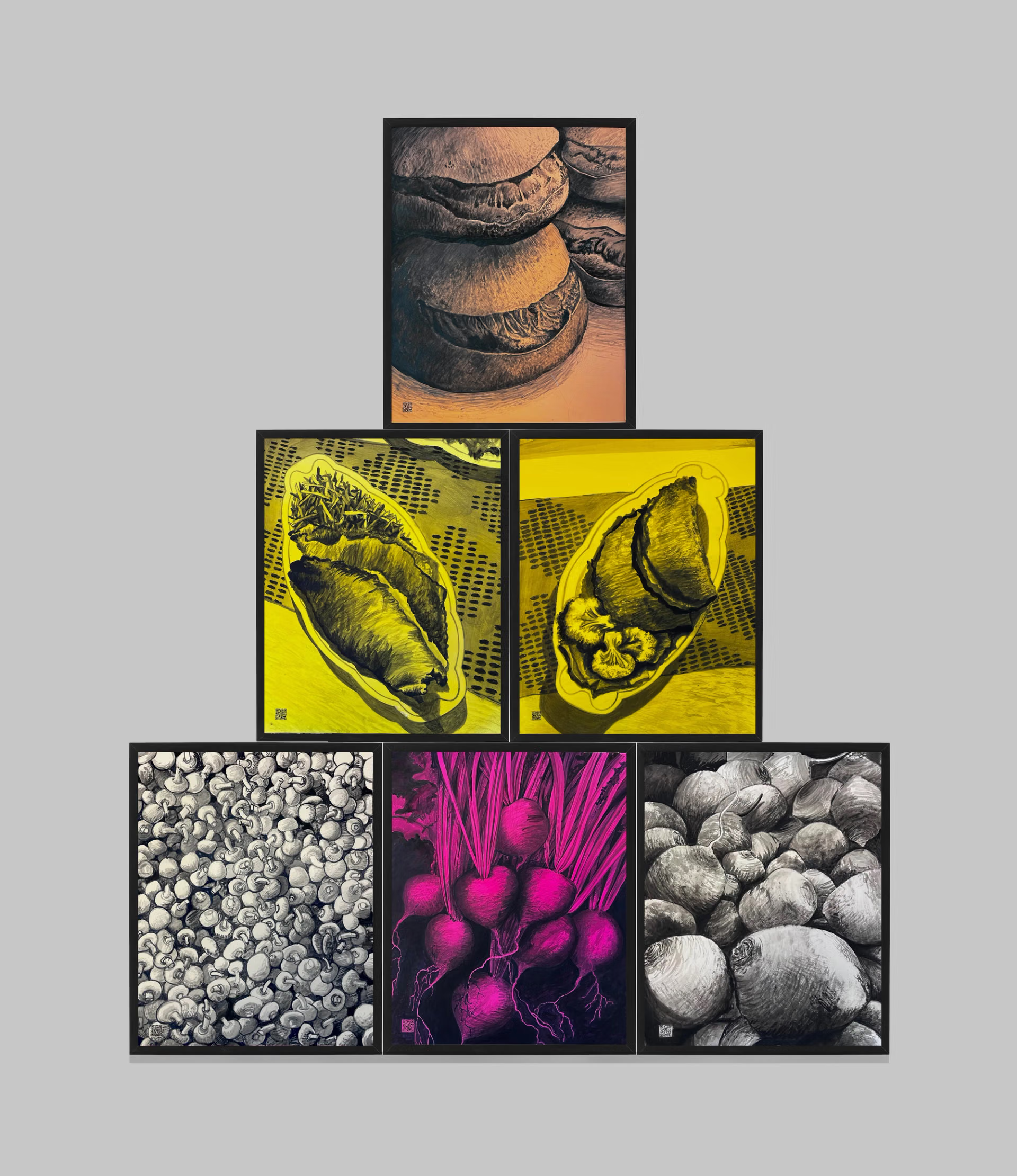
Piers Secunda’s The Deportation of Ukrainian Children (2026) Courtesy of the artist and Fitzrovia Gallery
For further research on the crimes and personalities, Secunda worked with Vladyslav Havrylov, a Ukrainian church historian now focused on studying Russia’s deportation and “re-education” of Ukrainian children, primarily from occupied territories. Havrylov says the exhibition is meant to draw attention to Russian government officials “as well as church leadership, who are involved in crimes against Ukrainian children”.
For example, Patriarch Kirill I of the Russian Orthodox Church, linked via a painting of bread, sits at the top of The Deportation of Ukrainian Children pyramid. The research document about him, and all of the others, reads like a wanted poster: “Perpetrator: Patriarch Kiril. Crimes: Promotes any actions which are perceived to weaken Ukraine. He sanctifies the invasion of Ukraine as a ‘Holy War’. His church charity runs channels for transport and distribution of force deported Ukrainian children to orphanages and adoption homes in Russia.”

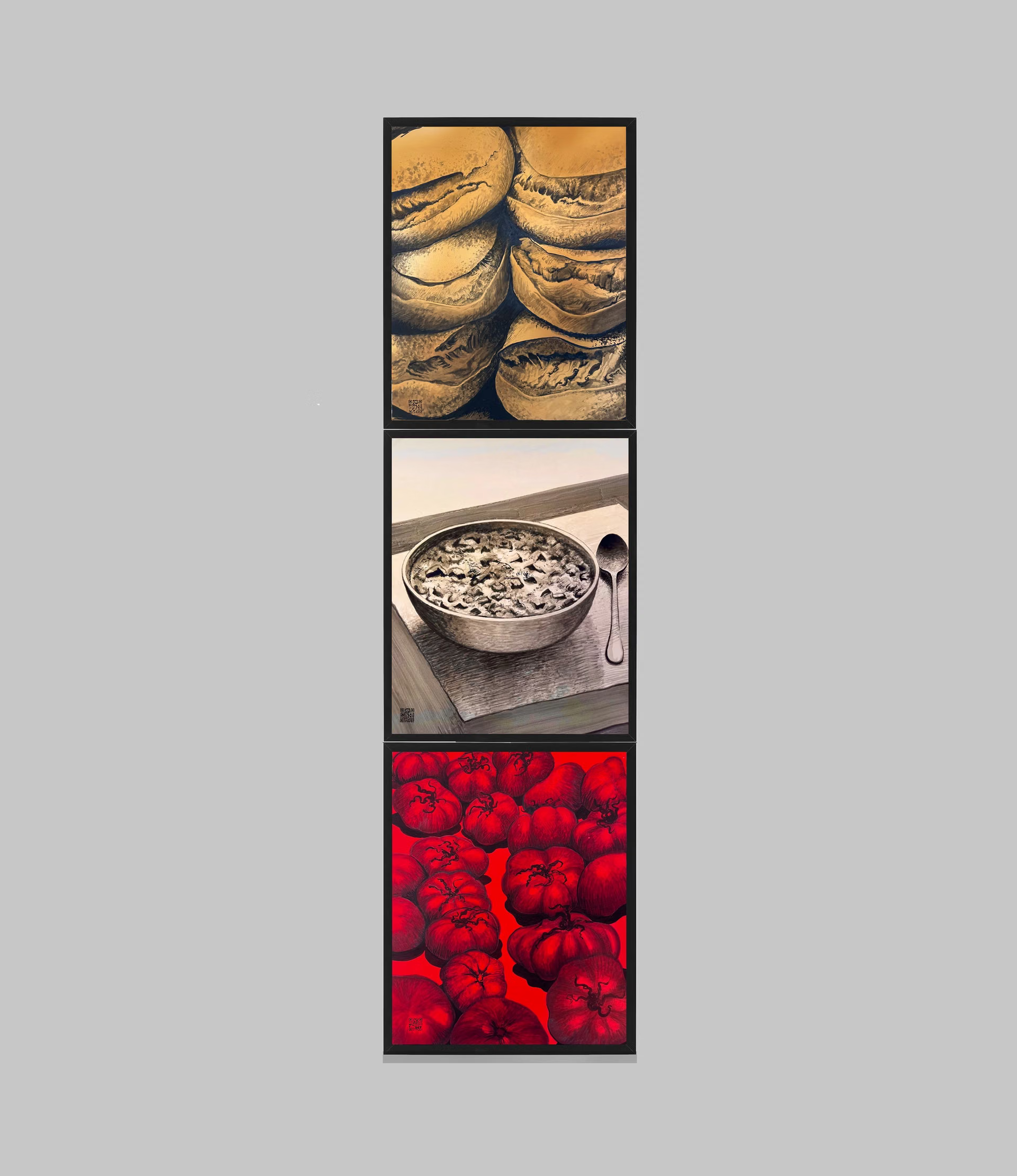
Piers Secunda’s The Attempt To Destroy Odesa Cathedral (2026) Courtesy of the artist and Fitzrovia Gallery
Each of the images below the bread linked to Patriarch Kirill I opens to individuals from religious and civil authorities accused of targeting Ukrainian cultural identity for forced “Russification”.
Marina Peschanskaya, the ombudswoman for children’s rights in Sevastopol in Russian-occupied Crimea, linked to the turnip image, is quoted as saying that children from the Kherson and Zaporizhzhia regions, which remain partially occupied by Russia, must be “psychologically ‘reformatted’ because they were ‘raised in hatred of Russia’”. Peschanskaya is sanctioned by the European Union, Switzerland, and Ukraine, Patriarch Kirill by the UK, Canada, Australia, and the Czech Republic. Two other church officials identified in the pyramid are not sanctioned.

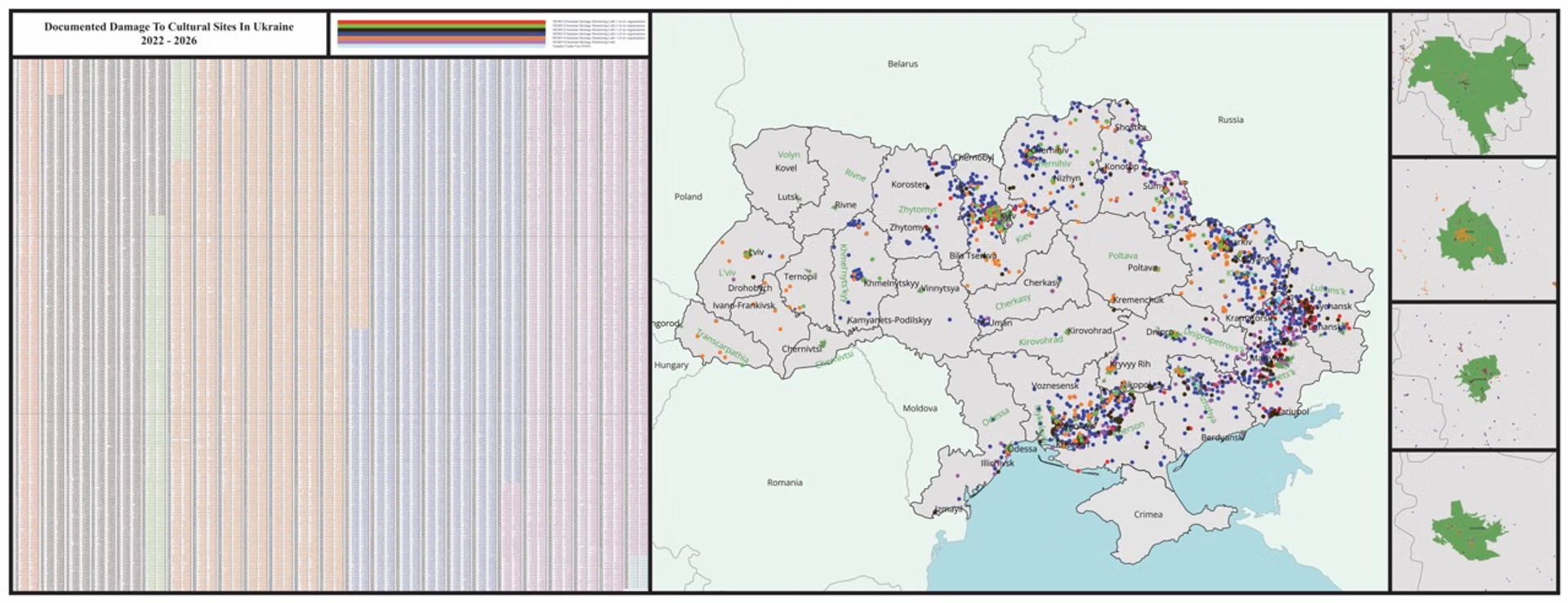
The infographic Documented Damage To Cultural Sites In Ukraine 2022 to 2026 is also included in the show Courtesy of the artist and Fitzrovia Gallery
Also presented in the exhibition is a large-scale map depicting 6,374 recorded points of damage to cultural sites across Ukraine, which is based on data compiled by the Ukrainian Heritage Monitoring Lab. A 40-minute film, by Secunda’s long-term collaborator David Miller, that documents the artist’s research and includes interviews with cultural workers and experts in Ukraine, is also on view.
Secunda tells The Art Newspaper that when he started the project he had set out “to figure out what Russia was doing and understand how they were disassembling the culture”. With his 25 years of experience in documenting conflict, he concluded that “Russia has merged the tactics of Isis in Iraq with what it learned as a result of fighting Isis in Syria. It displays a very clear intent to completely delete Ukraine’s cultural identity and rewrite it as entirely Russian.” The exhibition coincided with Ukraine’s 35th Independence Day on 24 August and the fifth year of Russia’s full-scale invasion.
Secunda is donating 15% of the money from exhibition sales to the restoration of a cathedral at the historic Kyiv Pechersk Lavra, which was hit by a Russian strike in June.
- Piers Secunda: Nature Morte: The Extermination of Ukraine, until 6 September, Fitzrovia Gallery, London


