


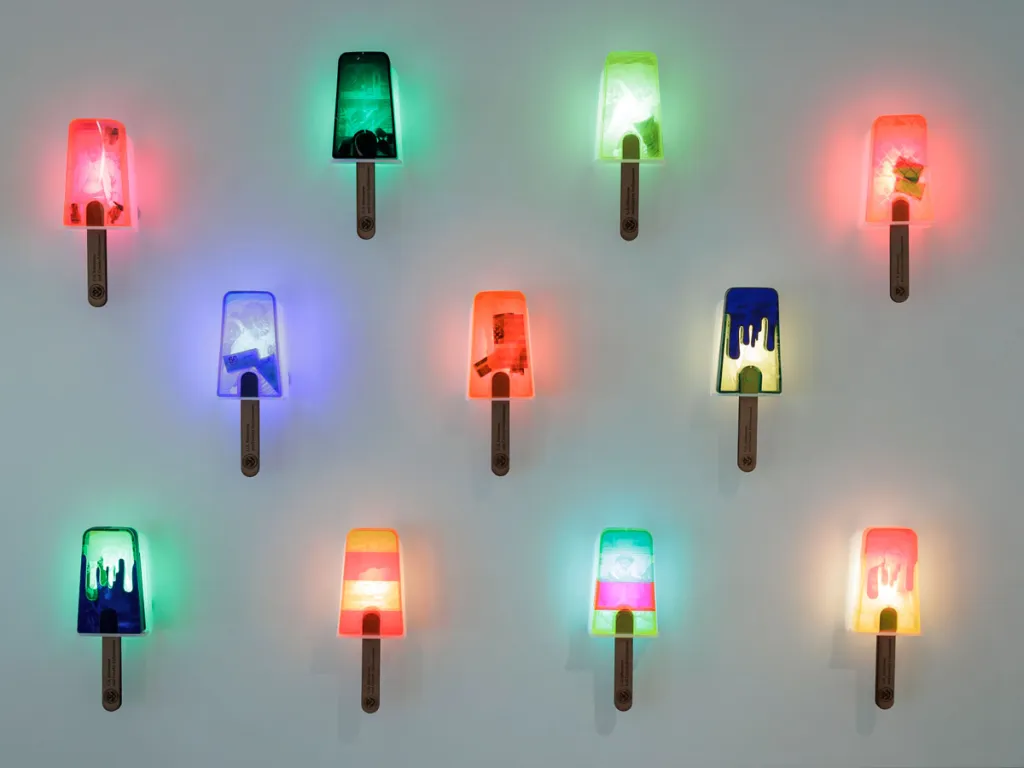
As accusations of censorship mount at museums nationwide, a new resource has emerged to help artists safeguard freedom of expression. The Artist’s Guide to Defending Artistic Freedom, from the National Coalition Against Censorship (NCAC), outlines strategies for artists facing canceled exhibitions, demands to alter works, and contract negotiations—situations that the guide notes are increasingly shaped by shrinking institutional space for risk-taking art.
In its introduction, the NCAC defines censorship broadly: when institutional leadership or “government actors” cancel or withdraw an invitation to present work over disagreement with its “perceived message,” or out of concern for public backlash. It also extends the definition to include works suppressed for the “socio-political positions” they express.
Against the backdrop of the second Trump administration and its exceptionally hostile stance toward diversity, equity, and inclusion, censorship controversies have surfaced at both major and local arts and cultural institutions.
Prominent artist Amy Sherald canceled her retrospective, “American Sublime,” at the Smithsonian National Portrait Gallery after the museum allegedly pressured her to remove or alter a painting depicting a Black transgender woman as the Statue of Liberty. Likewise, Nicholas Galanin and Margarita Cabrera withdrew from a symposium at the Smithsonian American Art Museum over the institution’s decision to keep the event private and record it—a move the artists characterized as government censorship, an accusation the museum denied.
Indiana University made headlines for canceling a 20-year retrospective of Samia Halaby, citing “security concerns” after she posted pro-Palestinian statements online. Meanwhile, University of North Texas faced outcry for abruptly shuttering an exhibition by artist Victor “Marka27” Quiñonez, allegedly because of its anti-ICE messaging.
Leaked transcripts show that University of North Texas leaders worried that proceeding with Quiñonez’s exhibition could draw scrutiny from elected officials with the authority to allocate—or withhold—state funding, as recently seen at the University of Texas at Austin and Texas A&M University.
The NCAC guide addresses situations in which an artist’s work is framed as a potential threat to donor or federal funding, advising: “Remind the institution that side-stepping curatorial integrity and mission-centric decision-making can expose them to a greater loss of public trust [and] reputational damage.”
Museum workers are likewise reminded of their responsibility to provide an equitable platform for perspectives that may not align with every visitor’s values. In an interview with The Art Newspaper, Elizabeth Larison, director of arts and culture advocacy at the NCAC and a co-author of the guide, said that “even if curators or other institutional employees engage in behind-the-scenes resistance for artistic freedom, the absence of a public argument for artistic freedom is often filled by the work’s detractors.” She added: “Under these challenging circumstances, it can be less effective to let the artwork ‘speak for itself.’ Artists need to be able to advocate for their own work.”
The guide also introduces readers to the concept of the “Streisand Effect,” which holds that the more an institution attempts to suppress or deflect attention from a controversy, the more likely it is to attract public scrutiny. Framing this phenomenon as a strategic tool, the guide states: “With censorship, attempts to avoid negative publicity tend to backfire. Censorship often causes even more negative attention and controversy for the organization.”
The NCAC guide follows the 2024 launch of the Art Censorship Index, a digital tool that tracks and maps incidents of pro-Palestinian censorship since October 7, 2023. According to its website, the project’s mission is to defend the right to free expression for “creators of all forms of art and cultural production.”
Among the incidents documented by the index since its launch are the cancellation of a panel featuring Berlin-based Palestinian artist Jumana Manna as part of a “Director’s Dialogue on Art and Social Change” at Ohio University’s Wexner Center for the Arts, and calls to remove an exhibition titled “U.S.-Israel War Machine” from the Chicago Cultural Center.
The NCAC encourages users of both its artist guide and the Art Censorship Index to report suspected incidents of censorship to the organization.
