


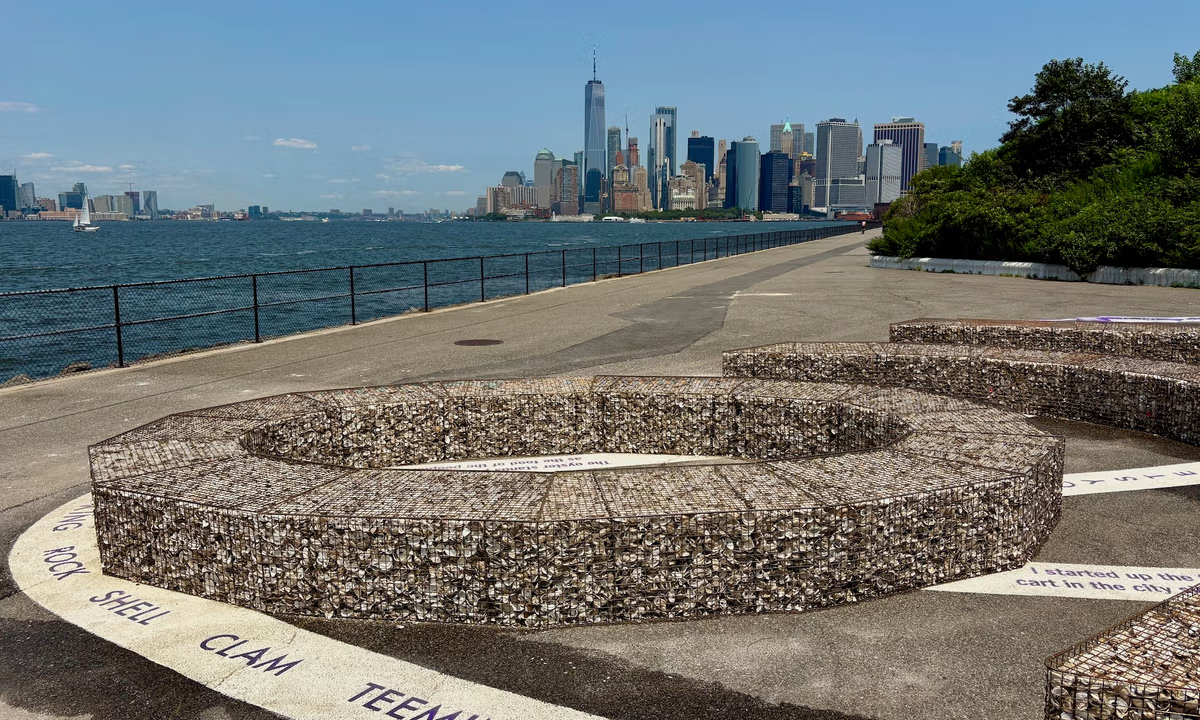
When Dutch colonists arrived in New York Harbour in the early 17th century, they settled on Paggank, a small plot of land now known as Governors Island. At the time, they encountered an estuary teeming with oyster reefs and land covered in shells and middens, piles with food remnants and cultural artefacts formed by Lenape people for generations. As European settlers continued to arrive, Governors Island became a contested area, the Lenape were displaced and their middens slowly disappeared. Over time, the island became a colonial military outpost, then a headquarters to the Coast Guard, before becoming a public park and cultural destination.
While reminders of this history remain throughout Governors Island, a new art installation opening 30 July brings the site’s Indigenous legacy to the fore. Called The Oyster, the sculpture by the Mohawk artist Alan Michelson (Six Nations of the Grand River) is filled with shells and resembles a “contemporary Indigenous geoglyph, a monumental earthwork in the shape of an oyster shell”, the artist explains. Visitors can walk through and sit on the structure, which is surrounded by texts reflecting on the oyster, from its history to its environmental and cultural significance.
“I wanted to work with shell, being a quintessentially Indigenous material prized for its opalescence,” Michelson says. “I also wanted to commemorate the Indigenous middens that once dotted the harbour, lost evidence of its abundance over eons of Indigenous stewardship.”
Commissioned by the non-profit More Art in partnership with Billion Oyster Project and Governors Island Arts, the project is part of “Reframing 1776: Land, Water, and the Work of Repair”, More Art’s initiative to centre Indigenous voices and environmental histories on the occasion of the 250th anniversary of US independence.
“Michelson’s practice has long examined the intersections of history, memory and place, and The Oyster offered an extraordinary opportunity to bring those conversations into the public realm through a work that is at once sculptural, ecological and civic,” says Micaela Martegani, More Art’s executive director and chief curator. “Governors Island emerged as the ideal setting because it sits at the convergence of so many of the project’s concerns.”
Alan Michelson, The Oyster, 2026. (Install progress detail). Commissioned by More Art in partnership with Billion Oyster Project and Governors Island Arts. Photo courtesy Alan Michelson.
For centuries, Governors Island and the surrounding New York Harbour were shaped by industry, a story embodied by the oyster. As New York grew into a global port, oysters became a defining commodity. With industrialisation came pollution and the harbour was transformed beyond recognition. As water quality deteriorated, reefs disappeared, and by the 1920s, New York’s oyster population—once representing half of the world’s oysters by some estimates—had effectively collapsed.
“The Oyster acknowledges an unsettling past that through collective effort can alchemise into a better and more just future for all the interdependent beings of Turtle Island,” Michelson says.
Today, Governors Island and oysters are part of New York’s story of revitalisation. Organisations like Billion Oyster Project are restoring reef systems throughout the harbour, recycling discarded restaurant shells and cultivating oysters. Restored reefs serve as living infrastructure, cleaning the water, reducing erosion and increasing coastal resilience as sea levels rise. When Michelson’s installation closes in November, some components will be returned to the water, becoming part of the revitalisation efforts.
“One of the qualities we admire in Alan’s work is its ability to make layered histories visible without resolving them into a single story,” says Martegani. “Rather than offering easy conclusions, the work holds ecological, Indigenous, colonial and civic histories together in productive tension, inviting visitors to consider how they continue to shape one another today.”
Michelson’s project is one of a handful of artistic endeavours related to the environment on view throughout Governors Island this summer. Visitors who arrive on the Harbor Charger, the first hybrid-electric ferry in the state, might see Anna Valdez’s mural Spring Migration(2026), which features migratory and non-migratory birds to symbolise the history of Indigenous and settler communities in the harbour.
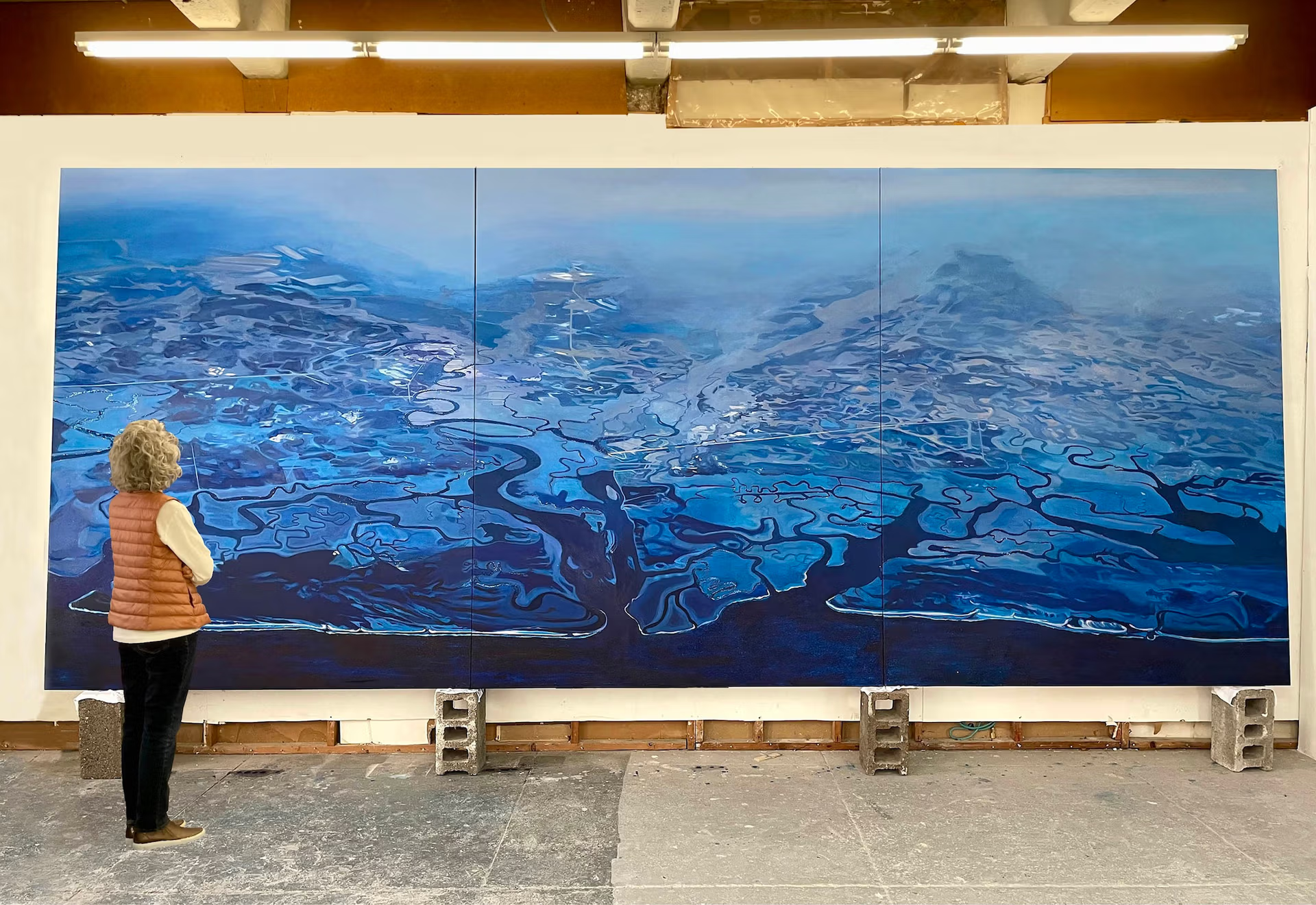
Leslie Wayne standing in front of the finished painting The Unintended Blues (2026) in her studio Photo by Don Porcaro. Courtesy Leslie Wayne
On the island, the artist Leslie Wayne’s exhibition at the Arts Center The Unintended Blues(until 27 September), presented by the Lower Manhattan Cultural Council (LMCC), ushers in crucial conversations on the impact of climate change. Inspired by aerial photographs and climate science, Wayne’s work juxtaposes the beauty of landscapes with their fragility, inviting viewers to consider the urgent environmental challenges facing coastal communities worldwide.
Part of LMCC’s 25th River To River Festival, the exhibition includes monumental paintings of melting Arctic glaciers and vulnerable American coastlines, including New York Harbour, as well as a sculpture, handouts on climate science and a video projection of lapping water intended to give viewers the feeling of trying to stay afloat.
“What I’m hoping is that all of these elements together will create an experience that is multi-dimensional, thought provoking and profound,” says Wayne. “As an artist all I can do is hold up a mirror to ourselves and hope we see that the splendour of life on this planet is inextricably tied to what we do on it.”
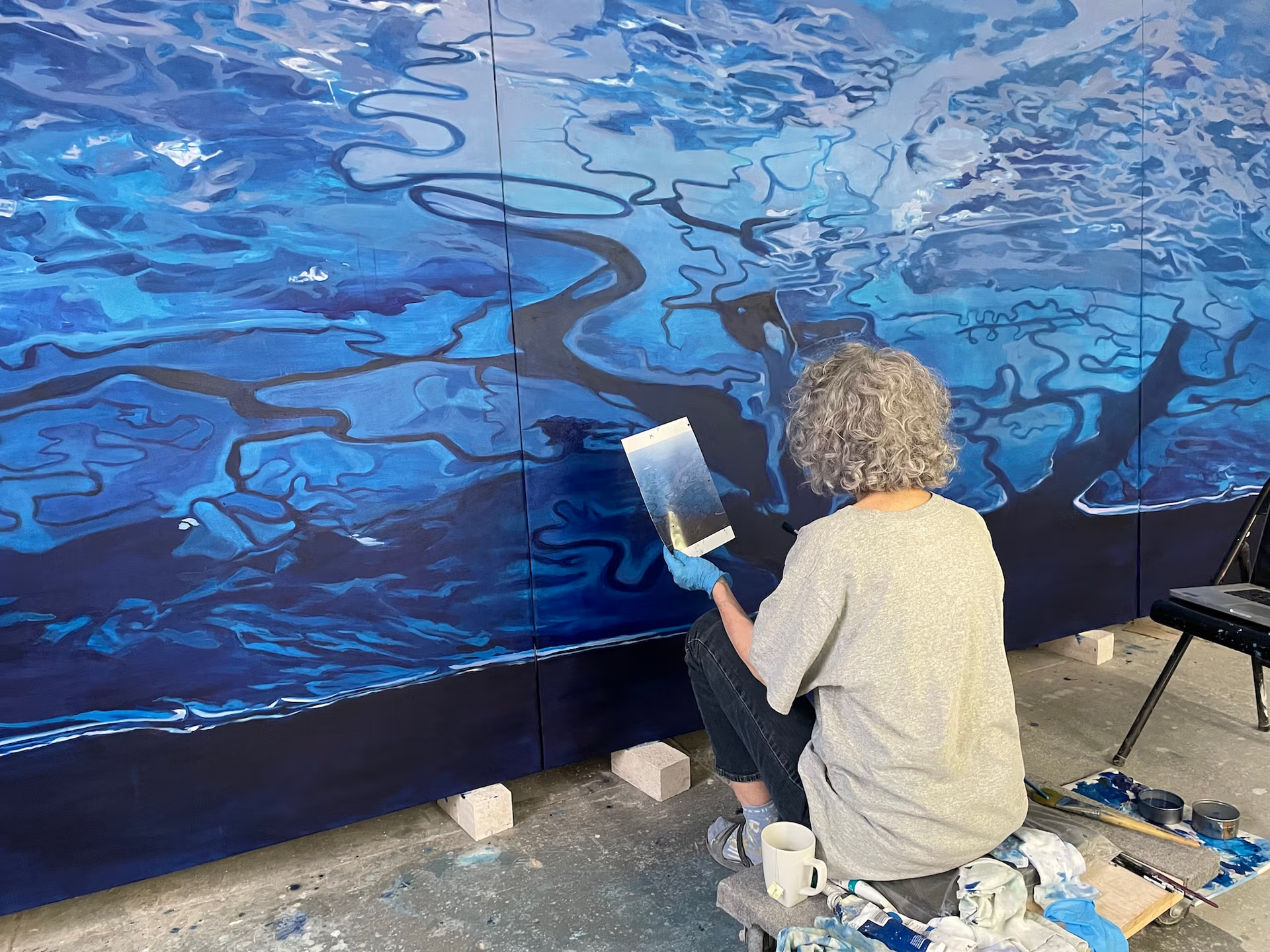
Leslie Wayne working on the painting The Unintended Blues (2026) in the summer of 2024 Photo by Don Porcaro. Courtesy Leslie Wayne
- Alan Michelson: The Oyster, 30 July-30 November, Governors Island, New York
- Leslie Wayne: The Unintended Blues, until 27 September, Upper Gallery at the Arts Center at Governors Island, New York
