


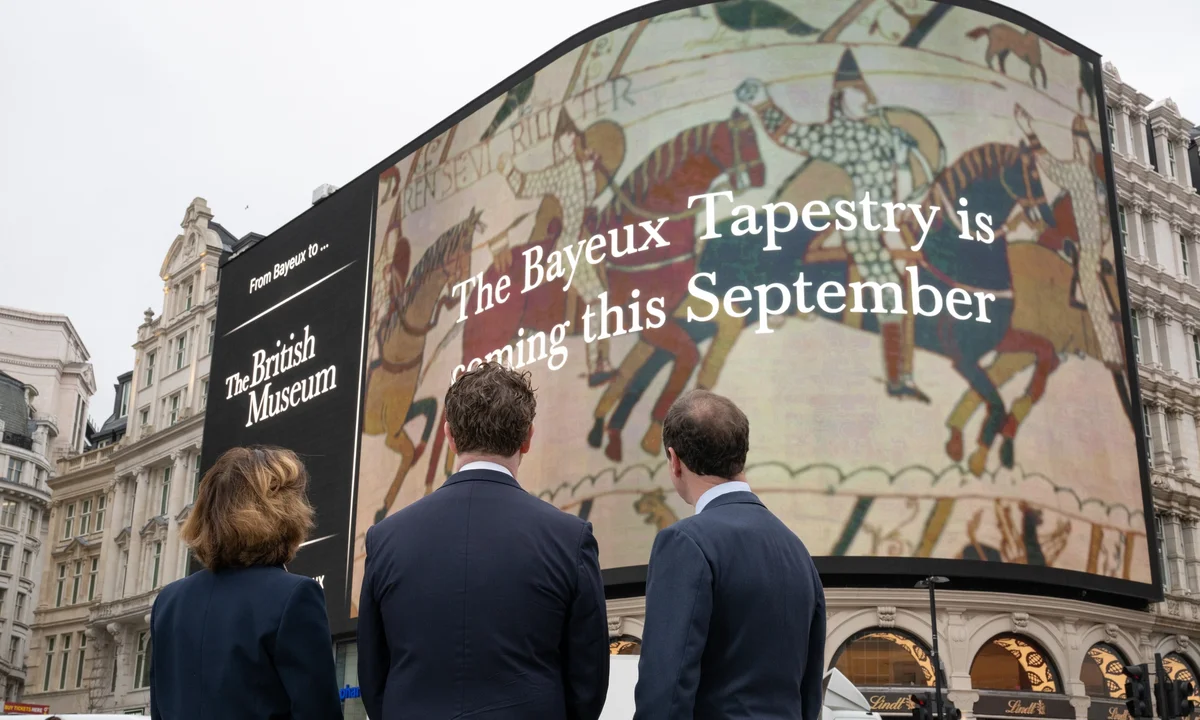
The British Museum generated £2.5m on the first day of online tickets sales (1 July) for its forthcoming blockbuster Bayeux Tapestry exhibition. The demand to see the medieval masterpiece marked the “single biggest day of ticket sales in its history”, according to a museum statement.
“Demand to see the once-in-a-generation exhibition has been unprecedented. The online queue reached a peak of over 80,000 and the museum’s website saw 4.7 times its average daily traffic with hundreds of thousands of people trying to access the site across the day,” the statement adds. The total number of tickets sold so far has not been confirmed.
The Bayeux Tapestry, which depicts the 1066 Norman invasion and Battle of Hastings, will be displayed in the Sainsbury Exhibitions Gallery from September until July 2027, while its current home, the Bayeux Tapestry Museum in Normandy, undergoes renovations. The display will mark the first time the textile, which is 70m and 50cm high, has been in Britain in almost 1,000 years.
The first tranche of tickets, which were for September to December, have now sold out with further releases in October and January for dates between January and March, and April and July 2027 respectively.
In May, the museum announced ticketing details with the top price adult ticket costing £33. At off-peak times, the standard adult price falls to £27. These times are regular weekdays during the school term up until 5:10pm; peak pricing is also in place for the first and last two weeks of the exhibition’s run. Students and disabled visitors will be charged £25 at all times; all slots are time limited at 40 minutes.
The tapestry ticket prices are generally higher than the cost of other tickets to the British Museum’s usual temporary shows. But Nicholas Cullinan, the museum director, told the BBC Radio 4 Today programme the exhibition was “really expensive” for the museum “to put on as a charity, and so we do need to recoup those funds”.
The tapestry will be displayed horizontally for the first time in the British Museum display. “Visitors will experience the tapestry as it has never been seen before when it’s displayed flat for the first time and in one continuous length in a specially made show case,” the museum adds.
