


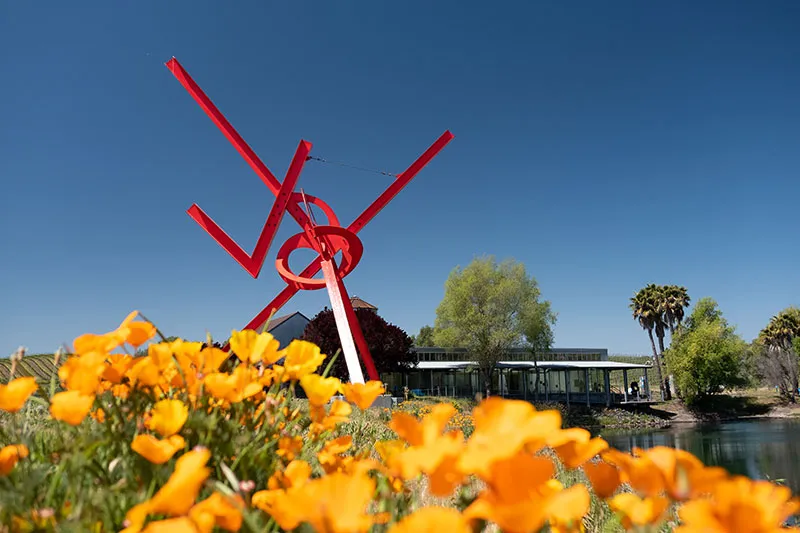
The di Rosa Center for Contemporary Art, a beloved art park in Naples, California, that is in the midst of a prolonged period of financial difficulty, has listed its estate for $10.9 million, according a report by the San Francisco Chronicle from last weekend.
The park is host to a range of notable works by Northern California artists from the postwar era, most notably an iconic Mark di Suvero sculpture that presides over the 217-acre estate. Also included in its collection are important pieces by Peter Saul, Robert Arneson, Bruce Conner, Jay DeFeo, and Deborah Butterfield, many of them purchased by the park’s founder, the collector Rene di Rosa and his wife Veronica, who died in 2010 and 1991, respectively.
Ever since 2019, the center has been attempting to rectify a shaky financial situation behind the scenes. That year, the di Rosa announced that it would no longer purchase artworks for its collection and that it would begin the process of selling its holdings. The announcement was met with such sharp condemnation from local artists and dealers that the center later went back on the decision.
In 2025, the center revealed plans to expand to San Francisco. Kate Eilertsen, the center’s director and chief curator, told Artnet News at the time, “We’re taking some steps to have a viable business plan that will allow us to not rely on philanthropy and admissions and membership, but figure out a stream of earned income that will keep the di Rosa sustainable.”
Eilertsen this week told the San Francisco Chronicle that selling the estate could bring in much-needed revenue. The hope, she said, is that “some very wealthy art loving philanthropist comes in and says, ‘I’ll purchase it and I will lease it back to you for $5 a year, and you can keep everything here.’”
Another possibility would involve selling the estate to Napa County and transforming part of the park into hiking trails. Both the Napa Land Trust and Open Space District had expressed interest in “keeping the sculptures there,” she said, “and if that happens it will allow us to have probably two years worth of time to figure out how we can build more money and make the lower half of the property more successful as a business.”
The Chronicle reported that that the park’s collection would not be sold alongside the estate.
