

Close Menu
  • News
  • Stocks
  • Bonds
  • Commodities
  • Collectables
    • Art
    • Classic Cars
    • Whiskey
    • Wine
  • Trading
  • Alternative Investment
  • Markets
  • More
    • Economy
    • Money
    • Business
    • Personal Finance
    • Investing
    • Financial Planning
    • ETFs
    • Equities
    • Funds

Subscribe to Updates

Get the latest markets and assets news and updates directly to your inbox.

Trending Now

Celeste Dupuy-Spencer, Painter Who Used Her Art to Fight for Justice, Dies at 46

April 11, 2026

The Best Booths at Expo Chicago, From a 16th-Century Belgian Manuscript to a Painting of a Mariachi Band

April 11, 2026

Ukraine Sanctions Russian Culture Figures Linked to Country’s Participation in Venice Biennale

April 11, 2026
Facebook X (Twitter) Instagram
The Asset ObserverThe Asset Observer
Newsletter
LIVE MARKET DATA
  • News
  • Stocks
  • Bonds
  • Commodities
  • Collectables
    • Art
    • Classic Cars
    • Whiskey
    • Wine
  • Trading
  • Alternative Investment
  • Markets
  • More
    • Economy
    • Money
    • Business
    • Personal Finance
    • Investing
    • Financial Planning
    • ETFs
    • Equities
    • Funds
The Asset ObserverThe Asset Observer
Home»Art Market
Art Market

Bronze Age State Metal-Working Center Unearthed Near China’s Yangtse River

News RoomBy News RoomApril 8, 2026
Share
Facebook Twitter LinkedIn Pinterest Email

During China’s Bronze Age (c. 2070 – 771 B.C.), the durable alloy was an indispensable resource, central to the development of early Chinese civilization. Under the Zia, Shang, and Zhou dynasties, China developed advanced metallurgy techniques and, along with them, systems for managing them at scale. The Bronze age in China was thus not only characterized by its bronze tools and weaponry, but by its advanced social and political structures.

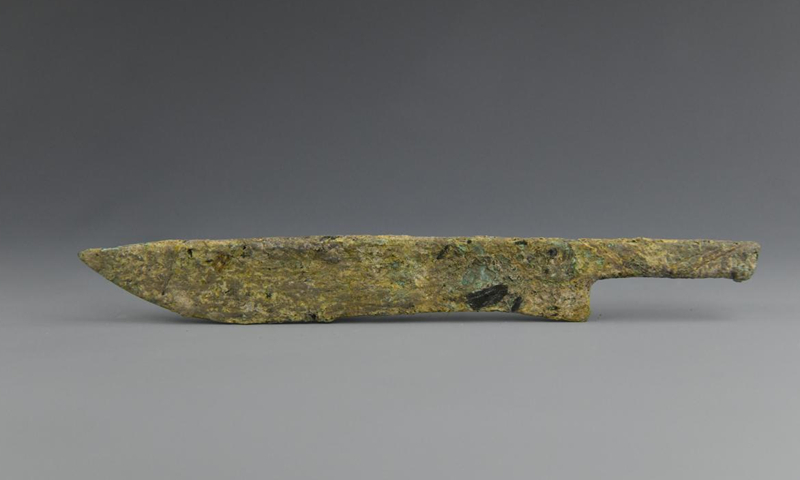
As reported in the China Daily, excavations over the last two years at the Shenduntou archeological site near the Yangtze River have unearthed around 1,000 artifacts linked to the bronze industry under the Zhou dynasty. While more modest than the ritual bronze vessels prized by museums, these artifacts—simple knives, arrowheads, and broken clay molds—suggest a major metal-working site.

“The discovery of numerous bronze-casting remains proves this was a high-level workshop,” says Wang Zhigao, an archaeology professor at Nanjing Normal University, who is leading the excavation project.

Perhaps even more interesting to Wang and his team was evidence of a “state controlled” system of smelting and casting. This control was reflected in the layout of the site, in which workshop areas–identified by furnaces and bronze artifacts—were enclosed by earthen walls and moats, suggesting oversight and protection.

“This reflects an ‘official industry’ model, in which the state organized and supported production, says Zhang Min, a researcher with Nanjing Museum. “Artisans and merchants were brought together and sustained by government resources to ensure steady manufacturing and trade.”

At the time, while the Zhou royal house nominally ruled the Central Plains, their vassal states competed with one another for resources. Part of the Wu kingdom, Shenduntou’s bronze industry was likely responsible (along with famed military advisor Sun Tsu) for the Wu rulers’ successful territorial expansions in the 6th century BC.

“In that era, bronze technology represented national strength, and the industry was strictly managed by governments,” Wang explains. “Whoever controlled bronze could produce superior weapons and tools.”

Share. Facebook Twitter Pinterest LinkedIn Tumblr Email

Keep Reading

Celeste Dupuy-Spencer, Painter Who Used Her Art to Fight for Justice, Dies at 46

The Best Booths at Expo Chicago, From a 16th-Century Belgian Manuscript to a Painting of a Mariachi Band

Ukraine Sanctions Russian Culture Figures Linked to Country’s Participation in Venice Biennale

Obama Presidential Center Announces Final Cohort of Commissions Ahead of June Opening, Including María Magdalena Campos-Pons, Jeffrey Gibson, Lorna Simpson

Rome’s Colosseum Gets a New Pedestrian Plaza

Louvre Museum Jewel Heist Inspires Latest ‘Law & Order’ Episode

Tensions Rise Over Proposed New Zealand Statue Commemorating ‘Comfort Women’ Japan Forced into Sexual Slavery, Have a Bartering Breakfast with Maurizio Cattelan: Morning Links for April 10, 2026

Chicago’s Neighbors and Barely fairs show the strengths of smaller, alternative formats – The Art Newspaper

What Made Marcel Duchamp’s Readymades So Revolutionary?

Recent Posts
  • Celeste Dupuy-Spencer, Painter Who Used Her Art to Fight for Justice, Dies at 46
  • The Best Booths at Expo Chicago, From a 16th-Century Belgian Manuscript to a Painting of a Mariachi Band
  • Ukraine Sanctions Russian Culture Figures Linked to Country’s Participation in Venice Biennale
  • Obama Presidential Center Announces Final Cohort of Commissions Ahead of June Opening, Including María Magdalena Campos-Pons, Jeffrey Gibson, Lorna Simpson
  • Rome’s Colosseum Gets a New Pedestrian Plaza

Subscribe to Newsletter

Get the latest markets and assets news and updates directly to your inbox.

Editors Picks

The Best Booths at Expo Chicago, From a 16th-Century Belgian Manuscript to a Painting of a Mariachi Band

April 11, 2026

Ukraine Sanctions Russian Culture Figures Linked to Country’s Participation in Venice Biennale

April 11, 2026

Obama Presidential Center Announces Final Cohort of Commissions Ahead of June Opening, Including María Magdalena Campos-Pons, Jeffrey Gibson, Lorna Simpson

April 11, 2026

Rome’s Colosseum Gets a New Pedestrian Plaza

April 11, 2026

Louvre Museum Jewel Heist Inspires Latest ‘Law & Order’ Episode

April 11, 2026
Facebook X (Twitter) Instagram
© 2026 The Asset Observer. All Rights Reserved.
  • Privacy Policy
  • Terms
  • Press Release
  • Advertise
  • Contact

Type above and press Enter to search. Press Esc to cancel.