


The art collective known as MSCHF is no stranger to provocation. The group has questioned the value of art itself, making copies of pieces by Andy Warhol and Pablo Picasso, selling forgeries and the originals as presumably authentic objects. It has shined a light on wealth disparity through an ATM that ranks users’ account balances. It has been sued by Nike and criticised by animal rights groups for making sneakers that contain human blood. But while in the past MSCHF has balanced controversy and artistic merit to varying degrees, its latest scheme missed the mark. Called Our Cow Angus, the project was imagined as a kind of social experiment to raise awareness of animal rights issues, but instead shed a light on the polarising nature of public discourse.
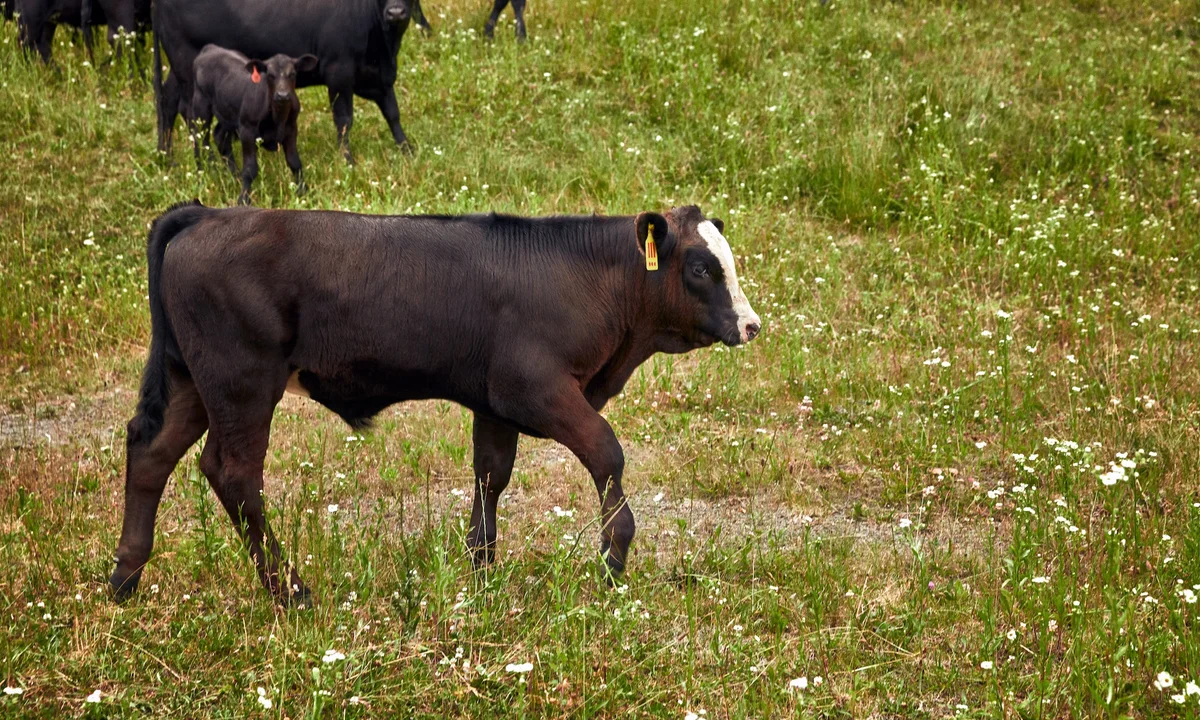
MSCHF began Our Cow Angus two years ago when it purchased a cow and pre-sold it as tokens representing 1,200 hamburgers and four leather bags to be made when the animal reached slaughtering age. Buyers could save Angus’s life by returning their tokens through a “remorse portal”. If 50% of tokens were returned by the end of the day today (13 March), Angus would live the rest of his life on an animal sanctuary.
“The project set out to create a microcosm alternate reality which made retroactive consumer choice effectual,” Kevin Wiesner, a co-founder of MSCHF, tells The Art Newspaper. Buyers could also resell their tokens, allowing any concerned person to buy shares to save Angus on the secondary market, though at a significantly inflated price.
After significant returns over the last 48 hours, the project passed the 50% threshold on Friday afternoon. Angus is no longer heading to the slaughterhouse.
Even though his life was spared, it is hard not to view Our Cow Angus as a failure. The experiment did not spark meaningful conversations on animal rights or the food and fashion industries. Much of the public discourse occurred over platforms like Instagram, Discord and Reddit, where comments have been polarising. There have been some meaningful remarks, including concerns about hinging an animal’s life on an art project, as well as broader points about the dialogue over Angus as a microcosm for discourse more globally. But unfortunately, the engagement through these outlets (particularly Discord and Reddit, where users favour anonymity) led to a barrage of inflammatory quips and insensitive memes intended to provoke further division. For a project that aimed to narrow the gap between buyers and the products they consume, the actual result worsened the distance, flattening intellectual dialogue.
The MSCHF collective is far from the only artist to use living animals in an art project. In 2000, the Chilean artist Marco Evaristti unveiled Helena, a disturbing installation of blenders, each containing a goldfish vulnerable to any visitor who wished to turn the machine on—leading to the deaths of at least two fish. The artist staged an equally despicable installation in 2025, leaving three piglets to starve to death in a cage (they were thankfully rescued by an animal rights group). In 2014, the Aspen Art Museum came under fire for exhibiting tortoises with iPads attached to their shells, which wandered around the museum’s rooftop as part of Cai Guo-Qiang’s exhibition Moving Ghost Town. And in 2017, three pieces in Art and China After 1989: Theater of the World at the Guggenheim were removed due to their use of animals, including Huang Yong Ping’s Theater of the World (1993), which features live reptiles and insects.
The design for the handbags that four buyers would have received if MSCHF’s project Our Cow Angus (2024-26) had turned out differently Courtesy MSCHF
In these earlier cases, artists brought the animals into the space of the gallery (and in some instances intentionally put them in harm’s way), confronting visitors with a tangible reminder of the life being used as a spectacle. In MSCHF’s project, the conceptual distance may have been too wide.
For its part, MSCHF has been sending buyers photos of Angus, updates on the status of his rescue and links to the Remorse Portal. “With the exception of sharing some audience-made content specifically about the intersection of meat/climate/deforestation, our communications to buyers have been limited to documenting Angus in particular, albeit with some anthropomorphism and pathos,” Wiesner says.
Updates have also been shared periodically on the project’s website, and MSCHF has offered the occasional reminder of how to save Angus on its social media platforms, including information earlier this week on how to buy tokens on the secondary market and then return them. Ironically, this particular post was shared the same day that MSCHF advertised its latest leather handbags for sale, products unrelated to Angus.
Whether social media commenters even own an Angus token is unclear. When asked what the project achieved, a representative for MSCHF said: “It has generated an ecosystem around Angus larger than just the buyers and sellers and burger and bag tokens—larger, I think, than we expected. We’ve met people around the world who have followed the life of this cow.”
As a conceptual project that lives online, Our Cow Angus didn’t so much reveal the perils of the agriculture and fashion industries as it showed the pitfalls of a form of public debate now dominated by anonymity, rage-baiting and dichotomy.
