


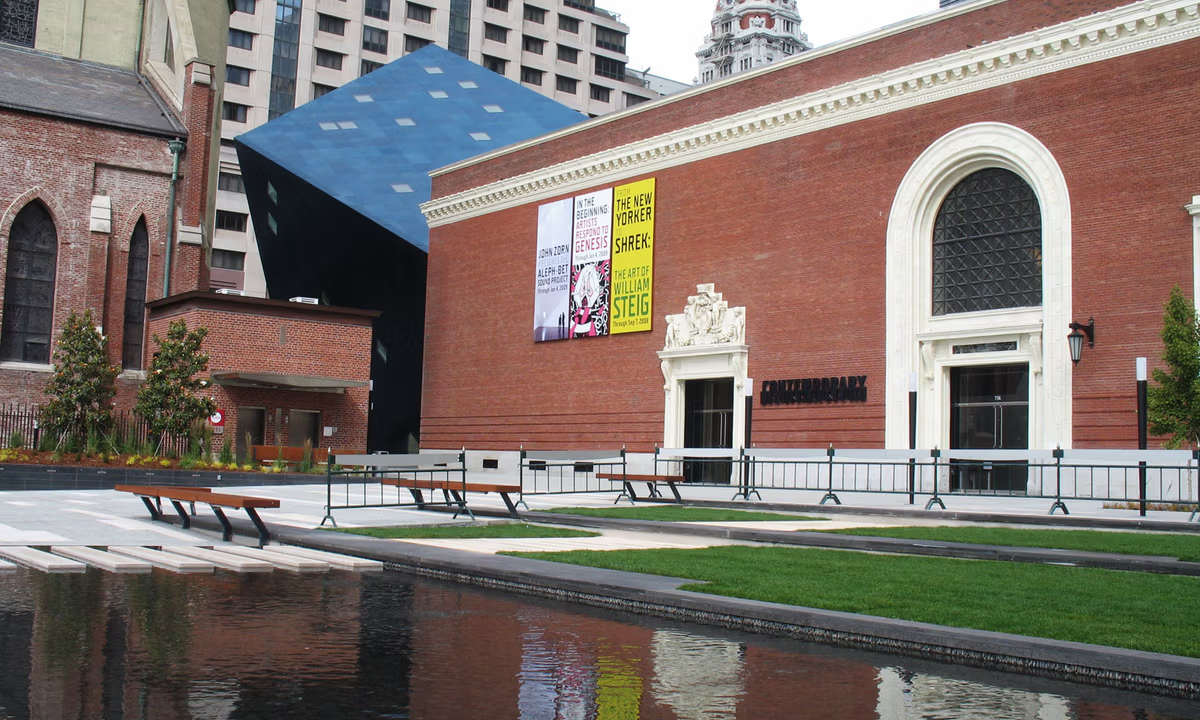
The Contemporary Jewish Museum (CJM) has decided to sell its Daniel Libeskind-designed building in downtown San Francisco. The museum had already been closed since December 2024, when it shut down and laid off 80% of its staff, citing low attendance and limited support since the Covid-19 pandemic. The CJM intends to use proceeds from the sale to “ensure a sustainable and impactful future for the museum”, according to a press release announcing its intentions.
“As we enter our next chapter, every decision is guided by our commitment to remaining an essential part of the cultural fabric of the Bay Area for generations to come,” Kerry King, the CJM’s executive director, said in a statement. “Over the past year, we’ve strengthened the CJM both financially and structurally, positioning the institution for a bold and lasting future. While our physical home may evolve, our dedication to serving as an essential hub for art, culture and Jewish life remains unwavering.”
The museum, founded in 1984, is a non-collecting institution focused on contemporary Jewish art and culture. It inaugurated its 63,000-sq.-ft home in 2008, spending $47m to transform a landmark 1907 power substation. The project’s award-winning architect supports the upcoming sale.
“It has been both an honour and a profound responsibility to shape a building for this community—one that transforms a historic power station into a new architectural expression of light, form and public life,” Libeskind said in a statement. “As the Contemporary Jewish Museum enters its next chapter, it is my hope that the building continues to inspire all who encounter it, serving as a lasting testament to Jewish life in San Francisco and the creativity and cultural exchange it was conceived to foster.”
According to Laura Waxmann and J.K. Dineen of the San Francisco Chronicle, local law requires that the landmark building continue to be used for cultural or institutional purposes. It cannot be converted into offices, housing or a hotel, greatly restricting the potential buyer in an already struggling downtown cultural landscape. “This is our most significant asset,” King told the Chronicle. “We need to monetise it to have a future.” The CJM currently has about $13.5m in debt—the museum is still paying off the loan it used to construct the very building it is now attempting to sell.
Although the CJM has not announced its exact intentions for the future—perhaps it will follow the Institute of Contemporary Art San Francisco’s lead and become a nomadic museum—it is decidedly not winding down programming. In fact, the museum intends to hire a new curator and collaborate on exhibitions and events with other cultural organisations. Its spaces will also be available to rent out for private events through January 2027. The real-estate firm Newmark is handling the marketing and sale of the property.
