


Upon entering Threading Inwards at the Centre for Heritage, Arts and Textile (Chat) in Hong Kong, visitors pass through an ethereal fabric gate. The Korean artist Sang A. Han created the soft artwork, Threshold 1 (2024), using white cotton stained with meok (Korean ink). Beyond this piece is a series of shrine-like soft sculptures resembling pagodas. Each form is filled with cotton stuffing collected from donated dolls.
“The work is a portal that welcomes people into a spiritual realm beyond the everyday physical world,” says Wang Weiwei, the curator of exhibitions and collections at Chat, who co-curated the exhibition. “The work invites reflection on how we connect with others. The artist wanted viewers to imagine how these dolls once held people’s joy, playfulness and blessings.”
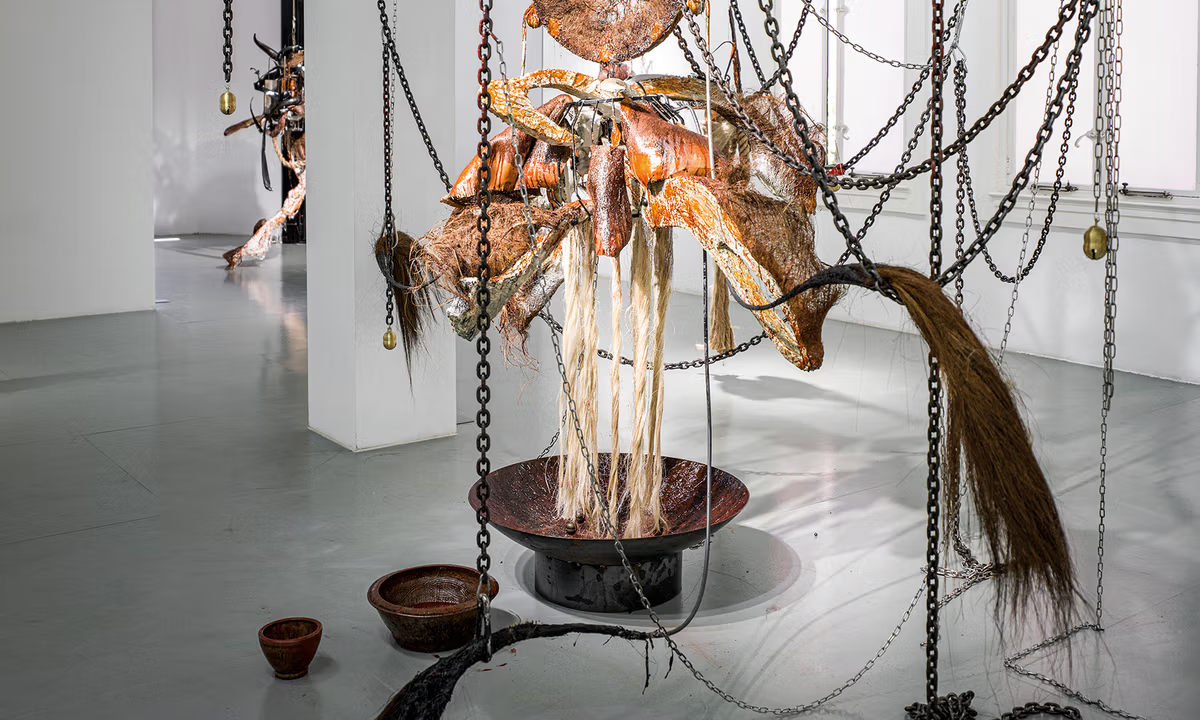
Hu Yinping’s Soul Bottles (2026) Courtesy of the artist
In Asia, textiles have long served as sacred vessels that link the material and spiritual worlds. Taking this as a departure point, the exhibition brings together 14 artists from the region working in media spanning painting, video, photography and textile.
Wang collaborated with three rising curators—Seoul-based Eugene Hannah Park, Tokyo-based Kurosawa Seiha and Beijing-based Wang Huan—to select artists that encompass a diversity of perspectives. Works range from monumental site-specific tapestries by the Malaysian-born artist Marcos Kueh to anthropological photographs by the Kyoto-based Korean diaspora artist Kim Sajik.
Ancestral cosmology
“The idea of textiles and spirituality, especially in Asia, has been contaminated in many ways because each country went through a process of Westernisation, modernisation and colonisation,” says the co-curator Eugene Hannah Park. “Speaking with artists and the other curators, we realised how complex the subject is and how much we’ve lost in terms of understanding both ourselves and our ancestral cosmology.”
The curatorial team deliberately chose emerging to mid-career artists whose works tease out such tensions within textile culture. The London-based Uzbek artist Aziza Kadyri, for instance, created an installation using artificial intelligence, inspired by her grandmother’s unrealised dream of becoming a traditional folk dancer in Soviet-era Uzbekistan.
Kadyri’s two-channel video juxtaposes contemporary choreographer Shirin Jalilova’s fluid movements with the restricted gestures of the artist’s elderly grandmother moving within her apartment today. Alongside the video hang large fabric sculptures suspended in space that capture movements of traditional Uzbek folk dance. These shell-like structures are made of upholstery fabric, which viewers can place their bodies into.
“Costume can be a carrier of memory,” Kadyri says. “I want it to be fun when you fit yourself into these sculptures, but also if you want to experience a slice of this choreography and how it is connected to my grandmother’s memory, you can really use your body—not just your eyes or brain—to feel that.”
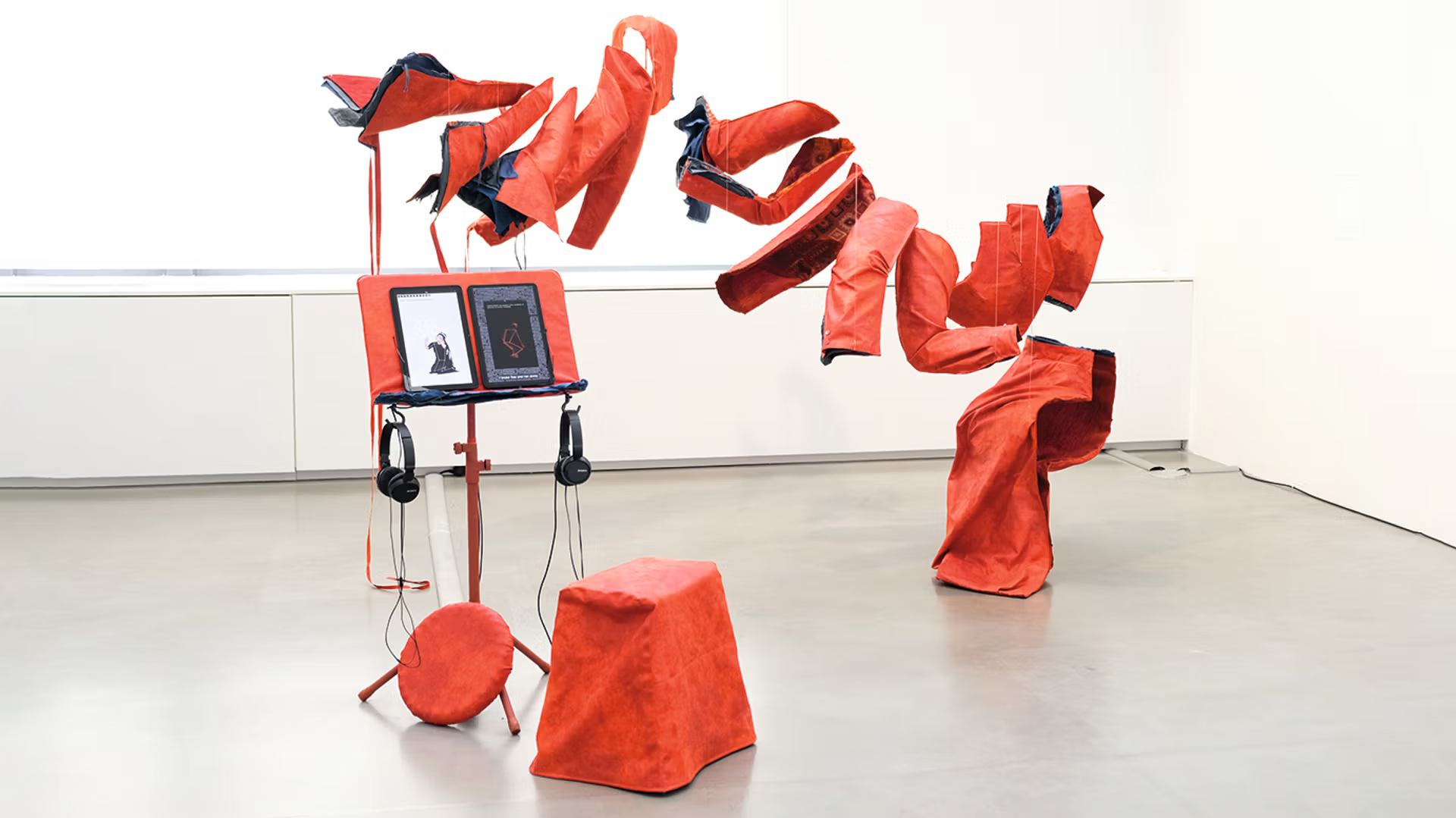
Aziza Kadyri’s Her Stage (II) (2024) Courtesy of the artist
Several other pieces incorporate multisensory elements, including Sky River in Fountain of Amygdala (2026) by the Balinese artist Citra Sasmita, a monumental fabric work accompanied by bags of fragrant herbs. Made in collaboration with a weaving community in Tumanggal, Central Java, the work was inspired by Balinese funerary rites where the body is wrapped in textiles to help guide the soul on its onward journey.
The show concludes with Chloronest (2026), an immersive installation by the Hong Kong-based artist IV Chan, which was inspired by the concept of a green room, a backstage sanctuary for performers. Chan enveloped the walls of a large alcove with soft green fabric and various fabric sculptures inspired by ancient gods and deities that visitors can touch.
“It’s a place for transformation where you can calm yourself and imagine what you could be,” Wang says. “At a time when the world is full of conflict and uncertainty, this is a moment to reconsider how we can reconnect with our spiritual landscape, nature and our communities—and explore an alternative future together.”
• Threading Inwards, Centre for Heritage, Arts and Textile, Hong Kong, until 28 June
