


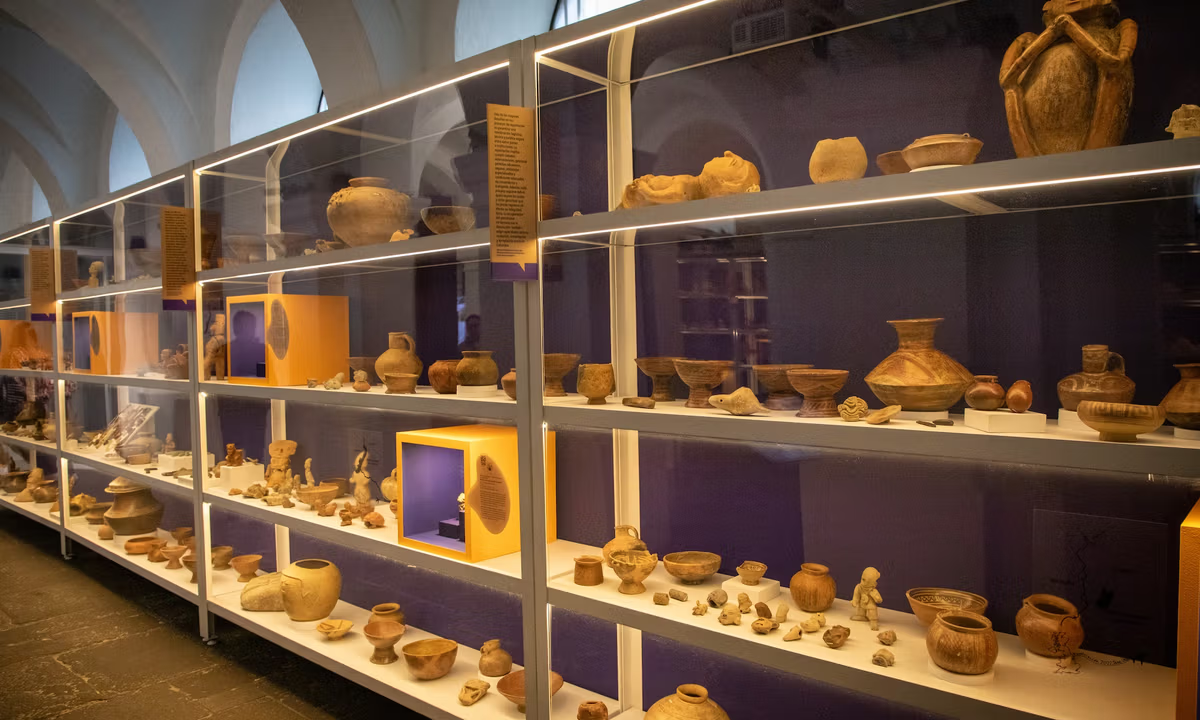
Bogotá’s Museo Nacional de Colombia is showing off the 1,194 pre-Columbian artefacts repatriated to the country between 2022 and 2026, under President Gustavo Petro’s outgoing administration. (Abelardo de la Espriella, a far-right lawyer who narrowly won the recent election, will take office on 7 August.)
The objects are on public view for the first time in the exhibition Pasados en retorno. Repatriación del patrimonio arqueológico (until 23 August). Recovered through efforts carried out in 13 countries, 80% of the artefacts were voluntarily returned, while the remaining pieces were found in auctions or linked to illicit trafficking networks, leading the Colombian government to take legal action to get them back.
The artefacts were repatriated primarily from the US (384 objects), Italy (208), Chile (174), Germany (149) and Canada (127). Smaller numbers also came from the UK, France, Switzerland, the Netherlands, Peru, Costa Rica, Venezuela and New Zealand.
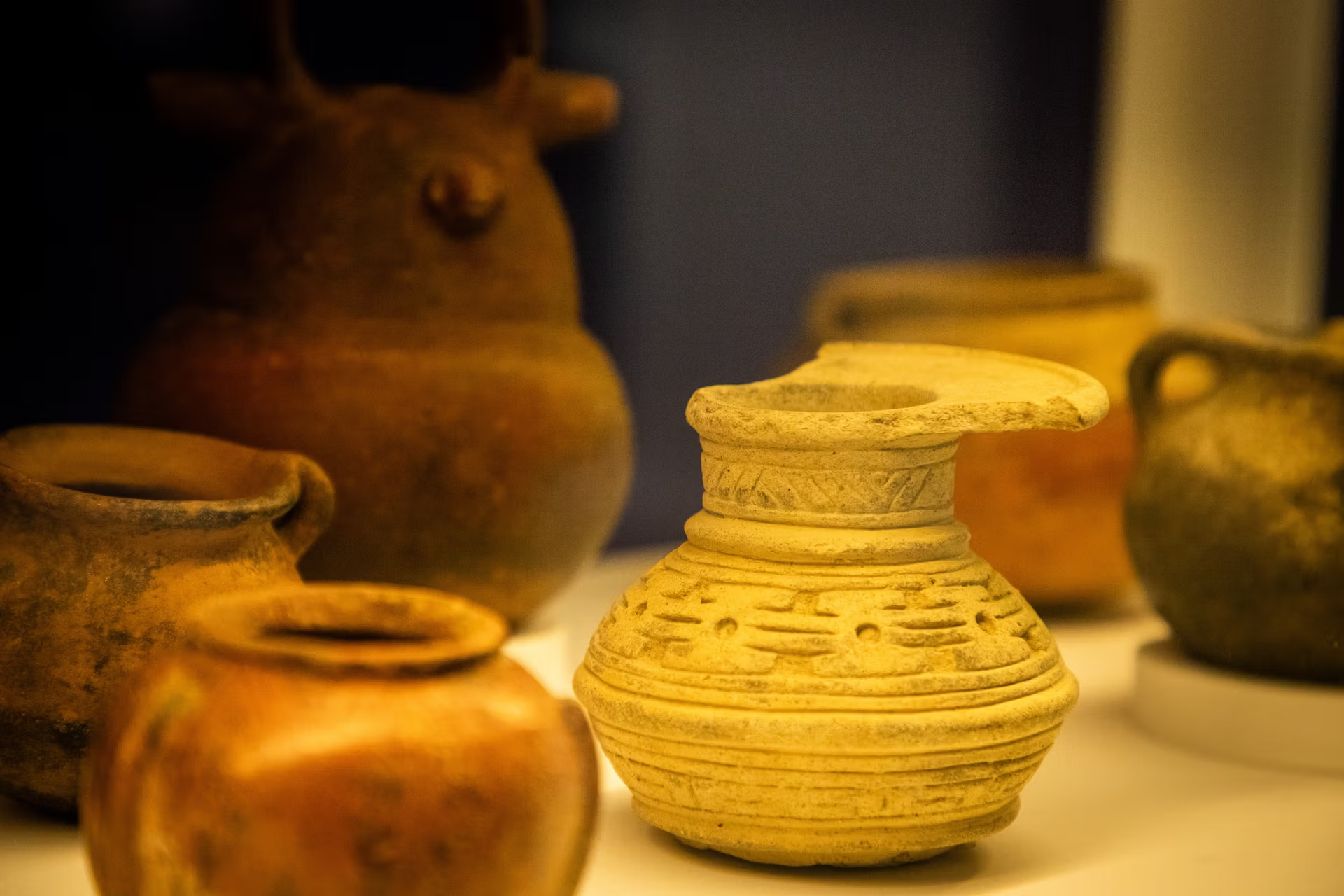
Ceramics, sculptures, funerary objects, anthropomorphic figures, necklaces, amulets and other items associated with at least 14 archaeological regions have been brought together for the exhibition—co-organised together with the Colombian Institute of Anthropology and History (ICANH) and the ministries of culture and foreign affairs.
Courtesy: Mauricio Idarraga / Museo Nacional de Colombia
The exhibition reflects the diversity of Indigenous communities whose presence in what is now Colombia dates back to at least 2000BC. The objects—made from a wide array of materials, produced in different periods and shaped through a range of techniques—preserve ancestral knowledge and ways of understanding the world.
Among the most significant examples, Natalia Angarita (the museum’s archaeology curator) points to the collection voluntarily returned by the Museum of Anthropology at the University of British Columbia in Vancouver, Canada. “That case shows the efforts of some museums to rethink their role as institutions, review whether they hold pieces that belong to other countries, and recognise the importance of repatriation, especially for countries in the Global South,” Angarita tells The Art Newspaper.
This is the only case of a repatriation from a museum collection on display. Most of the others resulted from individual decisions, including those of Jessica Lawrence in the US and Michelle Guigoz in Switzerland, who returned artefacts they had inherited from their families. “Both could have kept the pieces in their possession and never said anything, but they realised that what they had were objects their grandparents or great-grandparents had acquired at a time when the idea of cultural heritage, as we understand it today, did not exist,” Angarita says.
For the curator, these three examples point to an ethical reconsideration of public and private collections. They also show that returns often come through individual or institutional initiatives rather than government-led processes.
Courtesy: Mauricio Idarraga / Museo Nacional de Colombia
The exhibition frames repatriation as part of a sustained policy to protect heritage. “Behind every recovered piece there is a technical, legal, diplomatic and institutional process,” says a spokesperson for the Grupo de Patrimonio Cultural Mueble. The group, part of Colombia’s cultural ministry, oversees the National Program to Prevent and Counteract the Illicit Trafficking of Cultural Property. Background material provided by the ministry also notes that the government used the presidential aircraft and naval training ship ARC Gloria to bring the artefacts back.
Pasados en retorno also draws attention to two emblematic repatriation claims that remain unresolved: the Quimbaya Collection, held at the Museo de América in Madrid, and the San Agustín stone sculpture collection at the Ethnological Museum of Berlin. “We could not overlook the pending cases,” Angarita says. “These are just two of many similar cases, but they are particularly significant because they involve European governments and have specific characteristics that make them unique.”
The Quimbaya Collection, comprising 122 pre-Columbian artefacts, was given by the Colombian government to the Spanish queen María Cristina in 1893. “It’s a case with many ambiguities, because it was a ‘gift’ to the Spanish monarchy more than a century ago,” Angarita says. “But for several years now, we have been re-evaluating whether that gift was truly appropriate, taking into account the importance of those pieces, their provenance and the logic that prevailed at the time.”
The case of the San Agustín statues is also “exceptional”, Angarita says. “There is very strong public demand for their return, and the pieces do not play a prominent role at the Ethnological Museum in Berlin. Rather, they are kept in storage.” Both cases, Angarita notes, are also subject to court rulings that require the Colombian government to seek their repatriation.
- Pasados en retorno. Repatriación del patrimonio arqueológico, until 23 August, Museo Nacional de Colombia, Bogotá
