


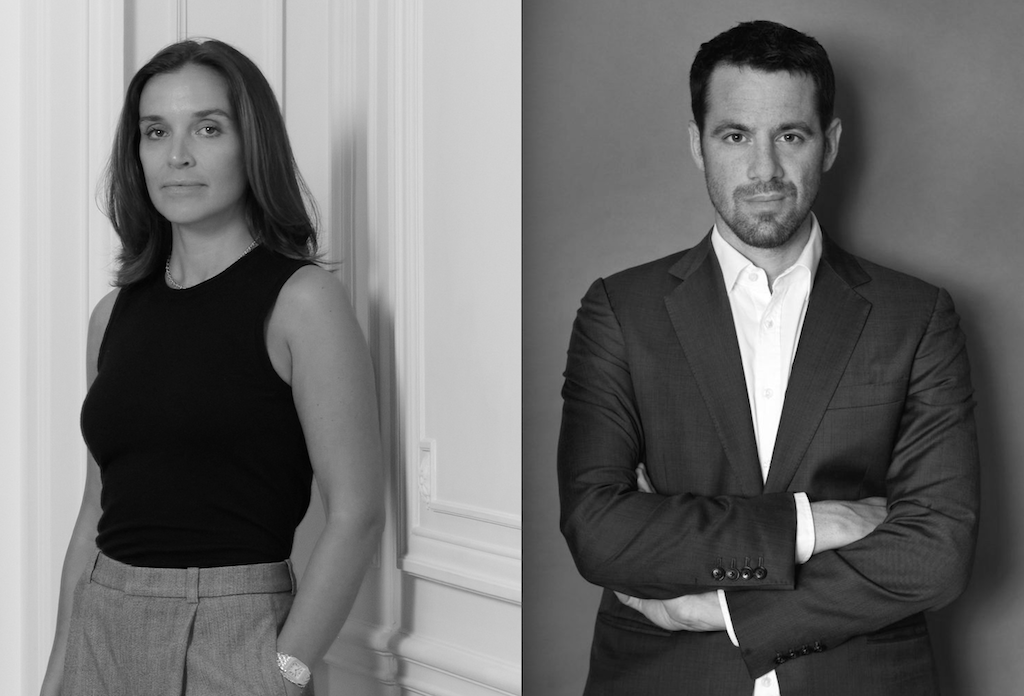
In 2020, as the art market scrambled to move online, Loïc Gouzer tried something smaller. After years staging blockbuster evening sales at Christie’s as chairman of post-war and contemporary art, he launched the app Fair Warning. Its premise was simple: sell one work at time to a tightly screened group of collectors.
Five years on, that constraint defines the company. Fair Warning has sold roughly $81.9 million worth of art not through volume, but through a steady cadence of tightly edited offerings. Its results suggest that the model can work. Last November, an Andy Warhol portrait of Brigitte Bardot from 1974 sold for $16.7 million, the highest publicly reported price for the artist that year. A year prior, a Fair Warning sale set a new record for Elizabeth Peyton at just over $4 million. Before that, the app sold a 1982 Jean-Michel Basquiat work on paper for $10.8 million.
The platform’s next test comes on Thursday, when it will offer a 1960 painting by Dorothea Tanning, estimated at $700,000 to $1.2 million. Now Fair Warning is expanding. Saara Pritchard, a former specialist at Christie’s and Sotheby’s known for identifying undervalued artists and building markets around them, is joining as a partner. The company has also taken on new investment from a technology backer, with plans to build out its platform and develop new ways of selling art.
What follows is a conversation with Gouzer and Pritchard about a market that, in their view, has grown far too comfortable “buying with its ears,” as Pritchard would put it.
This interview has been edited lightly for clarity and concision.
ARTnews: Loïc, you’ve said the market needs editing. What do you mean specifically?
Loïc Gouzer: There’s just too much. The amount of art being produced and pushed keeps growing, and not everything can be good. People deal with that in different ways. Some stop buying because it becomes overwhelming. Others rely on advisers to go through everything. What we do is edit.
We show between one and five percent of what we’re offered—not because the rest is bad, but because we set a higher bar. At a traditional auction house, if the estimate works, the work can come in. For us, that’s not enough. We need to believe in it. We need to feel that it brings something—historically, visually, or emotionally. And once you have that, you can have conviction.
What are you filtering out?
Gouzer: A lot of what is easy to sell. Over the past few years, artists were producing as long as the market demanded it. Collectors thought they were buying something rare, but often they weren’t. Now people are coming back to basic questions: Is it good? How many exist? Where are the best works? Who owns them? We try to ask those questions every time.
You’ve described Fair Warning as somewhere between an auction house and an adviser.
Gouzer: We’re an auction house and a noise-canceling device at the same time. If something appears on Fair Warning, it’s because we would want to own it ourselves. That’s the baseline.
On November 22, 2024, this Elizabeth Peyton work, Blue Liam (1995) sold for $4.07 million on an estimate of $1.8 million–$2.5 million. It’s record for the artist at auction.
Saara, you’re known for spotting artists early. What do you look for?
Saara Pritchard: It’s less about seeing something others don’t look for and more about how I learned to look. Most of what I know comes from collectors. My father was a collector, and he approached things very simply: do I want to live with this, and is it worth stretching for? That stayed with me. So when I started working in auctions, I found myself looking at works that felt strong and asking why the market didn’t reflect that yet.
Why is a woman artist selling for one price when a comparable male artist is at a completely different level? Why are certain artists sitting in the middle of the market? It wasn’t political. It was instinct about quality.
Then what does Fair Warning allow you to do that you couldn’t before?
Pritchard: It lets me act on that instinct without compromise. At an auction house, you’re part of a larger system. There’s volume, expectations, and competing priorities. At a gallery, you’re tied to a program. Here, I can be focused. I can say no. And I can spend time on the things I really believe in.
The best results come from that kind of alignment. Ideally, everything we sell is something we would want to live with ourselves.
You both keep using the word “conviction” like it’s a mantra.
Gouzer: If people ask what Fair Warning is, I say it’s a conviction-based auction house. A lot of people follow what’s hot or easy. That’s understandable, but it’s not conviction. Conviction is having a view before the market confirms it—and standing by it.
Do you agree on everything?
Gouzer: Not at all.
Give me an example.
Gouzer: We completely disagree on Frankenthaler. I’ve never understood the work, even when it was less expensive. I always thought it was already too high.
Pritchard: And I’ve always felt the opposite—that it was undervalued relative to its importance.
Gouzer: That’s the point. I don’t need agreement. I need conviction. That’s how you sharpen your eye.

On November 15, 2025, this Andy Warhol picture, Brigitte Bardot (1974), sold for $16.7 million on an estimate of between $8 million–$12 million. It was the top auction price achieved for the artist in 2025.
You’re both critical of how people are buying right now.
Pritchard: A lot of people are buying with their ears. They’re following what other collectors are doing, what advisors are saying, what institutions are validating. It makes sense—it’s expensive and can feel risky. But the result is that collections start to look the same.
Gouzer: We’re not selling ear art. We’re selling eye art. There’s that story about Joshua Bell playing in a concert hall and then in the subway. Same musician, completely different response. Sometimes it feels like that. The people who really look understand immediately. Others are following something else.
You’ve taken on new investment. What’s the plan?
Gouzer: First, to build the team. Then to build technology. We’re rethinking how live auctions work on a platform—how to recreate that moment online. We’re also working on new ways of selling art. It’s still early, but it will become clearer soon. The investor comes from tech, so that’s a big part of it.
Is this a niche model, or can it scale?
Gouzer: Our bet is that what looks like a niche today becomes broader over time. Right now, it’s a smaller group that understands what we’re doing. But if we’re right about the work, that group will grow. And I think some people who bought the wrong things in recent years are already feeling it.
What does the next generation of collectors look like?
Gouzer: More focused. In a world where it’s easy to be distracted, the people who succeed are the ones who can concentrate. And those are the people starting to collect. They want to understand. They want to do the work.
Pritchard: I see that too. More collectors want to visit studios, meet artists, and engage with museums…not just acquire things, but build something. It feels closer to an older model of collecting, where engagement mattered as much as acquisition.
Ten years from now, what happens to Fair Warning? Do you want to sell it to a tech company or an auction house?
Gouzer: We’re going to auction Fair Warning on Fair Warning.
I couldn’t have hoped for a better answer.
