






Felix Art Fair is betting that less can be more.
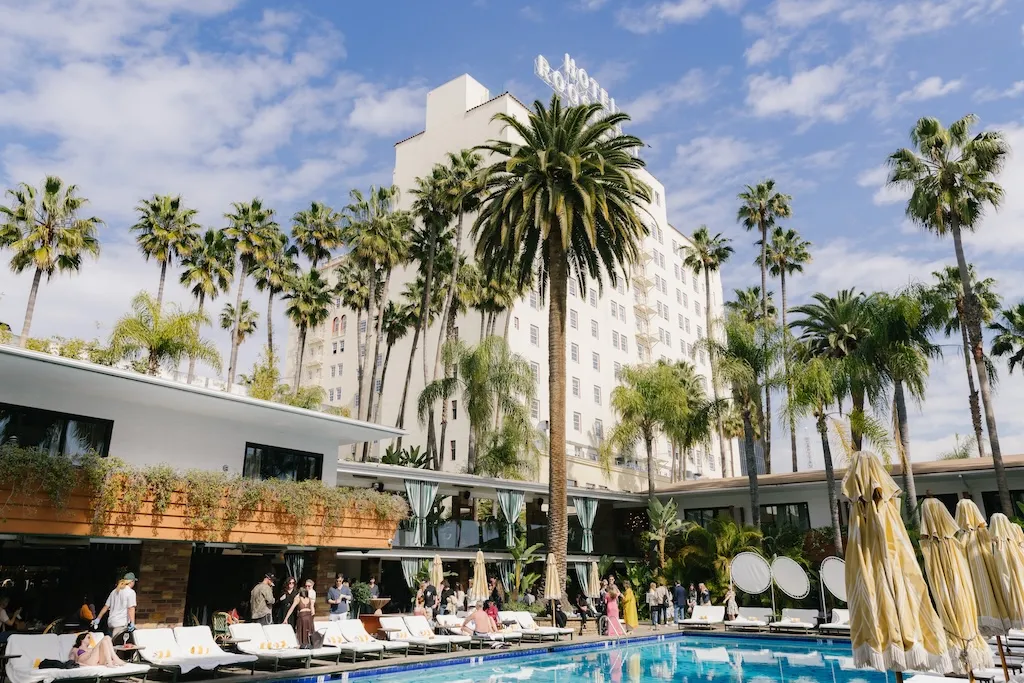
The Los Angeles fair will dramatically reshape its format beginning with its 2027 edition, abandoning its longtime split between the Hollywood Roosevelt Hotel’s upper-floor suites and its famous poolside cabanas in favor of a unified layout centered entirely around the hotel’s two-story cabana complex. At the same time, exhibitors will be encouraged to present solo and two-artist booths instead of the larger group displays that have become standard at most art fairs.
The changes are designed to make Felix feel less like a conventional trade fair and more like an artist’s studio visit, while preserving—if not slightly expanding—the number of participating galleries.
“We’re creating the physical and conceptual space for deep encounters with art,” the organizers said in a statement. “We want to banish art fair fatigue and replace it with an environment that prioritizes the artist’s voice, discovery, and a true sense of community.”
For visitors, one immediate benefit will be the disappearance of one of Felix’s defining frustrations: the elevator lines.
Since launching in 2019, the fair has occupied both the hotel’s poolside cabanas and suites on the upper floors. While the hotel setting has distinguished Felix from convention-center fairs, it has also produced notorious bottlenecks as thousands of visitors queued for elevators during the opening days of the fair. Earlier this year, long elevator waits meant many collectors reached the upper floors well after the VIP opening began, leaving some exhibitors with a slower start than those surrounding the pool.
“People don’t love waiting in lines for an elevator,” Felix cofounder Dean Valentine told ARTnews over the phone earlier this week. “People always walked away feeling some of the things they most loved about it were the things happening around the pool. We wanted to condense that experience.”
“We weren’t at 100 percent where we wanted to be, in terms of satisfaction,” added Morán, who was also on the line. “We were getting closer, but we never hit that sweet spot where we’re really happy with people’s experience. This is now our moment to change that.”
Rather than reducing the fair’s footprint, Morán and Valentine said the new layout could accommodate roughly the same number of exhibitors—possibly even a few more—through a more efficient use of the cabana complex and surrounding spaces. Smaller galleries may also occupy hallways and other areas, Morán said, allowing Felix to remain in the 60-plus exhibitor range.
Beyond the physical redesign, the organizers see the new presentation model as a philosophical shift.
While Felix positioned itself as an alternative to the blue-chip fair circuit, Valentine said the traditional fair model has become too burdensome for both galleries and collectors.
“We all felt we needed to get back to the basics,” he said. “At the end of the day, it’s about artists making art. We think art fairs should send that message along with, ‘Here’s a bunch of stuff you can buy.’”
The emphasis on solo and two-artist presentations, he added, is intended to recreate the experience of visiting an artist’s studio rather than walking through densely packed booths.
“The idea of recreating a studio visit in an art fair setting really resonated with me,” Valentine said. “It’s having that experience that not a lot of people get, even collectors. This is probably the closest representation of that.”
The new format could also expand who gets to participate.
Felix plans to continue accepting applications from galleries, but organizers said they are also open to artists applying directly without gallery representation—a notable departure from the traditional fair model as more artists experiment with agents, managers, and independent business structures.
“If there is an artist who doesn’t have a gallery, or wants to show their work outside of the normal gallery system, we’re totally open to having them have space inside of Felix,” Valentine said. “If eventually half the fair becomes actual artists representing their own work, we’d be happy with that.”
The overhaul marks the first major initiative since Felix cofounder Mills Morán stepped away from the day-to-day management of his gallery, Morán Morán, earlier this year to focus on the fair full time. At the time, Morán described Felix as an opportunity to support a broader segment of the art ecosystem during a challenging period for galleries.
Additional details, including participating galleries and expanded programming of talks, performances, and artist-curated exhibitions, will be announced in the coming months.


