







We Are Martin Parr
Photography Seoul Museum of Art, until 18 October
The streets of North Korea are a long way from the kitschy British seaside resorts that made Martin Parr’s name. But the images that he shot there during a 1997 trip to Pyongyang have many of the same qualities: ordinary people in everyday situations captured with wit and humour, and bursts of highly saturated colour. He later travelled to South Korea several times between 1998 and 2007, picturing the country’s rapid economic growth in images including a child in a shopping trolley, piled high with brightly coloured international brands.
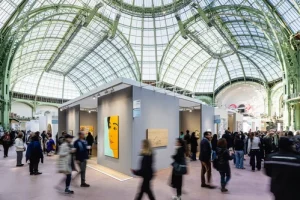
This exhibition at the Photography Seoul Museum of Art is the first major survey of Parr’s work held since his death last year. It is comprehensive, with more than 500 photographs and all 89 of his photobooks. Fourteen series are represented, including Small World, in which Parr observes how tourism paradoxically serves to make the world more homogenous, and The Establishment, which zooms in on the structures and systems of Britain’s tea-sipping upper classes.
Parr was still thinking about Korea before his death. According to The Korea Times, the show’s curator, Hyunjung Son, told a press conference that Parr was curious about how South Korea had changed since his last visit and they discussed plans about his taking new photos in Seoul.
Nest/s (2024), which comprises 21.5m of translucent fabric passages, is being shown in South Korea for the first time Courtesy of the artist; STPI-Creative Workshop & Gallery, Singapore; Lehmann Maupin, New York, Seoul, and London
Do Ho Suh
National Museum of Modern and Contemporary Art, until 9 February 2027
The week before Frieze Seoul, the National Museum of Modern and Contemporary Art opened what it calls the largest show of Do Ho Suh’s work ever staged. Anyone who saw him at Tate Modern last year knows his fabric architecture; that is the part of Suh that travels. Here, it arrives with much that stayed behind.
This is the first time in Korea his drawings have had a room to themselves, some 200 of them, in a show whose oldest work was made at primary school. Rubbing/Loving Project: Seoul Home (2013–22), his childhood house rubbed onto paper surface by surface, is shown in Korea for the first time. So is Nest/s (2024), 21.5m of translucent fabric passages.
Seol Wonji, the show’s curator, does not call it a retrospective; Suh is only in his sixties, she says, and this is closer to an interim report. Meanwhile, at Frieze Seoul, Lehmann Maupin will hand its stand over to Suh.

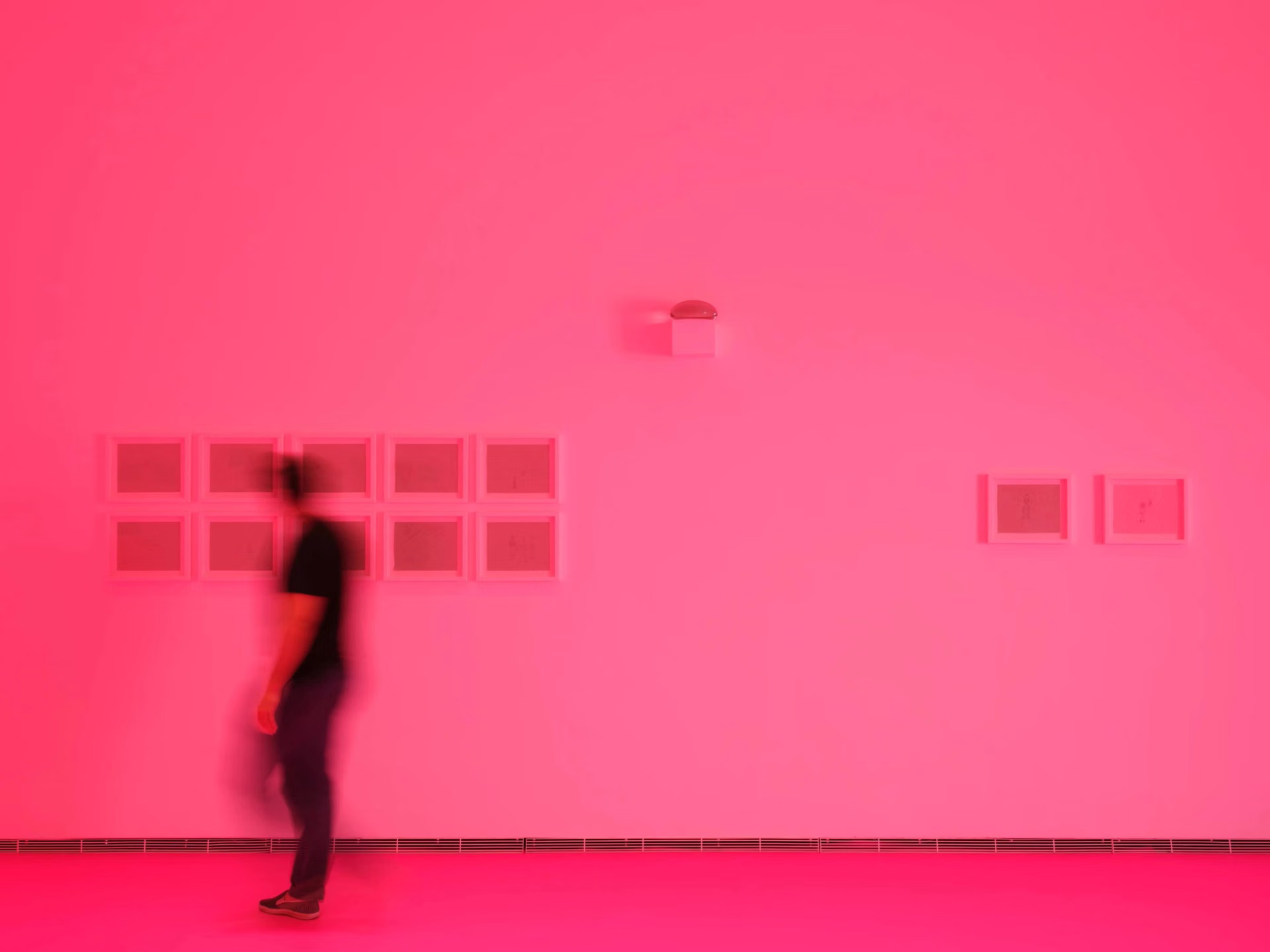
Koo Jeong A’s show, which takes in three decades of her practice, builds on exhibitions at Luma Arles and Kunsthaus Bregenz © Victor & Simon/Grégoire d’Ablon
Koo Jeong A: Ousssmos
Leeum Museum of Art, 5 September-27 December
What does Korea smell like? Koo Jeong A’s work for the South Korean pavilion at the 2024 Venice Biennale aimed to find out, canvassing hundreds of people for their olfactory memories of the peninsula and transforming them into scents. Koo’s exhibition at the Leeum Museum of Art will be just as difficult to pin down, with works seeping out of the contemporary art galleries and revealing themselves in unexpected places—lurking in the lobby or in hidden corners. It covers three decades of Koo’s practice, which connects art, science, daily life, superstition and cosmology.
The title refers to ‘OUSSS’, a term coined by the artist that can refer to “energy, matter, substance or even the universe itself”, according to an exhibition statement. This show builds on recent shows of Koo’s work at Luma Arles and Kunsthaus Bregenz. The centrepiece of the exhibition will be a newly commissioned work, [MOBIOUSSS], a monumental structure that will resemble a crashed spacecraft, its luminous form evoking both the symbol of infinity and a skatepark.

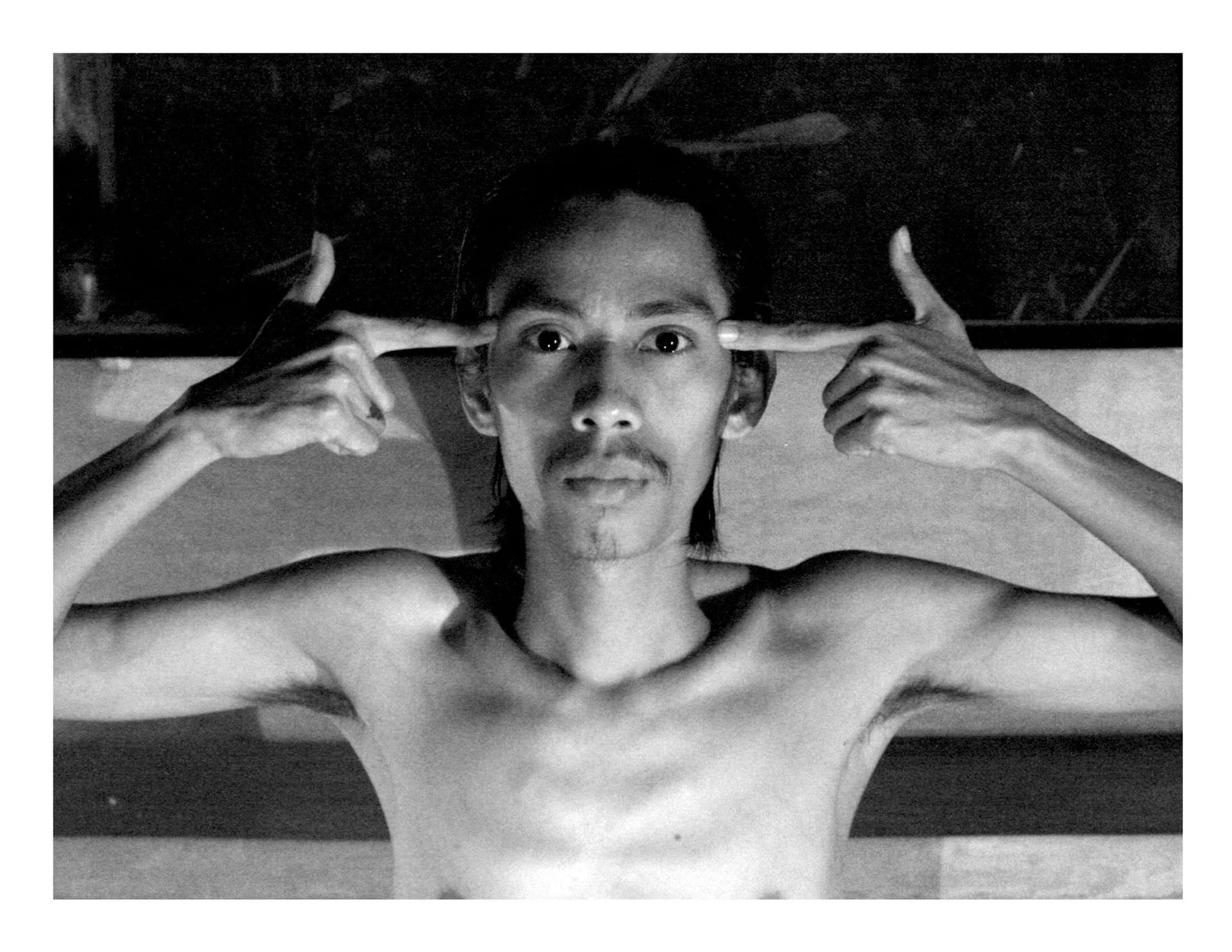
Moe Satt’s F n’ F (Face and Fingers) explores non-verbal communication in Myanmar Courtesy Frieze
Busan Biennale x Frieze Film Seoul 2026
Songeun, until 5 September
Busan may not be able to bring the beach to Seoul, but it can bring a taste of its ongoing biennial, Dissident Chorus (see page 2). This year’s Frieze Film Seoul partners with the Busan Biennale for a series of screenings at Songeun. Curated by the biennial’s co-directors Amal Khalaf and Evelyn Simons, Busan Biennale x Frieze Film Seoul 2026 features projects by eight multimedia artists who are also participating in this edition of the biennial. It brings together multifaceted perspectives, particularly from Southeast Asia and its diaspora, on how youth and club culture worldwide is interfacing with sociopolitical resistance.
The showcase opens with a talk by the curators and artists, who include China’s Shuang Li, Indonesia’s Natasha Tontey, the US’s Alison Nguyen and Australia’s Bhenji Ra. The screenings are broken into three blocks, each no longer than an hour. The first, The Body as Language, includes Moe Satt’s F n’ F (Face and Fingers): choreographed gestures illustrating non-verbal communication in Myanmar. The second block, Speculative Fictions, includes Umi Ishihara’s The Pioneer (2018), portraying a dystopian Japan wrangling with memory just before the Tokyo 2020 Summer Olympics. Block three, Mediated Identities, includes Tanat Teeradakorn’s National Opera Complex (2025), pairing Ram-vong dance with Thai protest songs and state propaganda.

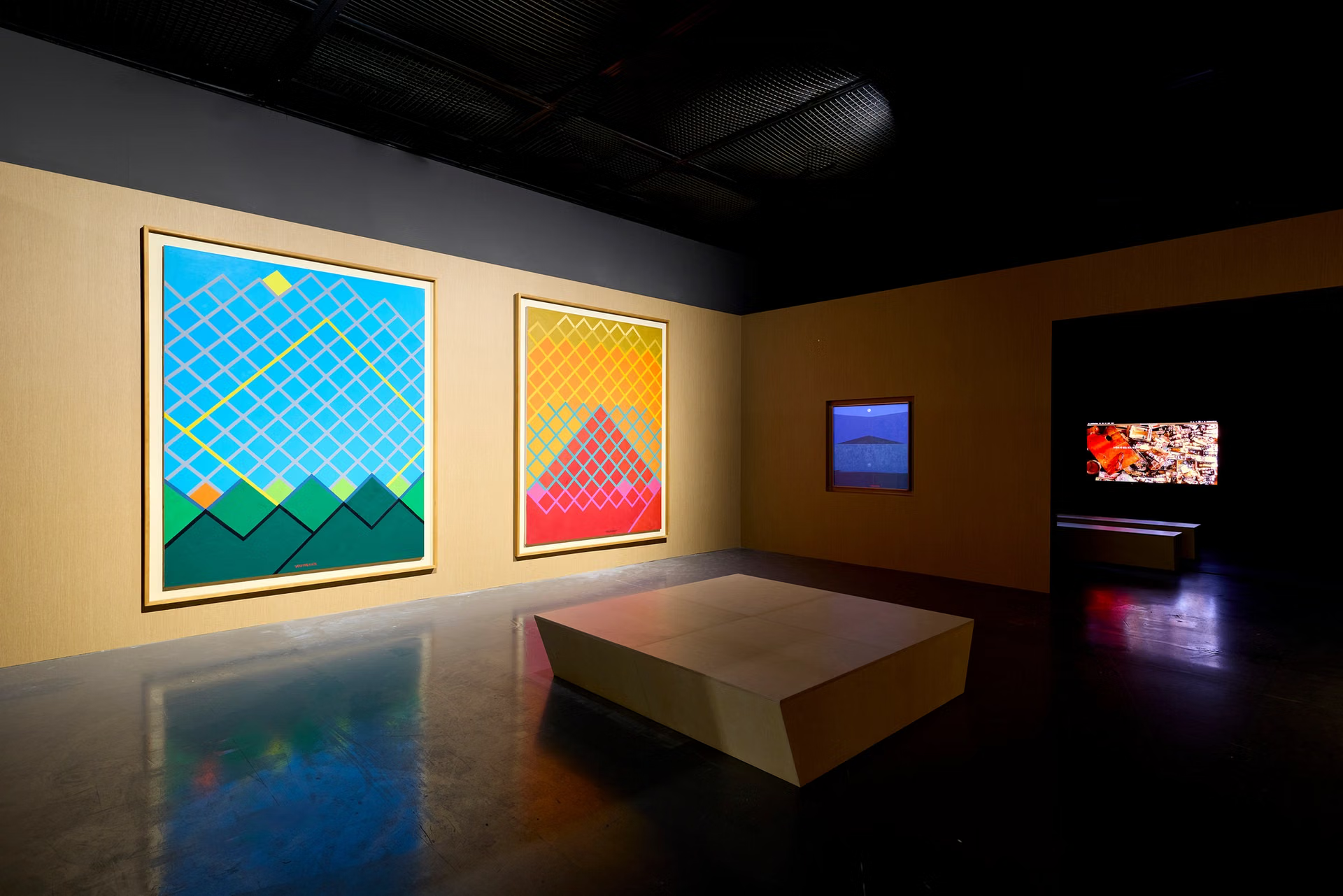
Yoo Youngkuk’s six-decade career is explored in a free exhibition Courtesy Seoul Museum of Art
Yoo Youngkuk: A Mountain Within Me
Seoul Museum of Art (SeMA), until 25 October
Billed as the largest survey of Yoo Youngkuk (1916-2002) to date, this show marks the inauguration of SeMA’s “Korean Modern Masters” series. Thoughtfully laid out in an exhibition space designed by Teo Yang, the show brings together around 170 works and archival materials charting the artist’s six-decade trajectory, from his early works at Bunka Gakuin in Tokyo, where he studied Western painting in the 1930s, through to his abstract imagery in his later years.
Rather than sticking to a conventional chronological narrative, the show opens with his mystic large canvas from 1964, a pivotal year of his career as he held his solo debut at the age of 48. Viewers are then taken on a fluid journey transcending time, tracing his artistic footsteps that also parallelled the development of South Korea. Entry to the exhibition is free, but the museum’s shop has an exceptional offering of special-edition merchandise inspired by Yoo’s art.


