


In a former storage space behind Darsham train station, on the East Suffolk Line halfway from Ipswich to Lowestoft, the art gallery Unit 4 is operating this summer. Its inaugural show, Modern Problems, co-curated by David Cooper, who lives in the nearby village of Yoxford, and Giovanni Morter, might take anybody coming up from London by surprise. Not your usual local artist fare, it brings together a range of revelatory works by artists working in the area. It is about the state of the world in 2026, Cooper says, “from the rise in homophobia, to racism, war, pollution and the cost of living”. A far cry, then from watercolours of Southwold or Walberswick. At the beginning of August, Modern Problems will be followed by the second summer exhibition at Unit 4, Be Aware of Invisibility, with works by artists associated with the area including Renata Adela, Paul Benney, Mathew Weir and Abigail Lane.
Unit 4 is both unusual and not. The past few years have seen a heady transformation in the art scene in rural Suffolk. It feels appropriate that this year marks the 250th anniversary appearance of Suffolk’s most revolutionary painter, John Constable, born in 1776. Two of his six-footers, The Hay Wain (1821) and The Leaping Horse (1825), have made their way to the county for the first time (they depict local scenes but were painted in London), shown over the summer at Christchurch Mansion in Ipswich and at Gainsborough’s House museum in Sudbury. A common response to them is just how contemporary they feel, and how Constable remains a direct source of inspiration to painters. At Gainsborough’s House, paintings by Kate Giles (also recently on display at Snape Maltings) and David Dawson are vivid responses to Constable’s transformation of landscape into paint. Constable’s prints, recently the subject of a display at the Victoria and Albert Museum, are the subject of a small exhibition at the Rowe & Williams gallery in Yoxford, between Ipswich and Lowestoft. Print aficionados can see a rare original state of his mezzotint of The White Horse, first published in 1838, on display at R&W throughout the summer.
“The cultural shift east in England is fascinating to watch”
Local artist William Wallace’s Live/Work Balance (2026) placed in the garden of The Art Station in Saxmundham as part of as part of Local Yokel Photo: Doug Atfield
Constable was that rare thing—a thoroughly local, but also avowedly international artist. This is the uniqueness of the Suffolk scene: its art is rooted in the region and the landscape, but it goes far beyond in significance. Whereas two decades ago the area between Lowestoft and Ipswich along the East Suffolk Line was marked only by Snape Maltings, with its gallery and concert hall established in the 1960s, now you might plot a journey up the rails and find reasons to stop at every station. That the region is at the centre of national debates about energy infrastructure, with the construction of a new nuclear power station, Sizewell C, as well as much renewable energy infrastructure and accelerated coastal erosion in the area around Thorpeness, is certainly part of this importance. The changing landscape and its history form the backdrop, if not the subject, for the newly vital Suffolk art world.
One of the most surreal and atmospheric art landscapes can be found by the more intrepid visitor at Bentwaters Parks at Rendlesham (otherwise known for its preponderance of Anglo-Saxon kings), the former RAF Bentwaters base, used by the United States Air Force during the Cold War, where much of the military infrastructure, including planes and hangars, has been left in place. As well as the arts centre with studios Old Jet, the exhibition Colliding Worlds is on view at Asylum Studios, housed in another atmospheric Cold War-era building.
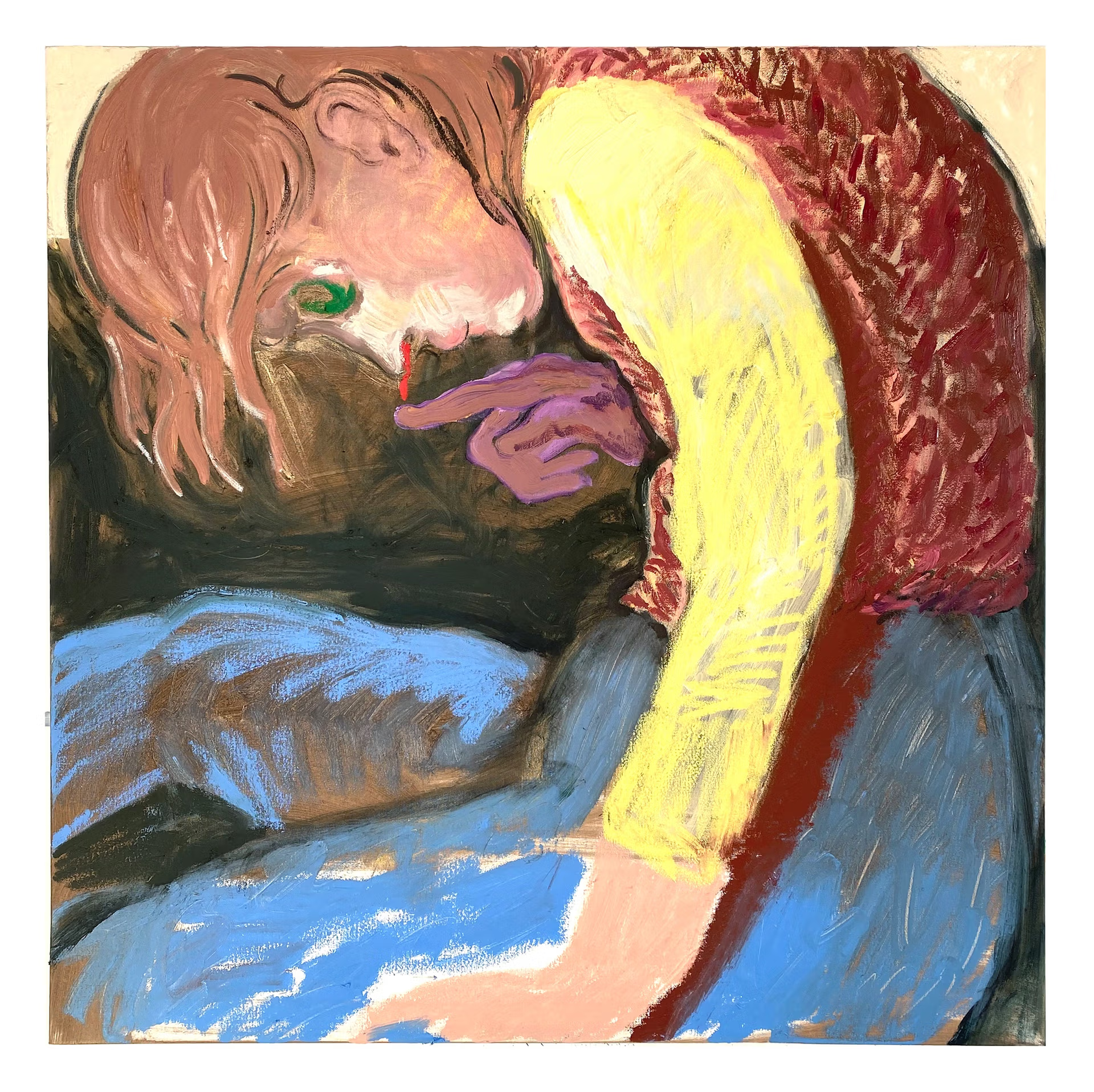
Jennifer Pitchers’s painting Happy To Be Here (2024) was part of exhibition The Mother Lode at The Art Station © Courtesy of the artist
Further up the coast, the small market town of Saxmundham has been transformed over the past few years by The Art Station, an organisation housed first in the disused Royal Mail sorting office and latterly in the former Barclays Bank building, using the bank’s safe as an exhibition space. Throughout the summer, the Old Bank building is hosting the exhibition Local Yokel, curated by the founder and director of The Art Station, Clare Palmier—the show takes as its theme the range and quality of art being made in the locality. It follows the exhibition earlier this year, The Mother Lode, curated by Tor Cooke, which showed work by Jennifer Pitchers, Kristina Tonev and Anna Ilsley. Palmier is one of the most noted curators in the East Suffolk area, drawing together remarkable works by artists including William Wallace, an artist of Romany-Jewish heritage who lives in a field near Eye, whose artwork Hedging Around Our Heritage, a tent-like structure whose inner floor is roughly engraved with skeletons taken from a book, Osteographia, or the Anatomy of the Bones (1733), by the 18th-century surgeon William Cheselden, is a worth a visit to the locale alone.
The Suffolk connection was also deeply entrenched in the Shake Festival, which last year staged a dramatised version of Ronald Blythe’s 1969 book Akenfield: Portrait of an English Village. Written by Glenn Wilhide and directed by Jennifer Caron Hall, it received great acclaim. The stage set included a woodland backdrop painted by the local sculptor Laurence Edwards that, in Local Yokel is artfully combined with Buckets and Trugs (2026) by Sarah Lucas, a mobile of brightly-coloured plastic receptacles. Akenfield and the world of Blythe offer a counterbalance to the writings of W.G. Sebald, so often used as the imaginative filter through which the Suffolk landscape appears in a glowing and magical light.
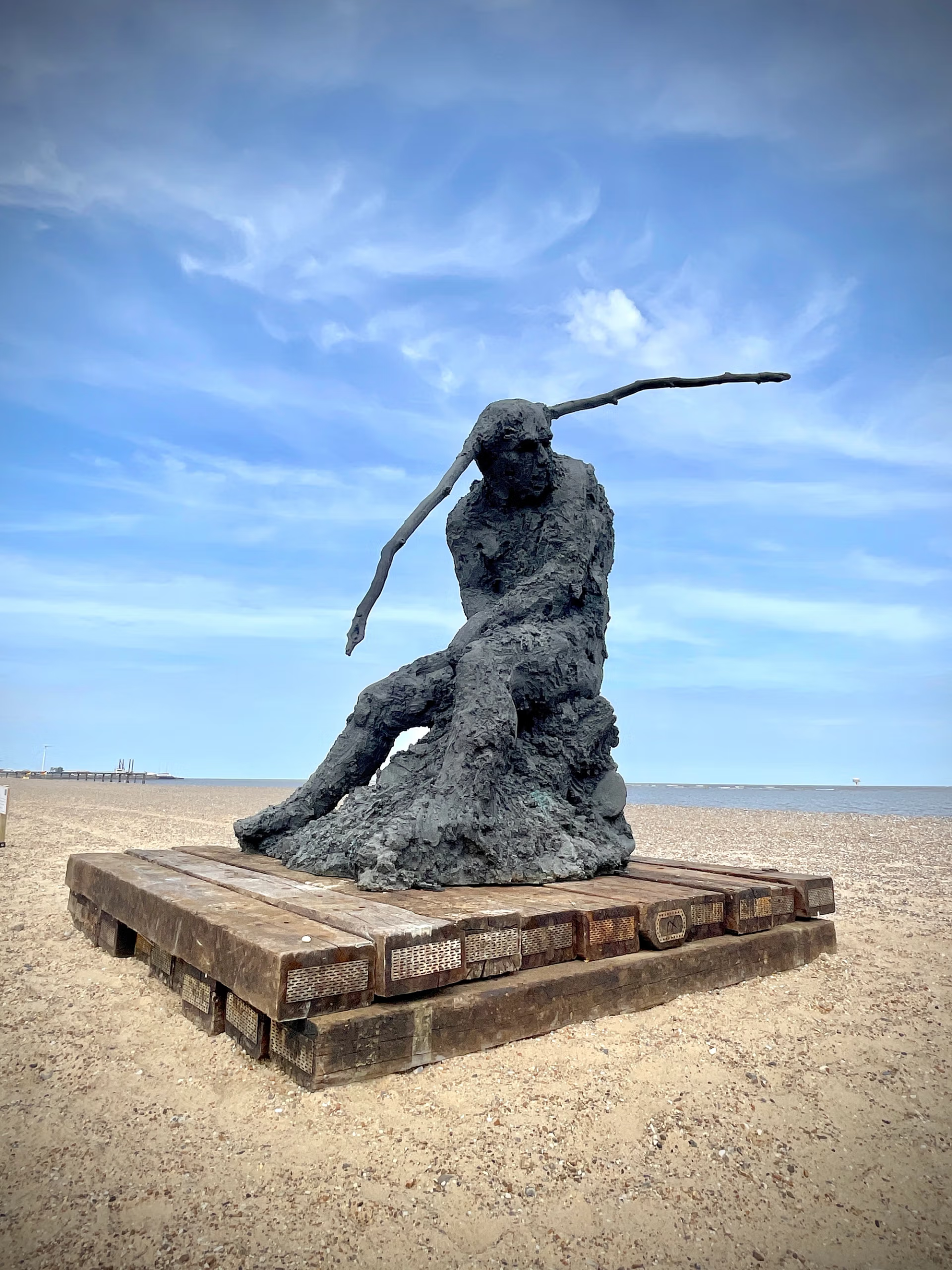
Laurence Edwards’s The Long Wait (2025) installed on the beach in Lowestoft as part of First Light Festival Courtesy of Messum’s East
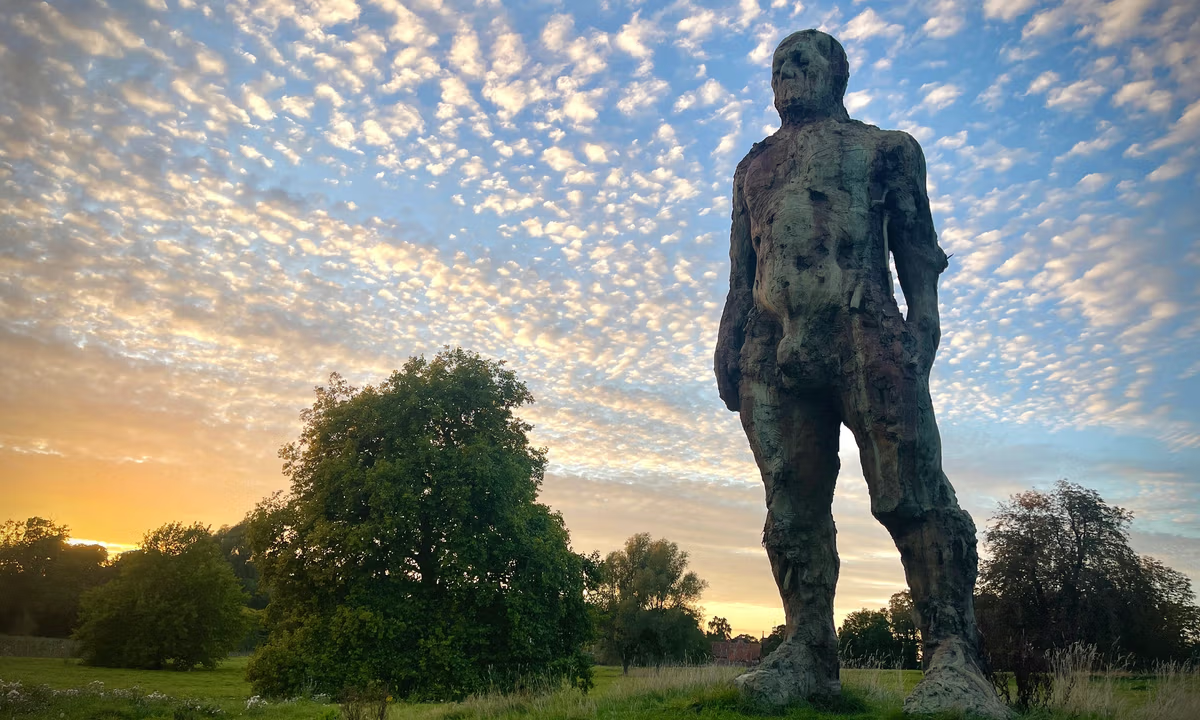
Travel a little further north on the East Suffolk Line and you can catch a glimpse of Yoxman by Laurence Edwards, a vast bronze sculpture of a melancholic figure commissioned by the ubiquitous local landowner Jon Hunt for the grounds of Cockfield Hall. Yoxman might be a portrait of Ronald Blythe imagined by Sebald, or perhaps the other way around—it has become the equivalent of Antony Gormley’s Angel of the North (1998) for the east, with a rural Suffolk twist.
The East Suffolk line art journey ends in Lowestoft, where much of the newly sprung energies of the region seem to gather and culminate. The annual free festival, First Light, founded and organised by Genevieve Christie, leads a programme of town-centred regeneration that is turning the run-down fishing port, known for its association with Joseph Conrad and unfairly, but hilariously, disparaged by Sebald in his 1995 novel The Rings of Saturn, into an important art capital of East Suffolk. Later this summer the former Post Office will open as an impressive arts complex, including a gallery, exhibition space and artists’ studios, co-run by Messums East and the local council. Edwards will keep an open studio and create a large bronze sculpture for the easternmost point of the country in the first months of its opening. Also in Lowestoft, 303 Projects, led by the artist Alexander Costello, will be showing works by Ryan Gander over the summer in a small but energy-filled gallery space.
The cultural shift east in England is fascinating to watch. One explanation is the complete pivot of London’s cultural life from west to east, radiating energy east and northwards. The stretch of coast between Sizewell and Lowestoft is being transformed by multiple energy infrastructure projects, which has been profoundly controversial, but also galvanising for the arts in the region. The area is being transformed, giving a feeling both of profound controversy and disturbance, but also hope. New train lines are being constructed for the nuclear power station that involve cuttings and embankments on a vast scale, bringing to mind the great era of railway construction in the time (just) of John Constable. And yet still, crossing the River Orwell by train or by car, you get the feeling of entering into a different landscape, cut off from the urban conglomeration of the south of England. This is what gives the east of England its character as a realm of art and artists—a landscape on the edge.
