


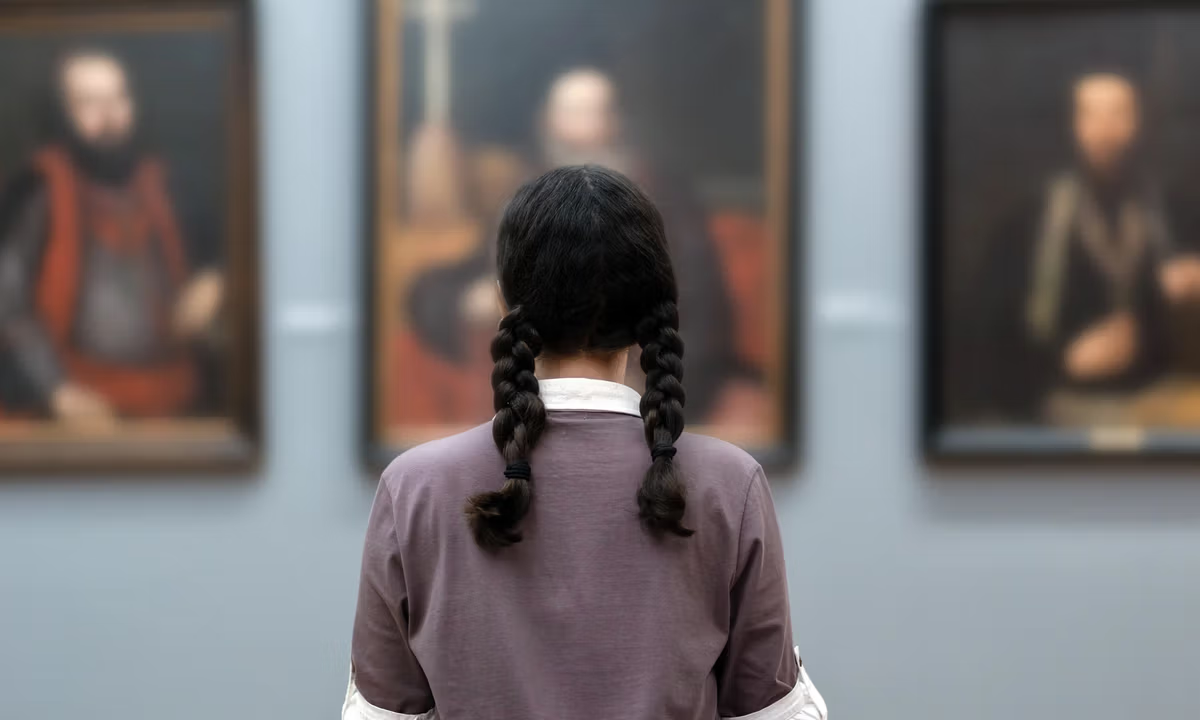
The state of art history is not good, at least not in the UK. According to a schools survey by the Association for Art History, only 80 schools offer an A-level in art history, down from 122 a decade ago. Last year the exam was taken by a grand total of 838 pupils. It seems the kids are just not that into it anymore.
Looking for silver linings, the association pointed to a “sizeable increase” in A-level entries in more recent years. But this only works if you take 2019 as the baseline, when just 483 pupils took the subject. Take a longer-term view and the decline is clear: 20 years ago, around 1,000 pupils took the A-level; 40 years ago it was about 4,000. Then there’s the class divide. Three quarters of the schools teaching art history are fee-paying.
The association found a more optimistic view of art historical interest in the university numbers. Enrolment in undergraduate courses is “stable”, at around 1,200 students a year. But, again, they have chosen 2019 as a starting point, after a decline of nearly 30% in the 2010s. There is no escaping it—art history in the UK is a dwindling, elite subject.
That’s the problem. What’s the cause? Here we normally blame a combination of money and politics. Art history is seen as an expensive subject, requiring specialist teachers and pricey materials (thanks in part to the image fees our “inclusive” museums like to charge). Curriculum reforms over the past 20 years have favoured STEM subjects (science, technology, engineering and maths). The last Conservative government tried to abolish the A-level altogether in 2016. Universities have faced similar pressures. The structural barriers for young people wanting to study art history are many.
But I’m afraid it’s also time to ask—are we teaching it right? Is it exciting and interesting enough? I’m not here to criticise art history teachers and lecturers; most do an impressive job in difficult circumstances. I want to question instead our wider approach to the subject.
First, we’ve been trying for two decades to sell art history as a means to an end. “Visual literacy”, say the prospectuses, gives you the skills for today’s digital age. Really? It may teach you how to be literary about visual things, but that’s different. I doubt young people feel they need help navigating the internet. If visual literacy were the point, TikTok would be the syllabus.
Such an instrumental approach reveals a growing lack of confidence in the subject itself. The latest “benchmark document” for art history from the Quality Assurance Agency (QAA), the body for academic standards in UK higher education, does concede that art history is worth studying in itself, but chiefly because it “reveals the decisions that construct dominant ideologies or resistance to hegemony at the intersections of class, ethnicity, race, gender, health and the environment”. In fact, the QAA is not even sure about the terms art and design anymore, for “they are today recognised as historical constructs rooted in European colonial expansion”.
The evidence suggests that politicising art history has not helped stem the decline in people wanting to study it. We may think we’re making the art of the past relevant by interpreting it through today’s values. But if we increasingly find that past distasteful—especially the European past—we risk spending as much time condemning it as understanding it. This might not be the best way to persuade someone to study the subject.
Perhaps France shows a different way. There, art history is treated less as an interpretative humanities discipline and more as a historical subject grounded in objects, archives and method, as part of a wider, state-supported cultural infrastructure. In Britain, we have tried to save the subject by making it a useful moral instrument. But art history does not need to be useful. It needs to be worth knowing.
