


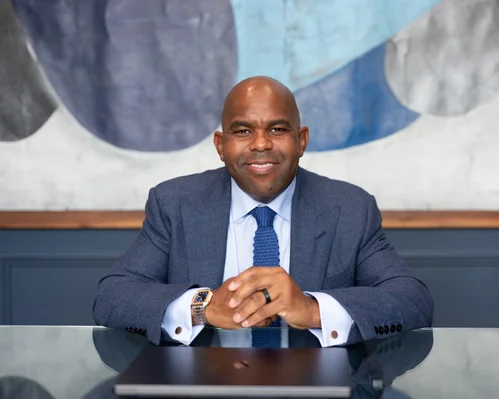
The first thing visitors to Hassan Smith’s home notice is the Jean-Michel Basquiat–style crown beneath their feet.
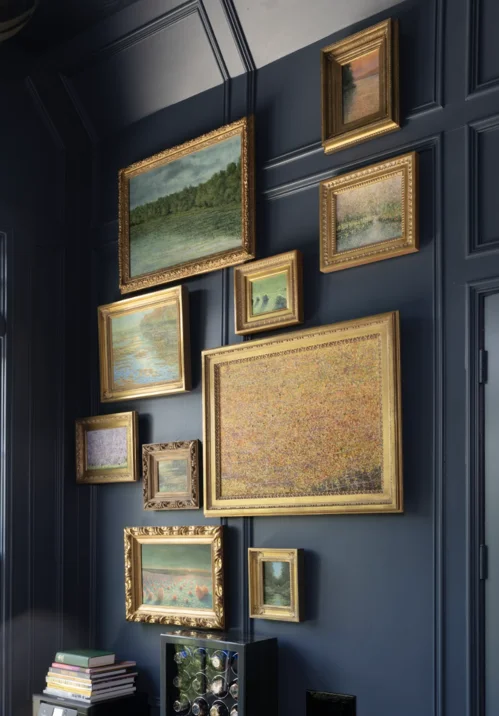
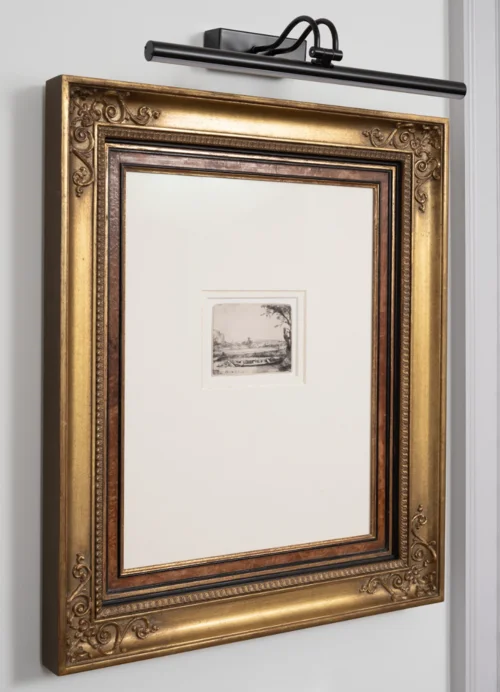
The doormat of Smith’s North Atlanta home signals what awaits inside: a house where art is not just displayed, but lived with. Works from Gordon Parks’s iconic “Harlem” series line the hall outside his children’s bedrooms; in the kitchen, a small Rembrandt drawing, Canal with a Large Boat and a Bridge (1650), presides over the breakfast table. Smith, an entertainment executive best known as the senior advisor for John Legend and the founder of private equity firm Ellaby Holdings LLC, has built a collection steeped in cultural history that balances the canonical with the personal.
Smith sees his collection as a long-term investment, but not in purely market terms. He invests in people and perspectives. “I collect for legacy,” he told me in his home office, where photos of Smith with the likes of President Barack Obama sit on the bookshelf, and a monumental Tony Lewis painting anchors the wall. “I always had my children in mind…that I wanted to create something for them to grow up around.”
That long view runs through everything that Smith does. He met Legend in 2004, just before the Grammy Award–winning singer released his debut album, Get Lifted, and has remained his trusted right hand ever since. He approaches collecting with the same instinct for what will last, building personal relationships with artists, including Patrick Eugène and Rashid Johnson, along the way.
How Hassan Smith made the leap from art lover to collector
Smith traces his love of art back to his parents’ record collection and childhood museum visits. But he points to a Yoruba mask he bought in Lagos in 2000—now sitting on his desk—as his first “collecting” purchase. When friends who collected art praised the mask, he said, “it gave me my confidence that I was selecting great, great works.”
Even so, Smith said he did not feel truly exposed to contemporary Black artists until he entered the music industry. Until then, his knowledge of the art world had been shaped largely by Old Masters. That changed when he began visiting friends’ homes, including those of cultural figures like Jay-Z and Swizz Beatz, both known for championing Black artists. “I got to see that there are artists who create at this level that look like me,” he said.
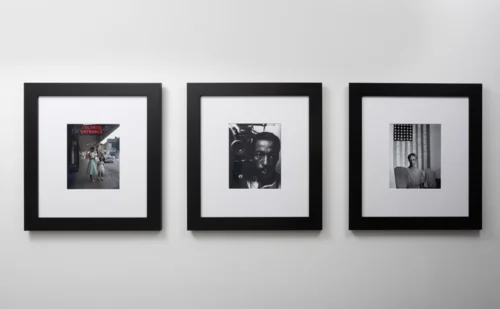
A decade after purchasing the Yoruba mask, Smith stepped more fully into the art world. He attended an auction at the Gordon Parks Foundation, where he bid on works from Parks’s “Harlem” series of portraits taken in the New York district. Some 16 photographs by Parks—including a portrait of Malcolm X and scenes of the Civil Rights Movement—line the upstairs hallway near the children’s bedrooms. “I put it upstairs purposefully, where their rooms are, so they can see it every day, and they can understand some of the things that are going on in this world today are subjects and works that were going on in the ’50s and ’60s,” Smith said.
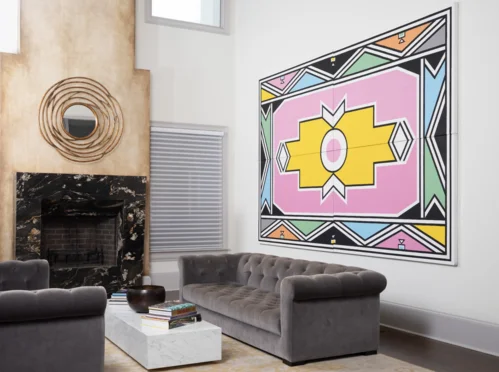
Because living with the art is central to Smith’s philosophy, it feels especially fitting that South African artist Esther Mahlangu’s massive, four-panel geometric painting Untitled (2024) hangs in the living room. Smith is among the artist’s most vocal advocates and owns 30 of her works. What drew him in, beyond the work’s “vibrancy,” was its connection to Mahlangu’s ancestry. “The history of where that practice comes from was astounding to me,” he said.
A collection that champions Black artists across generations
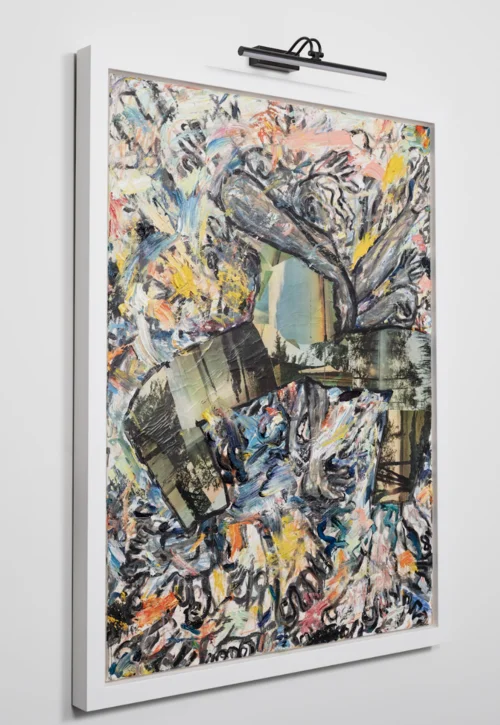
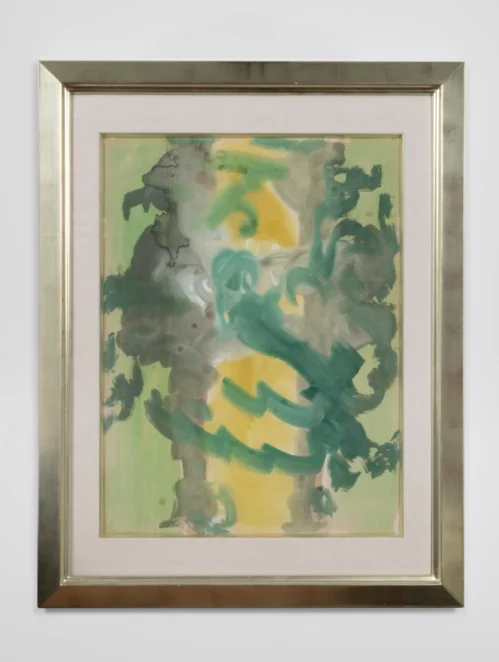
Curiosity, more than anything, drives Smith’s collecting. It is also what compels him to meet as many artists as he can. “I like to live with my works, and most artists that are in this home, if they’re living, I have a robust relationship with,” Smith said. Eugene, for instance, came onto Smith’s radar when a friend urged the collector to meet the artist, his cousin.
Before he considered acquiring a work, he wanted to make a personal connection. They clicked immediately. Today, two of Eugene’s works live in Smith’s house: a portrait in the living room and a giant commission, Untitled (2024), in the collector’s sunroom, an airy, gallery-like space where Smith hosts parties and fundraisers.
That sunroom, in many ways, captures the intergenerational dialogue and community-building that define his collection. Lined with windows and hovering above the driveway, the room brings together works that span from Betye Saar’s Lovers with Twilight Birds (1964) to Hank Willis Thomas’s The Only Bond Worth Anything Between Human Beings is Their Humanness (2024). “I love having the contemporaries of today with the legacy artists of tomorrow,” he said. Just as important are his children, who are growing up surrounded by art. “I’m proud that they’re growing up with…and really engaging with art throughout their entire life.”
The home gallery also doubles as a meeting place. As an active board member at museums, including the High Museum of Art and the Hirshhorn Museum, Smith regularly hosts parties and fundraising events there.
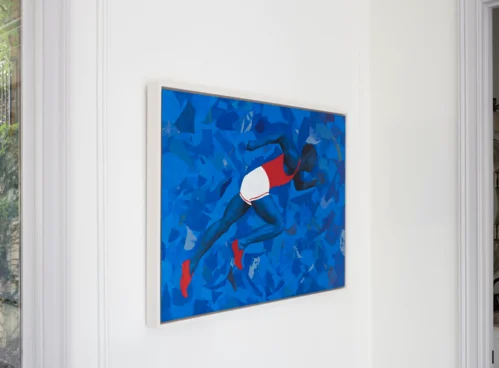
Community is central to his work, which is why he co-founded Collector X, a convening platform with private equity businessman Dale Burnett that creates space for Black collectors at art fairs. “We were trying to connect with our great friend group…and we just found it super hard to connect and convene…in the VIP lounge, just trying to pull chairs together,” he explained.
Ultimately, Smith hopes to pass on not just his love for art, but a way of looking: one rooted in education, personal connection, and care. He leads by example. For Smith, collecting is less about acquisition than legacy and preserving lived experience through art.
“The energy is carried within the work,” Smith said. “That’s what people feel when they love something, or they don’t like something. It’s the energy out of the work—where and how it was created.”
