


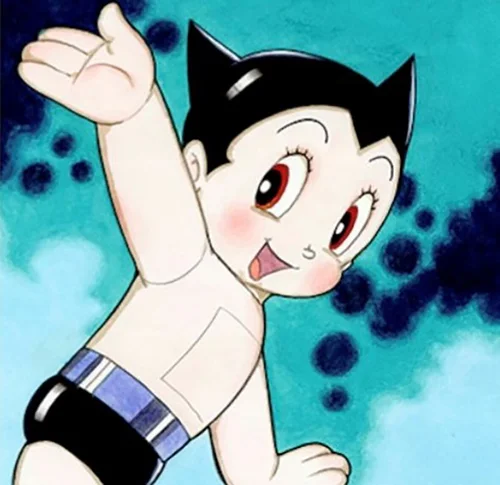
ATOM, 2020
Osamu Tezuka
Art in Dongsan
Its most famous characters include the likes of Astro Boy and Naruto Uzumaki, but manga is more than a cast of iconic heroes: It is an art form reaching new heights and fast becoming one of Japan’s fastest-growing cultural exports.
Evolving from serialized comics sold in domestic bookshops into a globally read medium with major franchises, manga is forecast to grow to a market value of $42 billion by 2029, according to a recent trade report. What was once a niche import is now the fourth-largest fiction category in the U.S.
Increasingly, this interest is filtering into the art market, as recent auction results have shown.
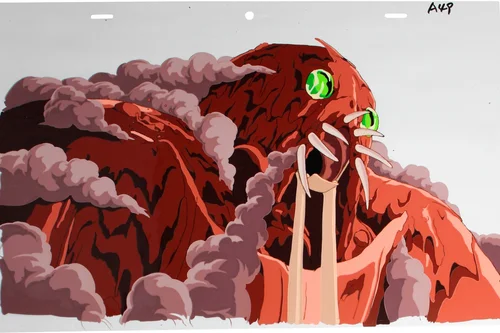
In March 2026, Christie’s held its first sale combining classical Japanese art with works rooted in subcultural movements. Titled “Anime Starts Here,” the sale included original manga drawings by Osamu Tezuka, anime cels from the 1984 film Nausicaä of the Valley of the Wind and vintage film posters of Godzilla. Also featured were works by contemporary artists such as Yoshitomo Nara and woodblock prints by Katsushika Hokusai.
The results were staggering, totaling 407% above the low estimate. Some 90% of lots sold, with 36% of buyers entirely new to Christie’s. “It significantly outperformed my initial expectations,” said Takaaki Murakami of the Asian art department at Christie’s.
Notably, some 35% of buyers were either Millennials or Gen Z, mirroring a shift seen by gallerists such as Eunha Chung, director of Art in Dongsan, which represents Japanese manga artist Sango Morimoto in Korea. “A new generation of collectors has grown up within a wide spectrum of visual culture—manga, animation, film, gaming, and fashion.”
The current market for manga art spans original manuscript pages, limited-edition prints, and manga-informed contemporary works, providing entry points for collectors and newcomers alike.
The following guide breaks down everything you need to know to get started.
What is manga?
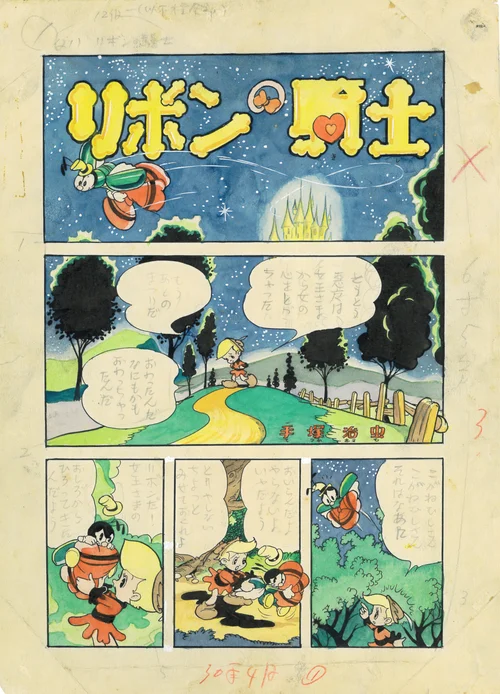
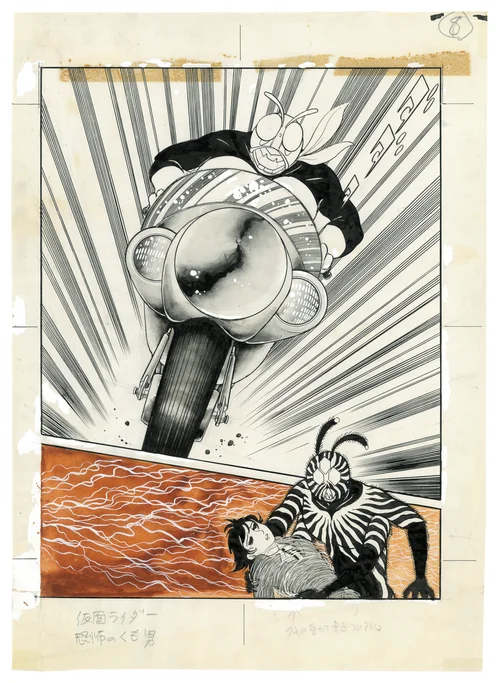
Manga is an umbrella term for Japanese comic books, most commonly printed in black-and-white with a right-to-left reading format. Targeting all age groups, the medium covers almost every genre imaginable, from romance and fantasy to teen fiction, comedy, and horror. Manga is an umbrella term for Japanese comic books, most commonly printed in black-and-white with a right-to-left reading format. Targeting all age groups, the medium covers almost every genre imaginable, from romance and fantasy to teen fiction, comedy, and horror.
The origins of manga stretch back to 12th-century picture scrolls, designed to be read from right to left—just as manga is today. However, it was during the Edo period (1603–1868) that illustrated fiction truly took root. Cheap, woodblock-printed storybooks known as kibyōshi were produced for the masses, and the word ‘manga’ itself (roughly translating to ‘pictures made freely’) first entered the art lexicon in 1814, when Hokusai used the term to title a series of assorted sketches.
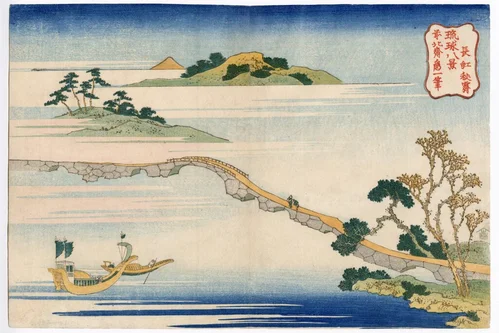
Eight Views of Ryukyu – Clearing Weather After Rain at Nagahashi/琉球八景: 長虹秋霽, 1832
Katsushika Hokusai
Aura Gallery
Following the Second World War and the rise of post-war artists like Osamu Tezuka (1928–1989), creator of Astro Boy and today known as the “god of manga,” the medium found its place as the mass cultural phenomenon we know today.
The 1980s and ’90s saw a golden age of manga, spawning some of today’s most-read series. These include the likes of One Piece, which has printed a weekly issue to this day since 1997.
How can collectors find manga art?
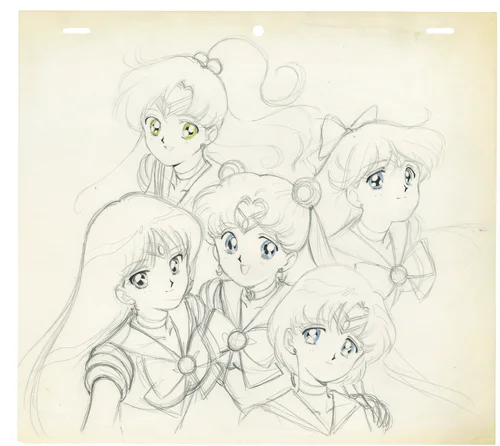
Although manga is a mass-produced product, with series published weekly and consumed at a pace, the medium offers original works of serious artistic value.
These are becoming increasingly available at auction houses and commercial galleries such as Art in Dongsan, Galerie Jacob Paulett, and Micheko Galerie that specialize in art informed by manga in aesthetics or subject matter.
According to Murakami of Christie’s, the value of original manga art is determined by a combination of factors: the significance of the artist, the subject depicted, the rarity of the volume, and the condition of the work, along with provenance, edition size, and where a piece sits within a series or publication history.
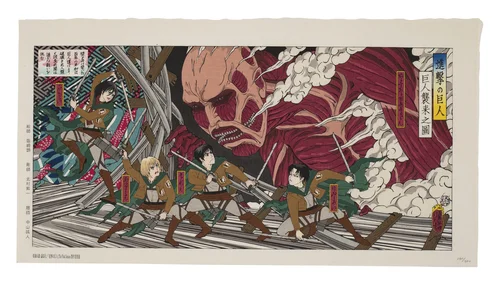
It is essentially the same evaluative framework applied to prints, photography, and most works on paper.
Where manga diverges slightly is in the value placed on source materials. Drawings carry an authenticity that reproductions—however high in quality—simply cannot replicate. This can make them more expensive. “Original works inherently carry a unique value, and this principle applies equally to manga art,” said Murakami. “This helps explain the growing recognition of manga as a legitimate art form, as collectors increasingly value not only the imagery, but also the physical presence and authenticity of the original work.”
What you can currently buy on the market breaks down broadly into the following categories:
- Genga (hand drawings): Original manuscript drawings, often marked with corrections, studio stamps, or the artist’s annotations.
- Splash pages: Original drawings of full or double-page spreads for the most dramatic moments in a story. These are among the most ambitious and compositionally striking pages of a manga.
- Sketches: Character studies or compositional roughs.
- Promotional posters: Theatrical and promotional posters for manga and its anime adaptations.
- Artist-made prints: Limited-run prints made by manga artists, separate from publisher-produced merchandise.
- Fine art informed by manga: Work by artists who draw on manga aesthetics but operate within the gallery and auction system.
Understanding manga art in the contemporary art world
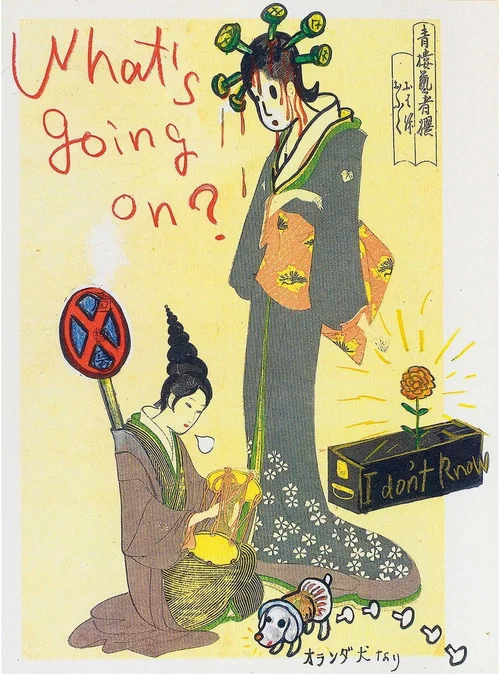
What’s Going On? (In the Floating World), 1999
Yoshitomo Nara
Upsilon Gallery
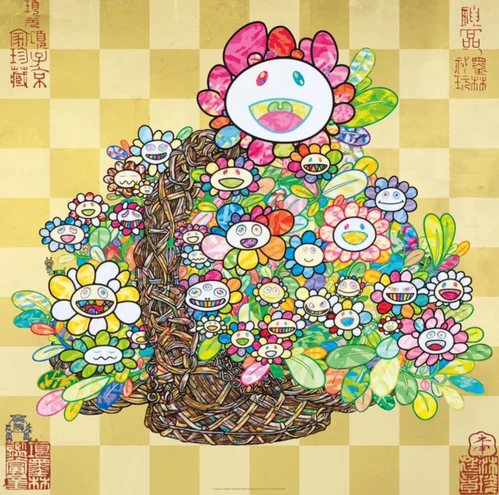
Bouquet in a Basket, 2024
Takashi Murakami
Baldwin
Recognized contemporary artists such as Nara and Takashi Murakami draw from manga aesthetics and have long commanded serious critical and commercial attention. What is new is the breadth of that influence and the growing number of galleries representing artists who work in this territory.
Munich-based Micheko Galerie specializes in Japanese contemporary art, and its co-founder, Keiko Tanaka, noted cases where fine art collectors notice manga-like expressions in works and develop an interest in them. “This shift occurs within the context of a deepening understanding of Japanese visual culture as a whole,” she said, “rather than stemming from a specific interest in manga.”
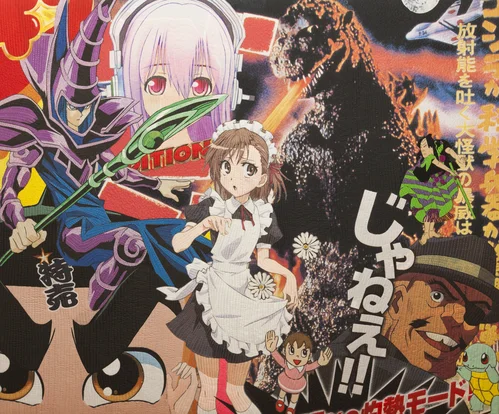
New Love Plan #18, 2013
Ai Kijima
Micheko Galerie
The rising appetite for manga-informed aesthetics, she suggests, is better understood as a broader reevaluation of a visual culture that has historically been treated as peripheral. Only now is it being reconsidered within a wider art-historical frame.
Still, Tanaka cautions about the limitations of the Western gaze. “We still see curators who are interested in recent Japanese contemporary art primarily because they are drawn to the ‘Cool Japan’ image, and who view the entire subject only very superficially—often with a certain underlying arrogance,” she said. “The fact that Japan also has a centuries-old tradition in the arts is overlooked or simply ignored.”
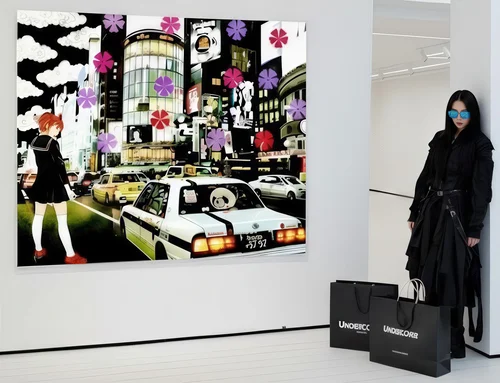
Pandasan 57-57 : Midnight Blooms in Tokyo Shadows, 2010
Hiro Ando
Galerie Jacob Paulett
Stephane A. Cohen of Japanese Neo-Pop specialist Galerie Jacob Paulett agrees. “Manga was an art form long before becoming the popular culture medium we know today,” he said, pointing out that through history, Japan has sustained a cultural ecosystem that simultaneously nurtures elite art alongside popular art for the masses.
As a result of these considerations, first-time buyers should approach manga art as part of a larger visual history rather than a contemporary trend. Looking beyond recognizable characters and blockbuster franchises and further back into its history can also open up a deeper understanding of the artistic lineages at play.
As both Tanaka and Cohen suggest, manga belongs to a broader continuum of Japanese image-making, where distinctions between pop culture and fine art have historically been more fluid than many Western audiences assume.
The golden rule for buying manga art
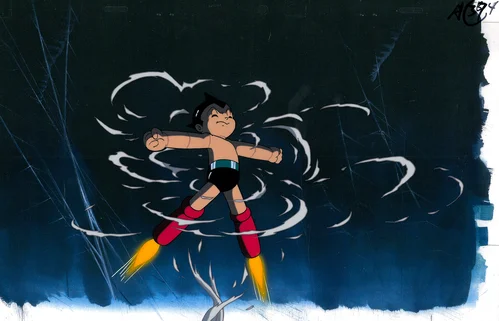
Astro Boy Anime Production Cel 鉄腕アトム (アニメ第2作), 1980s
Astro Boy
Tinny Art House
When asking for advice for first-time buyers, every gallerist and specialist returned the same answers: Follow your heart over anything else.
“In 99% of cases, there won’t be any increase in value—so buy what you love,” said Tanaka. Murakami echoes her advice: “Always ask yourself if you genuinely like the artwork.”
As for Cohen, “My advice to all buyers remains the same: let your heart speak. And if your heart has been nourished by manga culture for years, then even better.”
New collectors should spend time with the medium. Visit exhibitions, follow specialist galleries, study the history, and learn the distinctions between original drawings, prints, and manga-informed contemporary art.
As the market continues to evolve, knowledge will sharpen instincts, but ultimately, the work worth buying is always the pieces you are intuitively drawn to, whether that’s a favorite character or fresh discovery.
