


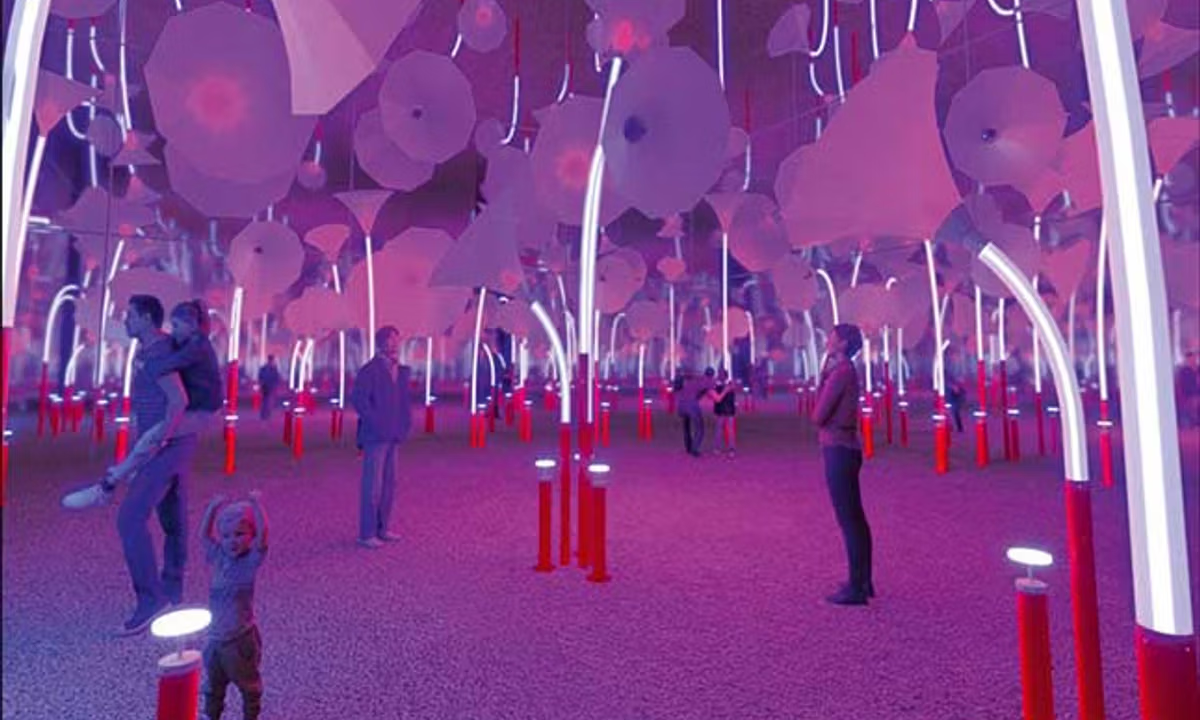
A shuttered cinema on Lincoln Road, Miami Beach’s main shopping and dining artery, could soon be home to an immersive institution dubbed the Superhuman Museum. The project is led by Steve Berke, a comedian, cannabis entrepreneur and two-time mayoral candidate; it received approval for a change-of-use permit from the Miami Beach Planning Board to begin development at the former Regal Cinema. The museum has received support from the Lincoln Road Business Improvement District; its president, Lyle Stern, has called the project “perfect for Miami Beach and especially Lincoln Road”.
Berke, also known for co-founding the International Church of Cannabis, an immersive attraction in Denver, is approaching the Superhuman Museum not as a traditional institution but rather as a destination “combining elements of theme parks, of art museums and of experiential museums worldwide”. Berke stresses that the museum’s design is focused on providing visitors with a sense of fulfilment and inspiration. “We really want visitors to see and experience the artwork at the museum and have it inspire them to be a better version of themselves,” he tells The Art Newspaper.
The museum is intended to become a permanent fixture on Lincoln Road, though it will require significant capital investment and complex construction first. Berke is targeting a soft launch in November 2026 with a grand opening during next year’s Miami Art Week, the smorgasbord of art fairs, parties and pop-ups that takes place concurrently with Art Basel Miami Beach in early December.
Augmented itineraries
Preliminary plans and renderings suggest the Superhuman Museum will be more of a guided journey than a traditional exhibition venue. The experience will open with a facial scan that allows each guest to be visually woven into the museum itself. Guests will move through a series of timed rooms that reveal the museum’s narrative in stages as they embark on a futuristic voyage of technology and art. Wireless wristbands will track visitor preferences and ensure that no two visits are the same, while multilingual programming will allow guests to experience the museum in their preferred language.
The rooms will include a mix of immersive, tech-forward installations and galleries featuring more traditional art; renderings include images of works by Keith Haring and Old Master portraits. One room is intended to feature a 20ft-long, stained-glass kinetic work by the Israeli Op artist Yaacov Agam. A “voice-of-god” narration will provide context for the artists and their work.
The experience will culminate in the former cinema’s Imax theatre, where visitors will be invited to become artists themselves. Interactive stations will enable them to work with the different elements that they experienced throughout the museum to craft their own digital works, which can then be printed onto various forms of merchandise and shipped directly to their homes. Berke says that this room will also feature a giant robot DJ that will come to life every half-hour to provide a futuristic climax to visitors’ journey through the museum, which he expects will take around two hours.
“Unlike other contemporary art museums around the world, Superhuman will not be abstract,” Berke told the South Florida television station WPLG. “We have a very distinct point of view, and that is using art to encourage our visitors to strive to become the best versions of themselves—hence, Superhuman. We want you leaving the museum being a better human being, thinking about your life’s choices, thinking about how you treat other people.”
