


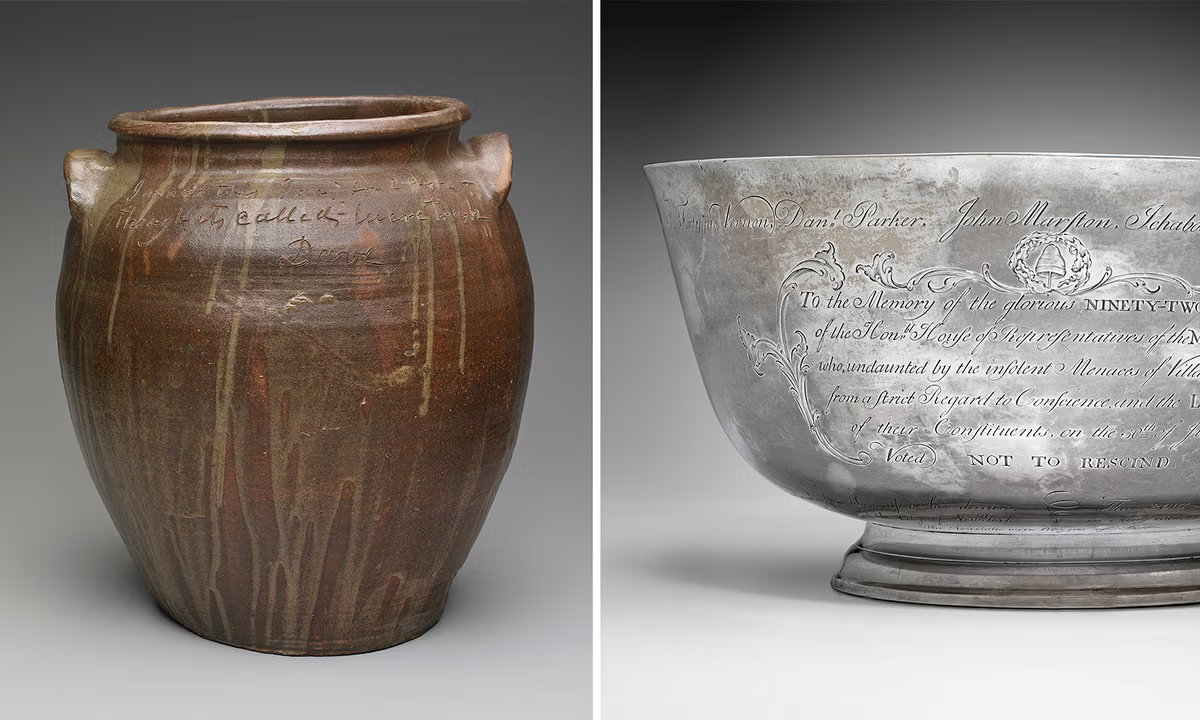
The enslaved 19th-century artist David Drake is finally getting a seat at the table of US history—or one of his most celebrated poem jars is.
After years of being relegated to the folk and self-taught art gallery at the Museum of Fine Arts (MFA) Boston, one of Drake’s important jars from 1857 is moving to the main galleries dedicated to the foundations of America.
Starting 20 June, in time for the celebrations marking 250 years since the country’s founding, the Drake jar is being shown prominently in the section’s first gallery, next to the “Sons of Liberty” silver bowl that Paul Revere made and inscribed in 1768 on the cusp of the Revolutionary War. One of the museum’s prized possessions, the Revere bowl has been compared in importance to the Liberty Bell in Philadelphia.
This pairing is part of the museum’s larger reinstallation of its 18th-century American art galleries, its first since 2010, overseen by the museum’s chief of curatorial affairs Ethan Lasser, who is also a Drake scholar. An overarching goal, he says, is to focus less on British rule and “stories of independence” and more on cultural exchange and “stories of interdependence—the way cultures depend on each other, are in conversation or in conflict”.
Thomas Sully, The Passage of the Delaware, 1819 Gift of the Owners of the old Boston Museum. Photograph © Museum of Fine Arts, Boston
In this spirit, he includes some objects that were made after the 18th century but look back at foundational questions of liberty. Thomas Sully’s 1819 The Passage of the Delaware, a dramatic portrait of George Washington on horseback, appears near a stainless steel bust of Washington from 2024 by Alan Michelson, a Mohawk member of Six Nations of the Grand River. Its title is Hanödaga: yas (Town Destroyer), as Washington was known among Native Americans, and the reflective surface lets visitors see their own faces in his.
The vessels by Revere and Drake speak to each other even more directly, and audibly. Both objects carry inscriptions by their makers, and recordings of these texts will automatically play when visitors approach the objects.
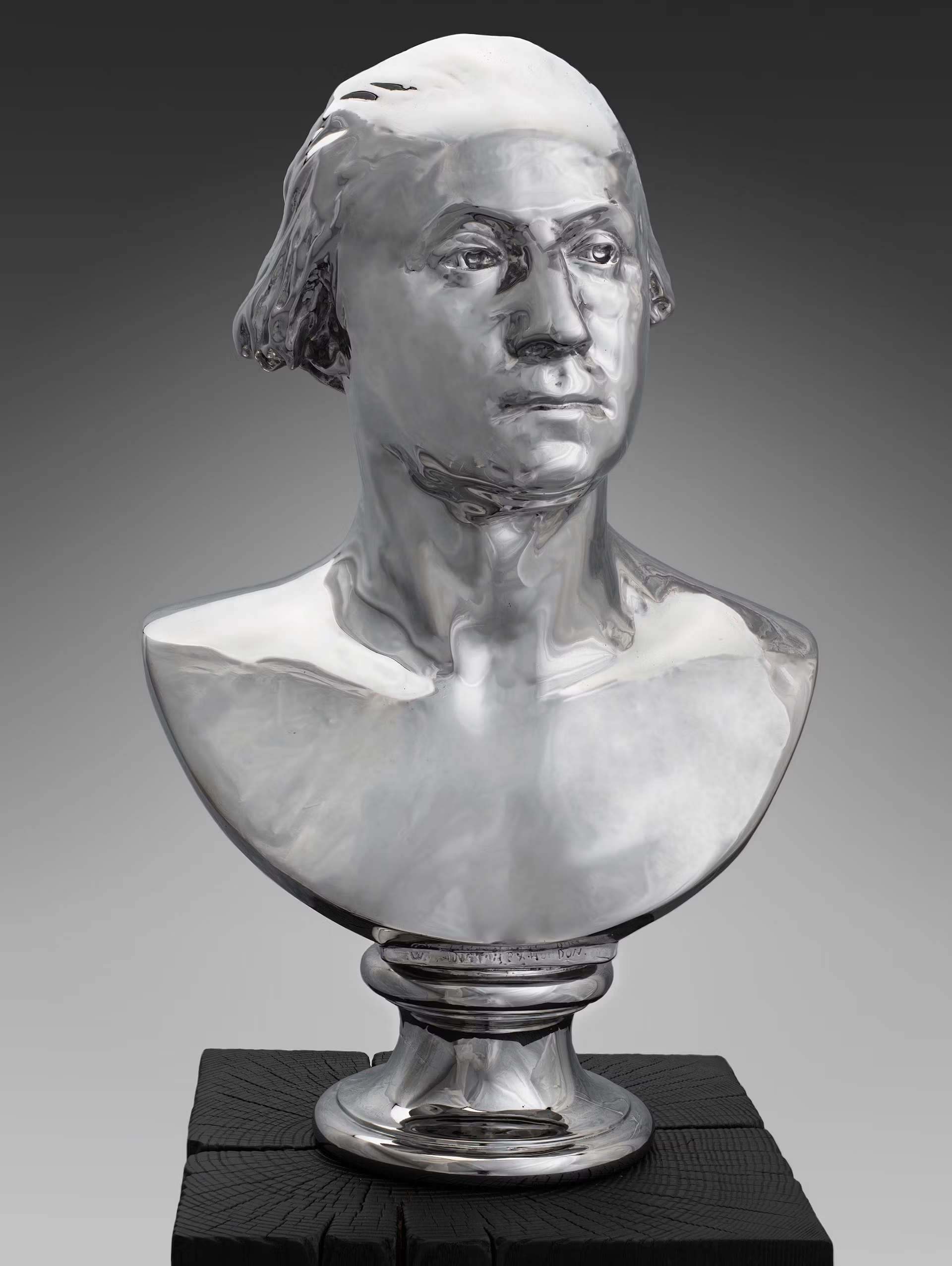
Alan Michelson, Hanödaga:yas (Town Destroyer): Reflect, 2024 Helen and Alice Colburn Fund. Artwork: © Alan Michelson. Photograph: © Museum of Fine Arts, Boston
Even though literacy among enslaved people was punishable by fine or worse, Drake inscribed dozens of his pots with clever rhyming couplets, referring to everything from the jar’s size to the Bible. This one, which was restituted to Drake’s heirs and re-acquired by the museum last autumn, reads: “I made this Jar for Cash- /though its called lucre trash.” He would also sign his name Dave on the pot, hence his nickname “Dave the Potter”.
The Revere bowl has a longer engraving celebrating the 92 Massachusetts legislators who stood up to British taxation and the “insolent Menaces of Villains in Powers”. It could be considered an early example of protest art, making a compelling “no kings” statement, says Lasser. But when paired with the Drake jay, its blind spot is glaring.
“These men are arguing, they’re advocating, they’re protesting for liberty, but what they don’t see, or maybe they do see, is how many people they’re leaving out of that conversation, including people like Dave,” says Lasser.
He adds: “We love the idea of these two vessels with words on them talking to each other, about liberty, about freedom, about what it means to be American.”
