


In one scene of Nagi Notes, a new film by the Japanese writer-director Koji Fukada, which premiered on 13 May at the Cannes Film Festival, a woman and a teenage boy visit the Nagi Museum of Contemporary Art (Moca), and walk through Ubiquitous Site • Nagi’s Ryoanji • Architectural Body, by Arakawa and Madeline Gins. A permanent installation, Ubiquitous Site is something like a turbine, a tubular hallway illuminated at either wall by an end-of-the-tunnel glow; the woman, Yuri (Shizuka Ishibashi) and the boy, Haruki (Waku Kawaguchi), a family friend, reach it by ascending a spiral staircase in the dark. They approach it reverently, marvelling at its beauty, and continue speaking to each other about intimate topics. Their hushed conversation is soon interrupted by another group, three enthusiastic visitors who burst into the installation already gushing and giggling, killing the mood by responding equally authentically to the work, exclaiming how cool it is.
What we bring to art, and what art draws forth from us, is one major concern of Nagi Notes. Yuri has come to Nagi, a remote farming town with a military base on the southwest part of the island of Honshu, to visit her friend Yoriko (Takako Matsu), the sister of her ex-husband and a sculptor, and to sit for her in her studio. Upon arrival in Nagi, Yuri is recognised by Keita (Kiyora Fujiwara), a shy neighbourhood boy and Haruki’s best friend: Haruki had previously drawn Yuri, as well, and had texted Keita a picture of the sketch he was working on; like a prospective bride in medieval times, Yuri’s portrait has preceded her to an unfamiliar land.
A scene from Nagi Notes (2026) © Nagi Notes Partners (Star Sands/Hassaku Labs/Wonderstruck) / Survivance / Momo Film Co
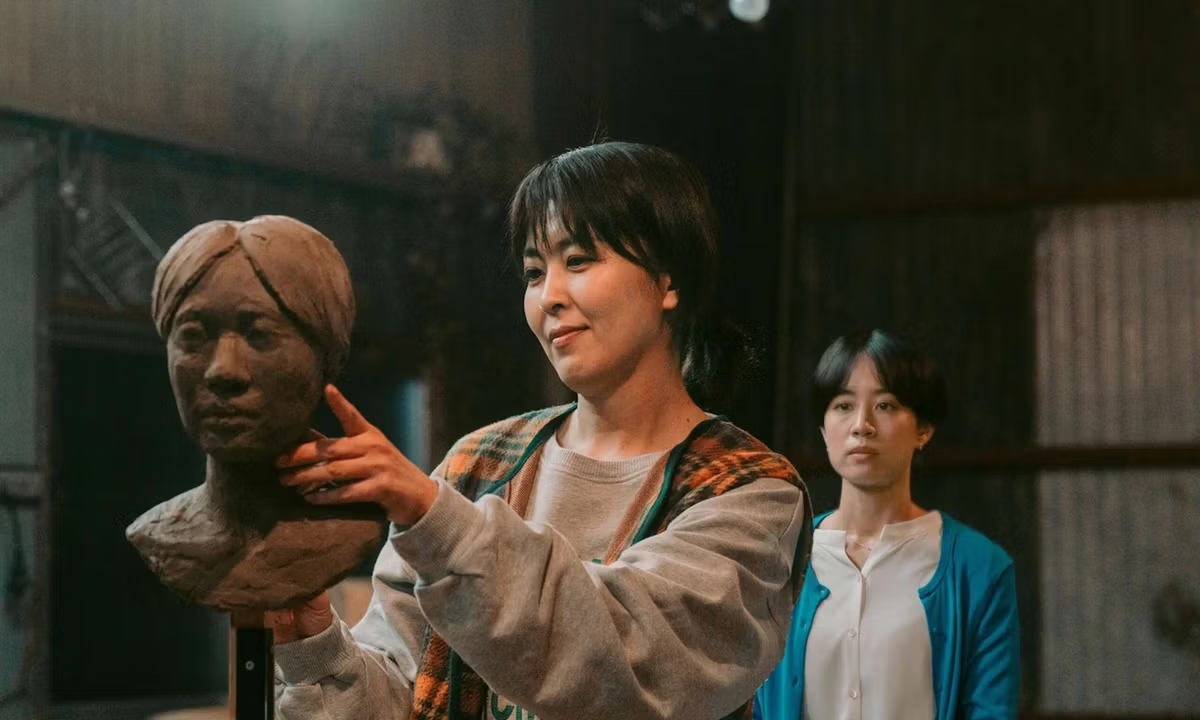
Haruki’s drawing is one of many unfinished or abandoned artworks in the film. Yoriko works out of a studio on her farm, where she also keeps dairy cows. The studio is cluttered with busts and figures in a folk style and in various stages of completion, including of her brother and Yuri’s ex-husband, and of Haruki’s late mother, who was Yoriko’s close friend. Yoriko’s process is to mould in clay, then hew from wood with chainsaw and chisel. “This is going to be you,” she says as she shows Yuri a three-year-aged block of camphorwood. The two talk, as Yoriko pounds and shapes the clay into Yuri’s face, squeezing her features and carving out her eyes. (At one point, Yoriko chisels away at the back of Yuri’s head as the two argue.)
Surrounded by reminders of their past, Yoriko and Yuri discuss art and life, to the extent that the two can be separated. Yoriko came to sculpture after the death of her best friend, a woman she had loved unrequitedly; she has not pursued close relationships since. Yuri reflects on the end of her marriage, which she connects to her trouble conceiving herself separately from the demands or perceptions of others. As she says all this, Fukada keeps his camera on Yoriko’s hands, busy on her bust of Yuri. Figuratively and actually, the process is bringing Yuri into focus, and if the metaphor is straightforward, it’s but one level of an uncommonly delicate and multitiered character study.
Like Ryusuke Hamaguchi, who also has a film premiering this year at Cannes, Fukada makes domestic dramas that are soft-spoken but buffeted by cosmic coincidences and uncanny parallels; their previous films share both specific elements (earthquakes that shake something loose in the characters; sign language and communication across language barriers) and general interests. And Nagi Notes has in common with Hamaguchi’s 2021 Best Picture nominee Drive My Car an interest in the therapeutic uses of art.
A scene from Nagi Notes (2026) © Nagi Notes Partners (Star Sands/Hassaku Labs/Wonderstruck) / Survivance / Momo Film Co
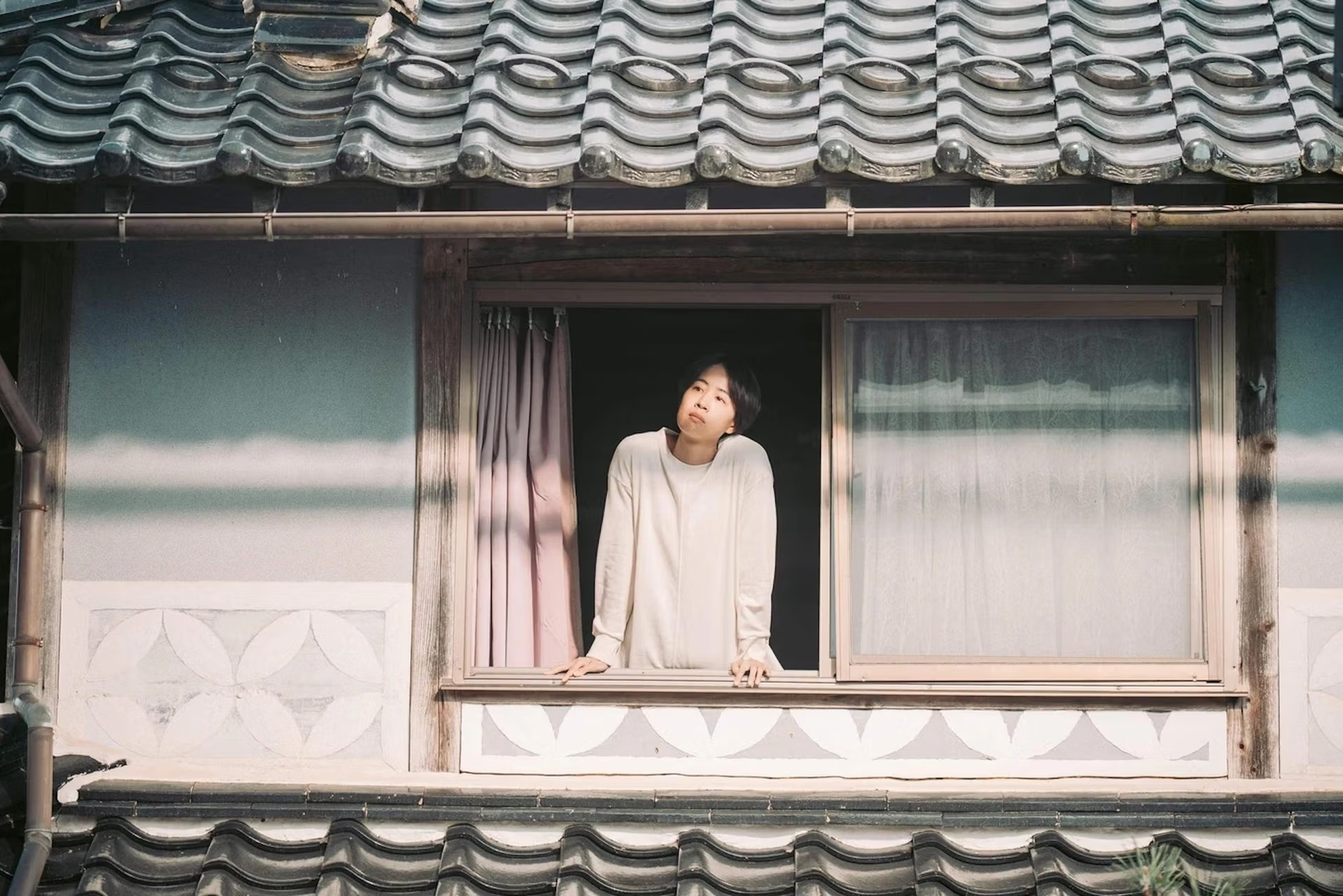
Characters in Nagi Notes express their desires first through art. Haruki, who sketches Yuri in a life-drawing class, hopes his model will marry his father. Keita, a military brat who struggles to fit in at school, cuts class to sketch migratory birds, and is pointedly disappointed to learn that Yuri and Yoriko are not a gay couple. For her own part, Yuri, who gifts Haruki a book about Edward Hopper, has come to Nagi in part to explore solitude—perhaps learning it from Yoriko, whose retreat to her hometown to pursue art is both a flight from the world and a way of forging a home in it.
In Nagi, daily municipal radio broadcasts keep the citizens updated on live-fire drills at the military base, play peaceful music to herald the death of local residents and announce upcoming events, including spring concerts and an all-ages camera obscura workshop at Nagi Moca. The narrative of Nagi Notes, which unfolds over a week and a half or so,is loosely structured around a recurrent image of hands tearing the date off various page-a-day calendars; the film treats art as embedded in the quotidian, as work that is not incomplete but perpetually in progress.
Watch a clip from Nagi Notes:
- Nagi Notes is showing as part of the Cannes Film Festival, until 23 May
