


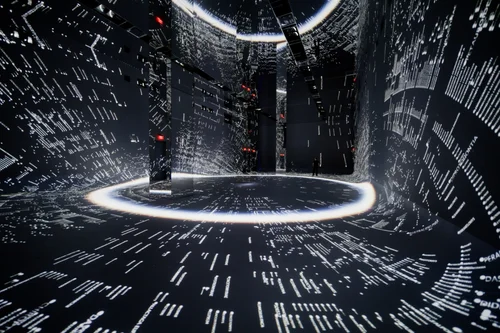
On June 20, 2026, DATALAND opened to the public at The Grand LA in downtown Los Angeles, introducing what its founders describe as the world’s first Museum of AI Art. For Refik Anadol, the Turkish American media artist known for monumental, data-driven installations at sites including The Sphere in Las Vegas, Casa Batlló in Barcelona, Serpentine Galleries in London, the World Economic Forum in Davos, and the Museum of Modern Art in New York, it is his most enveloping project yet: a permanent museum.
Its opening comes at a pivotal moment. AI-generated images, artist’s datasets, creative labor, environmental cost, and technological spectacle have become central debates in contemporary art. DATALAND enters that conversation with an ambitious proposition: a “living” museum where artificial intelligence, ecological information, and audience participation shape the experience in real time.
Here’s what to know about the new institution.
What is DATALAND?
DATALAND is a new AI-focused museum and digital ecosystem co-founded by Anadol and artist and cultural researcher Efsun Erkılıç, the duo behind Refik Anadol Studio. Presenting itself as the world’s first museum of AI arts, DATALAND describes its mission as exploring the point where “human imagination meets the creative potential of machines.”
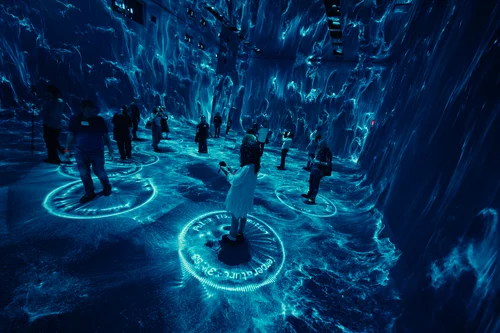
In practice, that means the museum is not organized around static objects in traditional galleries. Instead, it is built around immersive environments, generative AI systems, large-scale projections, sound, scent, and visitor-responsive technology. The museum’s inaugural exhibition, “Machine Dreams: Rainforest,” uses ecological data, rainforest field recordings, AI-generated imagery, and audience feedback to create an exhibition that changes over time.
DATALAND is located inside The Grand LA, the Frank Gehry–designed development on Grand Avenue in downtown Los Angeles. The location places the museum in one of the city’s most concentrated cultural corridors, near Walt Disney Concert Hall, The Broad, REDCAT, the Colburn School, The Music Center, the Los Angeles County Museum of Art, and LA Opera at the Dorothy Chandler Pavilion.
Who is behind DATALAND?
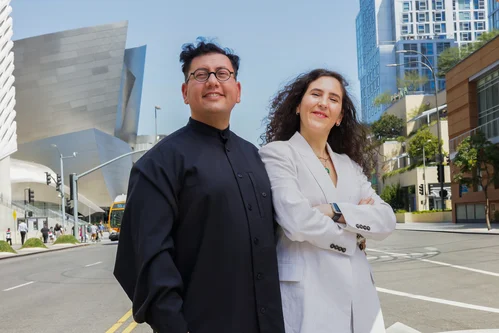
DATALAND is led by Refik Anadol and Efsun Erkılıç, who co-founded Refik Anadol Studio in Los Angeles in 2014. Anadol’s work has long explored architecture, machine intelligence, public space, and data visualization, often translating vast datasets into immersive audiovisual environments. His relationship with Los Angeles stretches back to his time as an MFA student in UCLA’s Design Media Arts program, where he later continued teaching.
Los Angeles also figures heavily in Anadol’s imagination. He has cited Ridley Scott’s 1982 film Blade Runner, with its futuristic vision of L.A., as an early influence. In 2018, he premiered WDCH Dreams at Walt Disney Concert Hall for the Los Angeles Philharmonic’s centennial, transforming the building’s archives into a projected data sculpture.
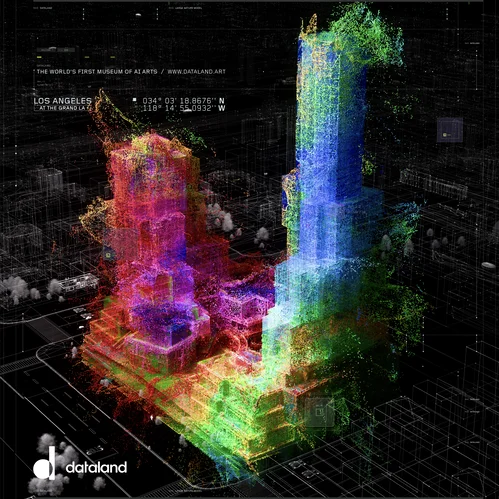
“Los Angeles is the perfect city to launch DATALAND, a forward-thinking, revolutionary museum in support of the fields to which I have dedicated my career: art, science, technology, and AI research,” Anadol has said. “L.A. has long been a city that looks to the future in art, music, cinema, architecture, and more, and it feels natural to open DATALAND here.”
The museum was developed with a broader production and design ecosystem. Architecture firm Gensler collaborated on the design, while engineering consultancy Arup served as prime engineer and AV owner’s representative.
What will visitors see at DATALAND?
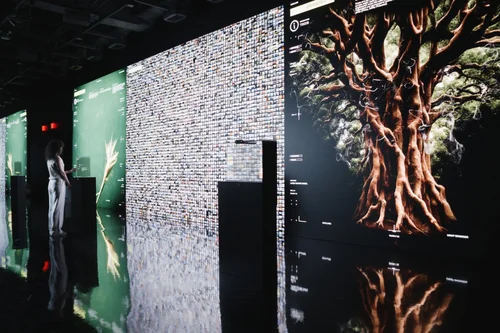
The inaugural exhibition is “Machine Dreams: Rainforest,” presented by Refik Anadol Studio and on view from June 20, 2026, through January 31, 2027. The show extends Anadol’s ongoing “Machine Dreams” series, this time focusing on the rainforest as both subject and data source.
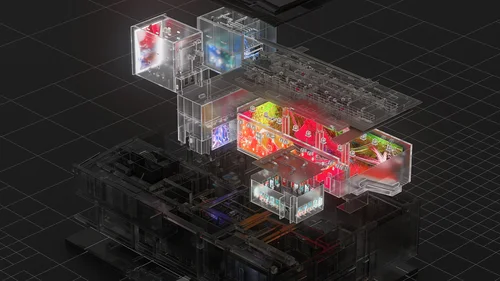
Rather than offering a documentary view of the rainforest, the exhibition translates ecological information into a multisensory environment. Visitors move through five gallery spaces, beginning with a Discovery Portal, where they are introduced to the museum’s wearable technology. They then enter environments filled with kaleidoscopic projections, rainforest field recordings, symphonic music, interactive screens, species imagery, scent, and edible chocolate sculptures.
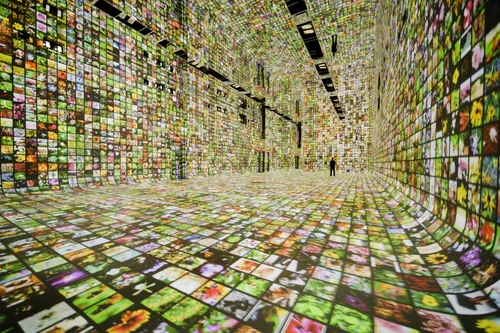
A central space, the Data Pavilion, uses a 200-channel sound system and large-scale digital imagery to immerse visitors in changing visual and sonic compositions. Other galleries draw on stories, music, and cultural material connected to the Yawanawá people of the Brazilian Amazon, who, according to the museum, have given permission for their material to be included.
The exhibition’s final gallery, Sanctuary, brings visitors together inside a room-scale visualization shaped by aggregated audience interaction. At the end, each visitor receives a small paper data token representing their visit, which they may keep or choose to delete.
How does technology shape the museum experience?
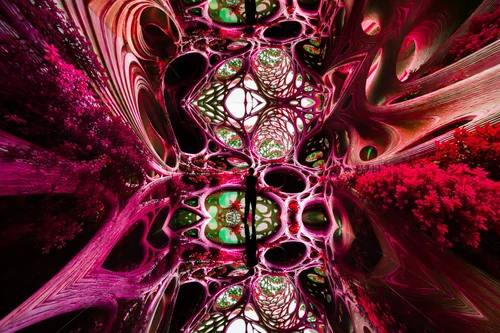
DATALAND’s technology is not simply behind the scenes; it is part of the museum’s identity. The museum’s 25,000 square feet of public exhibition space includes 1.5 billion pixels of high-resolution imagery, LiDAR and remote-sensing scans, and more than 50,000 audio recordings, according to Anadol.
At the center of the visitor experience is a wearable system called Data.Link. Each visitor is assigned an Empathica device worn on the wrist, paired with a neckband that functions as a personal scent diffuser. As visitors move through the galleries, the system responds to their anonymous biometric and behavioral signals, connecting the person, artwork, architecture, and live data streams.
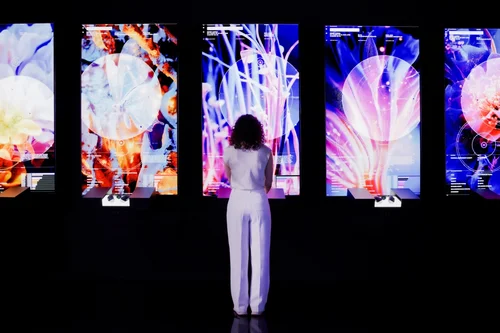
For non-specialists, the idea is relatively simple. The exhibition changes depending on who is in the room, how they move through it, and what live ecological data is being processed at the same time. In “Machine Dreams: Rainforest,” real-time signals from 16 rainforest locations are included, along with environmental measurements such as humidity, light, and soil moisture.
The exhibition is powered by Refik Anadol Studio’s Large Nature Model, or LNM, a generative AI model trained on permission-based data about the natural world, including flora, fauna, and fungi. The museum has emphasized ethical data sourcing as a core part of the project, pointing to the use of permission-based datasets and institutional partners including the Smithsonian, the Natural History Museum in London, Getty, and the Cornell Lab of Ornithology.
DATALAND also foregrounds sustainability, though the claims are likely to be closely watched. The LNM runs on a Google Cloud server in a low-CO₂ compute zone in Oregon, which the museum says operates with 87% carbon-free and renewable solar energy. Anadol has said that each visit requires roughly the energy equivalent of one iPhone charge.
When does DATALAND open, and how can visitors go?

DATALAND opened to the public on June 20, 2026, at The Grand LA in downtown Los Angeles. “Machine Dreams: Rainforest” will remain on view through January 31, 2027.
The museum is also offering memberships, which include preview and priority-access benefits. Beyond the physical museum, DATALAND offers online resources, including the Living Encyclopedia, an open-access digital platform that gathers ecological and scientific data on oceans, coral reefs, rainforests, and the atmosphere.
The DATALAND app is also available now, allowing visitors to exchange questions and responses with an AI system while inside the galleries. For opening hours and ticketing, check its website.
What could DATALAND mean for Los Angeles’s art scene?
DATALAND joins a Grand Avenue cultural district already anchored by major institutions, but it brings a different proposition. Where its neighbors are largely built around orchestral performance, contemporary art collections, experimental theater, and opera, DATALAND positions AI itself as a medium, infrastructure, and museum subject.
That makes it a test case for what an AI-focused art institution can be in 2026. It is at once an art destination, a technology platform, an ecological storytelling environment, and a public-facing argument for the creative use of machine intelligence. For Los Angeles, a city shaped by cinema, architecture, design, music, gaming, aerospace, and digital media, DATALAND’s arrival feels strategically placed.
Whether visitors experience it as art, spectacle, research, entertainment, or some combination of all four, DATALAND is likely to become a closely watched experiment. Its success will depend not only on how dazzling its projections are, but on whether it can make the larger questions around AI, data, ecology, and authorship feel tangible to the public walking through its galleries.
