


To receive Morning Links in your inbox every weekday, sign up for our Breakfast with ARTnews newsletter.
THE HEADLINES
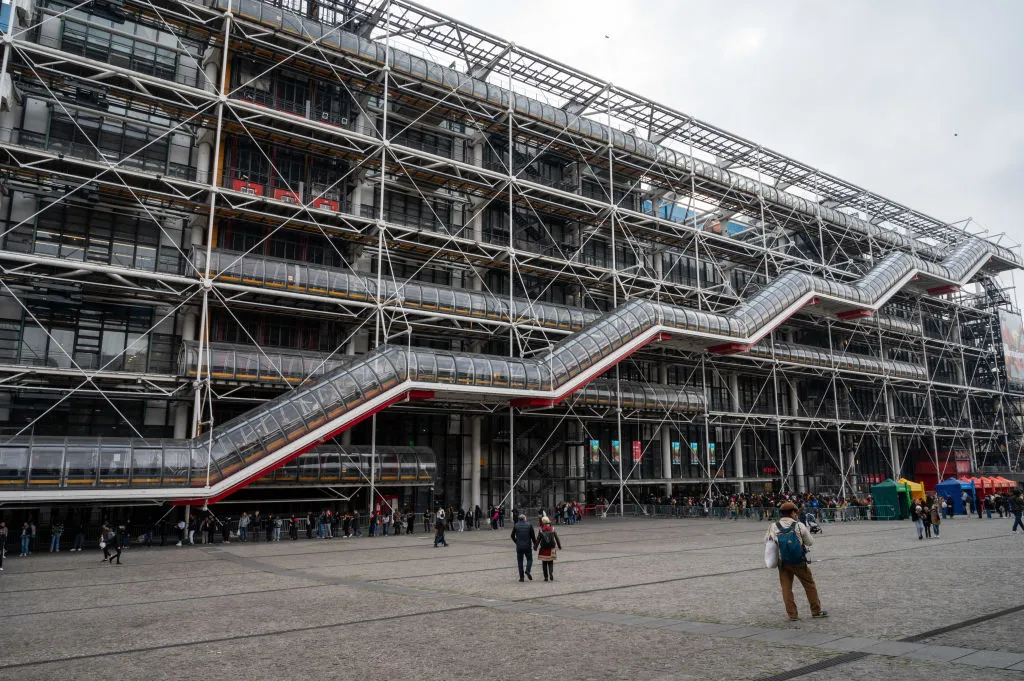
BRUSSELS’ KANAL SPROUTS. The long-anticipated Kanal–Centre Pompidou, Brussels’s new hub for modern and contemporary art, will open on November 28 with an ambitious launch program of 10 exhibitions, positioning it alongside Europe’s leading art institutions, The Star wrote. Housed in a vast former Citroën garage built in the mid-1930s, the transformed Art Deco landmark spans five floors of gallery space and includes areas for the Kanal Architecture program, an indoor playground by the UK collective Assemble, and a rooftop restaurant and bar open until midnight. Highlights of the opening program include a new installation by Otobong Nkanga, No Show, a performance and sound exhibition featuring 20 local artists, and a critical examination of a 1925 colonial propaganda exhibition sponsored by Citroën. The centerpiece exhibition, titled “A truly immense journey”, brings together more than 350 works from the Centre Pompidou’s collection (on loan while the Paris Pompidou undergoes renovation) exploring themes of exchange, movement and migration inspired by the nearby Brussels–Charleroi canal.
TRUMP CARD FOLDS. Plans to redevelop Belgrade’s former Yugoslav army headquarters into a luxury complex anchored by a Trump International Hotel have fallen apart following the indictment of Serbia’s culture minister and other senior officials, The Art Newspaper reported. Affinity Global Development, a company linked to Jared Kushner, has withdrawn from the project after prosecutors charged Culture Minister Nikola Selaković and three heritage officials with abuse of office and falsification of official documents, though no wrongdoing has been alleged against the developer. The Generalštab complex, a landmark of Yugoslav Modernism badly damaged during Nato’s 1999 bombing, became the focus of fierce public debate after the government moved to override its protected status through a special law. Approved in early 2024, the project heightened sensitivities due to the site’s wartime symbolism and the involvement of a US-affiliated firm. The case has intensified wider concerns over the erosion of Socialist-era heritage in Serbia, amid recent demolitions, controversial redevelopments, and growing fears of a state-led erasure of Yugoslavia’s modernist legacy.
THE DIGEST
The Newark Museum of Art (NMOA) has appointed Lisa Funderburke as its next director and CEO, effective February 1, 2026. [New York Times]
Expo Chicago has announced the full list of participants for this year’s slimmed-down edition, taking place from April 9-12 at Navy Pier’s Festival Hall. [Artforum]
Three paintings by the beloved American painter and instructor Bob Ross sold for a combined $1.27 million at Bonhams, raising critical funds to support public media stations nationwide. [Artsy]
After only one year as artistic director of Argentina’s Museo de Arte Latinoamericano de Buenos Aires (Malba), the Brazilian curator Rodrigo Moura will step down next month. [The Art Newspaper]
THE KICKER
SEX, ANYONE? When Germany’s national exhibition center was built in the 1980s, conservative Chancellor Helmut Kohl promoted “bourgeois virtues” at a time when sex work was legally considered immoral. The Times noted that this spring, the Bundeskunsthalle in Bonn will open a major exhibition on the history of sex work, transforming the space into a brothel-like setting amid heated debate. Following public uproar, the family affairs ministry convened a panel to explore criminalizing the purchase of sex under Sweden’s Nordic model. Curator Johanna Adam said the topic “almost always triggers a strong emotional reaction.” Officially, just over 32,000 sex workers hold the so-called Hurenpass, but estimates including unlicensed workers range from 90,000 to 400,000, nearly half Romanian or Bulgarian. While some treat it as a regular job, surveys suggest that two-thirds work unwillingly, and nearly all are women. The exhibition, overseen by Adam and researchers, shows the two-tier system is centuries old: since the 14th century, municipal brothels existed alongside persecuted “secret women” outside official houses.
