


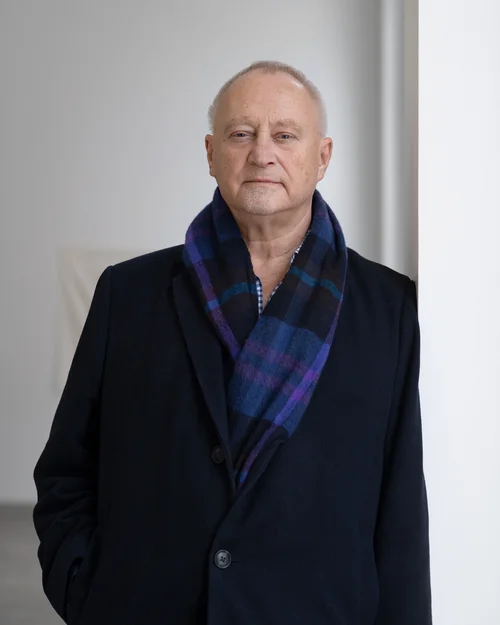
“As a young gallerist, I was a cleaner, a security guard, an interiordesigner, a carpenter, a courier, a warehouse manager, and a stock clerk,” said Claes Nordenhake, the Swedish art dealer whose eponymous enterprise, Galerie Nordenhake, celebrates its half-century this year.
Over five decades, the business has grown from a modest space opened in 1976 in Malmö on the southern coast of Sweden, showing contemporary art—favoring Minimalist, often conceptual, works—into a powerhouse brand with galleries in Stockholm, Berlin, and Mexico City.
Talking to Artsy from his Berlin branch, Nordenhake’s stocktake of his early duties doesn’t end there. Starting out, he was obliged to be a photographer, philosopher, business strategist, psychotherapist, and a divorce counselor, he explained. He could be a “sympathetic drinking buddy” one day and an “arrogant bastard” the next. And, when the occasion allowed, he was an art dealer.
Roots in Malmö
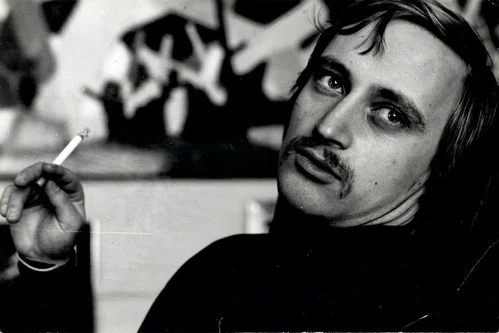
Nordenhake was born in 1948 and grew up in the Skåne region of southern Sweden, where his family owned several quarries celebrated for their Ebony Black granite—a material highly sought after by artists such as Isamu Noguchi and Max Bill. “Coming from a rather conventional business family, sort of a bourgeois upbringing, the artists that I encountered offered another different view on life,” he noted.
And there was art at home. “My old man had a collection of mainly Swedish artists, but at some point, he got absolutely fascinated by Lucio Fontana. He had three paintings: one red, one white, and one blue. Fontana in the 1960s was like the ultimate avant-garde.”
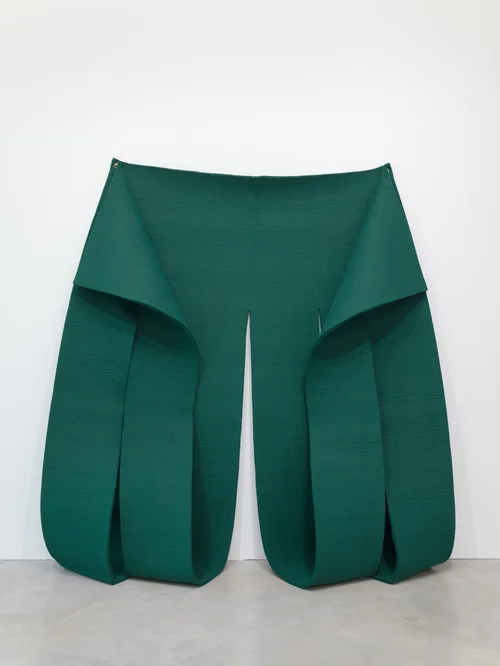
Green Felt Piece, 1983-84
Robert Morris
Galerie Nordenhake
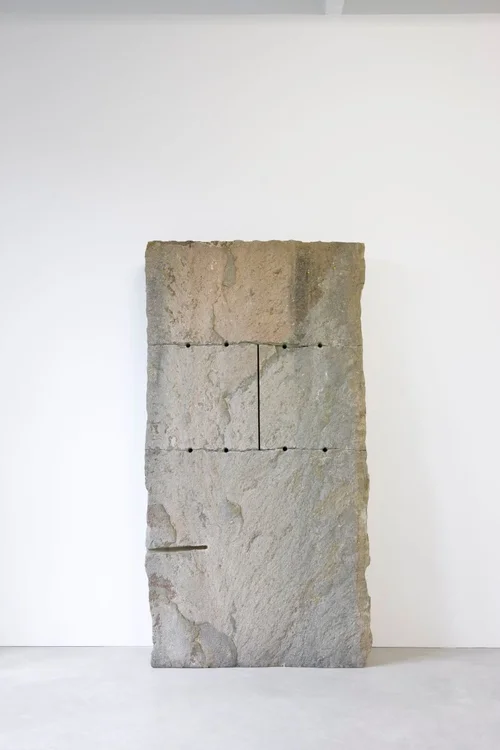
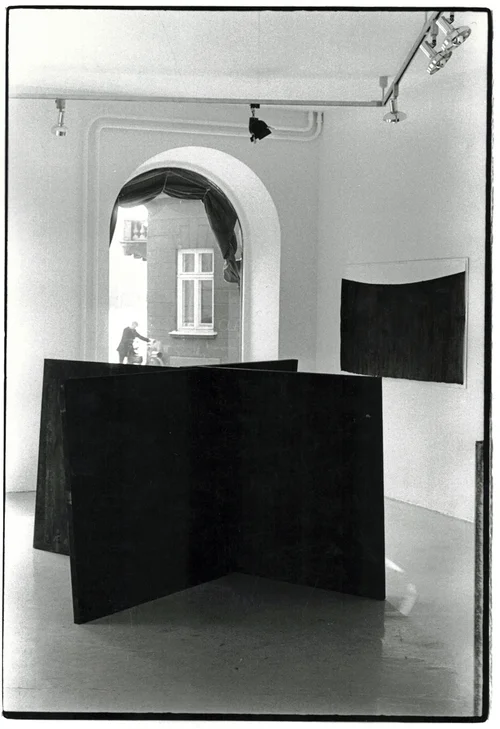
Wandrelief, 1988
Ulrich Rückriem
Galerie Nordenhake
Nordenhake initially trained as a lawyer but quit his studies to pursue his interest in art. I suggest that Malmö in the 1970s could hardly have been a center of Conceptual art. “No, for sure. But the advantage of Malmö was that it was very close to the rest of Europe,” Nordenhake explained. “I would drive my car, and if I left Malmö in the morning, I would be in Cologne in the afternoon or evening. It would take the same time from Malmö to Stockholm.”
He targeted a “cosmopolitan” clientele. “There were maybe five collectors who were interested in international art and wanted to be part of that scene,” he said. “I was convinced of certain things. I was very interested in Concrete art…and I made these few collectors follow my interest.” He kept costs low—“hand to mouth”—and acquired a reputation for showing monochrome paintings by internationally renowned artists such as Robert Mangold, Alan Uglow, and Marcia Hafif, as well as Minimalist sculptures by Robert Morris and Ulrich Rückriem.
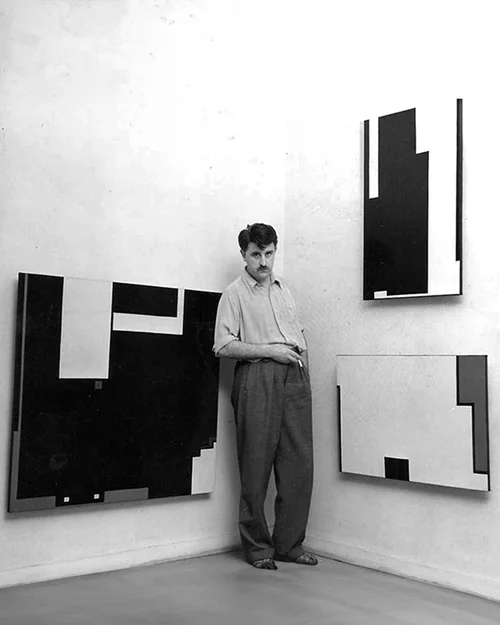
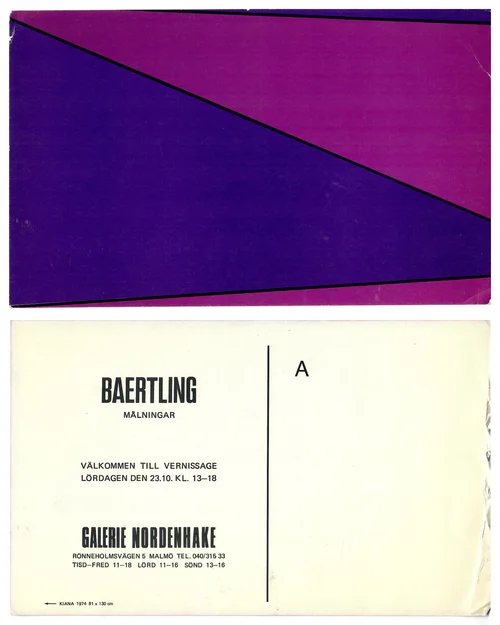
Closer to home, he championed the work of the Swedish modernist painter Olle Bærtling. “He was absolutely exceptional,” recalled Nordenhake.
“He was working with colors that, I mean…the blue would never be the blue of the sky, the green never the green of the grass. They were sorts of fields of energy.”
How Nordenhake expanded its footprint
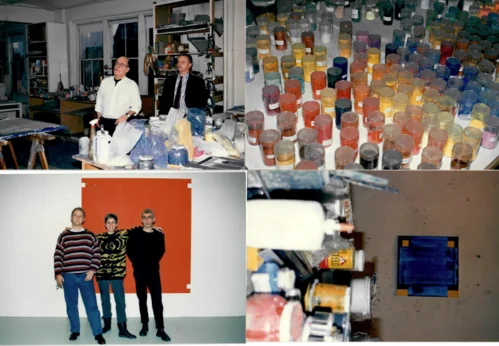
The business moved to Stockholm in the mid-1980s, when Nordenhake was offered a “sensational space” in the Royal Academy of Fine Arts building. “I’m sure there were a lot of discussions in the gallery about whether one should let the enemy into the house?” he said, laughing, referring to the inclusion—or contamination—of a commercial gallery in a museum context. The rooms allowed him to present larger sculptures, including works by Richard Serra.
In 2000 he opened in Berlin, when the city had become a magnet for both artists and gallerists taking advantage of the low rents for studios and a sense of zeitgeist. “I thought it would have been easier,” he recalled. “It was an experiment to come with three kids and my wife and move the entire family. I come from a shit-kicking little town in southern Sweden, so I have no experience of big cities.”
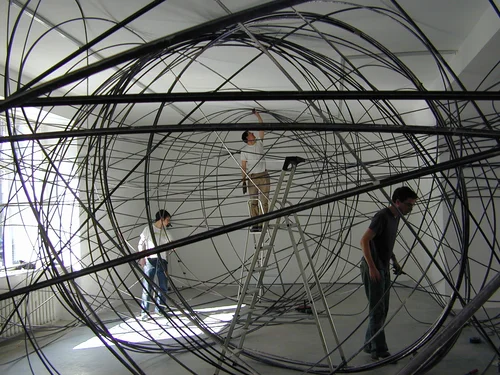
At the time, Berlin’s reputation as an artistic hotbed following the fall of the Wall was more than a cliché, said Nordenhake, at least to begin with. “From 1990 to 2010, even a young artist could find an apartment and a studio rather easily,” Nordenhake said. Collectors would visit from abroad to experience the scene.
Rents rose over the subsequent years, and the tone shifted. But Nordenhake has helped to foster a collegiate atmosphere among the city’s galleries. In 2005, he co-founded (with Max Hetzler) the first Gallery Weekend Berlin, which, two decades later, now includes some 50 participating galleries and has become a template copied in major cities around the world.
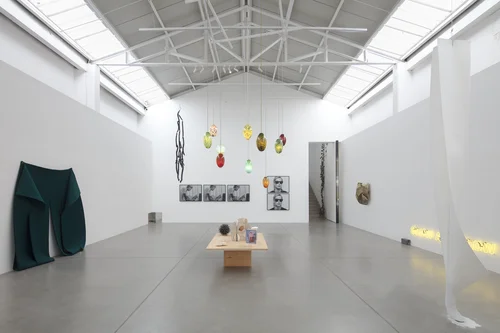
Nordenhake opened a third gallery in 2018 in Mexico City, on the suggestion of his former intern, Toni Sadurní Viñas (the gallery’s current director). “Mexico City is the new Berlin,” he declared. “
At the beginning of this century and until recently, Berlin was a place where artists, even young artists, could afford both a studio and an apartment. Which is still the case in Mexico City.” And, he noted, the general public appreciates its artistic heritage, “from the pre-Columbian artifacts to Frida Kahlo and the muralists. Art means something for Mexicans.”
Lessons from 50 years in the art trade
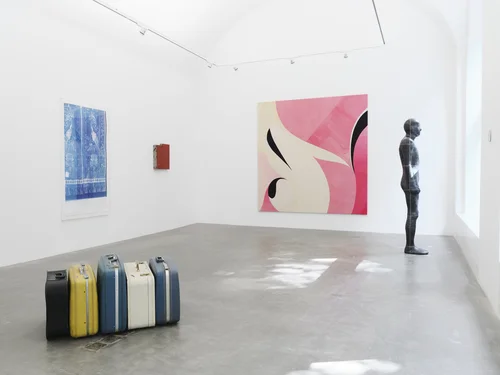
Is it easy to work with artists over a long period? “I would say usually no. But of course, there are always exceptions,” he smiled. The artist-gallerist relationship is similar to a “marriage,” he said, with all the “conflicts” that implies. And being a gallerist is a work in progress. “You learn stuff,” he noted, adding that his opinion on artists’ work can change over time. “I’m much more generous than I used to be. My art world has gotten bigger.”
“Contemporary art is a notoriously slippery commodity in which to do business,” said Philip Hook, author of Rogues’ Gallery, a History of Art and its Dealers. “Very few art dealers remain at the forefront of the avant-garde beyond one generation.” Claes’s son, Sten, is now a director at Galerie Nordenhake, offering a future path for a gallery that needs exceptional mental and commercial agility to continue interpreting the ever-changing new.
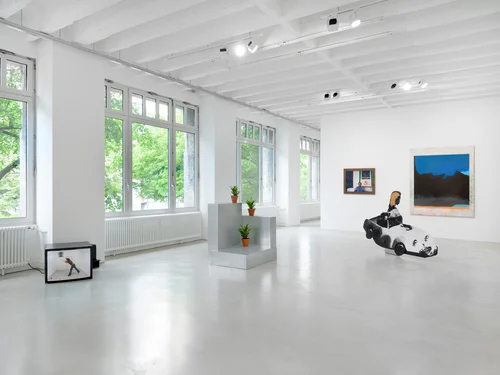
This is illustrated by the gallery’s 50th anniversary group exhibitions, staged across its three locations, showing artists from its past and present roster, from Bærtling’s last known painting, Ksard (1980), to newly commissioned works by Lap-See Lam (winner of the prestigious Lise Wilhelmsen Art Award last year).
And while he is aware of the challenges—both commercially and intellectually—Nordenhake stated that “curiosity is the most amazing driving force. I’m a traveling salesman and a schoolteacher.” Just two more professions to add to his list.
