


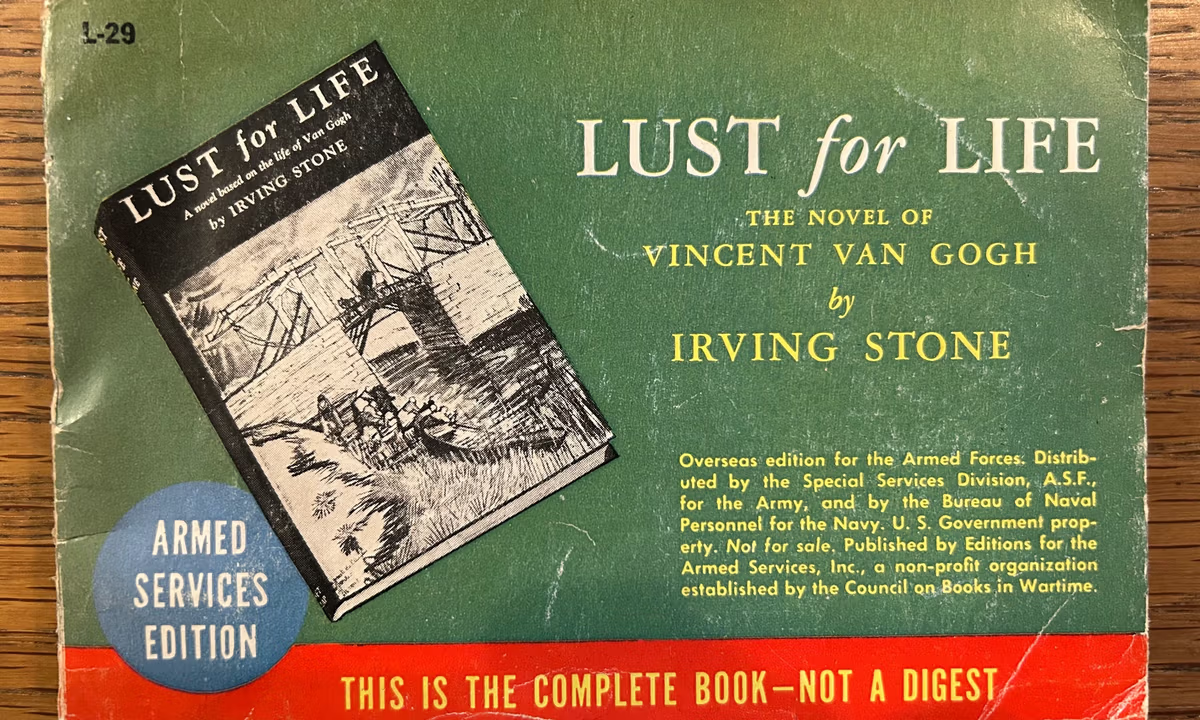
Irving Stone’s 1934 bestseller Lust for Life: A Novel based on the Life of Van Gogh has sold over 25 million copies, but the most unusual edition in English is one produced during the Second World War for US forces serving overseas. Lust for Life was only one of the 1,322 titles that were published as an “Armed Services Edition”, in a special format that was designed to be troop-friendly.
These 1944 wartime copies of Lust for Life are scarce and the few which do survive, like our example, tend to be bashed up, because they were often kept in the pockets of US uniforms. The thin pages have browned after more than 80 years, since paper was in short supply and the books were only intended to last for the duration of the war.
Their covers state that they are “U.S. government property”. The books are “not to be resold or made available to civilians”, so perhaps technically we should not have bought the copy displayed here.
Holding a copy, one wonders who was the first soldier to have been given it, and in which battlefield they were serving. After being read, these books were usually passed on to colleagues, and they were produced in such a way that they could be read by at least six people before falling apart. And one also wonders into whose hands our copy has passed through in the 80 years since the war, long after the original soldier would have died.
Although Stone’s novel was initially rejected by 17 publishers, it was eventually taken up and had been released in 1934. Based on Van Gogh’s published letters, the fictionalised account of his life was to have a profound impact on how the public perceived the artist.
Lust for Life had proved an immediate success, making it an obvious candidate for inclusion as an Armed Forces Edition. No doubt the word “lust” in the title would have appealed to young serving men, although nothing in the actual novel could be described as erotic.
Original 1934 edition of Lust for Life, which was later reproduced as part of the cover of the Armed Services Edition Grosset & Dunlap, New York, 1934
The idea of Armed Forces Editions was simple. Troops often had time on their hands between periods of intense activity, and reading would provide both entertainment and education. It was also a subtle response to the Nazis’ 1933 “burning of the books”, particularly those by Jewish and socialist writers.
The Armed Forces Editions needed to be small, to fit into trouser pockets. Most were 11cm by 17cm, about the size of a postcard. They were printed in a horizontal format, stapled on the left side (conventional binding might have been problematic in tropical climates and with glue-eating insects and mildew).
The books were printed on very thin paper, to reduce the weight when the use of paper was restricted. They were printed on presses that were normally used for magazines, at a time when the circulation of periodicals was down because of the war.
Battle conditions were stressful and lighting conditions not ideal, so the books were produced to be as readable as possible. The text was in two columns, with just around eight words to a column.
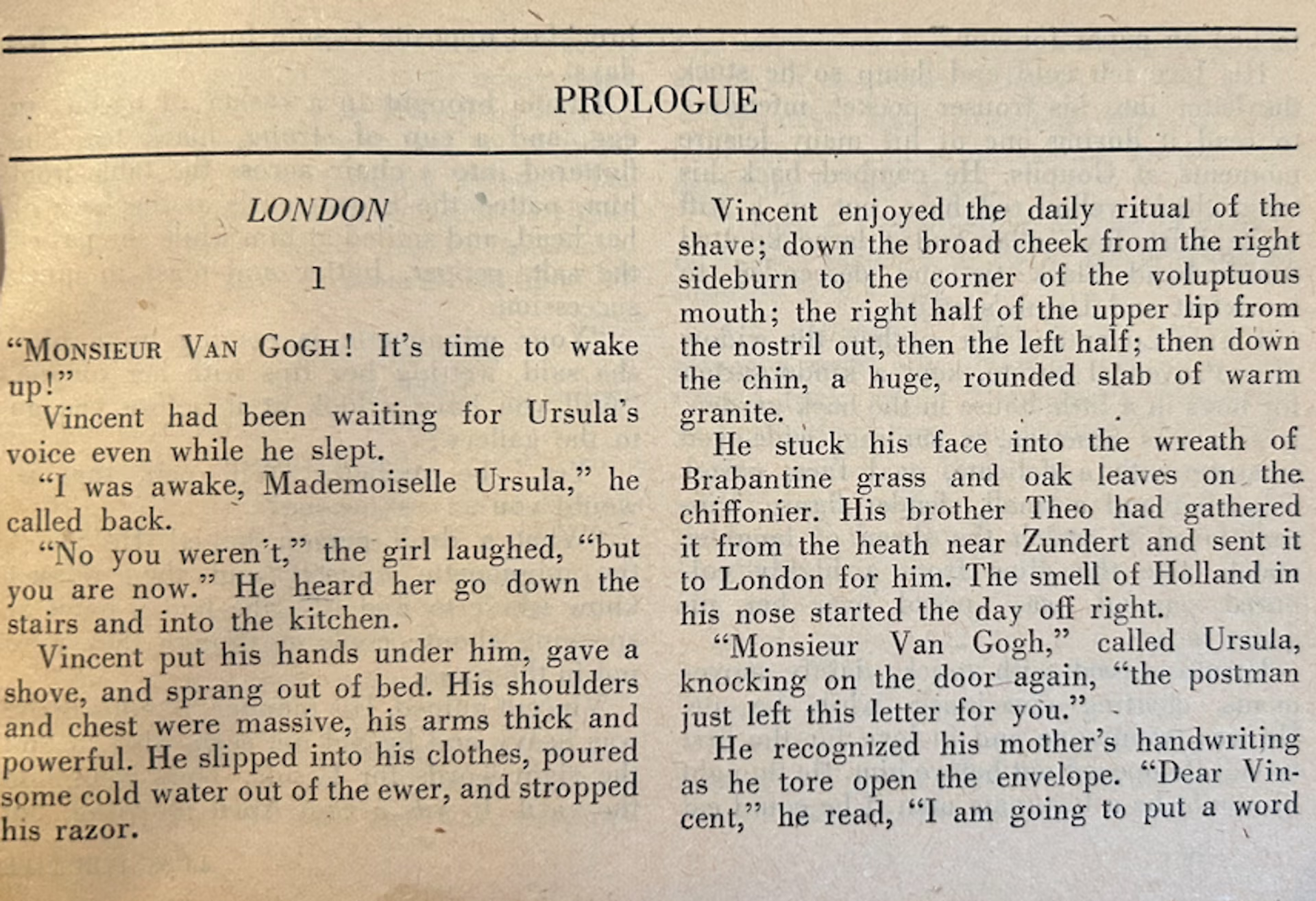
The prologue of Lust for Life, printed on the now-browned paper of the Armed Services Edition Photo: The Art Newspaper
Altogether a total of 123 million Armed Services Edition books of the various titles were printed from 1943 until 1947. Distribution was a complex logistical operation. Some copies were dropped by parachute to troops on remote Pacific islands. In southern England, just before the June 1944 Normandy Landings, each soldier was given one of the series as they embarked on the dangerous invasion.
Seducing title
Stone was delighted that Lust for Life was selected as an Armed Services Edition, later describing the project as “one of the most significant accomplishments of our war effort”. Soldiers would write to him, some saying that they “read a book straight through for the first time in their lives”. Stone asked not to receive royalties, regarding it as his modest contribution to the venture.
At 512 pages, Lust for Life was the longest book produced as an Armed Forces Edition. Despite its length, the thin paper meant that the spine is less than 2cm wide and it weighs just under 200g. During the war the cost of producing each copy of Lust for Life was about 6 cents. Around 100,000 were printed, although very few copies still survive.
Lust for Life’s cover carries the inscription “L-29”, in the upper-left corner. “L” means that it was produced in the 11th month of the project, and the Stone novel was 29th out of the 32 titles released in August 1944. Other books that month included Bram Stoker’s Dracula (1897), W. Somerset Maugham’s Of Human Bondage (1915) and Lytton Strachey’s Eminent Victorians (1918).
What would the soldiers have made of Stone’s story of the struggles faced by Van Gogh? Perhaps it offered some consolation at a time when they themselves were facing extreme stress, far from their loved ones.
Designed as mass-produced books to be digested and discarded, the Armed Forces Editions paved the way for the development of cheap paperback books after the war, revolutionising book-buying habits. Although the publishers Pocket Books (US) and Penguin Books (UK) had both been founded in the 1930s, they really thrived from the 1950s.
In 1951, Pocket Books brought out a paperback of Lust for Life, produced in a conventional format (at 35 cents). Gone is the austere Armed Forces Edition style of cover, to be replaced by the sensationalist approach of “pulp fiction”.

Pocket Books edition of Lust for Life (1951) Photo: The Art Newspaper
Other Van Gogh news
The 1956 film of Lust for Life, starring Kirk Douglas, bought Stone’s novel even greater fame. In a new book, The Hollywood History of Art, the British writer on popular culture Christopher Frayling explores how the lives of artists have been interpreted in films. The longest chapter is devoted to Lust for Life. One of his anecdotes is that New York’s Metropolitan Museum of Art lent the original of Van Gogh’s painting of L’Arlésienne (December 1888-January 1889) for one night to hang in the lobby of the cinema that was screening the film’s US premiere.
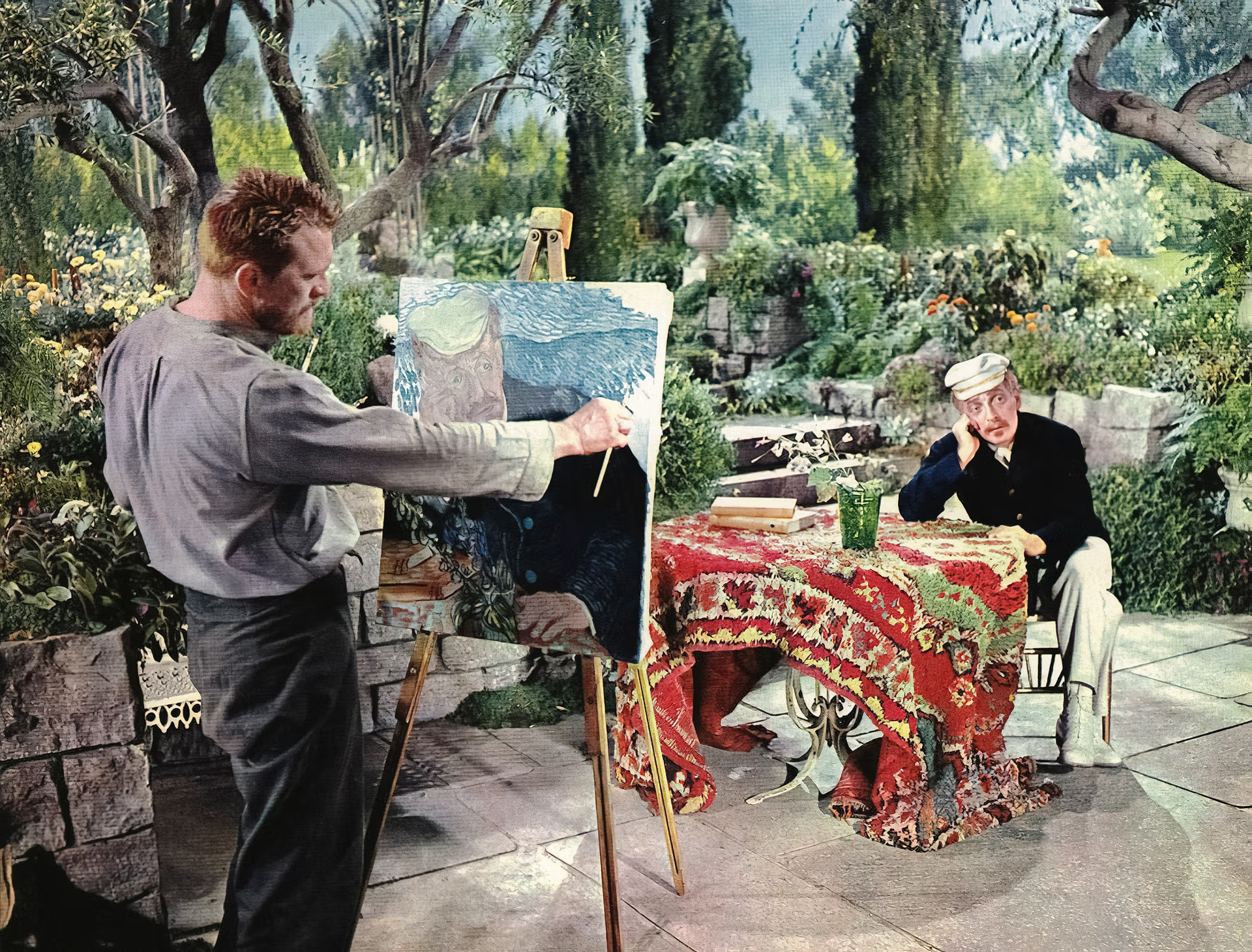
A clip from the film of Lust for Life: Van Gogh (played by Kirk Douglas) paints a portrait of Dr Paul Gachet (Everett Sloane), 1956 Reel Art Press
The Van Gogh Museum has just acquired a pastel of Louis Anquetin’s Avenue de Clichy: Five O’Clock (1887). This was an image which almost certainly inspired Van Gogh’s Terrace of a Café at Night (September 1888), either this pastel or another version in oil paint (now at The Wadsworth in Hartford, Connecticut). The Van Gogh Museum’s pastel had previously been sold, in 2016, for $583,500.
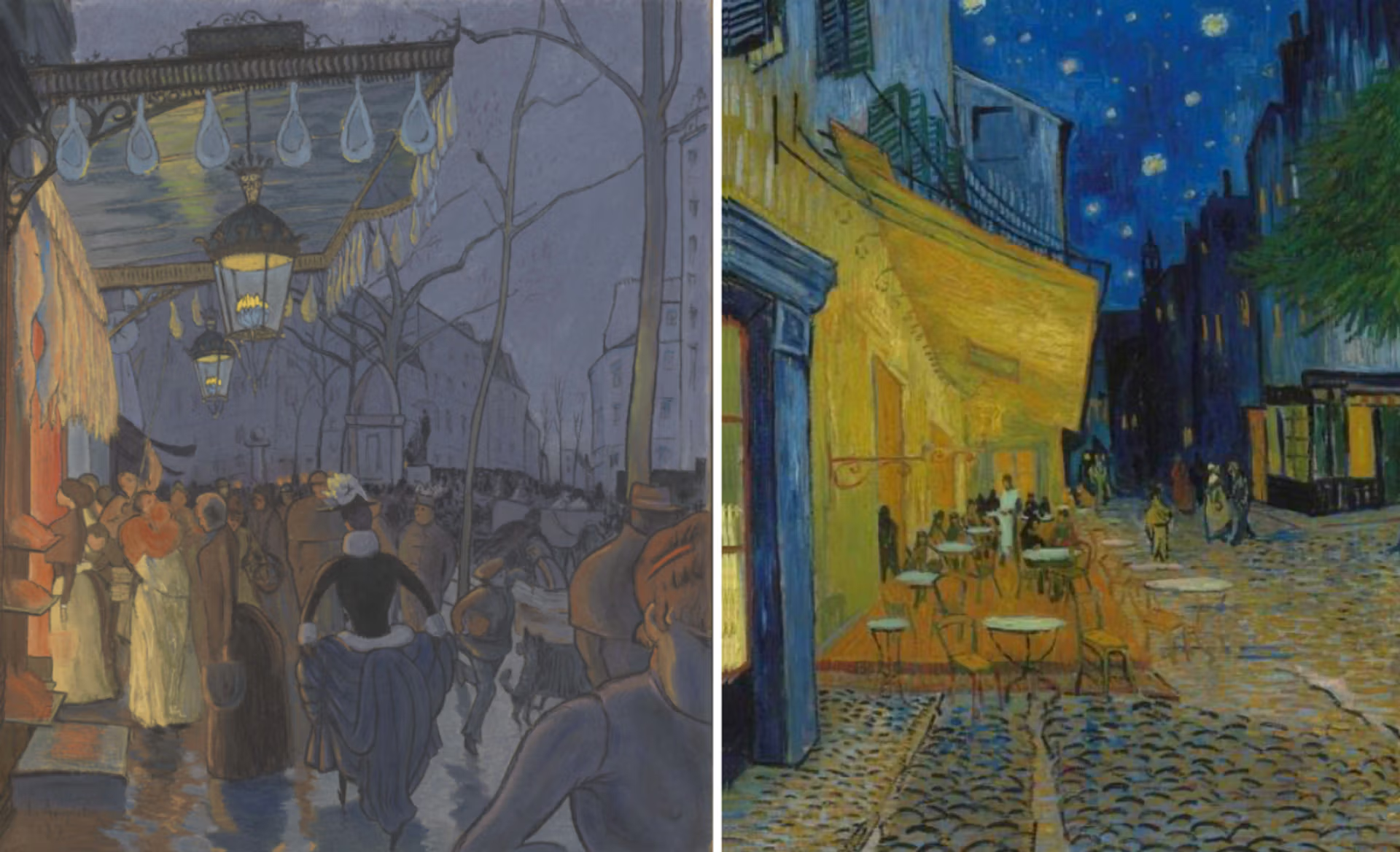
Louis Anquetin’s pastel of Avenue de Clichy: Five O’Clock (1887) and Van Gogh’s Terrace of a Café at Night (September 1888) Van Gogh Museum, Amsterdam and Kröller-Müller Museum, Otterlo
Martin Bailey is a leading Van Gogh specialist and special correspondent for The Art Newspaper. He has curated exhibitions at the Barbican Art Gallery, Compton Verney/National Gallery of Scotland and Tate Britain.
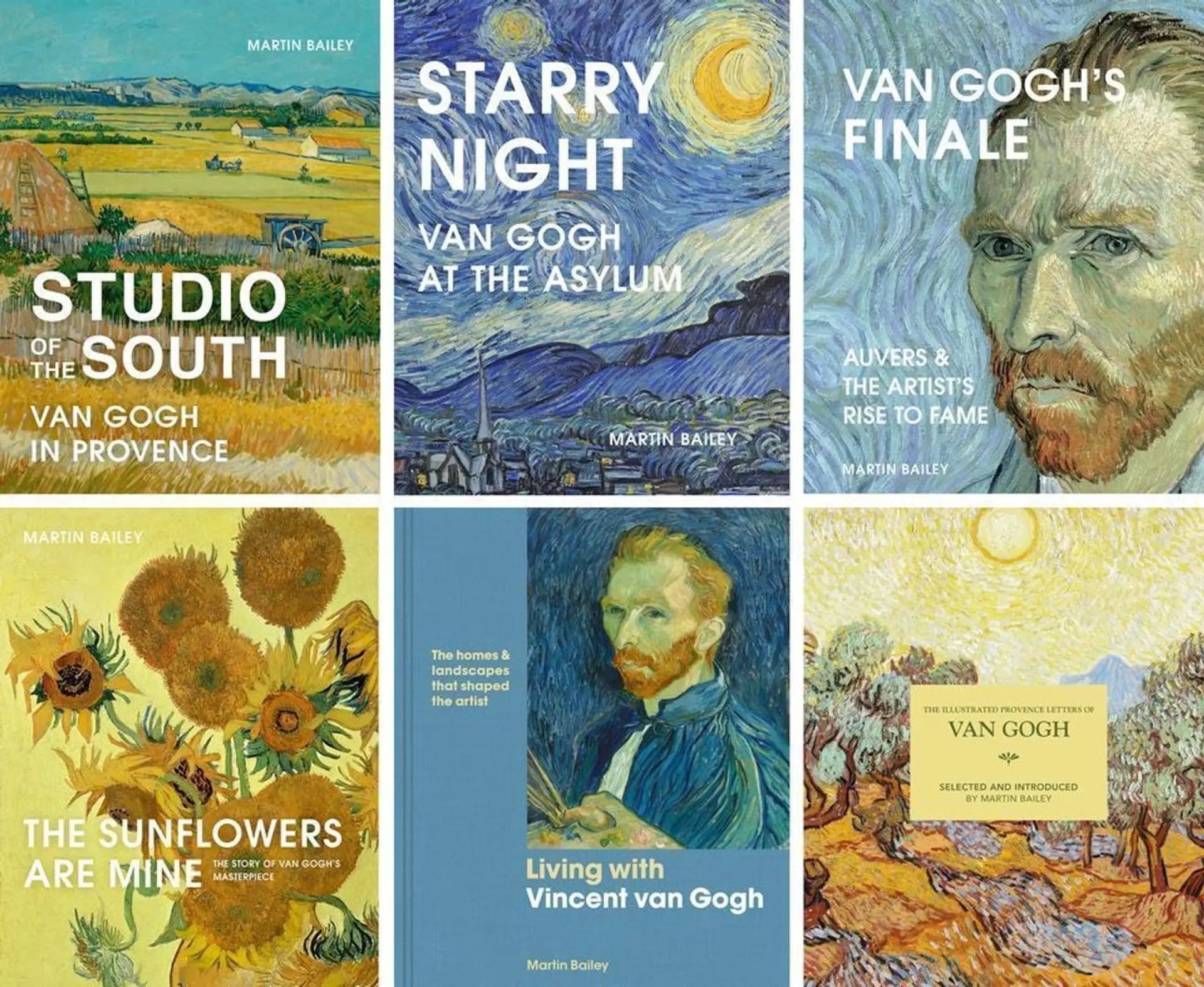
Martin Bailey’s recent Van Gogh books
Martin has written a number of bestselling books on Van Gogh’s years in France: The Sunflowers Are Mine: The Story of Van Gogh’s Masterpiece (Frances Lincoln 2013, UK and US), Studio of the South: Van Gogh in Provence (Frances Lincoln 2016, UK and US), Starry Night: Van Gogh at the Asylum (White Lion Publishing 2018, UK and US) and Van Gogh’s Finale: Auvers and the Artist’s Rise to Fame (Frances Lincoln 2021, UK and US). The Sunflowers are Mine (2024, UK and US) and Van Gogh’s Finale (2024, UK and US) are also now available in a more compact paperback format.
His other recent books include Living with Vincent van Gogh: The Homes & Landscapes that shaped the Artist (White Lion Publishing 2019, UK and US), which provides an overview of the artist’s life. The Illustrated Provence Letters of Van Gogh has been reissued (Batsford 2021, UK and US). My Friend Van Gogh/Emile Bernard provides the first English translation of Bernard’s writings on Van Gogh (David Zwirner Books 2023, UKand US).
To contact Martin Bailey, please email [email protected]
Please note that he does not undertake authentications.
Explore all of Martin’s adventures with Van Gogh here
