





Major protests have been staged across the Venice Biennale, after weeks of internal political turmoil at the international art event.
On Wednesday, the protest group Art Not Genocide Alliance (ANGA) held a large demonstration outside the temporary Israeli pavilion, which this year has been moved from its permanent Giardini site to the Arsenale.
More than 200 people attended the protest, calling on biennial organisers to stop art-washing and to close the Israeli pavilion. The ANGA organisers, participating protestors, and onlookers—surrounded by photographers and cameramen—then moved further into the narrow area outside the Israeli pavilion, chanting “silence is complicity” and “shame on you” and distributing leaflets. The Israeli pavilion entrance was lined with private security forces and Italian carabinieri, though there was little sense of escalation.
ANGA is also reportedly planning a further demonstration for later in the week.
Less than an hour earlier a second group, the Solidarity Drone Chorus, performed the sound of drones humming, a composition by the Gazan Ahmed Muin that mimics the sound of drone weaponry heard nearly continuously throughout the Gaza war. Around 60 artists from the Biennale’s main exhibition, including Muin, are taking part in the chorus, which is staging daily interventions at 12pm throughout the preview days of the biennial. Each wears a T-shirt bearing the name of an artist from Gaza on the front, and then an image of their work on the back.
“Our goal is to bring attention to the artists in Gaza and to show our solidarity with our community,” one member of the group told The Art Newspaper. He was wearing a T-shirt with the name of Halima Kahlout, who was killed in 2023 along with ten members of her family. Yesterday’s march wound through the Giardini, and featured prominent Lebanese, Palestinian and diaspora artists.
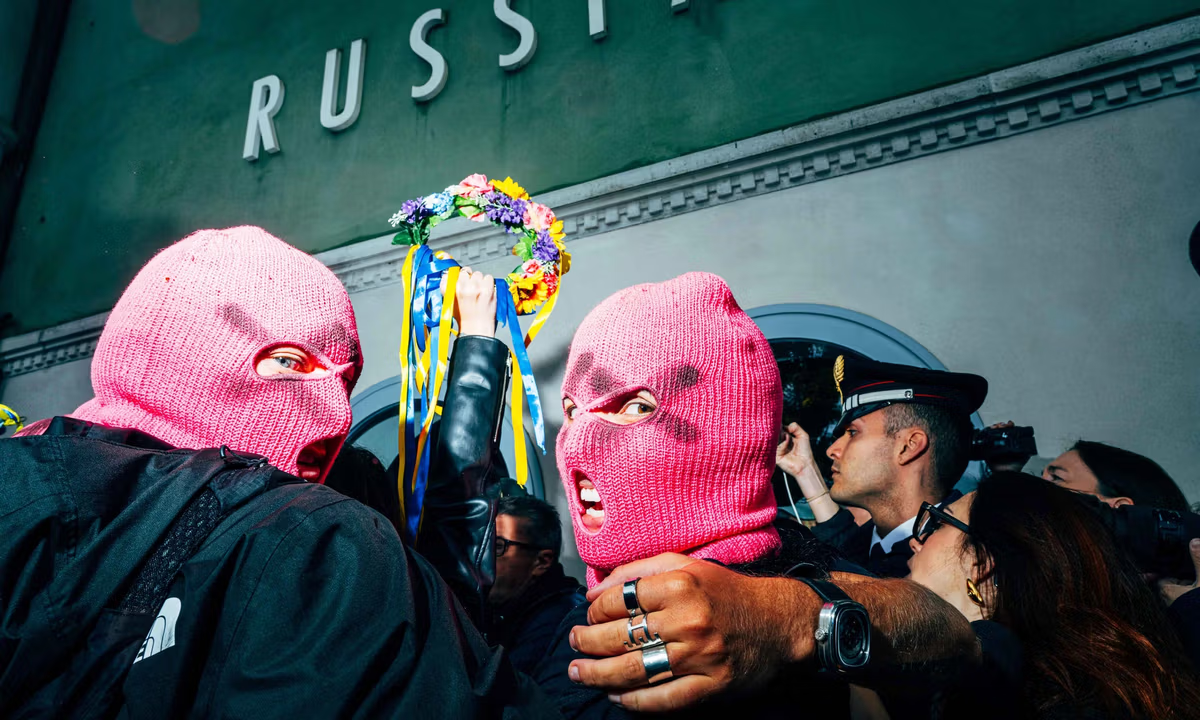
Also on Wednesday in the Giardini, the Russian dissident art group Pussy Riot and the feminist activist group FEMEN protested Russian participation in the art event. More than 50 members of the groups, wearing bright pinks masks, surrounded the Russian pavilion, forcing it to shut its doors.
“Russia’s best citizens are either imprisoned for anti-regime and pro-Ukraine actions or killed in jail, while Europe opens its doors to Putin’s officials and propagandists,” Pussy Riot and FEMEN said in a statement. “If art is meant to represent a country at the Venice Biennale—something like the Olympics of the art world—then artists imprisoned for their anti-war, pro-Ukraine stance are the real face of modern Russia.”
The protests come on the back of an already rocky beginning for the biennial. Just days before the opening, all five of the curators announced they would not be awarding any Golden Lions, the prizes for best pavilion that are typically given out by the jury. The jury previously said they would not consider pavilions from countries whose leaders are “currently charged with crimes against humanity by the International Criminal Court”, as they put it in a statement on 20 April—largely understood to be a reference to Russia and Israel. They resigned a week later, in response to what The Art Newspaper understands was immense state pressure.
There were repeated calls to exclude Israel’s participation in the Biennale, with 236 artists and art professionals from the event and its pavilions signing a petition first circulated by ANGA in October 2025. During the last biennial in 2024, the Israeli artist Ruth Patir opted to close her show at the country’s pavilion, saying at the time she was doing so until a ceasefire and hostage release agreement were reached in the Israel-Hamas war. While protests occurred during that edition, they were far smaller in number and scale than what has already happened by day two of the biennale preview this year.


