


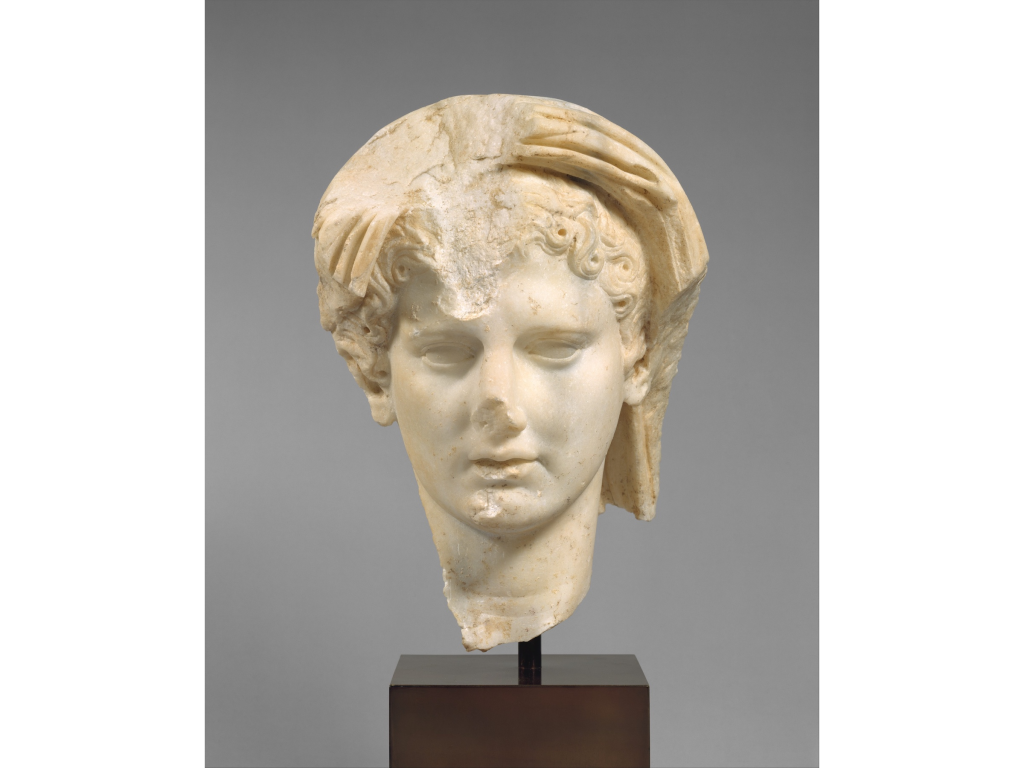
Investigators from Manhattan District Attorney Alvin Bragg’s office seized dozens of ancient artifacts from the Metropolitan Museum in June, reports the New York Times. According to an inventory produced by the office, this brings the total number of artifacts it has removed from the Met since 2017 to more than 120, collectively worth more than $95 million.
The removals have followed on the office’s investigations into the work of the international smuggling rings (and their stateside collaborators) who dominated the global antiquities market after WWII. In the process of identifying potentially illicit artifacts, they subpoenaed records on objects acquired by the museum from dealers suspected of ties to trafficking networks.
Among those dealers associated with the latest round of seizures is Robert Hecht, who sold a 2,500-year-old Greek vase known as the Euphronios krater to the Met for more than $1 million in 1972. After a long negotiation, the Met returned it to Italy in 2008. Hecht himself was accused several times of antiquities trafficking, but was never convicted. He died in 2012.
The objects removed in June, believed to have been looted from Italy, Turkey, Egypt, and other countries, range in value from $20,000 to $26 million. They include a first-century CE Roman marble head from Greece, a 2,000-year-old bronze statuette from Turkey, and a gold diadem decorated with rams’ heads from ancient Egypt.
In a statement, the Met described the removal as part of a joint effort by the museum and the DA’s office, with the office sharing with Met officials evidence they felt indicated the items had been looted, and the museum returning them after conducting their own provenance research.
“The Met doesn’t want any stolen art in our collection,” said Lucian Simmons, head of the Met’s team of 12 provenance experts, in a statement. “[The D.A.’s office] has been an invaluable partner to us in this work—particularly their ability to unlock information that would otherwise be inaccessible.”
The D.A.’s office, however, expressed impatience with the pace of Met’s reviewing process. According to the Times, Matthew Bogdanos, who leads the Antiquities Trafficking Unit at the District Attorney’s office, said the recurring seizures at the Met “spoke for themselves.”
“The question has to be asked, ‘Why are we the ones doing this?’” he said.
For its part, the museum insists it is moving at due speed. “Determining which corresponding present-day country a work came from, and the object’s unique ownership history, is not always straightforward,” Simmons said in his statement. “Which is why this work takes time and every individual object deserves to be studied and assessed.”
