
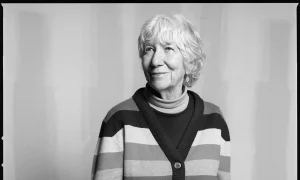







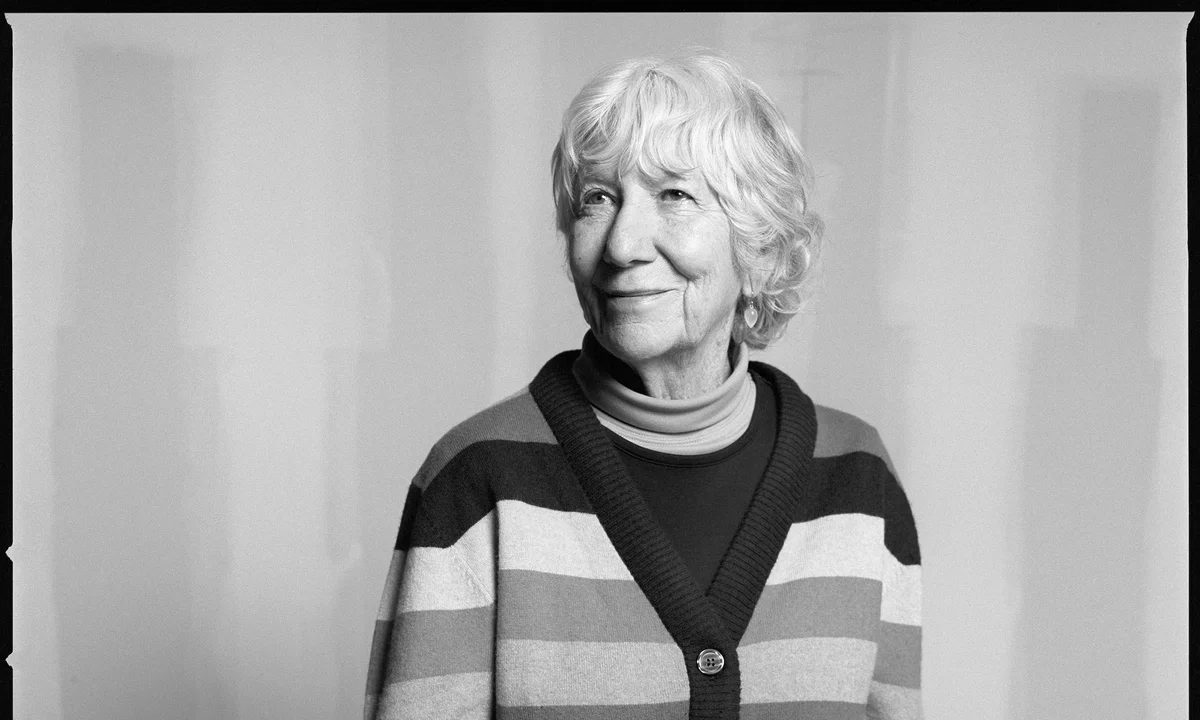
May Heilmann, who adopted elements of post-war abstract painting, Post-Minimalist sculpture and craft processes into her distinctive and brightly chromatic pursuits, died on Friday (14 August), aged 86. According to an announcement posted on Instagram by her studio director, Heilmann died on New York’s Long Island from “complications from a fall”.
Though a native of California, Heilmann had been a fixture of the New York art community since 1968, when she arrived in Lower Manhattan (she moved to Bridgehampton in 2020). Even so, it was not until 2008-09 that she received her first institutional exhibition in the city, the retrospective Mary Heilmann: To Be Someone at the New Museum. The show also traveled to the Orange County Museum of Art in California, the Contemporary Art Museum Houston and the Wexner Center for the Arts in Ohio.
Mary Heilmann, Lonesome Dove, 1988 © Mary Heilmann. Image courtesy of the artist, 303 Gallery, New York, and Hauser & Wirth. Photo by Genevieve Hanson
Reviewing that exhibition for The New York Times, Ken Johnson wrote that Heilmann “takes 20th-century art history as her personal toy box. A kind of painterly Pop artist, she gives vibrant new life to standard forms of 20th-century visual culture. Imagine the Ramones covering Cole Porter.” He added: “Nothing she does looks like anything other than a Heilmann.”
Recognition from To Be Someone and the support of the galleries Hauser & Wirth (where she started showing in 1997) and 303 Gallery (starting in 2005), led to a surge in institutional interest and a string of solo shows at venues ranging from Museum Ludwig in Cologne (2010) and the Whitechapel Gallery in London (2016) to Dia Beacon (2023) and the Whitney Museum of American Art in New York (2015).
The Whitney had been especially supportive of her work over the decades, featuring it in the 1972 Whitney Annual and the 1989 and 2008 Whitney Biennials, and a solo exhibition that closed this past January featuring Heilmann’s neon-hued rectilinear armchairs.

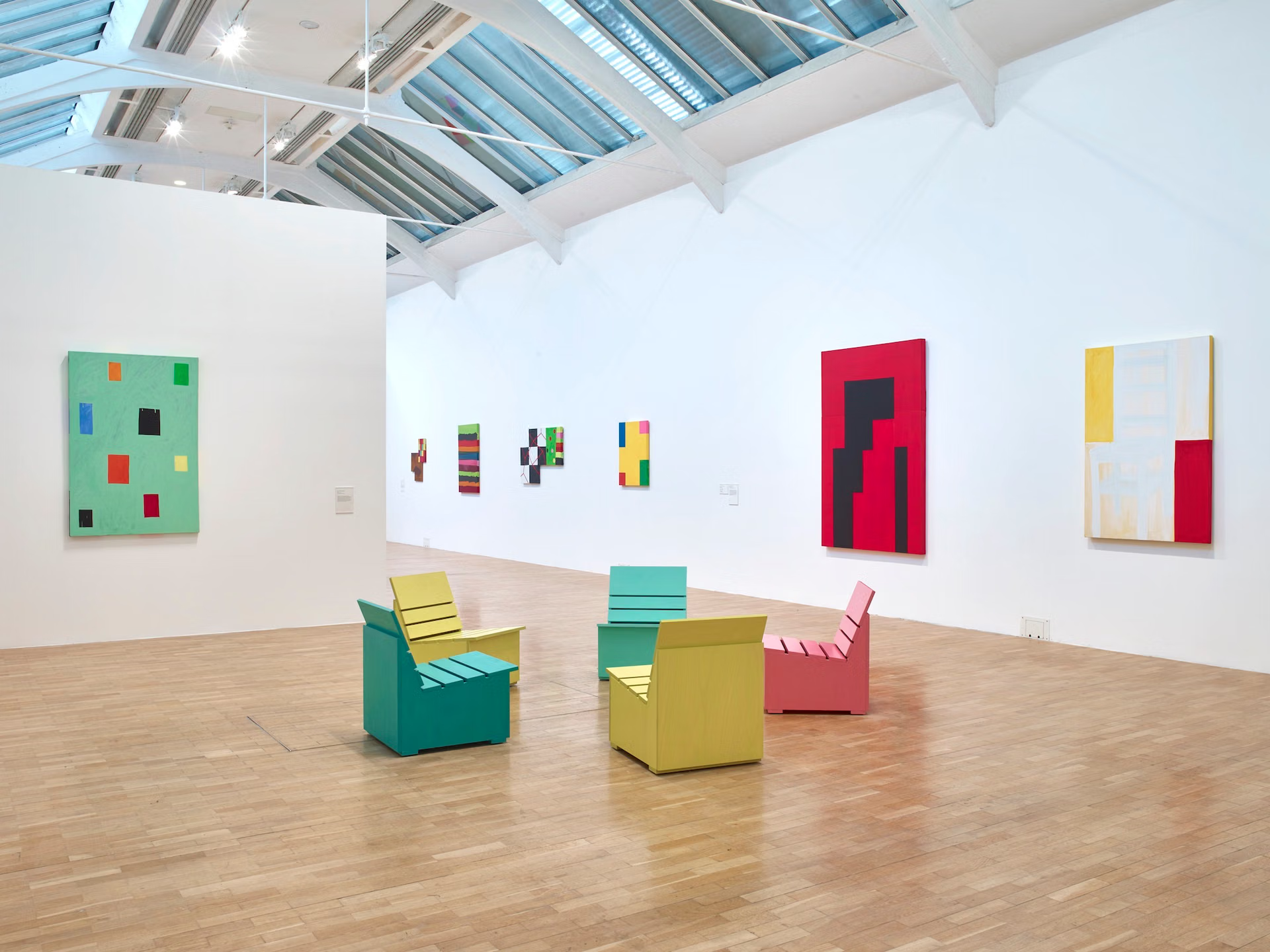
Installation view of Mary Heilmann: Looking at Pictures at the Whitechapel Gallery, London, in 2016 Photo by Stephen White. © Mary Heilmann.
Courtesy the artist, Hauser & Wirth and 303 Gallery, New York
“That’s always been a part of my biography… growing up I was always interested in the house and architecture and home décor,” Heilmann said in a 2022 oral history interview for the Smithsonian’s Archives of American Art (AAA) when asked about her interest in furniture. “I always want there to be a place to sit down at a gallery or a museum, so you’ll stick around a while without having to stand up.”
Heilmann was born in San Francisco on 3 January 1940. Her mother, Mary Florence Webb, was a nurse and her father, John Sherman Heilmann, was a civil engineer; after he took a job in Los Angeles, the family moved from the Bay Area to the seaside community of El Segundo. Heilmann’s first passion was ceramics, and after graduating from the University of California, Santa Barbara in 1962 she moved back to the Bay Area and studied under the pioneering ceramicist Peter Voulkos at the University of California Berkeley. She earned her master’s degree there in 1967.
“I started out with ceramics. Then I started doing sculpture. Then I started doing painting. I was a writer. I did a lot of writing, and so telling stories is a part of it,” she said in the AAA oral history. “So it sort of tells a story when you go in a show and see all different kinds of stuff all over the place.”

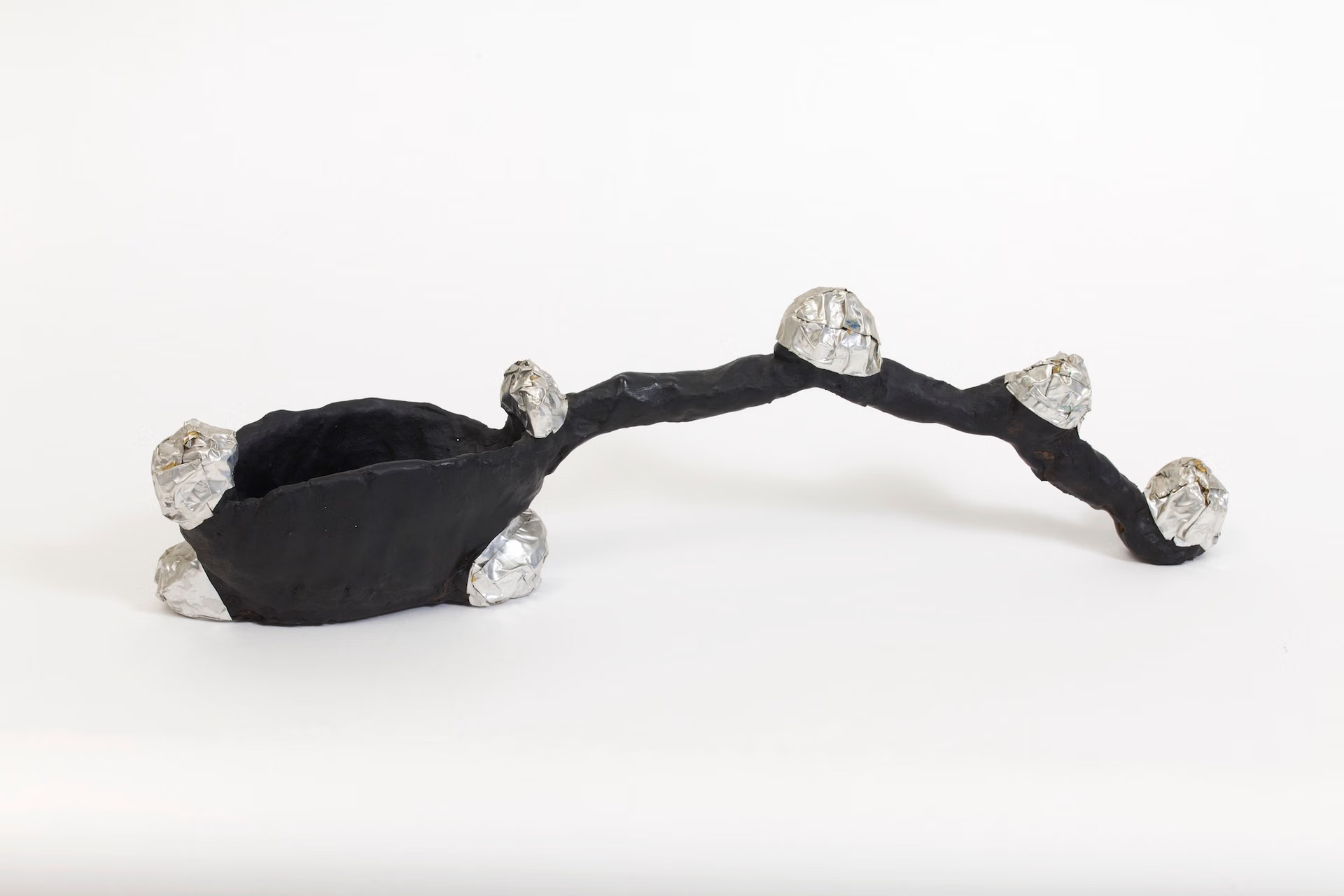
Mary Heilmann, The Big Dipper, 1969 Photo by Thomas Müller. © Mary Heilmann. Image courtesy of the artist, 303 Gallery, New York, and Hauser & Wirth
Heilmann continued to work in sculpture throughout her career, but after her 1968 move to New York it was painting that defined her practice. She adopted elements of Minimalism, Post-Minimalism and hard-edged abstraction to her purposes, creating works in which gestural brushstrokes were visible under geometric forms that occasionally melted into each other or dripped dramatically. She rejected flatness and pure abstraction, often incorporating forms that hinted at shapes like a palette, waves or a road. Her titles often provided possible interpretations, clues or irreverent references, from playful rhymes like Pink and Black is Coming Back (1983) to song titles like Save The Last Dance For Me (1979) and allusions to experiences like Surfing on Acid (2005). Discussing her approach to titles in the AAA oral history, she said “they are about telling a narrative story, really, or a daydream. A dream. A story that you might make up in your own head with a few little clues to make you think of certain things.”
A constant across most of Heilmann’s work, from the ceramics and sculptural furniture to the paintings, was a fearless attitude toward colour—whether pushed to the edges of her compositions, masked under a monochrome layer or spilling across an asymmetric configuration of shaped canvases in sharply contrasting hues.

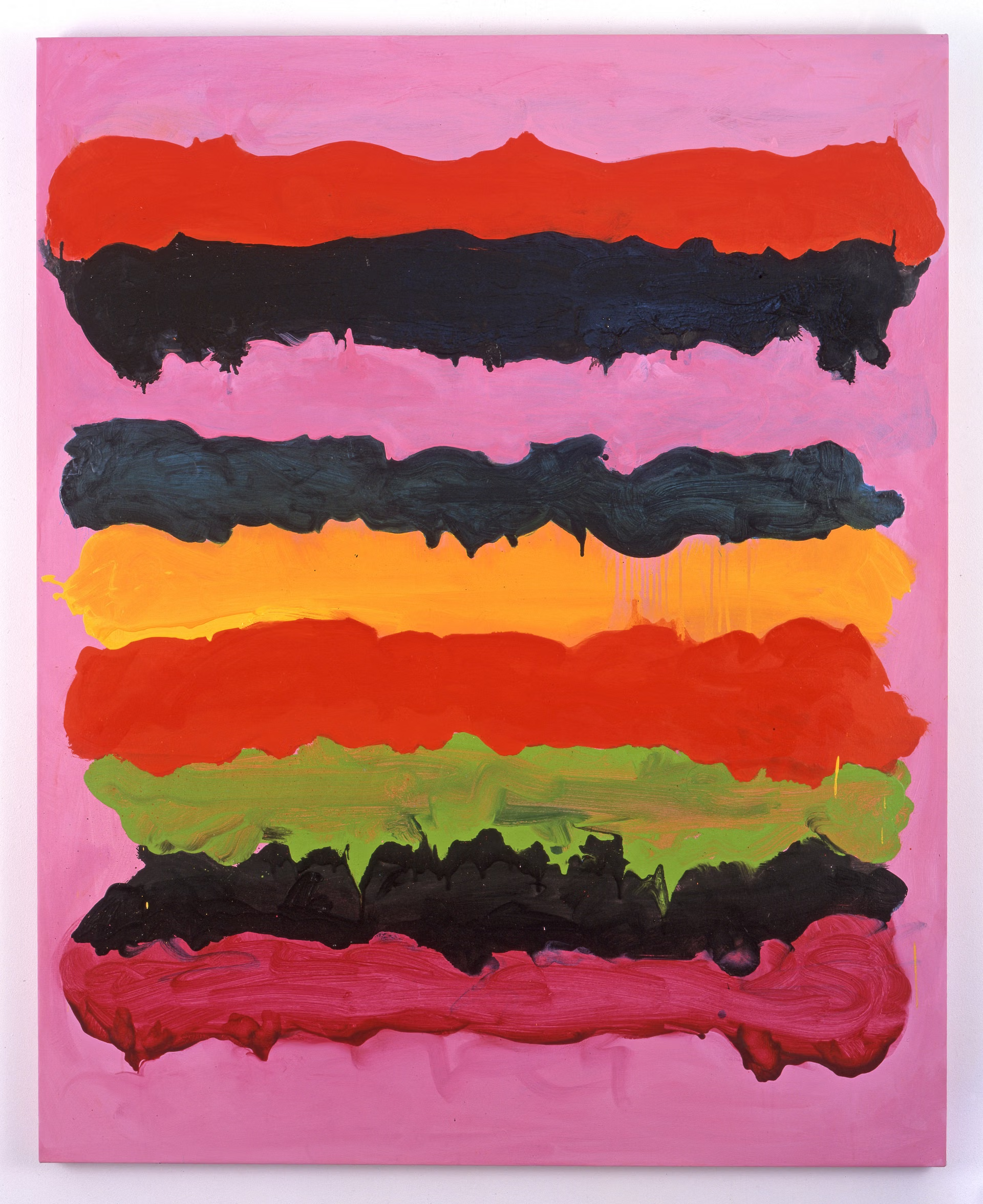
Mary Heilmann, Surfing on Acid, 2005. Collection of the UC Irvine Langson Orange County Museum of Art Photo by John Berens. © Mary Heilmann. Image courtesy of the artist, 303 Gallery, New York, and Hauser & Wirth
“Mary Heilmann’s work combined formal innovation with a distinctly personal and playful sensibility,” Jessica Morgan, the director of the Dia Art Foundation who was recently appointed director of Tate, said in a statement. “Over five decades, she carved out a singular position in contemporary art with her daring balance of rigour and geometry with improvisation and gesture, alongside a palette of vibrant colour. This approach has reshaped how we might think about Minimal or Post-Minimal art—once defined by a severe restraint of colour and form. Mary brought joy, emotion, and freedom to her paintings and sculptures.”
In addition to sustaining her own prolific creative practice for more than 60 years, Heilmann taught for decades, first at Stony Brook University on Long Island at later at the School of Visual Arts in Manhattan. Reflecting on her teaching career in 2022, she said that “learning from them was as big as me teaching them. And so now, even my work is kind of ageless, youthful. It doesn’t feel like having a timeline to it.”

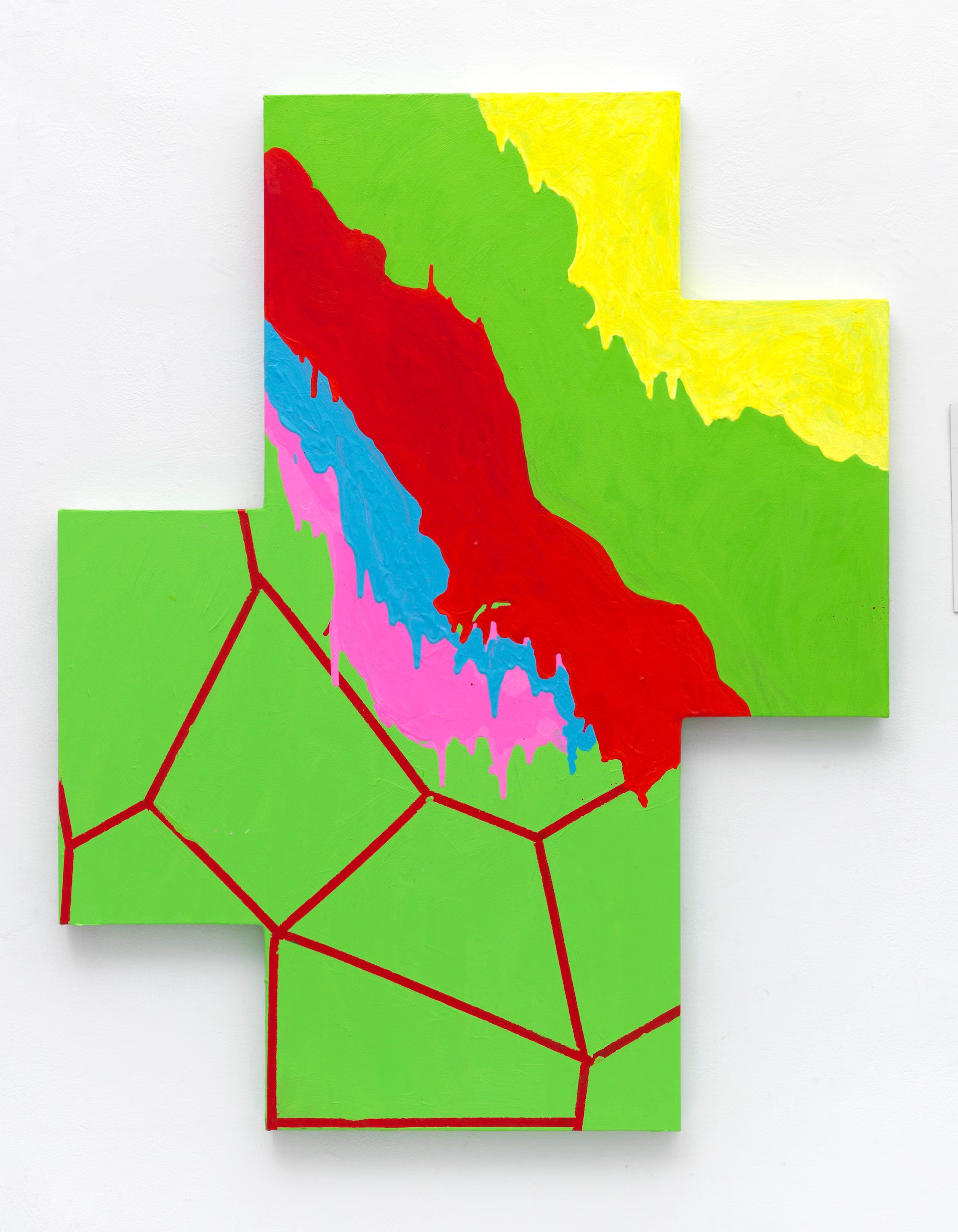
Mary Heilmann, Positive-Negative, 2011. Collection of the Bonnefanten Museum, Maastricht, Netherlands. Photo by Thomas Müller. © Mary Heilmann. Image courtesy of the artist, 303 Gallery, New York, and Hauser & Wirth
Heilmann’s work is included in many institutional collections including those of the Whitney Museum and the Museum of Modern Art in New York, the National Gallery of Art in Washington, DC, the San Francisco Museum of Modern Art, Museum Ludwig in Cologne and the Bonnefanten Museum in Maastricht. She received grants, fellowships and awards from Anonymous Was a Woman, United States Artists, the National Endowment for the Arts and the Guggenheim Foundation. She never had children or married; she is survived by her nieces, Ann Jaime and Chris Heilmann, and her nephew, John Heilmann Jr, and their families.
Shortly after she permanently relocated to Bridgehampton, while preparing for an exhibition with Hauser & Wirth in Zürich, Heilmann reflected on her California roots in an interview with The Art Newspaper’s Ben Luke: “I never was a surfer. But I was part of that world. I went to Santa Barbara, which was a surfing school. So I call it a spectator sport, for me. And I’m really interested in the geometry of waves and the sound, the colour.” She added: “The ocean is a big part of the reason I live here. I look at it all the time.”


