


Entering the “white cube” of a contemporary art gallery is like entering a liminal state. Artworks appear to float free of context, stripped bare from the noise of the outside world.
Though the term itself entered the art world lexicon in 1976 with critic Brian O’Doherty’s three-part Artforum essay titled “Inside the White Cube,” the proliferation of these spaces runs concurrent with the rise of modern art.
Vienna’s Secession Building was one of the first major sites to incorporate white walls in the last gasp of the 19th century. It paved the way for the Museum of Modern Art’s inaugural director, Alfred Barr, to standardize the hue upon the museum’s opening in New York City in 1929—a move that turned the white cube into an institutional staple.
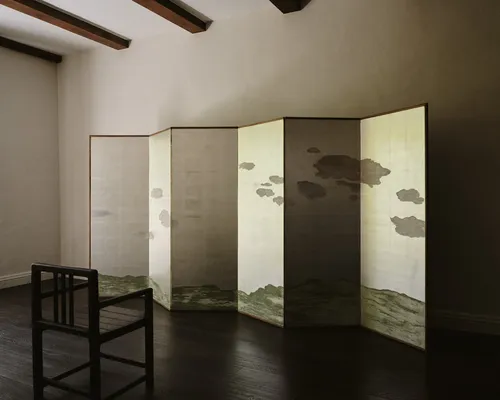
This design remains the orthodoxy nearly a century later—for good reason. The neutrality of these cubes focuses the viewer’s attention solely on the work, allowing for deeper reflection. It’s also very easy to replicate anywhere in the world, as long as you have enough white paint and bright lights.
This staging—now ubiquitous across the art world—offers familiarity, but it also inspires rigidity. Within a rapidly shifting industry, a growing crop of gallerists is bucking the trend, moving from the ease of a white cube to complex narratives staged within unconventional architecture.
From a former tenement building in Hong Kong to an 18th-century Hamptons farmhouse, the character and history of the buildings are becoming just as important as the works that appear within them.
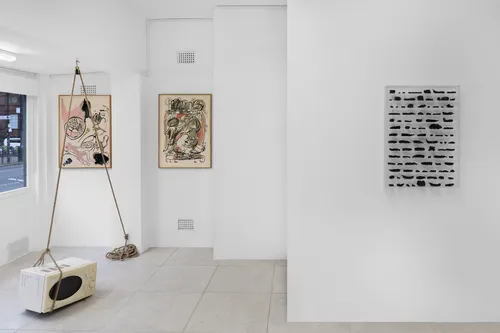
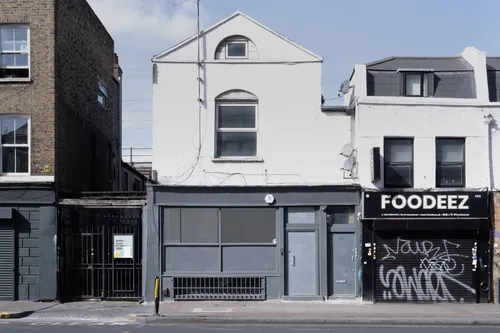
These imperfect environments alter how works are staged. In London, two young galleries present congruent case studies in balancing convention with experimentation. Helen Neven’s namesake gallery in East London occupies a disused taxi office across the road from the Young V&A museum, the result of a hunt for “somewhere with a history and character that might leak through a little,” she explained to Artsy.
Accessible via a heavy steel door set below the last vestiges of the old cab business’s faded lettering, the interior is punctuated by odd recesses and mismatched ceiling heights that disrupt the ideal of cubic perfectionism.
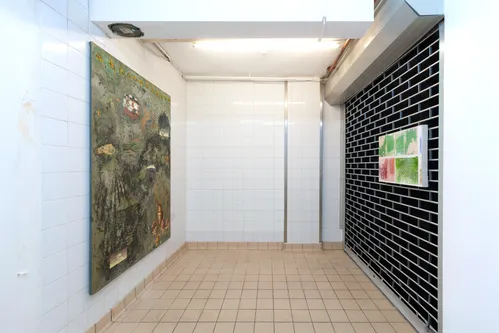
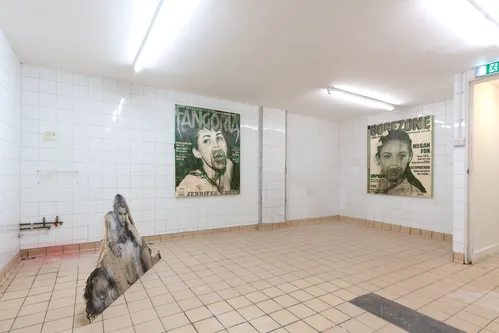
In northwest London, meanwhile, Chilli Gallery founder Aubrey Higgin created two distinct exhibition spaces within a former Japanese restaurant: The ground floor, with its wall of windows and large footprint, serves as the more conventional area, while the tiled, labyrinthine basement (formerly used as the kitchen) provides a more peculiar curatorial playground.
“Both draw out different dialogues,” Chilli’s assistant director, Max Rumbol, told Artsy. In a show earlier this year, “Split Studies,” Willa Cosinuke’s tessellated paintings—made of a series of interlocking panels—played off the basement’s discordant surfaces, including a metal security shutter.
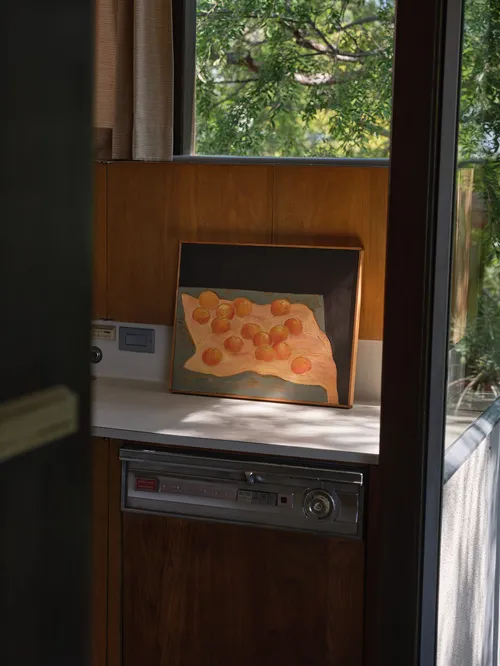
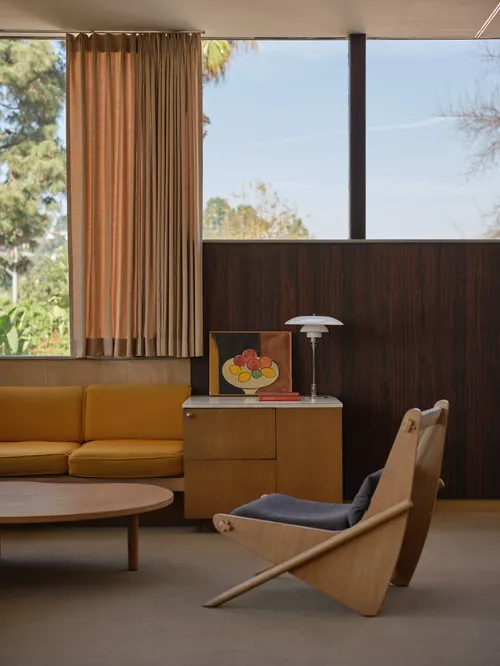
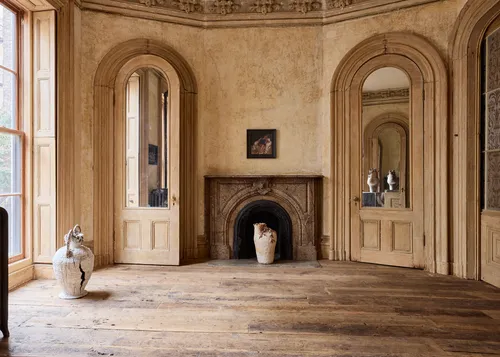
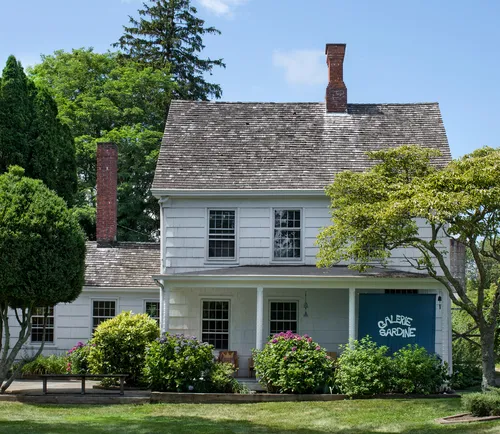
While some galleries have embraced the grain of these commercial roots, others have taken a softer turn. In both the rustic 18th-century farmhouse of Amagansett’s Galerie Sardine and the former private home of Francis Gallery founder Rosa Park in Los Angeles, shows are imbued with a familial intimacy.
“The white cube is an extraordinary tool for focus, but it can also create a kind of distance,” Galerie Sardine co-founder Valentina Akerman told Artsy. “In a domestic setting, the work instead shares space with books, tables—signs of everyday life. Rather than diminishing the work, that context can deepen the relationship; the art becomes perhaps less monumental, more intimate, but also more present.”
Park echoed this observation. “People tend to feel far more at ease coming to see work in a home than in a white cube—even when it’s the same gallery putting on the show,” she told Artsy. “There’s perhaps a touch of voyeurism in it too: a curiosity about how others live, how a space is inhabited.”
Though Francis Gallery’s permanent location is on Melrose Avenue in Los Angeles, Park is perhaps best known for her residential concepts; alongside a handful of shows in her own Spanish Colonial home last year, which enforced a strict “no social media” policy, she’s also recently staged a presentation of John Zabawa’s paintings in late artist Richard Neutra’s modernist VDL Research House in L.A.
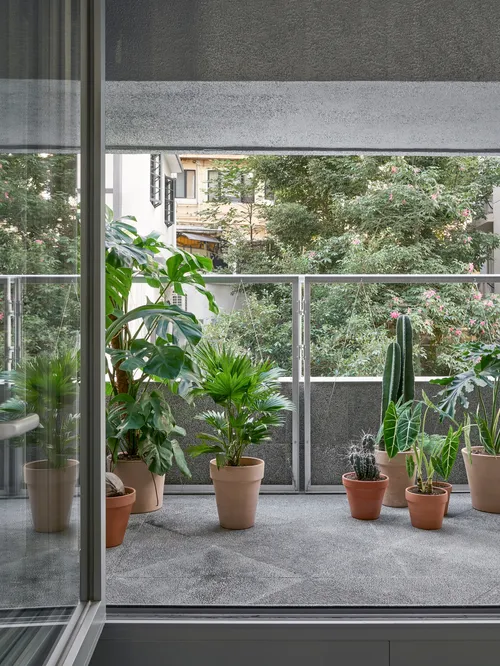
This pivot from sterility to domesticity is, in some ways, a homecoming for the art world. During the Dutch Golden Age of the 17th century, a booming middle class emerged, and art production exploded as families filled their homes with art—an activity once reserved solely for the elite. While the white cube may be the de facto way to exhibit works in many galleries and institutions today, art has also always existed outside this model.
Salons, which affix as many works as possible onto a wall, have operated since the first official Paris Salon in 1667, while nomadic, pop-up galleries in homes and empty shopfronts have offered a cost-effective means of showing and selling art for decades. Still, the accelerant spurring a fresh wave of cube-free spaces traces back, like many things, to the pandemic.
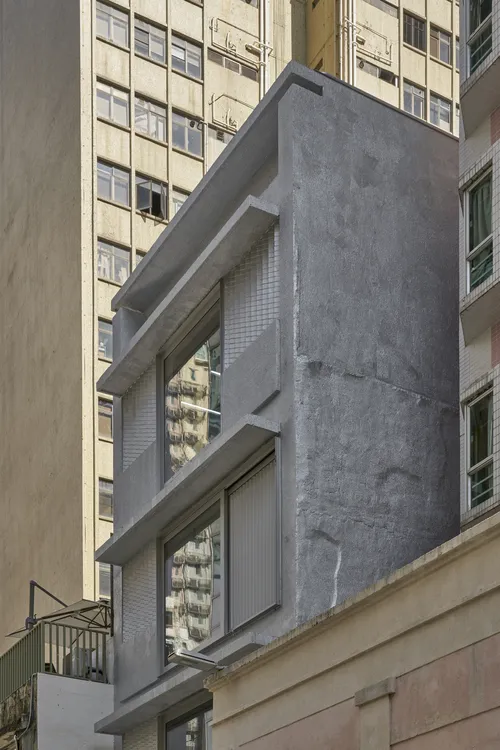
After an industry-disrupting pause that forced art to be consumed through screens (its own kind of liminal white cube), gallerists are responding to an appetite for a more participatory relationship with art; one that embraces, rather than eliminates, context. When husband-and-wife duo Lorraine Kiang and Edouard Malingue of Kiang Malingue began converting a ’60s-era tenement building into their new Hong Kong headquarters in 2022, context was elemental.
Alongside Beau Architects, they stripped back the storied building to its foundations, preserving its history while reimagining what the site could offer. Two floors of the six-story building were removed to create a stack of concrete, double-height galleries.
A windowless white-cube zone, meanwhile, provides a touch of the traditional, and a library, tea area, and rooftop terrace retain some of the structure’s heritage.
Together, these elements reflect a balanced push to respond to the moment. “The public is expecting more than a sales pitch. It’s not enough for a work to be ‘cool’ and ‘going up in value.’ No one believes this in the current market,” Malingue told Artsy.
“The public is looking for a more unique, meaningful experience. A domestic space in a cherished neighborhood is part of the answer.”
