


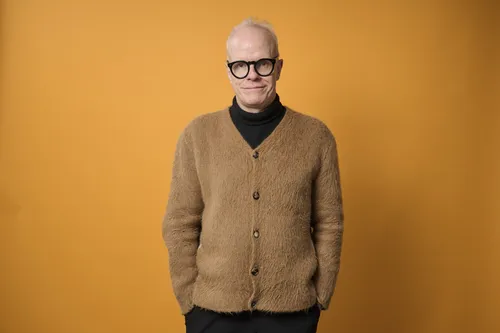
Hans Ulrich Obrist is famous less for a single exhibition than for a way of working, with the curator perpetually reinventing the boundaries of his remit. The long-time artistic director of London’s Serpentine Galleries is often credited with changing the very role of what a curator does, creating a blueprint for curators as cultural connectors.
Earlier this month, Artsy tapped the prolific art expert to hear his thoughts about the art world as 2025 came to a close and what he looks forward to in 2026. What stood out for him above all in 2025 was shared experiences. Rather than speeding through white-cube displays and art fairs, audiences gravitated to exhibitions that encouraged people to linger and engage with one another.
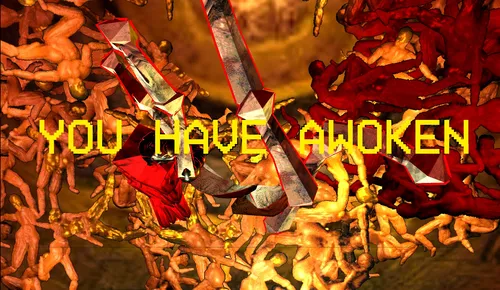
I CANT FOLLOW YOU ANYMORE, 2023
Danielle Brathwaite-Shirley
Public Gallery
This attention to togetherness during 2025 was not incidental. In an interview, Obrist framed it as a response to fragmentation: political, social, and technological. This has inspired artists to reposition the visitor as an active component of the work itself. One example he named is Artsy Vanguard 2026 artist Danielle Brathwaite-Shirley, who presented a solo show at Serpentine last year. “The audience becomes central; the work creates forms of togetherness in which strangers talk to one another,” Obrist told Artsy.
For Obrist, these changes reflect a growing desire for a tighter connection in the art world. He sees 2026 as a year when artists will build on this momentum through new technologies, longer timelines, and reimagined exhibition formats. Here are Obrist’s top three predictions for 2026.
Artists will incorporate AI to support the community
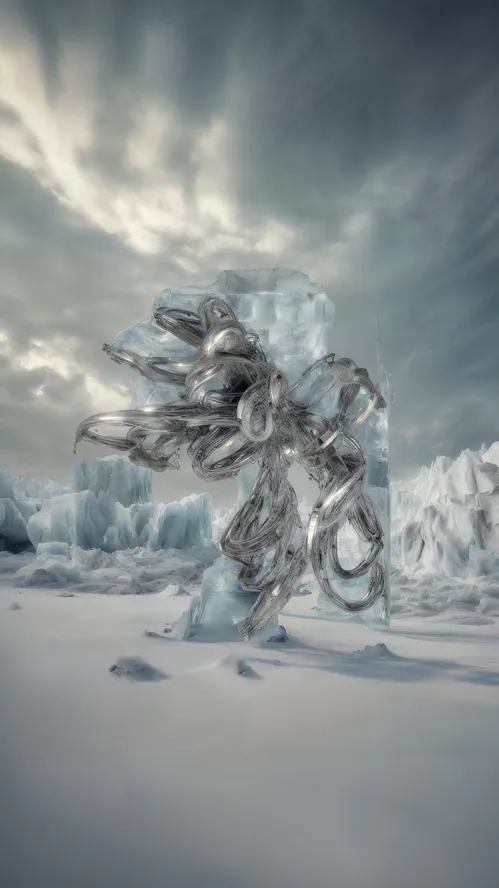
BODY MACHINE (MERIDIANS) – Glacial Biome Series, 2025
Sougwen Chung
HOFA Gallery (House of Fine Art)
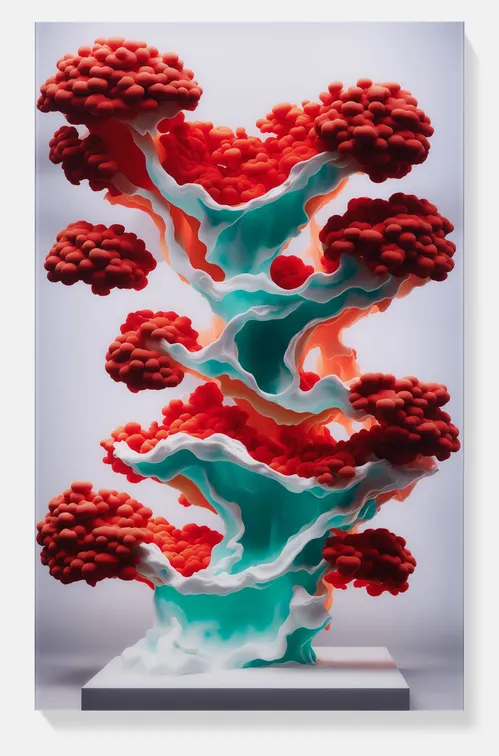
Artificial Realities Coral – B, 2025
Refik Anadol
Serpentine Galleries
“In 2026, we’ll see artists critically engaging with AI,” Obrist said. For him, this engagement encompasses less novelty image-making and more consideration of questions of coordination, authorship, and collective action.
He pointed to projects that rethink AI as a social tool rather than a visual one, particularly the work of Holly Herndon and Mat Dryhurst. “They trained an AI model using a songbook of hymns sung by choirs from across the U.K., approaching AI not as an image generator but as a coordination technology,” he said, referring to their show, “The Call” at the Serpentine from October 4, 2024 to February 2, 2025.
“Some more examples would be Stephanie Dinkins, who…creates AI projects with local communities, or Sougwen Chung, blending AI, robotics, and paintings and live performance,” he said, citing her work on silkworms. Chung, who keeps silkworms in her studio, drew inspiration from their metamorphosis for her performance Realm of Silk (2023), in which she created art alongside four AI-powered arms. He also cited the work of Sarah Friend, who uses AI and blockchain as coordination tools in her digital works, as well as major AI art pioneer Refik Anadol.
A turn toward long durational artworks
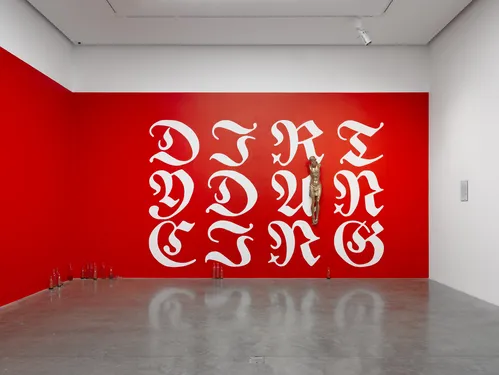
Dirty Dancing, 2019
Danh Vō
White Cube
Obrist identified a strong current toward slowness, particularly highlighting projects that resist the compressed timelines of the exhibition calendar. “I’m…struck by how many artists are moving toward long-duration projects, work that extends beyond the short life cycle of an exhibition,” he said.
This long-term thinking often takes artists outside institutional walls. “There’s a growing interest in public art and in practices that unfold outside the museum, on farms, in gardens, and within broader ecological systems. In many cases, the artwork becomes a living organism,” he said.
Obrist situates this trend within a longer art historical lineage. “The legendary Italian artist Gianfranco Baruchello, whose final book Andrea Bellini and I have been editing for publication in 2026, spent decades exploring the interconnections between art, agriculture, and economics,” he said, underlining how this will challenge museums and other institutions to rethink their programming. “Implementing his thinking feels more urgent now than ever,” he added.
Obrist noted names to look out for here include Nigerian artist Otobong Nkanga, British artist Yinka Shonibare, Argentine sculptor Adrian Villar Rojas, Vietnamese Danish artist Danh Vō, and British artist Alexandra Daisy Ginsberg.
Rethinking biennale models
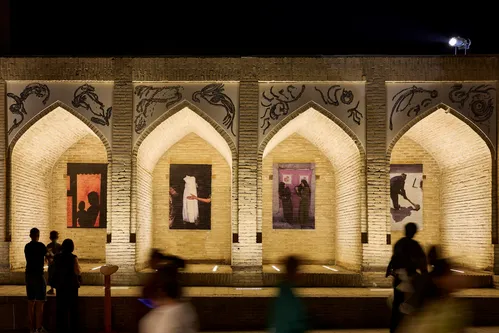
Looking ahead to 2026, Obrist believes that biennales will continue to rethink their exhibition strategies. The curator pointed out that in 2025, some exhibitions rejected the carbon-heavy, spectacle-driven model that has come to dominate the biennial format. “In Bukhara [Uzbekistan], curator Diana Campbell established a new rule of the game: every artist was paired with a craftsperson, and all works were produced locally, without transport,” he said. “The biennial offered free admission—hundreds of thousands of visitors simply walked in through open doors.”
A similar ethos shaped another standout example in Obrist’s eyes. “Okayama Art Summit, curated by French Algerian artist Philippe Parreno, was similarly generous and free,” he said. The exhibition dissolved the boundaries between art, architecture, sound, and daily life, he said, offering “hope for new models, new formats.”
Together, these biennials point toward a future where exhibitions are more about integration and inclusivity. This means embedding artworks in a local context and structuring them around inclusivity. For Obrist, these are early indicators of how the art world will recalibrate in the new year and beyond.
“I also think that the trend towards a new togetherness in a polarized world and to create spaces where people who would never meet usually or talk to each other…is becoming more important and is urgent in the polarized world we are living in,” he said.
