


To receive Morning Links in your inbox every weekday, sign up for our Breakfast with ARTnews newsletter.
The Headlines
STREEP DIGS DEEP. Actor Meryl Streep has made a seven-figure donation to the National Women’s History Museum (NWHM) in Washington D.C., reports Artnet News. As thanks, she gets her own, eponymous Educator Award in her honor, while the donation, the amount of which is unspecified, will fund storytelling projects and digital programming. Streep’s gift to the nomadic, digital-first museum “reflects her enduring belief in the power of amplifying women’s voices,” stated the museum in its announcement. The NWHM helped establish the forthcoming Smithsonian American Women’s History Museum, through a bipartisan congressional committee, though its physical location on the National Mall is still unknown, and lawmakers have asked for an “anti-transgender provision” to be added to the project. “History is shaped not only by those who make it, but by those who ensure it is remembered,” Streep stated in the announcement of the news.
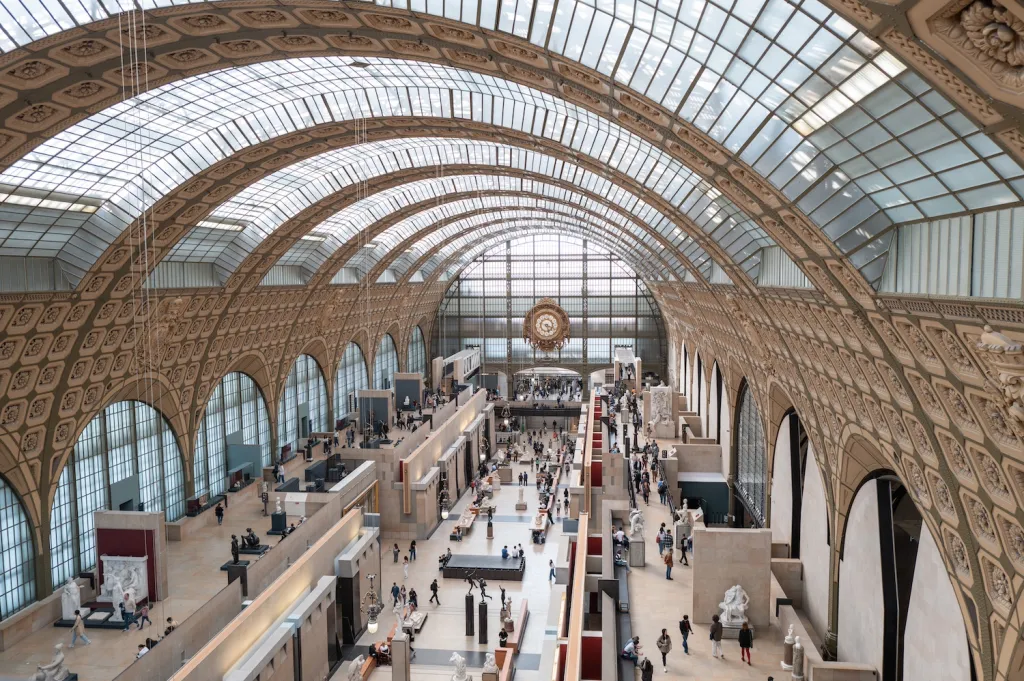
NUMBER ONE FAN. The Musée d’Orsay has received a remarkable collection of 17 Impressionist and post-Impressionist paintings, all done on fans, reports Le Figaro. Artists such as Pissarro, Gauguin, Degas, and Toulouse-Lautrec are among the big names who experimented with painting on fans. On March 24, in celebration of its 40th anniversary, the museum will display the recently gifted, fragile works for three months. The Hong-Kong-based collector who donated the collection, identified simply as Ms. Kan, stated she was struck by the “remarkable beauty” of paintings made on fans throughout art history and around the world, leading to a lifelong passion that is not limited to French Impressionists. “I like the fact that the Impressionists were influenced by Asia,” she added.
The Digest
Helen Legg will become the next director of London’s Royal Academy of Arts. Currently director of Tate Liverpool, Legg will start her new job in June, when she’ll become responsible for exhibitions, collection and public programming at the institution. [The Art Newspaper]
The pop-culture Jim Irsay Collection brought in $94.5 million across four sales at Christie’s in New York, where fans came to admire Kurt Cobain’s guitar, Jerry Garcia’s “Tiger,” and John Lennon’s piano from “Sgt. Pepper,” to name a few. The white glove sale total nearly quadrupled its low estimate, and it set 28 world records. [ARTnews]
“Fossils make me sick,” admitted the 19th-century groundbreaking English paleontologist Mary Anning, in a signed letter that will head to auction at Bonhams in London. Indeed, Anning had reason to be fed up: she was impoverished and mostly ignored by the male-dominated scientific establishment, despite her major contributions to the field. [The Times]
The Glasgow International biennial has announced the full program for its 11th edition, taking place from June 5 to 21. It will be directed by Helen Nisbet. [ArtReview]
The Kicker
DIG THIS. Camille Henrot hasn’t made a new film in about a decade, but her grand return this week to the medium, with the premiere of In the Veins (2026) at the reopened New Museum, “was worth the wait,” writes Art in America’s Emily Watlington. The 35-minute, “instant classic,” per the critic, will travel to Europe, but first Henrot tells us more about it in a must-read interview, revealing how her parenting experience, and “daily life amid the reality of the climate crisis,” inspired the film. While reading her kids bedtime stories about animals that were actually endangered, “I became drawn to this cognitive dissonance between all the animal representation that is everywhere in childhood, but that completely disappears for most adults as we age,” said Henrot. As for our environment “on the verge of destruction,” and guilt that can come with it, often placed on the act of having children, she later concludes: “Society likes to sweep unresolved problems like these under the rug, and that’s where I like to go digging.”
