


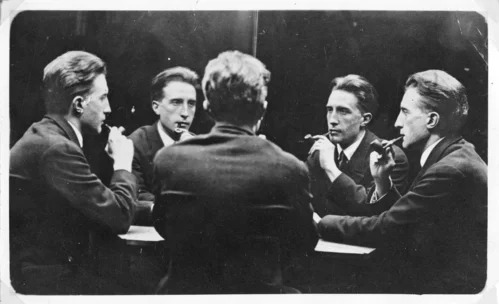
In 1923, Dadaist Marcel Duchamp famously gave up art for chess. While Duchamp secretly spent decades completing his final masterpiece, Étant donnés, the game became the defining passion of his life. On July 28, what would have been the artist’s 139th birthday, the Museum of Modern Art will celebrate that lifelong fascination by hosting a simultaneous chess match in conjunction with its major Duchamp retrospective.
The event will see Hungarian-born grandmaster Susan Polgar face 50 opponents from across the art world at once. The matches will take place in MoMA’s Agnes Gund Garden Lobby, and visitors with museum admission are invited to watch. According to the museum, the event pays tribute both to Duchamp’s enduring relationship with chess and to a similar simultaneous match staged during MoMA’s landmark 1973–74 Duchamp retrospective.
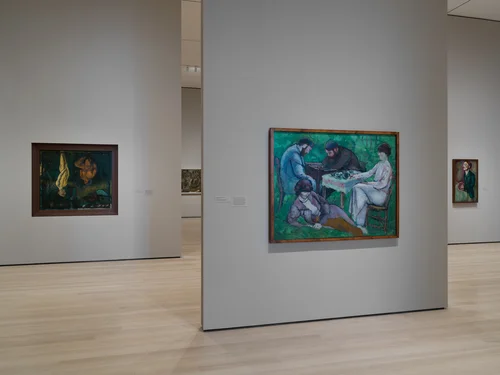
Duchamp’s fascination with chess began early. His 1910 painting The Chess Game, included in the current retrospective, depicts two of his older brothers engrossed in a match, foreshadowing the artist’s lifelong devotion to the game. After moving to New York, Duchamp became a fixture at the Marshall Chess Club in Greenwich Village, competed in international tournaments, and famously remarked in 1952, “While all all artists are not chess players, all chess players are artists.”
Susan Polgar, who is leading the matches, became the first woman to earn the men’s grandmaster title in 1991 and remains one of the most accomplished players in chess history. Rather than competing against a single opponent, Polgar will circulate among 50 chessboards, making one move at each before returning to begin the circuit again—a demanding format known as a simul.
The event also highlights the enduring relationship between modern art and chess. Beyond Duchamp, artists including Man Ray, Max Ernst, and Carol Bove have created artist-designed chess sets, several of which are held in MoMA’s collection. (Yoko Ono, too, recently launched an online playable chess bot.) The museum’s Duchamp retrospective likewise foregrounds chess as a recurring thread throughout Duchamp's career, demonstrating how the artist regarded the game not simply as recreation but as an intellectual pursuit closely intertwined with his artistic practice.
On view through August 22nd, “Marcel Duchamp” is MoMA’s first retrospective devoted to the artist in more than 50 years. The exhibition brings together more than 300 works and traces Duchamp’'s transformative influence on 20th-century art.
