


The New York financier J.P. Morgan was not only a canny investor and a passionate art collector—he was also exceedingly superstitious. Interested in the occult, a believer in astrology, and an obsessive solitaire player, his interests dovetailed in the 1911 acquisition of dozens of cards associated with a legendary 15th-century tarot deck, created for Milan’s ducal Visconti-Sforza family by the northern Italian artist Bonifacio Bembo.
The partial deck is a signature holding of his namesake and legacy, the Morgan Library & Museum in New York, and the 35 cards are now the basis for a sprawling two-part exhibition about tarot, opening this month. Tarot! Renaissance Symbols, Modern Visions will feature around 380 works, starting with the courtly culture of 15th-century Lombardy and culminating in the New York of 2026 with on-site tarot readings for museum-goers.
Card created by Andrea Bembo, a member of the northern Italian artist Bonifacio Bembo’s workshop The Morgan Library & Museum
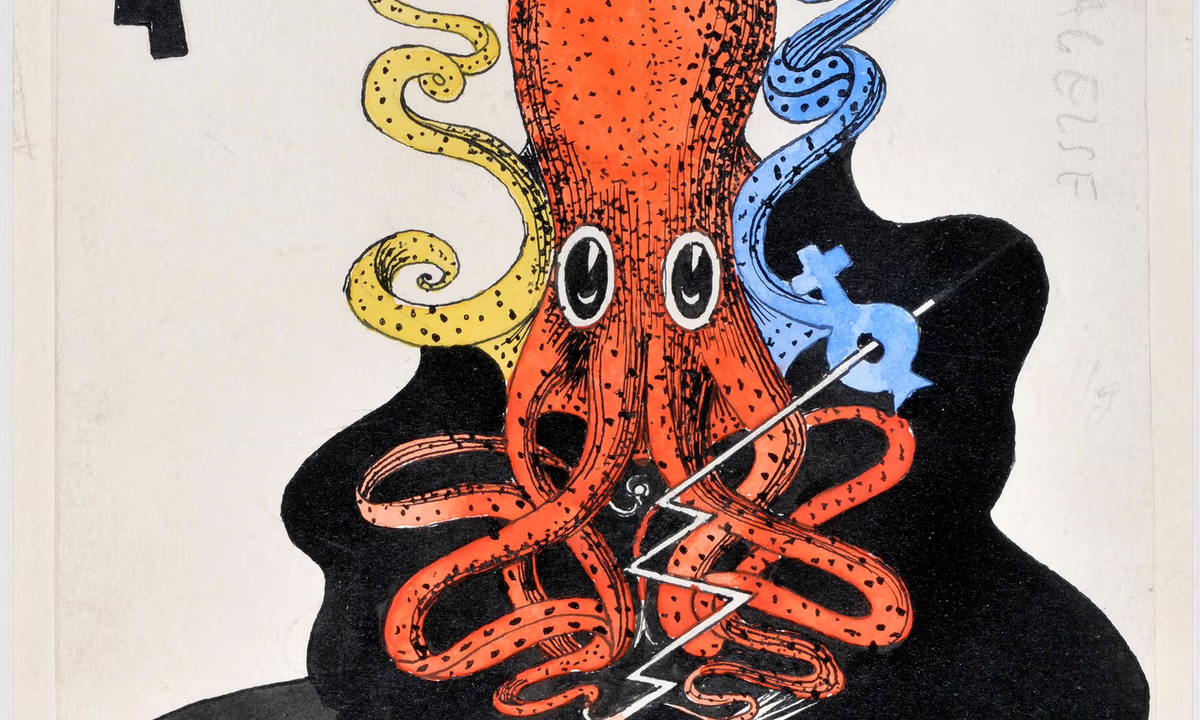
The show will chart tarot’s transition from a rarified game of skill on the Italian peninsula to an international symbol of the occult, taken up by the likes of the English author and magician Aleister Crowley and the French Surrealist André Breton. In the early 1940s Breton, joined by a group including the Romanian artist Victor Brauner and the Dadaist-turned-Surrealist Max Ernst, produced a supremely surreal take on a tarot deck, represented here with several cards on loan from Marseille. Breton’s otherwise cryptic octopus card is an ode to Paracelsus, the 16th-century alchemist.
In the first half of the show, the Morgan’s original Visconti-Sforza cards (around 1456-58) are crucially augmented with a loan from the Accademia Carrara in Bergamo, making this the first time that the majority of the deck’s surviving cards will be on view together in North America. Though some of the cards, notably the one depicting Death, are reminiscent of Medieval imagery, a major point of the exhibition, says the co-curator Joshua O’Driscoll, is that they were created by a Renaissance artist.
The Middle Ages and the Renaissance overlapped, O’Driscoll points out, and the earlier Visconti di Modrone deck—by an artist recently identified as Andrea Bembo, a member of Bonifacio’s workshop—still seems rooted in the late Gothic world. The Italian art historian Anna Delle Foglie, writing in the catalogue, cites “the fairytale-like character” of the Modrone’s deck’s Fortitude card, showing a woman cavorting with a lion (around 1441-42).
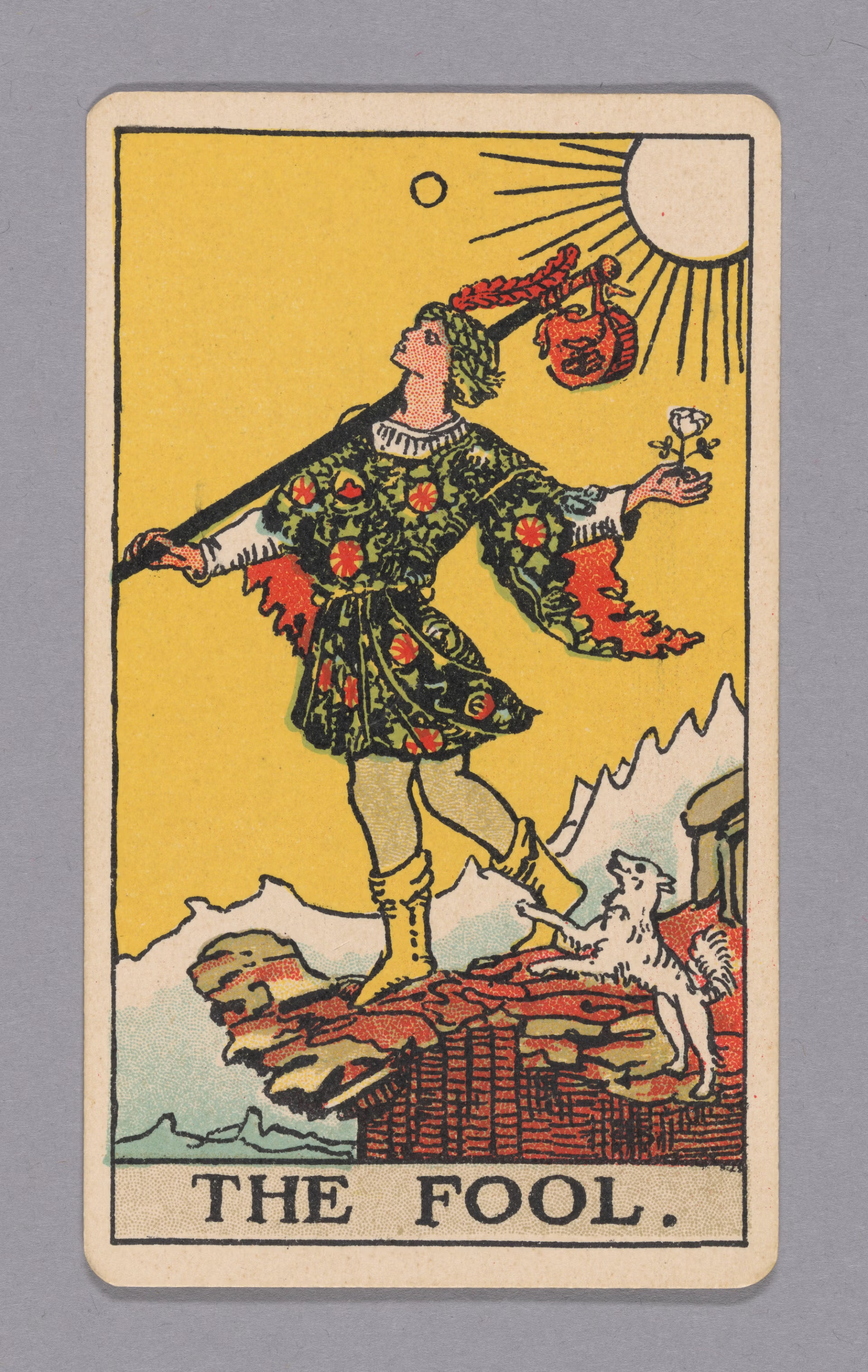
A card by Pamela Colman Smith, designed for the 1909 Rider-Waite-Smith tarot deck The Morgan Library & Museum
In the late 18th century, explains O’Driscoll, French occultists began to give tarot a supernatural mystique, planting the seed for a momentous 20th-century revival. The modern half of the show will begin with the British visionary artist Pamela Colman Smith and her illustrations for 1909’s influential Rider-Waite-Smith tarot deck, which was expressly intended for esoteric readings. In addition to Smith’s cards—including the eerie, fanciful Fool—the show will demonstrate her development in a striking 1908 watercolour work-on-paper, Sketch for Glass, showing a mysterious cloaked figure transfixed by a sun-like moon.
• Tarot! Renaissance Symbols, Modern Visions, The Morgan Library & Museum, New York, 26 June-4 October
