


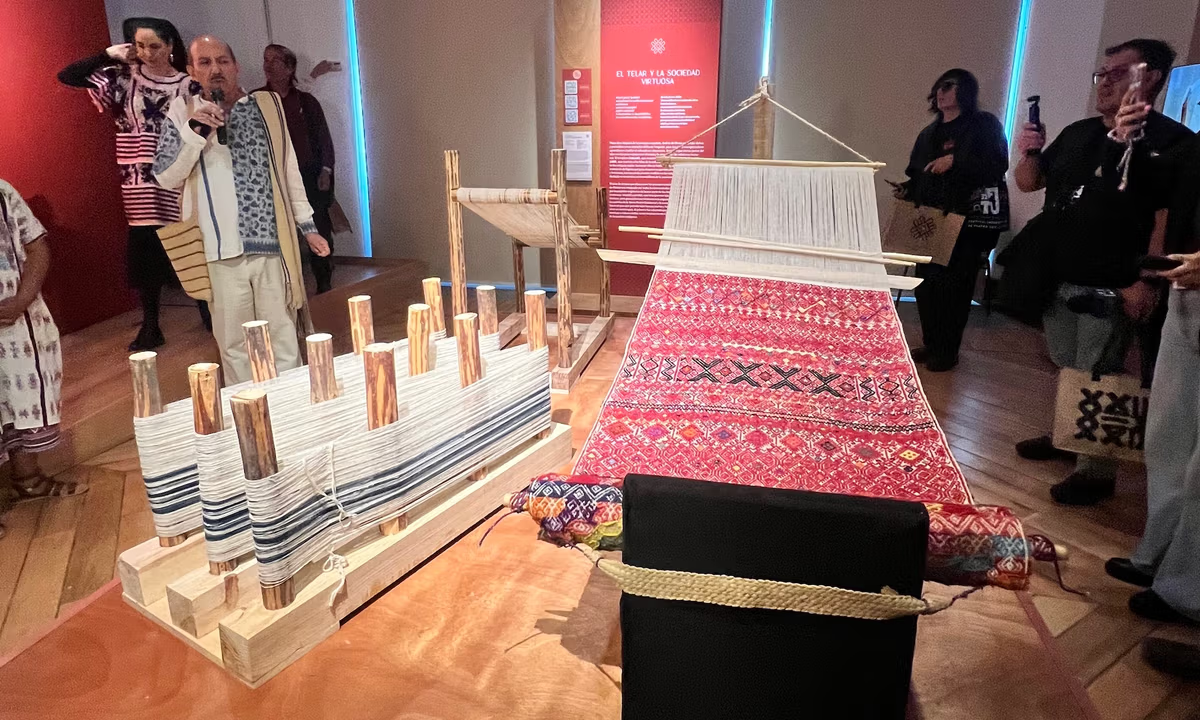
Backstrap looms, rebozos and sarapes are the protagonists of the new Museo de Arte Textil de los Pueblos Indígenas y Afromexicanos (MUT), which opened steps from the Templo Mayor archaeological site in Mexico City’s historic centre earlier this month. Housed in a 19th-century palace where Aztec ruins remain visible, the museum celebrates the country’s textile traditions as a living practice. It also continues an Indigenous heritage agenda initiated by former president Andrés Manuel López Obrador, including restitution efforts.
Vacant since 2019 after government offices were relocated, the venue reflects the city’s history. The neoclassical palace was built between 1795 and 1805 by the architect Manuel Tolsá for the nobleman and mining magnate Francisco Manuel Cayetano de Fagoaga y Arozqueta. In the early 1900s, Aztec vestiges were uncovered there, including large-scale sculptures. Some were left exposed.
“The staircase in the courtyard dates to Templo Mayor’s sixth construction phase, also visible at the archaeological site,” says Adriana Sanromán, the conservator of the Templo Mayor project.
Aztec ruins exposed at the museum’s 19th-century venue Photo © Constanza Ontiveros Valdés
“The space makes the past and present visible,” culture minister Claudia Curiel tells The Art Newspaper. “There is no better place to showcase artisans than opposite Templo Mayor, where archaeological and living heritage meet.” Curiel adds that the project aligns with Indigenous and Afro-Mexican groups’ justice plans.
The 80m-peso ($4.6m) project is managed by the Fondo Nacional para el Fomento de las Artesanías (Fonart), which promotes and commercialises Mexican crafts and, now for the first time, is overseeing a museum. But the opening, officially part of the 2026 Fifa World Cup’s cultural programme, was overshadowed by social unrest. Roadblocks stemming from ongoing teacher protests, which led to days-long closures of nearby museums, made access difficult. Inside, authorities ignored the chaos, framing the occasionn as a celebration.
Tradition and innovation
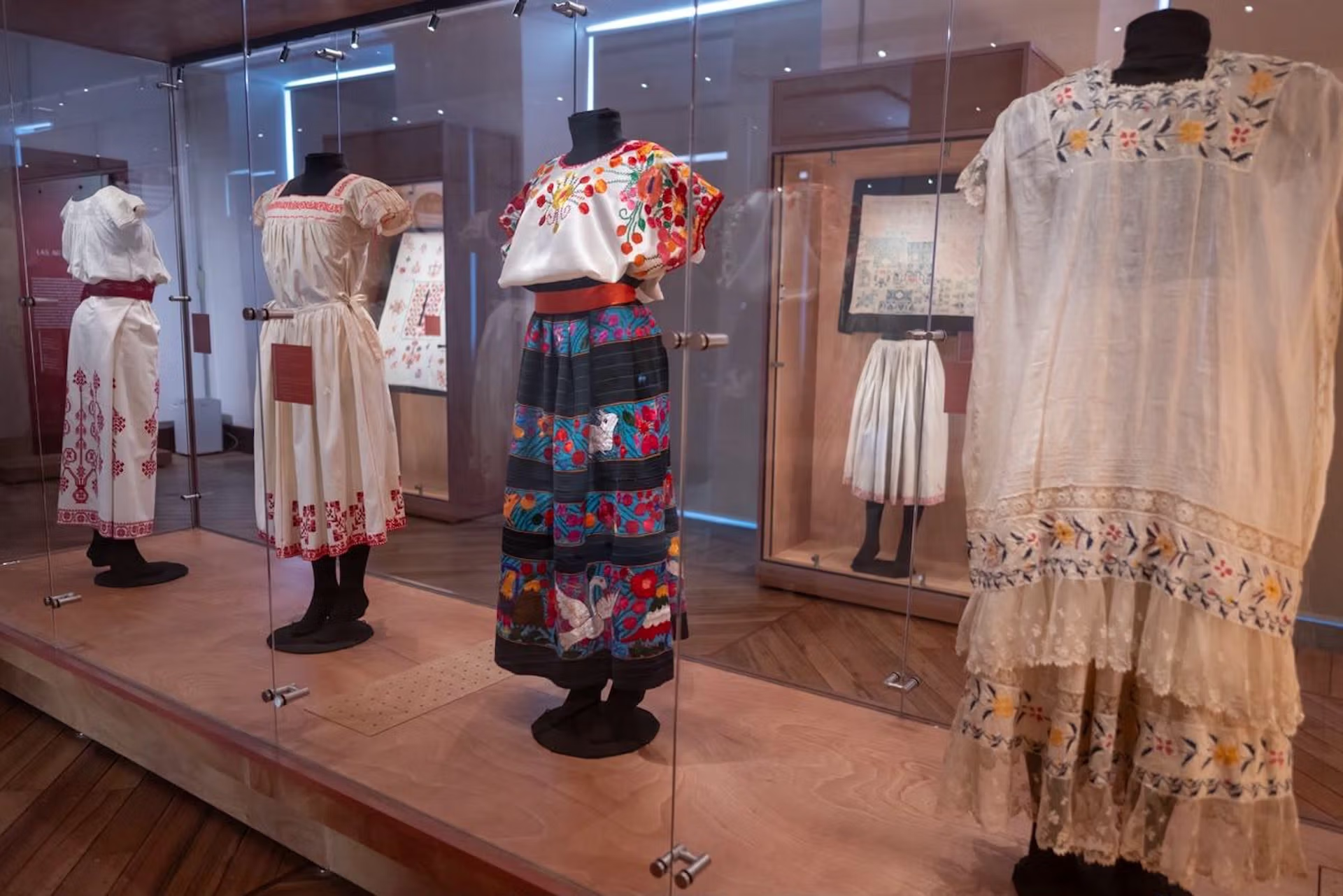
A display case at the new Museo de Arte Textil de los Pueblos Indígenas y Afromexicanos Photo: Gerardo Luna, Ministry of Culture
Across its 16 galleries, the museum displays 210 textiles, including four re-creations of historic pieces or those held in foreign collections. “The commissions re-create archaeological designs or lost techniques,” says Alejandro de Ávila, the museum’s curator. Most works, drawn from public and private collections, date from the late 19th century onward. “We present textiles as an art form largely created by women [and] historically overlooked,” Ávila adds.
Attention is paid to textile art’s origins, honouring techniques like the backstrap loom, found across the country, and the floor loom, practiced mainly in northeastern Mexico. Also on display is a re-creation of a thousand-year-old pall from Hidalgo. “We spent months reconstructing a lost technique based on the original piece,” says Jaziel de Jesús, a textile artist from Xochistlahuaca, Guerrero, who re-created the work.
Natural dyes are explored. Grana, a red dye derived from the cochineal insect found on cacti, is demonstrated, though a deeper exploration of what was once one of New Spain’s most valuable exports is missing. Fibers like henequen, once the backbone of Yucatán’s haciendas, are also featured. Upstairs, visitors can glimpse cacti and other plants used to create dyes, making the experience multisensory.
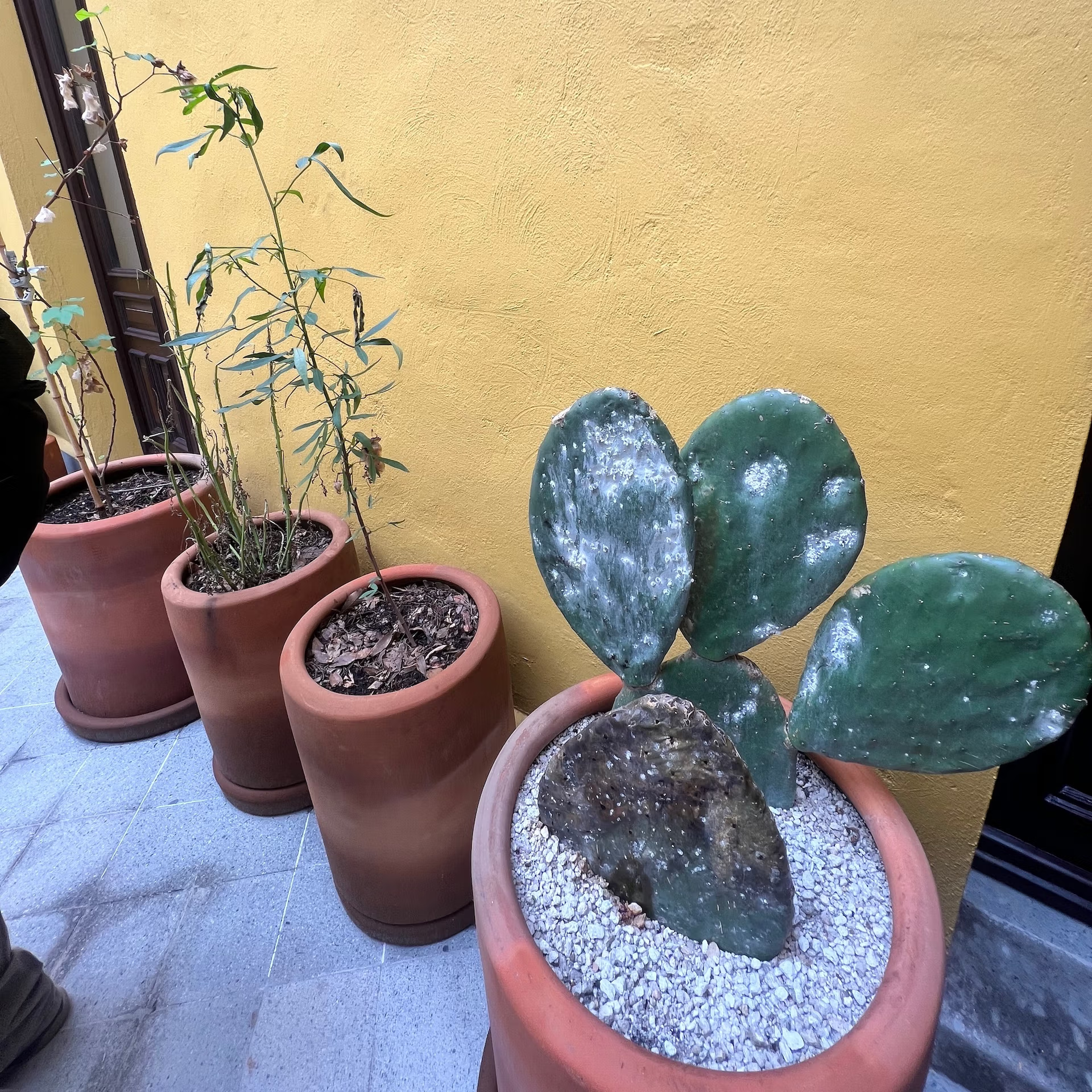
Cacti with cochineal insect and other plants producing dyes Photo © Constanza Ontiveros Valdñesjpeg
While Oaxacan textiles are prominently featured, the museum showcases practices from across the country. “We want to show that every state in Mexico has a textile tradition,” Ávila says. Although the museum’s name invokes Afro-Mexican traditions, examples remain scarce. “Afro-Mexican communities are less represented because their textile traditions are limited, although we included cotton weaving and beadwork,” Ávila says.
A section connects cosmological and calendrical knowledge to textiles through the vigesimal counting system of the 260-day calendar. “Textile art was a form of writing,” Ávila says. Some works hint at European and Asian materials and styles, reinterpreted in Mexico. These include exquisite rebozos, influenced by exchanges associated with the Nao of China, and sarapes, emblematic of northern Mexico. But the museum generally privileges the Indigenous roots of textile art.
In another area, now-lost feather-textile techniques are revisited by re-creating a tilma (cloak) that Puebla’s bishop gifted to Pope Pius IX 1860, which is now part of the Vatican collections. “This was a challenging re-creation that required multiple hands,” Ávila says.
The museum’s approach extends to its signage, which consists of black-and-red clay comales. “I created comales, an ancestral object and the first thing my mother taught me to make,” says Macrina Mateo, from the Zapotec community of San Marcos Tlapazola, Oaxaca.
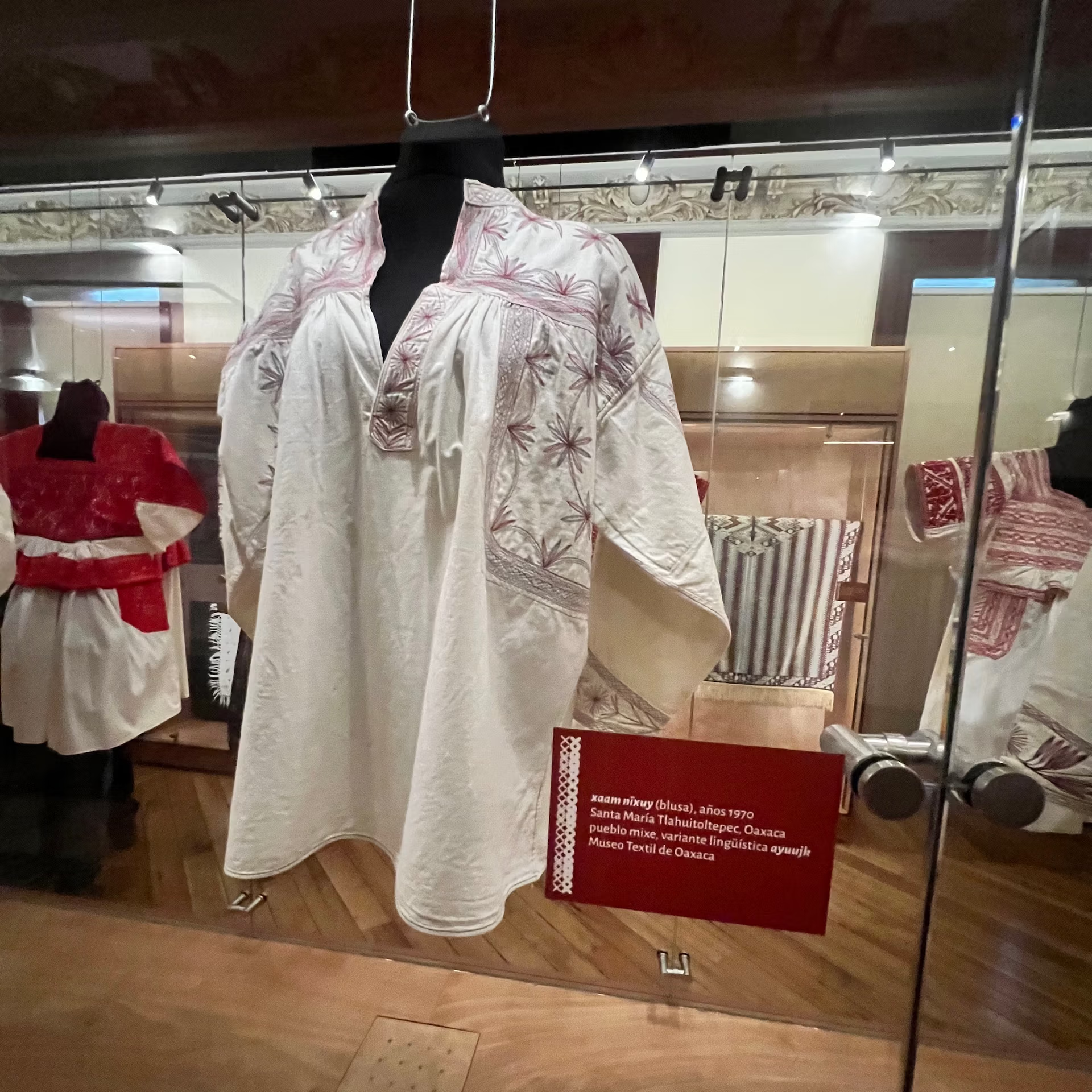
Blouse design from the Mixe community of Santa María Tlahuitoltepec in Oaxaca that has been repeatedly plagiarised Photo © Constanza Ontiveros Valdésjpeg
Appropriation is addressed through blouse designs from the Mixe community of Santa María Tlahuitoltepec in Oaxaca, which have been repeatedly copied by brands like Anthropologie. Taller Original, a new workshop in the museum where artisans will collaborate with designers, offers an alternative. Designs will be part of a soon-to-be-launched Fonart brand. “The space functions as a laboratory for innovation, respecting traditions and ensuring collaborations remain ethical,” says Marina Núñez, Mexico’s undersecretary of cultural development.
This echoes president Claudia Sheinbaum’s embrace of contemporary designs that incorporate traditional textiles, a style that earned her a “best dressed” mention in The New York Times. Sheinbaum-inspired dresses are even sold at the museum’s massive Fonart store.
The museum is a work in progress, with temporary exhibitions planned, including one by the Oaxaca-based Danish artist Trine Ellitsgaard. While uneven, the museum’s launch is a first step toward acknowledging Mexico’s rich and varied textile traditions and exploring ethical collaboration. Access, for now, remains challenging as protests in the centre of Mexico City continue.
